Mood is a lighting design company based in West Hollywood and Miami, founded on the belief that lighting should create an emotional connection between people and the places they visit. Its approach puts storytelling and the human experience ahead of technology, using light to shape atmosphere, create memories, and bring destinations to life.
Founded by Nick Diaz, Asher Harder and Kai Mosvold, the company brings together designers with extensive experience across the themed entertainment industry.
We speak to co-founder and lighting designer Nick Diaz, director of business development and lighting designer Ryan Bona, and co-founder and lighting designer Asher Harder.
A different vision for lighting design
“Everyone here at Mood has a similar origin story. There was a time in our lives when we all noticed light and its effects on emotion. And from that moment cemented our connection to the artistry of lighting design,” Diaz tells blooloop.
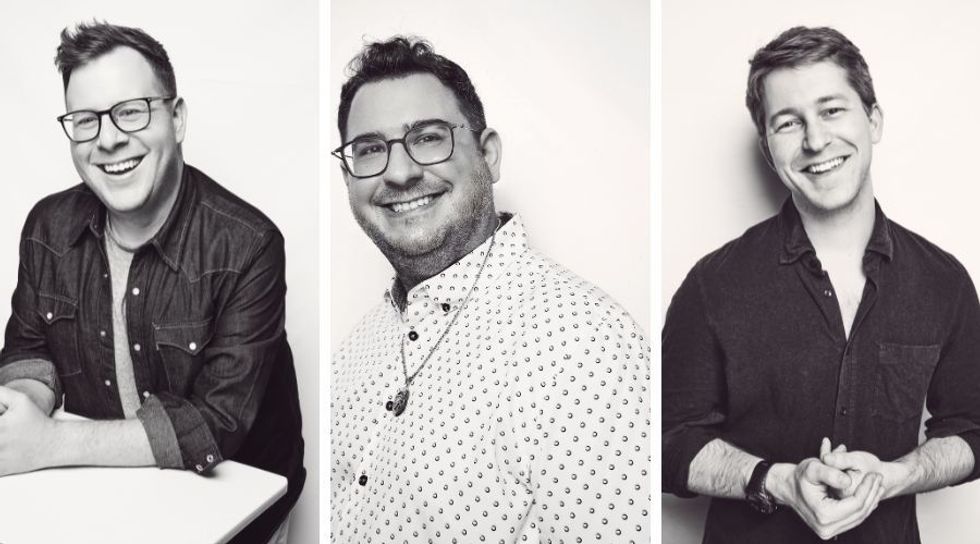 Mood leadership team L to R: Nick Diaz, Ryan Bona and Asher Harder Mood
On Mood’s genesis, Diaz says the team “wanted to create a place that could be an effective collaborator – one that prioritises the art of design and balances the project’s needs across the lifecycle, from creative development to the less glamorous aspects, like reviewing conduits for a year and a half.”
“I’m sure I’ll get slack for saying this, but we are not a 'jack of all trades' firm that promises clients packaged services and sweetheart procurement deals," he adds. “Where the art of lighting design is relegated to a single line item on a bill of materials next to the extension cords.”
The firm’s new team member, Bona, is an industry leader who previously worked at Universal Creative and Walt Disney Imagineering. He has opened three full parks before the age of 40 – Shanghai Disney Resort, Universal Beijing, and Universal Epic Universe. Bona has joined Mood as director of business development and a lighting designer within Mood’s Play Studio.
“I started my career in college as a theatrical lighting designer, then right out of college as a lighting design vendor,” says Bona.
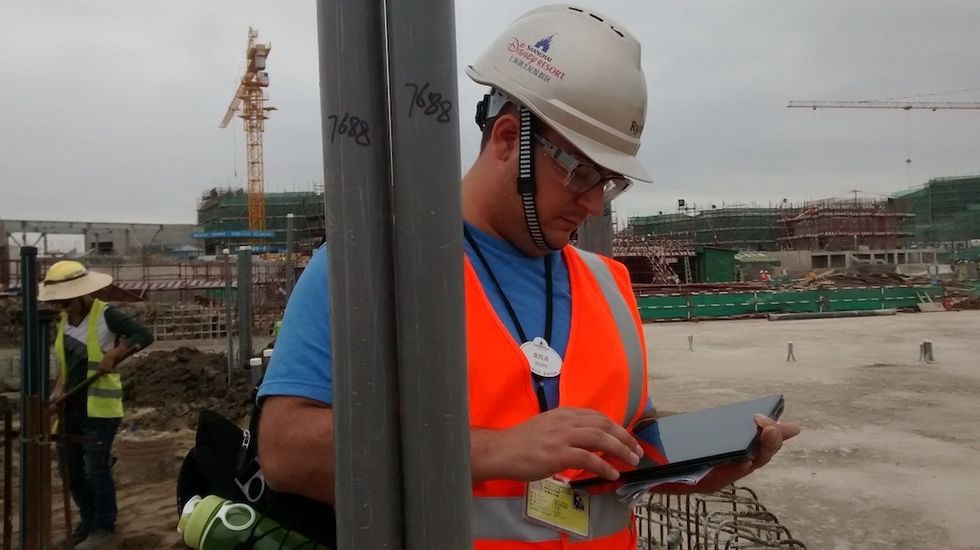 Ryan Bona on site at Shanghai Disney Resort during construction
After relocating to China to work on Shanghai Disney Resort and Universal Beijing, Bona returned to the US to join the Epic Universe development team.
“I learned so much about the differences between working in the Asian market and the international market compared to working here in the domestic market,” he says.
The idea of Mood was pitched to Bona, who says he “was hooked on the idea that I could be part of a young company that had a lot of similar origin stories and a lot of similar goals to be the next great designer for the industry.”
“Being connected to design again was really a return to my roots,” he adds.
Lighting for humans
Mood views its work through the heart of the guests rather than the physical space it illuminates. The team sees light as a storytelling tool, shaping how visitors feel, what they remember, and how they connect with an experience.
“We focus on lighting for humans,” Harder tells us. “For us, it's about creating the emotion that guests feel. That's important for us and for our clients because it creates memories. Those memories are what drive a lot of our clients and keep people coming back to experience that emotion, that memory.”
“When you look at other lighting design teams in the industry, you often see them advertising lighting for architecture or as architectural lighting designers. We focus on emotion versus the building and the environment,” Harder adds.
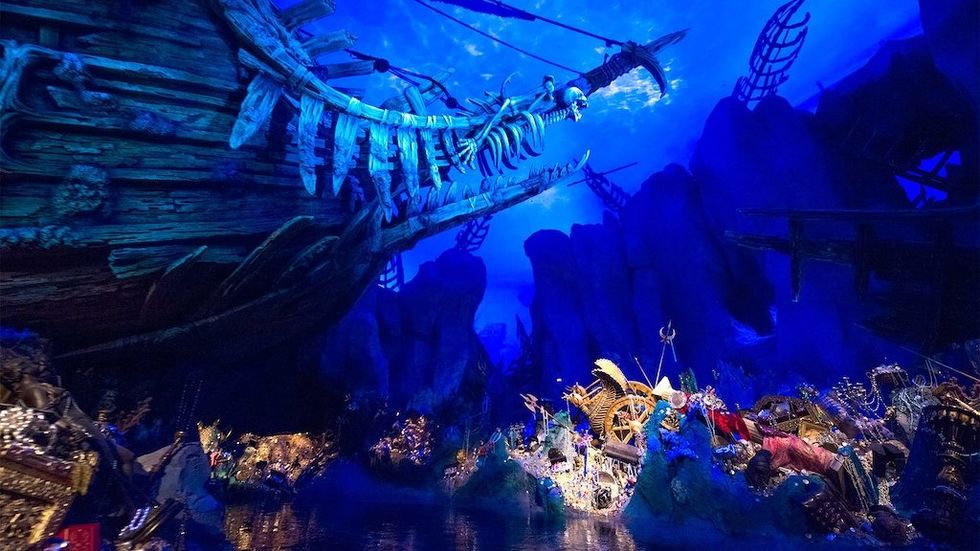 Scene from the Pirates of the Caribbean: Battle for the Sunken Treasure attraction at Shanghai Disneyland Disney
This philosophy also shapes how Mood approaches the technology behind its designs.
“Our designs never start with technology. We start with emotion; otherwise, you limit the possibilities. We go through the more theatrical process of starting with the feeling and the mood, and then we work backwards into the technology,” he says.
“Good design choices are never constrained by technology. You want a lighting designer that comes to the table with the pretty picture and a point of view that can withstand or adapt to any budget environment,” Bona says.
Mood is embracing its status as the “new kid on the block”. It offers a unique perspective, drawing on the shared experience of its team members, who have worked on all sides of the industry, he says.
“We want to be a design-forward collaborator for our clients, and our small, nimble starting-out aspect really helps us in terms of that. Through our Play Studio, we have a focus on themed entertainment and attractions, but our collective experience connects us to the broader market in terms of designing hotels and commercial spaces.”
Mood’s Play Studio
At the heart of Mood's themed entertainment work is its Play Studio, a creative arm dedicated to immersive experiences and narrative-led environments. The studio draws on the wider company's expertise while focusing on projects where storytelling and imagination take centre stage.
“We understand that we're the new kid on the block, and we aren't afraid to embrace that association because it’s what makes us unique,” Bona says. “I hope that with time, as we continue to grow, we'll be able to prove that this new kid is here to play.”
A specialised component of Mood, the Play Studio creates story-immersed, highly creative projects, drawing on the tools and knowledge of the main Mood entity to ensure a full-service approach.
“We like to think about the Play Studio more as an inner child of the same body – Mood’s body. The larger body has the knowledge and the understanding that holds the tools that help us to create a broader experience for the market.
“We're not separate divisions; we are complementary bodies working together in harmony to try and deliver a full experience. For us at the Play Studio, we get to work on really fun and exciting projects – things that are really rich in that storytelling experience.
“Getting the chance to interface with big IPs really does feel like we’re getting to play.”
Making good lighting accessible
Beyond major destination developments, Mood wants to bring its approach to a wider range of attractions. The company sees an opportunity to make thoughtful, high-quality lighting design accessible to regional theme parks and smaller operators that may not traditionally have considered it within their budgets.
“We want to make sure the lighting design is accessible for a lot of clients and that it's not just considered a luxury service that's afforded to the biggest theme parks,” says Bona.
“So many projects now are trying to hearken back to more local, regional-level experiences. They're not trying to compete with the Universal or the Disney-level experiences – they're trying to deliver quality emotional connections for their guests.
“We're bringing that experience of working with leading companies so that clients are getting that same level of quality, but it's balanced with what their specific needs are, and it's really tailored for them.”
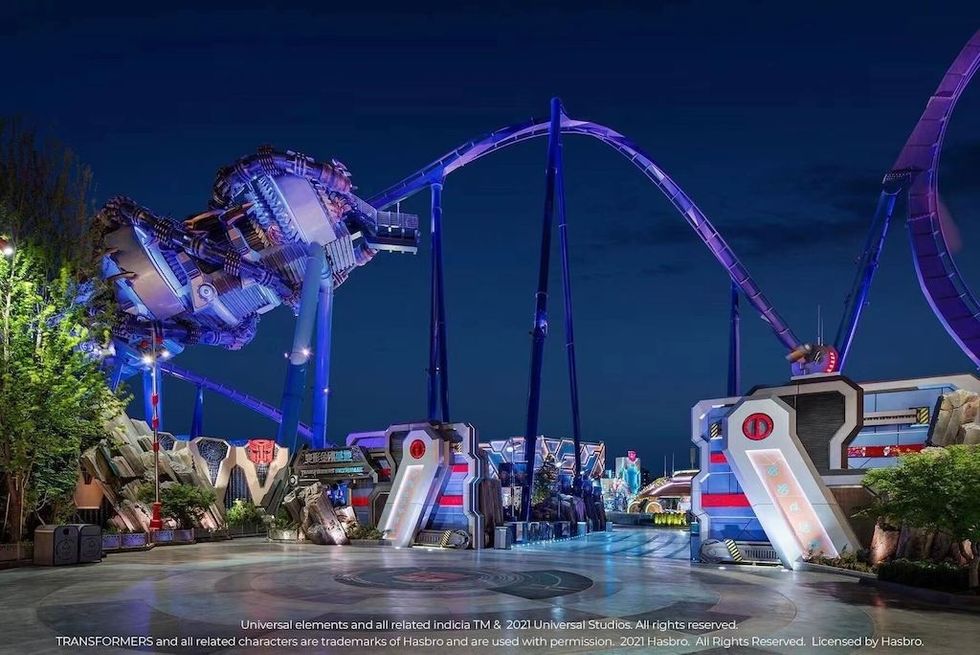 The Transformers Metrobase land at Universal Studios Beijing with the Decepticoaster roller coaster Universal
He added: “For us, it's about making sure that we're keeping to our core values and ensuring that the story, emotion, and what the client needs come first.”
Mood also sees opportunities to extend narrative-led design beyond individual attractions, creating a consistent sense of place across entire destinations.
Diaz says: “What we're seeing is that theme parks are no longer being designed to exist as a separate experience detached from a broader destination. When guests exit the gate, they expect that same storytelling experience to follow them throughout the entire resort to the dining and retail experiences, and across the whole destination.
“We've developed a team that responds to the needs of developers and owners who have been looking for lighting designers that can be responsible for both the highly theatrical, narrative-based experience inside of the theme park, and the more sophisticated architectural spaces.”
Harder adds: “The entire destination is important, and creating that emotional tie across different sub-brands within the main location is essential.”
Working with the creative vision
Mood believes good lighting design depends on understanding a project's creative ambitions and working closely with the wider design team to realise them.
“We're able to flex our architectural and theatrical sensibilities,” Diaz says. “We've had great responses from clients who previously would have had to hire a theatrical lighting designer and an architectural lighting designer and made those two people play nice together.”
This also means recognising that a lighting designer is part of a much larger creative process. The team says it wants to understand what clients and other project partners are trying to achieve, rather than impose a predetermined design vision.
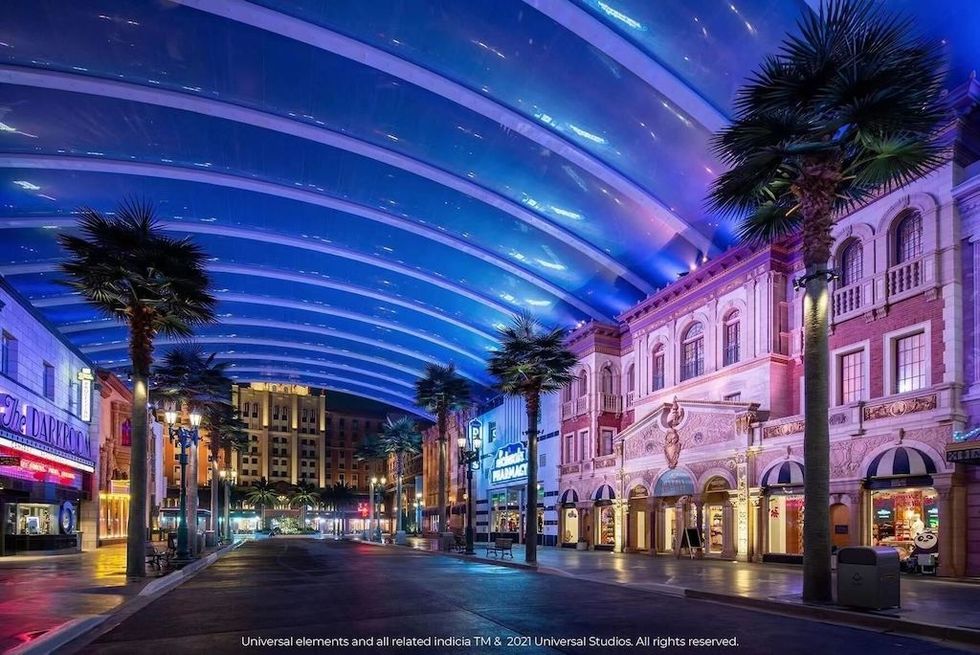 The Hollywood themed land at Universal Studios Beijing Universal
“This was one of the main reasons that we chose to found this company,” says Diaz. “We’ve heard endless stories from design clients and developers who are tired of being talked at by lighting experts who sell their personal vision or their restrictive partnerships even when it goes against the needs of the project. Usually that’s about the time we get the call.
“The feedback that we get all the time is that we’ve listened and that’s what clients are really looking for.”
The case for creative simplicity
Mood's emphasis on storytelling also informs its attitude towards technology, with the team favouring considered design choices over unnecessary complexity.
“We remind all of our collaborators that simple things rarely break,” Diaz says.
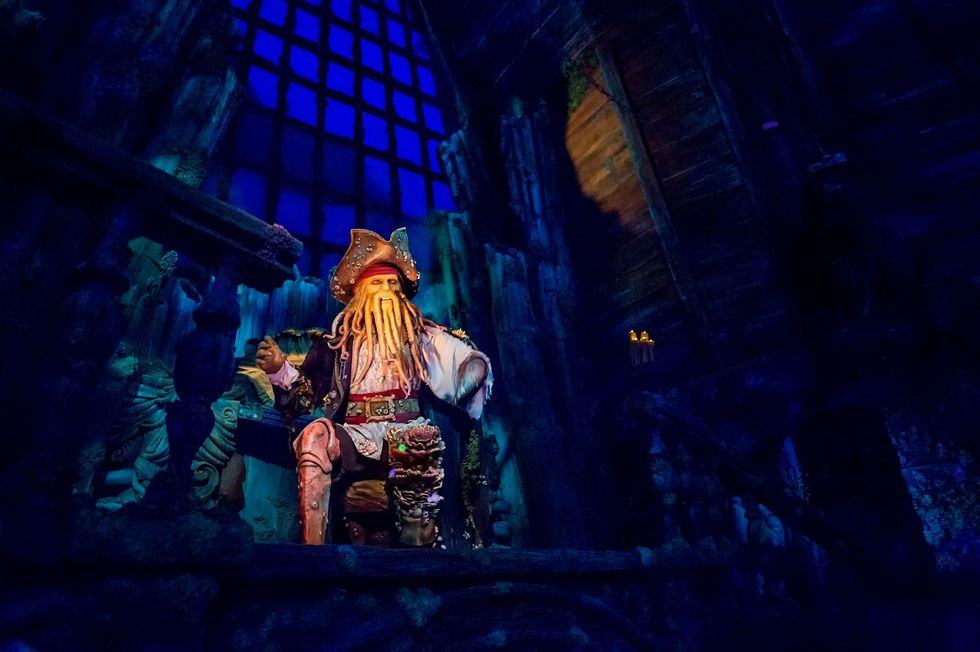 Shanghai Disneyland offers an immersive journey in Pirates of the Caribbean: Battle for the Sunken TreasureDisney
“Ryan has opened three gates. Asher and I, and other people on our team, have grown up inside theme parks, not only designing for them but also working alongside the day-to-day staff doing the operations.
“We learned pretty quickly that the tried-and-true, reliable design elements are the ones that are operating 20 or 30 years later.
“Guests will come to our experiences, and it may be the only time in their life that they would ever experience it. What’s important to Mood is that no matter what day or what hour, guests are getting the same experience; they're getting exactly what they paid for. We do that by ensuring that the technology we use is trusted and reliable and operates every day.”
Harder adds: “It’s important not to overdesign something because that overly complex solution usually comes with layers of multipoint failures and both higher construction and operating costs.”
“Put the money in front of the guests,” says Bona
“Simple as it sounds, the value needs to stay on stage lighting the story and not backstage in some IT closet.”
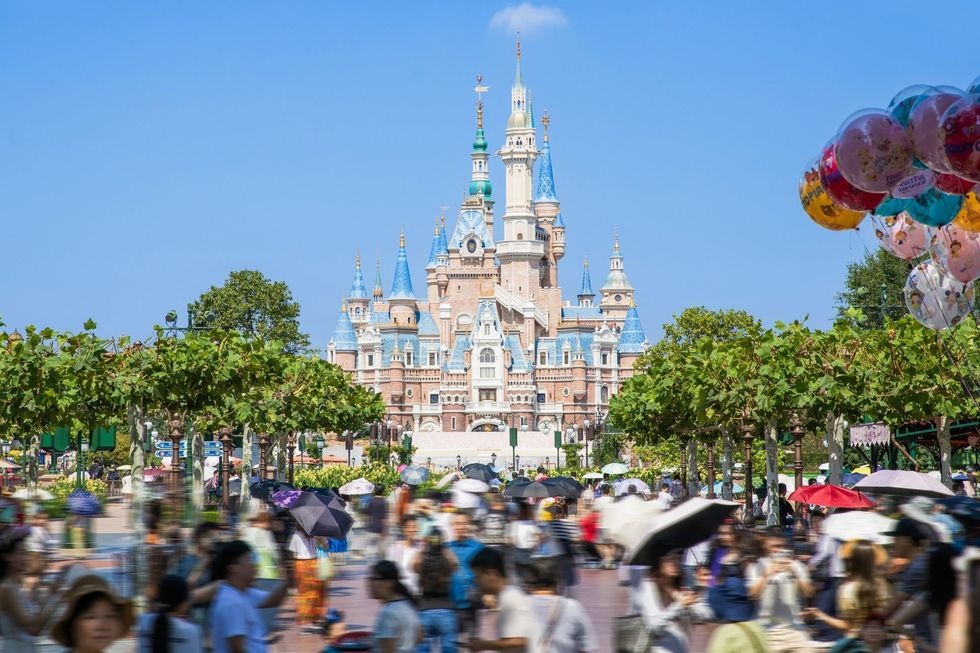 Shanghai Disney Resort opened in 2016 as Disney’s first destination in the Chinese mainland Disney
Alongside its project work, Mood wants to contribute to the wider themed entertainment industry by sharing experience and encouraging new talent to enter the sector.
“I’m excited to be back in the themed entertainment industry, specifically in lighting design, and having the opportunity to do more educational outreach, flex my lighting artistry in local live entertainment and participate in industry discussions, which weren’t really accessible in a larger corporate environment,” says Bona.
“I’m really happy to have this ability to be on different platforms and to speak more about the lessons learned, and hopefully encourage more young talent to join the themed entertainment industry.”
He adds: “Many of us at Mood, at some point, met someone who was our catalyst for cementing our path into the industry.”
Sharing experience and expertise
For Bona, it was the late Craig Pierce, a former Disney Imagineer and show lighting designer.
“He was my friend, colleague and mentor during my Shanghai days at that very first gate. I still go back to so many of his practices and lessons even today, like the idea that simple is better. Sometimes just doing it with a couple of light fixtures is better than doing it with an entire system.
“I hope that someday I’ll be able to share even a fraction of his experience and practices with young designers in this industry, and we hope that Mood will become a home for those designers so that they can grow and thrive, and be the next people who create their origin story. I’m very excited to be here.”
“The mood is everything,” Diaz says.