
What do theme parks and theatre have in common? More than one might think! Both are built around delivering a unique experience, and both are considered successful when audiences keep coming back for more.
That connection is exactly why I believe theme parks as a whole have a lot to gain by watching and studying how theatre companies craft space for audiences.
Below are three lessons theatre can teach theme parks, based on my work across numerous departments on immersive experiences, theatrical productions, and mixed media installations.
1. Serve the story first, the technology second
The first lesson is to ensure creative storytelling remains a singular priority throughout the process, from ideation to installation. Storytellers are as old as humanity itself, so it's no surprise that theatre as a craft has a pretty sharp sense for this.
Theatrical audiences are eager to repeatedly ask “why” as a core experience of attending productions, and critics (especially in NY) are waiting and ready to eviscerate shows over anything short of uninterrupted brilliance.
When working with live performers especially, authenticity and integrity are the rulers observers use to measure the quality of the performance they came to see.
While not a frequent occurrence, I have reasoned myself out of design teams, justifying why I shouldn't be there when producers focused too much on technology and gimmicks, thinking it would sell tickets and attract investors.
I believe that’s also the key to creating an amazing ride or guest experience. You have to know why the technology you've chosen will help serve the story you're trying to tell. If you can't answer that, the technology simply doesn't belong.
Following theatrical convention, an audience should never be asked to “put these glasses on” or “get in this cart” unless it's an essential part of the journey. Turning a rollercoaster into a minecart race and recreating the harrowing jumps of the original SNES game with a side-mounted rail system is a brilliant example of this, as Epic Universe recently did.
Personally, I like the firework analogy.
Sure, you can do one brilliant firework, but then it fizzles, and it's gone. So many productions that fall short focus on creating one great firework moment, but fail to address how we got there, why we should care, or how to carry on after it fizzles away.
Executing all of these elements together while orchestrating how they combine and flow to create a cohesive journey even has a term: ‘Mise-en-scène.’
In the recent West End production of Hercules the Musical, the brilliant combination of LED screens and precision projection mapping gave audiences a sense of scale that physical scenery couldn’t achieve alone.
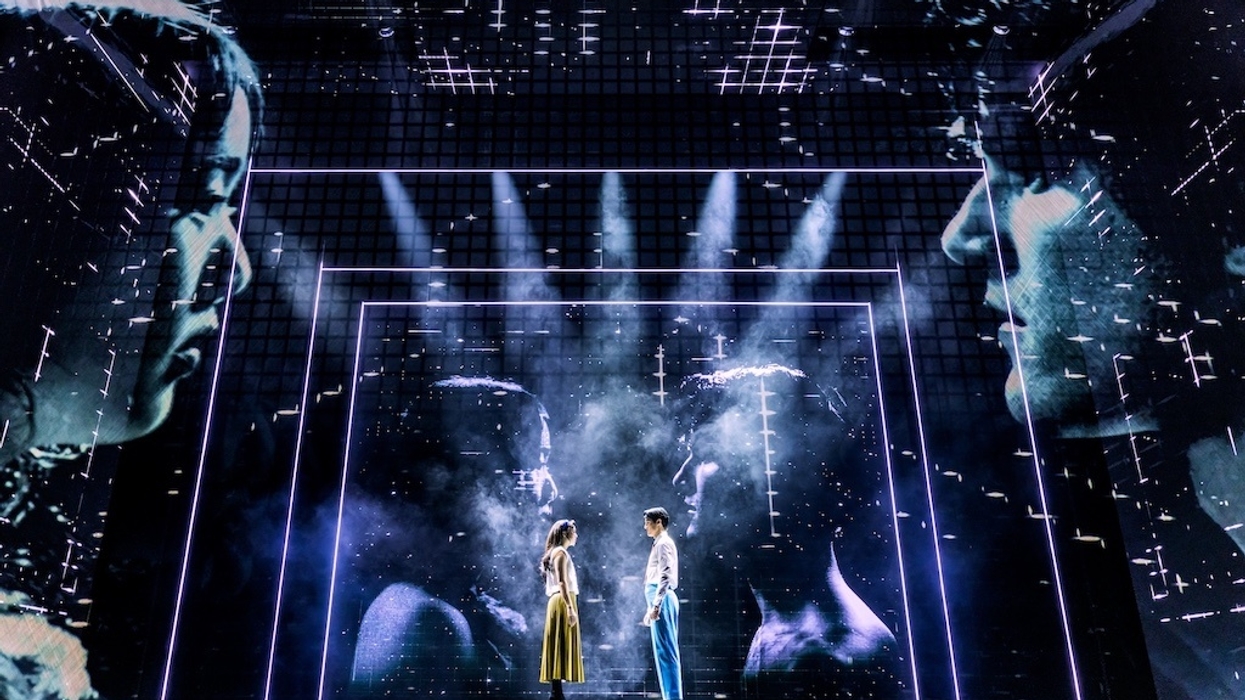
In Broadway’s Maybe Happy Ending, video content, lighting, and moving panels created a forced perspective for the audience, treated as a core narrative element rather than simply a backdrop. The digital and physical elements were so tightly integrated that audiences couldn’t tell where the physical set ended and the projection began.
When technology is driven by the narrative, it goes from feeling like a spectacle for spectacle’s sake and becomes an essential part of an emotional experience that keeps guests returning and reminiscing for years to come.
2. Don’t allow technology to break the fourth wall
In theatrical storytelling, breaking the fourth wall is a frequent and deliberate choice made by actors and directors.
However, if your technology is breaking this wall due to failure or glitches, it’s not overly dramatic to say you’ve shattered the magic, and all the hard work building a world literally vanishes. It’s the immersive equivalent to being told Santa Claus isn’t real.
In technical theatre, we often joke that if you don’t notice the work we did, we did our jobs right. We call achieving this effect the “willful suspension of disbelief,” and it is the currency we start to trade in when the lights start to dim on stage.
Sadly, I've seen attractions pushed past their limits with systems that were expected to run every day, in heat and humidity, for a decade or more. It's frustrating to watch rides deteriorate over time, especially when park teams don't have the tools to resolve issues quickly (even a re-ride line doesn’t provide guests with a complete experience).
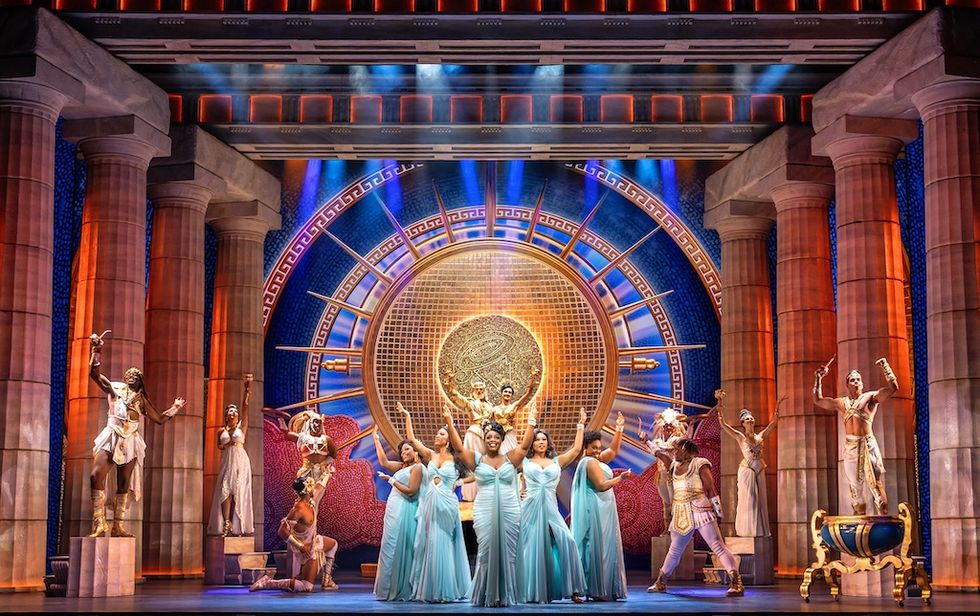 Disney's Hercules - Mount Olympus & Muses Credit Johan Persson/© Disney
As rides become more technically complex, these late-stage failures become a serious engineering consideration.
When designing a technical solution, many take an approach that consolidates technology and hardware into as tight a box as possible: the “ubermensch approach.” However, doing this increases the risk of failure exponentially.
To avoid this, engineers have learned to distribute their core components and choose purpose-built infrastructure, so the story never ends. Modern theatre productions typically rely on server-grade components with built-in real-time redundancy, such as Disguise’s media servers.
If your primary system has an issue, a backup machine takes over without dropping a single frame, and no server relies on more than a single GPU – dedicating 100% of each server's resources to guaranteeing longevity and performance.
3. Design holistically
Unlike theatrical productions, which are often run by tight-knit teams that work on each part of the production process as a single group, theme park stakeholders are varied and numerous, so workflows are often spread across multiple departments and divisions.
This can be a problem because historical knowledge lives only in whatever handoff and documentation exists between creatives and operators once a ride is open. Park staff assumes ownership, and the engineers and designers who deployed the ride move on to the next project.
This is why I advocate for a persistent presence of a role found in the film industry: the production designer.
In UK theatre, this person is also called a theatre designer or scenographer. A technically minded production designer has the skills and knowledge necessary to oversee not just the commissioning and deployment of an attraction, but also to consider and leverage its upkeep.
Working with a resident or associate director helps theatre productions preserve the original creative team's work and keep shows running true to form through multiple recastings and remounts for extended runs.
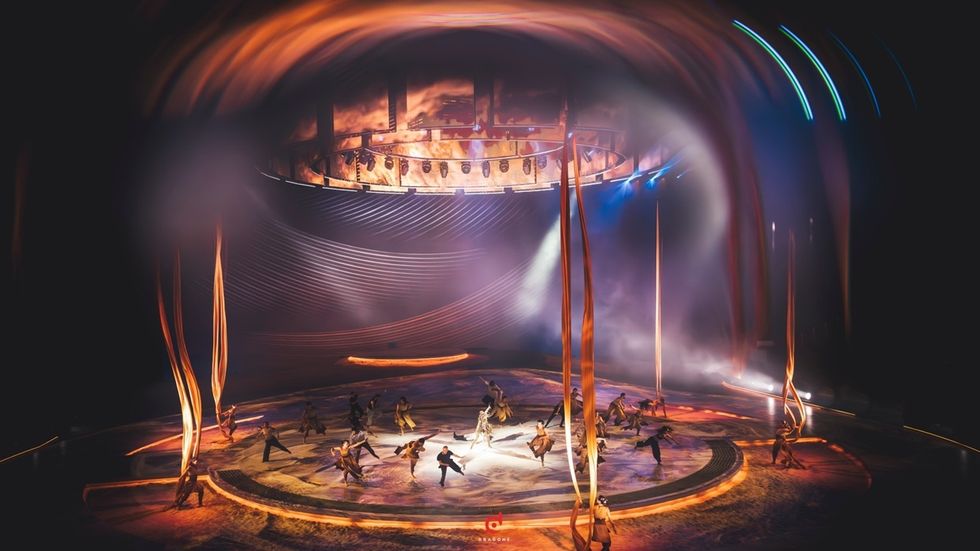 The second edition of Dragone's groundbreaking immersive show, Terhal, uses Disguise technologies to power new content, projections, and a huge chandelier of LED screens Image credit: Dragone
Theatre also pushes the boundaries of what we even consider a ‘stage.’
A talented production team knows how to think about things from every angle when staging a production ‘in the round’ or overtaking found spaces for immersive theatrical experiences.
This is why working with a visual environment such as Disguise Designer is such an invaluable tool.
Iterating in a navigable, real-time 3D environment lets everyone visualise elements from every angle when crafting attractions and experiences, building confidence in creative concepts and allowing designers to previsualise nearly every component of a ride before breaking ground.
Theatre (the craft) has spent centuries refining the art of immersing audiences while balancing creativity, technology, and operational excellence to tell unforgettable stories. As theme parks continue to embrace more ambitious digital experiences, those same principles have never been more relevant.
Get the foundations right, and the technology becomes more than a spectacle – it becomes part of the story guests remember long after they've left the park.