Lighting design in visitor attractions must balance creative ambition with practical requirements, from creating immersive environments to guiding guests and supporting retail. Delivering that experience requires close collaboration between creative and technical teams, with budgets, installation and long-term operation considered from the outset.
Matt Cooper, principal and founder of SPRK Lighting, and Ryan Gravilla, principal of its Creative Studio, explain how the Lexington, Kentucky-based firm connects lighting design with technical delivery.
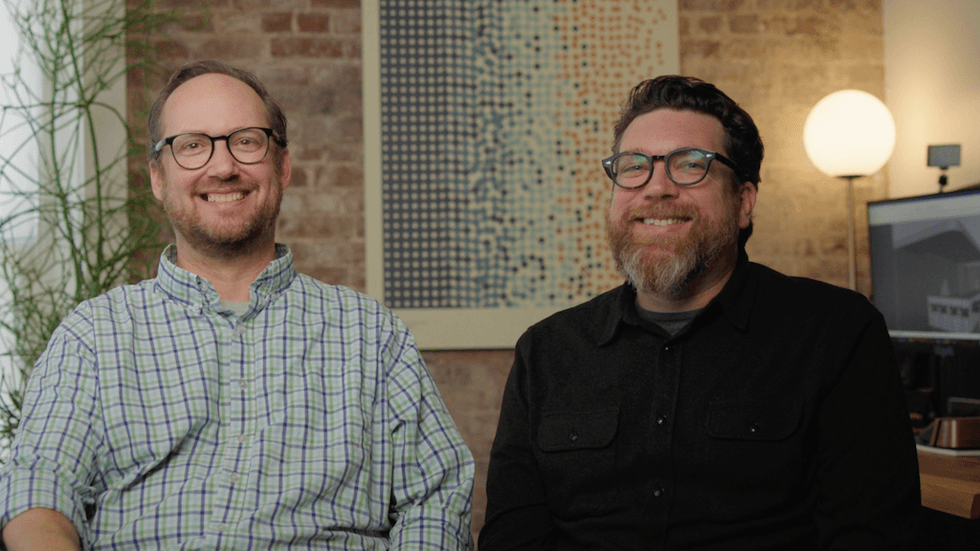
SPRK's Ryan Gravilla, left, and Matt Cooper, right
Following a recent rebrand, they speak to blooloop about its integrated approach, project experience and plans for sustainable growth.
From theatre to themed entertainment
Cooper founded SPRK in 2018, drawing on his background in theatrical production and systems integration and a longstanding interest in storytelling through lighting.
"I was a theatre kid, and I didn't get the memo that all theatre kids were going to go do the Disney College Programme," Cooper recalls.
"So instead, I went down this AV integration route. But lighting design and theatre in general have always been close to my heart. I found my way into a themed attraction project around 2015, and I just loved everything about it."
He was also struck by the industry's collaborative culture: "I was fascinated by watching people who had been working together on different projects for decades, having that lasting relationship, both as creative partners and as a business."
In the early days, Cooper handled everything himself. "It was me and a laptop and client meetings by day, drawings by night," he says. As the business grew, he sought people whose skills complemented his own.
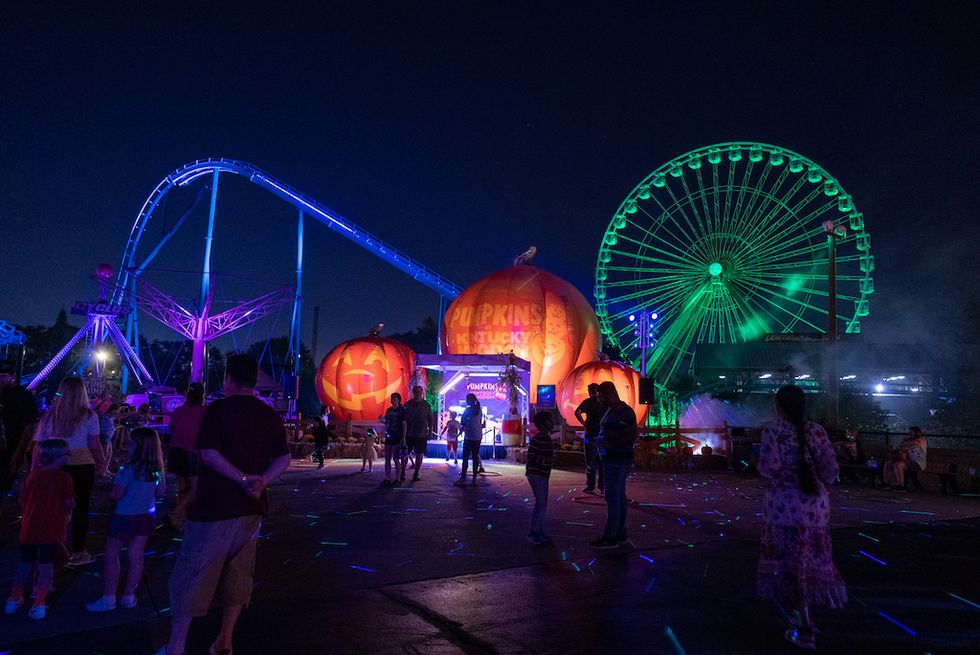
A lighting concept designed for Kentucky Kingdom, Louisville
Gravilla brought more than 22 years of experience with Disney Live Entertainment at Walt Disney World, where he led 20 designers working on nighttime spectaculars, park shows, cruise ship productions and international events.
“I found myself in more of a management leadership role, but my real passion is being a lighting designer and a creative," Gravilla explains. Seeking a new challenge beyond the corporate environment, Gravilla found SPRK online. A dinner meeting in Orlando confirmed the connection.
“We realised that we were like long-lost friends who had only just met each other. We clicked very quickly," he says.
Cooper describes their complementary roles: "I am the business development guy, finding the opportunities, and Ryan is a fantastic creative.”
Building a team around creative talent
As SPRK grew, Cooper and Gravilla assembled a team spanning the creative and technical sides of attraction lighting.
"In the design shop, we have designers who have experience with architectural and theatrical lighting, which are two very different disciplines, but in the world of the parks, we use them almost interchangeably.
“We brought on Ryan Gottlieb as another one of our principals. He is the technical genius to Ryan Gravilla's creative genius, and he oversees the technical direction and delivery of projects with his team."
Gottlieb brings more than 20 years of experience in technical installations, cruise ship productions and nighttime spectaculars for Disney Live Entertainment, Royal Caribbean, Celebrity Cruise Lines and Cedar Point.
Principal of operations Carson Childers brings experience in live music, studio management and large-scale audiovisual, lighting and video (AVL) operations.
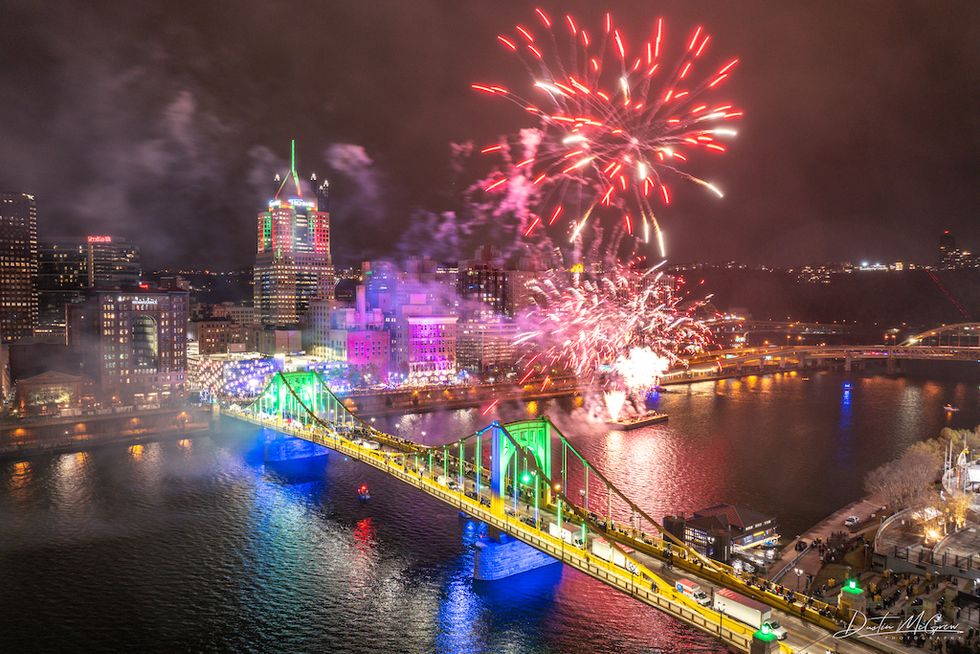
Three Sisters bridges in Pittsburgh, Pennsylvania, with architectural lighting
Image credit Drew McGrew
"Most of the people on our team have had a similar experience," Cooper reflects. "Working in a larger organisation and hitting a point where, for whatever reason, that job no longer allowed them the flexibility they needed in their personal life. They had achieved all the creative things they wanted, and they were looking for something new.
“We wanted to create a place where everyone can do the best work of their career."
Gravilla believes that supporting the team as individuals also benefits the work they deliver to clients.
"We support each other, especially understanding that your personal life is more important than the job. The job is a job, but we love it and are passionate about it. When you love something, you dedicate extra time, effort, and brainpower to it."
For Cooper, the challenge is less about encouraging people to work hard than about keeping their enthusiasm sustainable:
“It's making sure our teams don't overrun because everyone is so excited and passionate about what they do. When you work with people who are really talented and love what they do, the leadership challenges are very different."
Balancing function and storytelling
Architectural lighting supports visibility, safety and permanent installations, while theatrical lighting uses colour, movement and cues to create atmosphere and support storytelling. Visitor attractions often require both, from functional queues and retail spaces to immersive ride environments.
"That integrated approach is our secret sauce," Gravilla explains. "We like to take projects from beginning to end through all the different phases. It opens us up to a wider range of projects and lets us flex between the architectural and theatrical sides, blurring that line.
“Architectural design is inherently visible in a beautiful way, but a theatrical approach gives us incredible flexibility. Theatrical design is built for flexibility; you can easily move a light down a pipe or refocus it in four seconds. Architectural lighting might mean drilling a new hole in the ceiling or moving conduit.
“Being able to blend both approaches gives us a much broader set of tools."
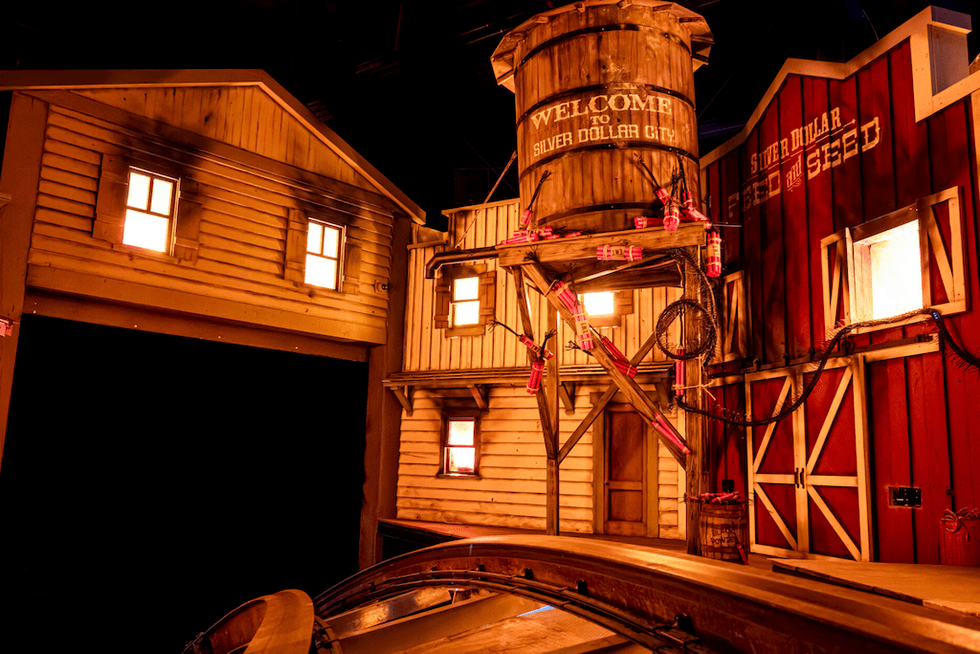
Lighting for Fire in the Hole coaster at Silver Dollar City, Missouri
Cooper points out that theme parks naturally combine both disciplines: "The reality is, theme parks are a blend of both. If you think about a dark ride, you are in a queue, which is very architectural. The ride itself might be theatrical. The gift shop you exit through brings you back to architectural retail lighting.
“At the end of the day, because we believe lighting moves people, if you think about the guest journey through an experience, from parking lot to parking lot, or entering a new land, queuing, experiencing the ride, and entering F&B or retail, we want that guest journey to be completely seamless."
The aim is to make each transition feel natural while also meeting practical requirements.
"When lighting is done well, it isn't consciously recognised by the guest. When lighting is done poorly, it is very obvious. The guest never stops to say, 'This lighting was amazing.' They live in a blissful ignorance of suspension of disbelief, enjoying an amazing attraction.
“For our clients, the objective is to create a cohesive guest experience that fulfils a specific business case. Our job is to take the guest on that journey where lighting is invisible until it needs to be expressive."
Gravilla sees this balance between practical function and immersion as central to successful attraction lighting.
"Those architectural and theatrical techniques are the tools in our toolbox to understand where it is more important to have crisp visibility because merchandise needs to be sold, versus where we need to immerse guests in colour, texture, and cueing to sell an imaginary world."
Connecting creative design with technical delivery
SPRK's integrated model bridges the gap between concept design and technical delivery.
In a fragmented delivery model, operators may commission a lighting design consultancy, then hand approved plans to separate vendors, electrical contractors, and systems integrators for procurement and installation.
"We hear from our customers all the time that aspects of their projects are siloed," Cooper says. "Design happens in a vacuum, and clients get this beautiful lighting design that they paid handsomely for.
"Then they go to budget the project and find the design is far over budget, or the business case has evolved, and the design is no longer adaptable.
“Then an integrator has to take a high-concept design that may not conform to the laws of physics and bring it into the built environment while reconciling budget. This often leaves customers disappointed, asking why issues weren't considered during design.
“It happens because it wasn't an integrated experience."
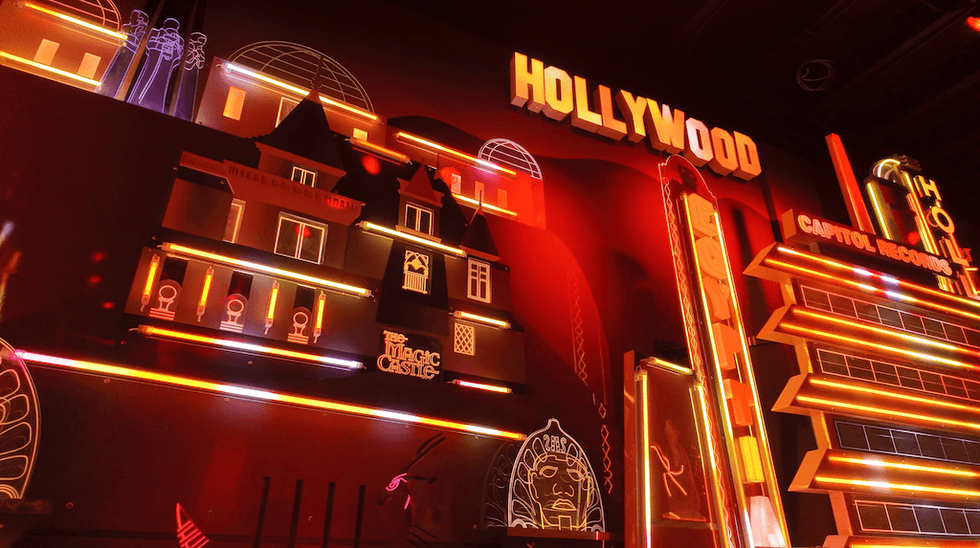
Lighting created for the Hollywood Wax Museum
SPRK combines design development, equipment procurement, installation oversight, commissioning, creative programming and long-term support, although clients can commission individual services.
"Every time you add a vendor, you add a layer of complexity, challenge, and accountability," Cooper says.
"Putting technical and creative under the same roof allows them to work together during design. The design considers physics and build reality from day one. Accountability is a high value to us.
"We want to tell a client up front that if we commit to delivering an experience for a specific dollar value, we can maintain that budget through the end of the project.
“You cannot do that without having oversight across the process."
Gravilla adds that involving creative and technical teams throughout delivery helps protect the original design intent.
"Creative and technical in lighting are two sides of the same coin. Without technical execution, concepting is just a great idea. Keeping the team that developed the concept involved throughout delivery helps preserve that original brilliant concept without unnecessary compromises.
"I work very closely with Ryan Gottlieb on the technical side. When I have a harebrained idea for a project or a lighting plot, he is one of the first people I go to for validation, asking if we can physically make it happen.
“The answer from him is very rarely no; it's 'Let me figure that out.' He is a wizard. He comes back and says, 'If we do this and this technically, we can achieve what you need for the project.'"
Lighting in action at August Wilson Center and Legoland Shanghai
Two projects illustrate SPRK's approach in contrasting settings.
In Pittsburgh, SPRK partnered with arts collective Rainbow Serpent on exterior lighting for the August Wilson African American Cultural Center, which celebrates the playwright's legacy on a downtown corridor that previously lacked exterior illumination.
"The August Wilson Center is a non-profit, and visibility in the community is very important," Cooper says. "They were situated on a dark street. As part of downtown revitalisation efforts to activate pedestrian streets, their vision was to tell August Wilson’s story visually.
“It was a cerebral concept, but what came together transformed that street in Pittsburgh and gave the centre the visibility they wanted. It entices guests to explore and learn more about August Wilson's work."
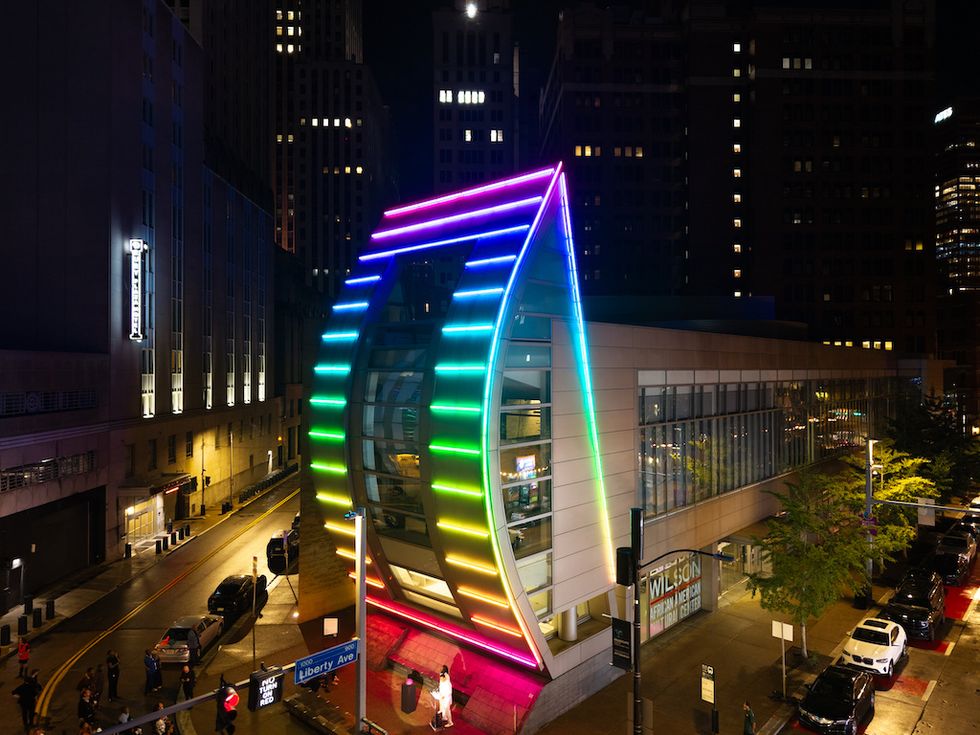
The August Wilson African American Cultural Center in Pittsburgh, Pennsylvania, at night
Image credit Joey Kennedy
SPRK programmed dynamic lighting sequences, at the direction of Rainbow Serpent, using architectural lighting to communicate the stories without audio or narration.
"Doing cool lights is fun but having a 'why'—a reason that motivates the cueing, colour, texture, look, and feel—is essential to elicit emotion," Gravilla says.
"The August Wilson Center installation is purely architectural lighting, not a show with audio or narration. If you look at it without context, it looks beautiful. But when you understand the story behind the light programming, you recognise that specific colour shifts and movement represent themes from his plays or stars in the sky.
“Having the 'why behind the what' is key to creating lighting that moves people."
At Legoland Shanghai Resort, operated by Merlin Entertainments, SPRK helped create an indoor version of Miniland, the attraction featuring detailed models of regional landmarks built from millions of Lego bricks. The project received a 2026 Thea Award for Outstanding Achievement.
"We made a world where the room goes through a full day-and-night cycle,” says Cooper. “From a technical side, it required balancing creative vision with complex control integration, including embedding micro-lighting inside the Lego models themselves.
“It engaged our technical team and creative team to activate the space fully."
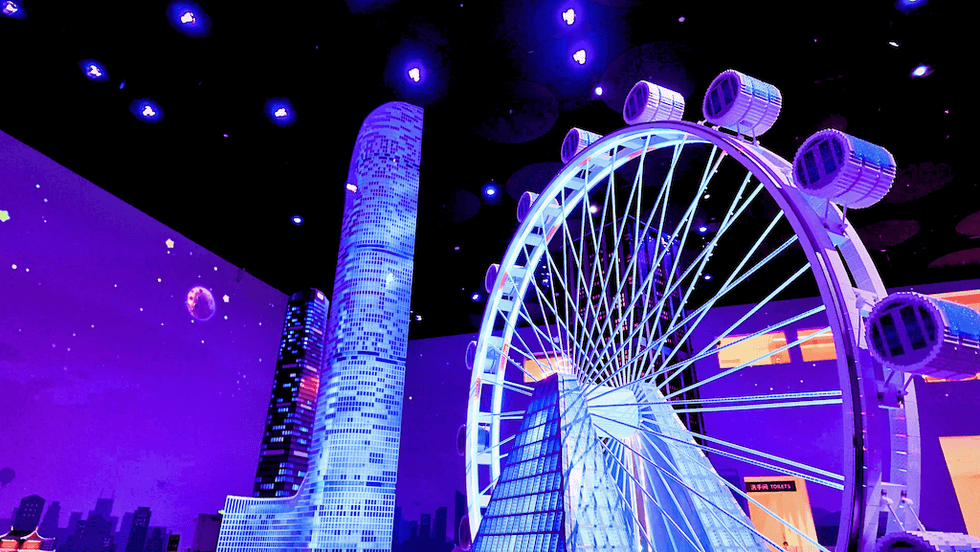
Illuminated Ferris wheel inside Legoland Shanghai's Miniland
Gravilla says the lighting changes how guests experience Miniland: “In Shanghai, it is a place where guests want to stay and dwell. The Lego models are the star of the show, and our goal was to build a realistic lighting environment that supports them.
“In this case, lighting that moves people was actually about encouraging guests to pause and stay immersed in the world."
Designing for long-term operation
With attractions often designed to operate for 15 to 20 years or more, lighting systems must be planned for long-term reliability. SPRK draws on its team's experience working for major theme park operators to address these requirements from the outset.
"A lot of our team members come from backgrounds where they received these wonderful capital projects and then had to maintain them for the next ten years," Cooper says.
"That reality informs how we design control systems. We consider the business case and operational lifecycle from early concept phases. If a ride system is expected to operate for twenty years, the lighting control architecture must match that longevity rather than being left to chance."
 Foggy Hollow at Silver Dollar City, where lighting enhances the atmosphere
Flexible control systems can also help operators create new experiences: "There is immense capacity in creative programming. Once our technical team figures out fixture placement and network topology, there is huge creative potential in how you program and activate that system.
“We have supported regional parks with seasonal activations for autumn, spring, and Christmas. Through programming flexibility, we can take an identical rig of equipment and re-program it for Christmas without moving a single fixture. Guests get two completely distinct seasonal experiences, but the operator incurs only one capital hardware spend.
“That creates compelling business case advantages."
Gravilla says: "If we design a plot and system with the right flexibility and longevity, that capability becomes repeatable for clients. Programming is where decisions and assumptions made on paper meet reality. It is where technology becomes art.”
Sustainability and connected systems
SPRK identifies energy efficiency and connectivity between lighting and show control systems as two important developments in attraction lighting.
"In Tier 1 cities in China, it is common to see entire municipal building facades activated with architectural lighting," Cooper says. "In that region, there is significant discussion about sustainability and energy. Over the next decade, as we design outdoor systems and public installations, energy consumption will be a primary question.
“Maturing LED technology, combined with advances in battery storage and renewable energy sources like solar and wind, opens new possibilities. Lower power loads and higher storage capacity mean we can start designing lighting systems that strive to be energy-neutral.
“As energy costs rise globally, sustainability will become a central part of project conversations."
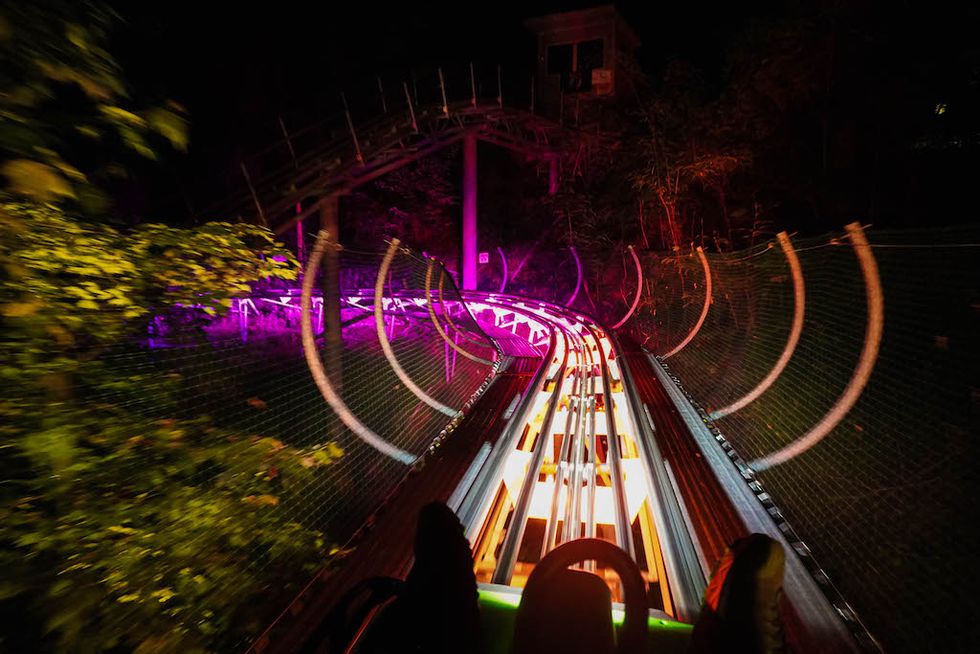
A nighttime ride on the Moonshine Mountain Coaster in Tennessee is enhanced by the lighting scheme
Connectivity is also enabling greater integration across complex resort environments: "Unified connectivity is a major development," says Gravilla.
"Having one integrated network that controls an entire venue or show allows for intricate, interactive cueing between elements that were previously siloed. In the past, architectural lighting operated separately from show control systems.
“Bringing them together into one unified system opens up vast possibilities for larger, more cohesive guest experiences."
"System connectedness changes how we support clients long-term," Cooper adds.
"We have been developing solutions to empower park operators to maintain systems efficiently post-opening, while enabling our studio to provide remote support and diagnostics from halfway around the world. Connected infrastructure facilitates a far more responsive long-term support model."
Keeping creativity and collaboration at the centre
As SPRK grows, Cooper and Gravilla say their priority is maintaining a close relationship between creative design, technical delivery, and client collaboration.
"We want to be known as a team that creates amazing experiences for guests," Cooper states. "We truly believe in lighting that moves people. But equally, my job is to create an environment where our team can do their best work, trust each other, and enjoy coming to work every day.
“We want to create a studio of exceptionally capable people who have the freedom to apply their talents fully."
Gravilla says: "Everything we do comes down to communication—communicating with each other, communicating with the client, and communicating with guests through our work.
"We want to be the collaborators of choice. We want to build lasting relationships with clients who trust us creatively and technically, allowing us to deliver something spectacular together. We want to be known as collaborative, creative, accessible, and fun to work with."