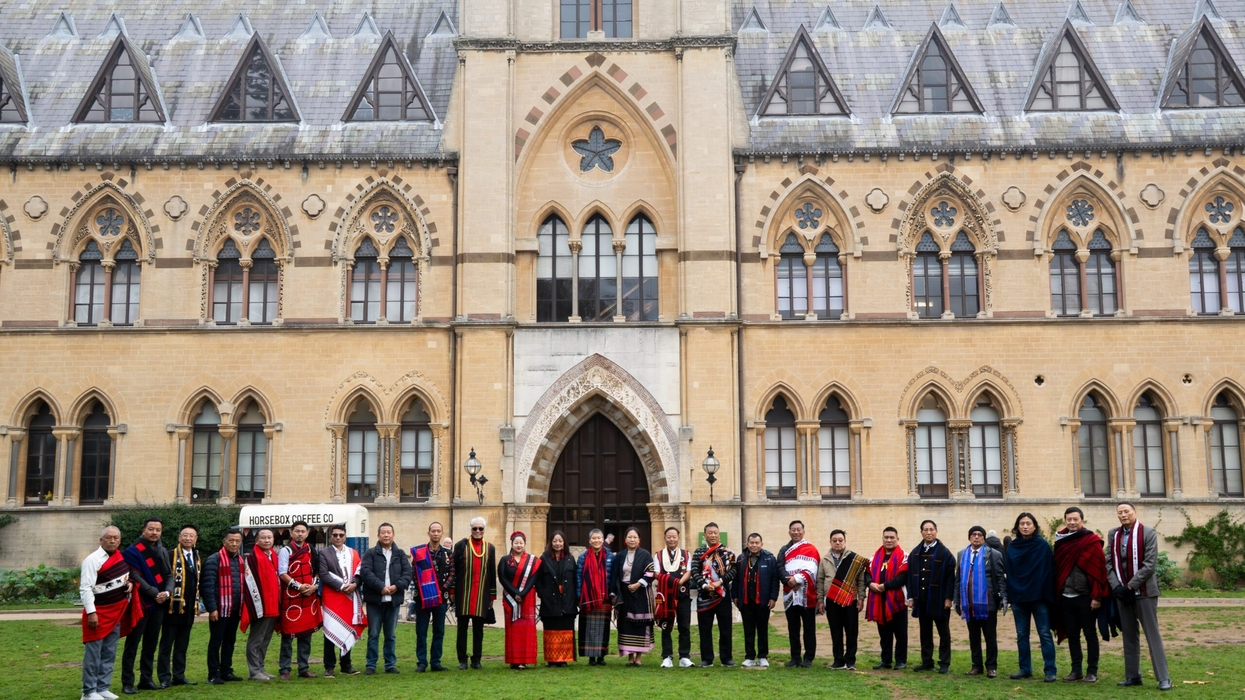

The University of Oxford's Pitt Rivers Museum has returned the ancestral remains of 39 people taken from the Naga people during British colonial rule in India.
A ceremony to mark the return of the human remains to the Naga homeland was held at the museum on Monday (9 November) and attended by a delegation of around 30 people from Nagaland.
Speaking to the BBC, Laura Van Broekhoven, director of the Pitt Rivers Museum, described the repatriation as "a historic moment that will be part of stories told to next generations".
The Pitt Rivers Museum holds the world's largest collection of Naga material, much of it gathered by colonial administrators in the early 20th century.
"A historic moment"
Among these collections are the remains of 39 Naga people, mostly skulls, held in the museum for decades and removed from public view in 2020.
Since then, the museum has worked in collaboration with Naga partners, particularly the Forum for Naga Reconciliation and its Recover, Restore and Decolonise team, to decide how the remains should be cared for and returned.
Ellen Konyak Jamir, a coordinator for Recover, Restore and Decolonise, said in a previous statement: "Our ancestral remains deserve a dignified homecoming.
"We must uphold the sacredness of human life by honouring the dead and respecting the living. While we cannot undo the past, we can learn from it."
Human remains in museums
Naga anthropologist Dolly Kikon from the University of California, Santa Cruz said the repatriation "is an act of healing, of returning sovereign decision making and reclaiming the dignity of our ancestors and the Naga people".
Earlier this year, the Manchester Museum removed from display the mummified body of an ancient Egyptian woman to respect "the wishes of the dead".
Many other institutions across the world are addressing their collections of human remains, often gathered using unethical practices and without consent.