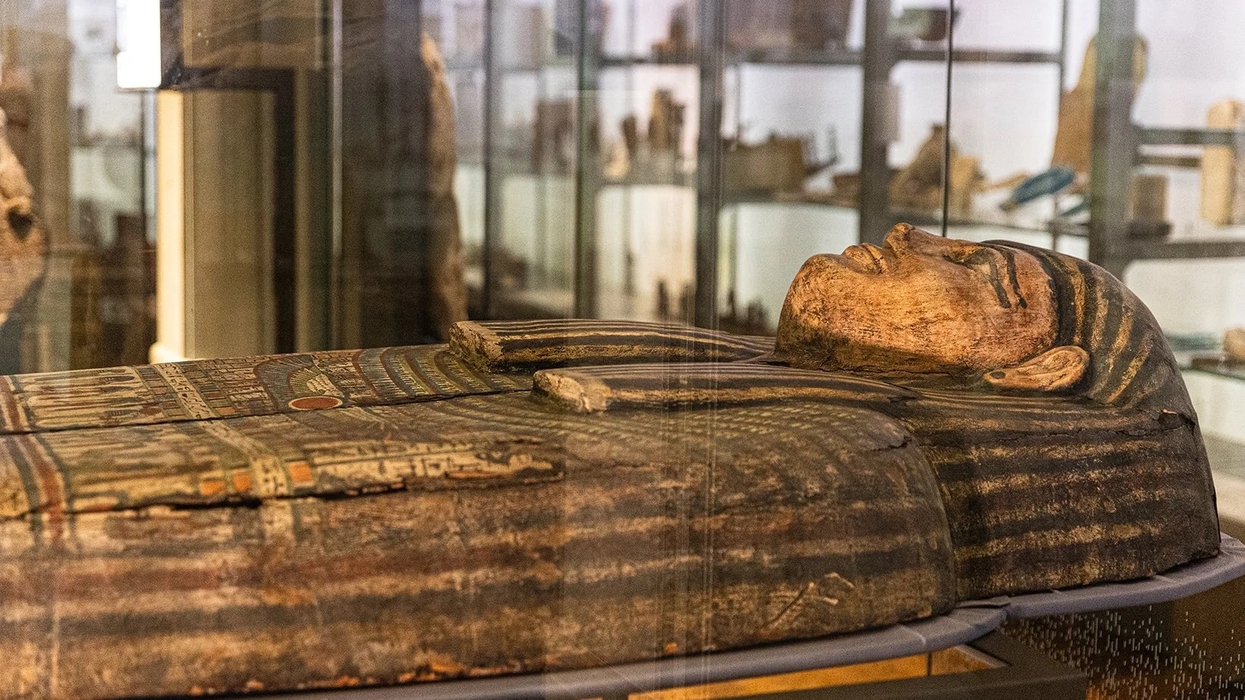

Manchester Museum has removed from display the mummified body of an ancient Egyptian woman to respect "the wishes of the dead".
The ancient Egyptian woman, named Asru, lived 2,700 years ago and has been on view in Manchester almost continuously for more than 200 years.
The decision to remove Asru from display "reflects changes in how we think about our responsibility towards ancestors, museum collections and the communities they represent", Manchester Museum said.
It added: "Before making this change, we consulted with Egyptian colleagues, members of the Egyptian diaspora and visitors to the museum, helping us to understand people’s feelings about care for mummified people.
"The decision to remove Asru from display also aligns most closely with what we understand about her own wishes."
Asru is currently in museum storage within her outer coffin as "elite Egyptians of her time expected that their mummified bodies would remain wrapped in their coffins, invisible to the living", the museum said.
Manchester Museum is yet to decide on Asru's final resting place, and is "thinking about how we better care for ancestors, in line with the wishes of the dead and of living communities".
This could mean creating a suitable resting place within the museum for Asru, or returning her to her communities of origin.
Asru's final resting place
Manchester Museum has reconsidered its display at a time when other institutions are addressing their collections of human remains, often gathered using unethical practices and without consent.
Research by one of Manchester Museum's curators, Campbell Price, previously found that Asru's sarcophagus was acquired by Robert and William Garnett, the sons of a former trader in enslaved African people, in the 19th century.
Until now, Asru's mummified body had been on display in the museum's Egypt and Sudan gallery, which was temporarily closed this month to remove her from public display.