
Scene2 Ltd, a leading UK design-and-build company, recognises that in immersive design and production, the best ideas rarely emerge in isolation. Instead, they are shaped through conversation, explored through making, and reinforced when the right expertise is introduced early enough to make a difference.
Yet much of the industry still operates through a model that keeps specialists apart until late in the process, says Susan Walker, founder of Scene2:
"Agencies, designers, fabricators, production managers and technical teams are often asked to compete separately, respond quickly and solve complex creative and practical challenges within increasingly compressed timelines."
The result is familiar to those in experiential design, themed environments, or live brand activations.
"A bold creative concept is developed, visualised and pitched. Then, once the project moves towards delivery, the realities of time, budget, materials, logistics and sustainability begin to reshape it. Ambition is reduced. Detail is removed. Sustainable choices become harder to integrate."
 Projects like Monopoly Lifesized by The Path Entertainment Group require all teams to work hand-in-hand to bring the vision to lifeImage courtesy of Monopoly Lifesized/The Path Entertainment Group
The finished experience may still be successful, but it can become an echo of the original idea rather than its fullest expression.
"This is not a failure of talent," adds Walker.
"The immersive sector is rich with creative, technical and production expertise. It is a question of process. As the industry responds to growing expectations around sustainability, circularity and long-term value, the way projects are commissioned and developed deserves closer attention."
The open studio approach
Competition plays a key role in creative industries by setting standards, encouraging innovation, and offering client choice. However, it may not be ideal for complex immersive projects that require deep collaboration among design, fabrication, technical delivery, and operation.
The traditional pitch process can carry hidden environmental and human costs. Teams spend weeks on creative work, costing, sampling, visits, and technical planning, but only one route advances. The rest is discarded despite the energy, materials, and expertise invested.
"This waste is rarely discussed as part of the sustainability conversation, but it should be," says Walker.
"If the industry is serious about reducing its environmental impact, sustainability cannot begin only when a project enters production. It needs to begin with the structure of the process itself."
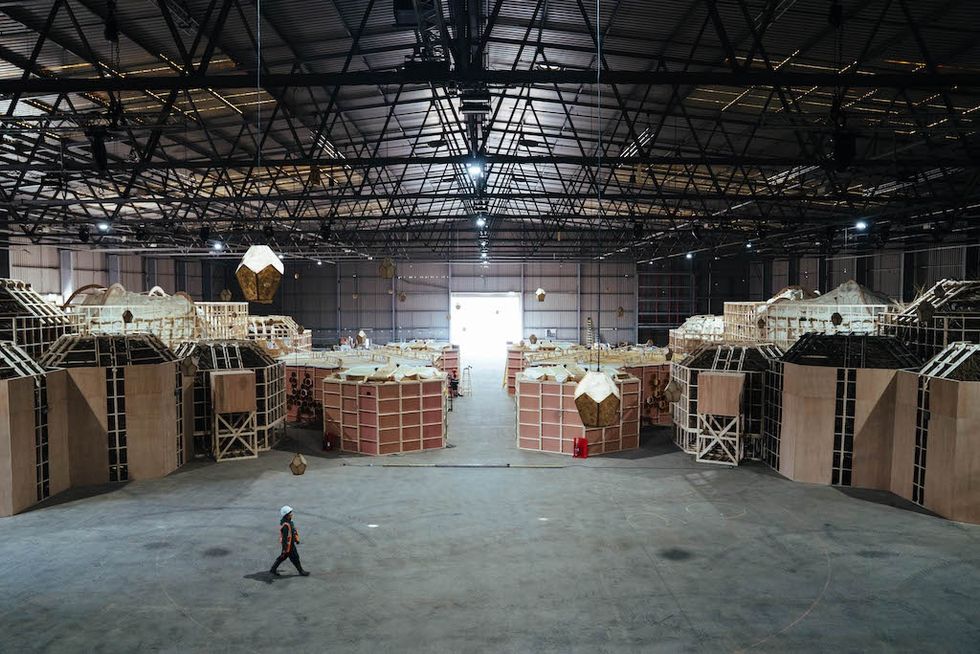 Scene2 working on the set build for Storehouse Immersive, a complex project from Sage & Jester, spread across 9,000 square metres of warehouse space in Deptford, LondonImage credit Helen Murray, courtesy of Sage & Jester
Instead of involving production expertise only after concept approval, the open studio approach brings specialists in early on in creative discussions.
For immersive work, this can significantly change the outcome, says Walker:
"When creative designers, scenic fabricators, production managers, technical specialists and venue teams shape an idea together from the beginning, the project develops with a more complete understanding of what is possible, practical and sustainable."
A fabricator’s knowledge of materials influences design, while a production manager’s understanding of sequencing and installation enables efficiency. A venue specialist’s awareness of audience flow, access, and operational needs shapes the guest journey early on.
These inputs enhance creativity.
"At Scene2, this collaborative way of working has become increasingly important. The most successful projects are often those where design and production are not treated as separate stages, but as connected parts of the same creative process."
Sustainability and attention to detail
Sustainability is most powerful when built into a project from the outset, rather than introduced later as a constraint. A request to reduce single-use materials, find lower-carbon options, reuse elements, or consider post-experience disposal is important but more effective if included in the original design brief.
Early collaboration influences creative direction. It also allows fabricators and designers to explore alternatives rather than rely on familiar methods under pressure.
"This shift requires more than good intentions," says Walker. "It needs longer lead times, shared knowledge and a willingness to bring different forms of expertise into the room early. It also requires clients to see sustainability not as an add-on, but as a structural principle that shapes the whole project."
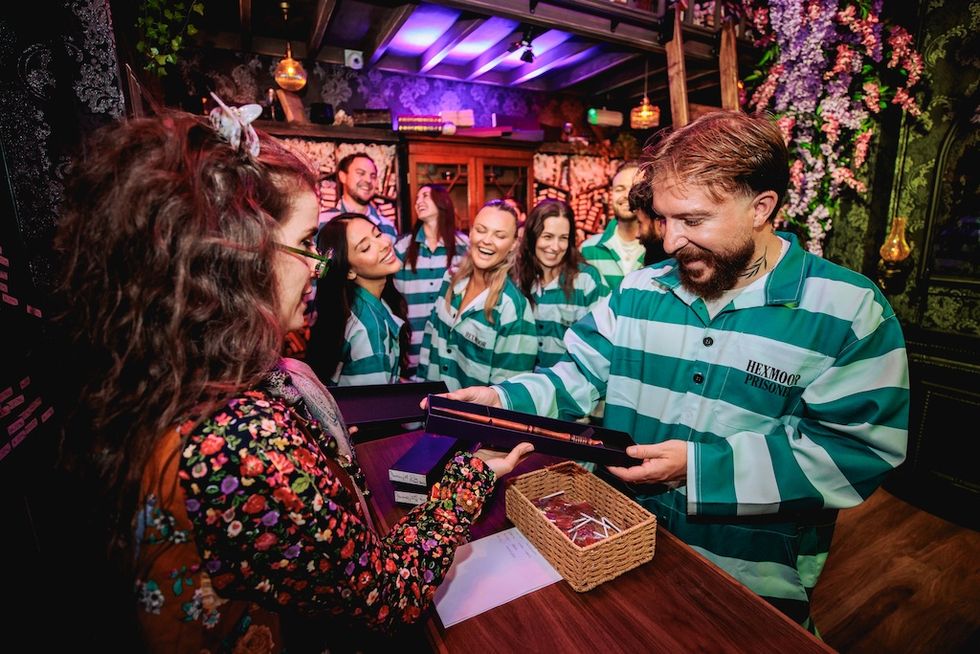 The success of immersive experiences, like Hexmoor: Wizarding Prison in London, by Inventive Productions, relies on attention to detail from all of the project teamsImage courtesy of Hexmoor: Wizarding Prison/Inventive Productions
Immersive experiences rely on detail. They must work for audiences, operators, performers, technical teams, and venues; withstand use; support storytelling; and remain coherent from start to finish.
That level of integration takes time, requiring testing, revision, and dialogue between imagination and making. When fabrication teams are engaged late, they become reactive, solving problems that could be avoided or simplifying ideas better developed with earlier input.
"A collaborative model creates space for a better exchange between creative intent and production reality. Design ambition can challenge fabrication practice, while fabrication knowledge can make the design stronger, more sustainable and more achievable."
A more intelligent form of collaboration
The future of immersive design often centres on technology, with new tools and interaction formats shaping the sector. But a key question is how teams collaborate. Ambitious experiences require diverse skills.
"The opportunity is to build project teams that are more open, more transparent and better aligned from the outset," explains Walker. "This does not mean removing competition altogether. It means recognising when collaboration will produce better work than a conventional competitive process."
For clients, this requires a mindset shift. The focus moves from which company pitches hardest to which expertise yields the best result. It involves valuing the process equally with the presentation and recognising that early collaboration can safeguard ambition.
The immersive industry exists to create experiences audiences remember. To do so well, the connection between concept and construction needs to be strong. The narrative, materials, structure, technology, and guest journey should feel like parts of a single, cohesive idea.
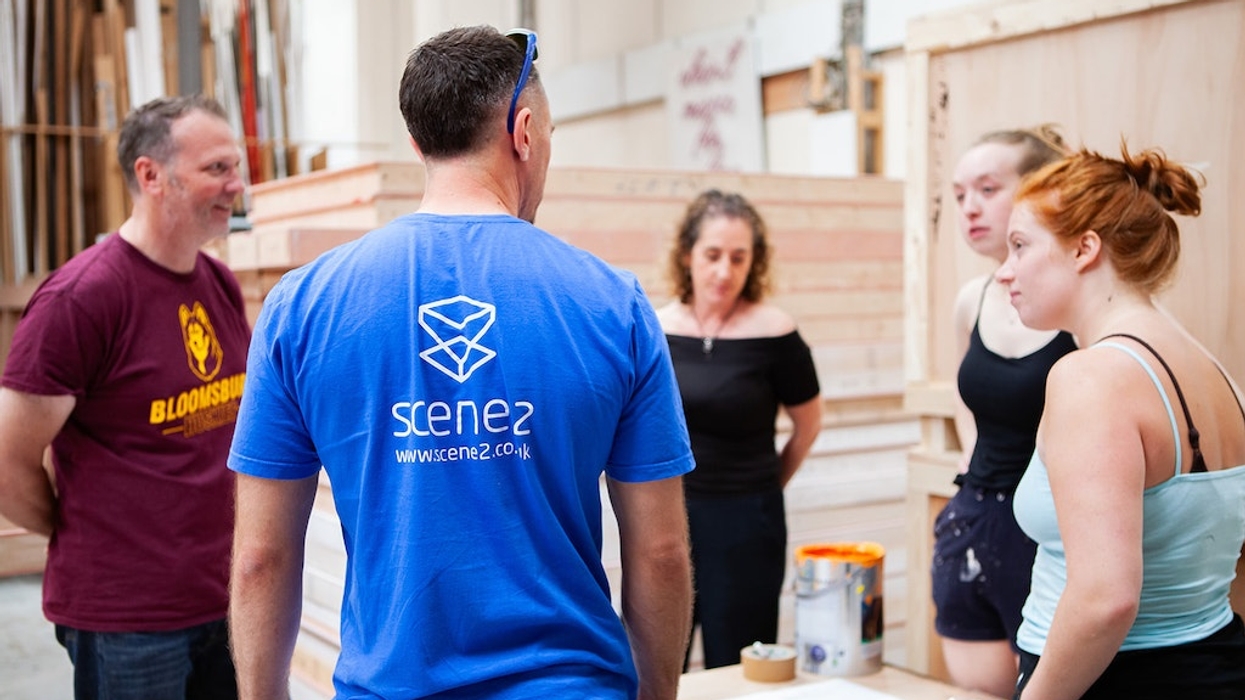
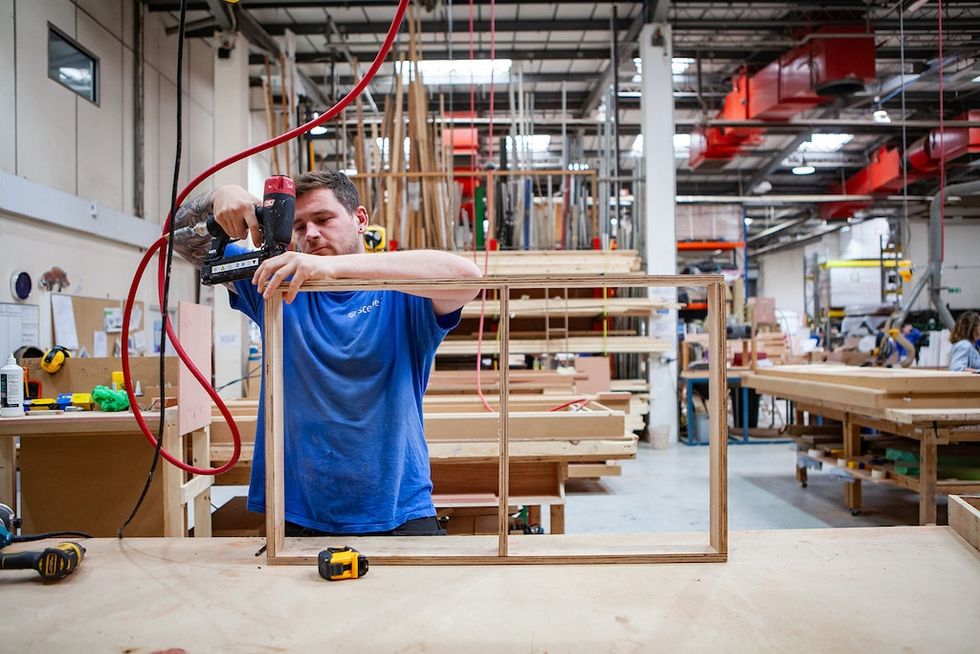 Scene2 takes a collaborative, open studio approach to its work, from design to constructionImage courtesy of Scene2
Coherence is hard with siloed teams but improves when designers, makers, and specialists share knowledge early, challenge each other constructively, and develop a shared understanding of the project’s goals.
"The open studio model offers a way forward. It supports better design, more sustainable decision-making, and more efficient use of time, skills, and resources," adds Walker. "It also reflects the reality of immersive work itself: the best experiences are collaborative by nature.
"As the sector continues to evolve, the most important innovation may not be a new technology or material. It may be a new way of working. One that recognises that sharing expertise is not a weakness, but a route to stronger, smarter and more sustainable creative production."
See also: Raising the curtain for a new era of immersive experiences with Scene2