
In the North American theme park industry, bigger has increasingly meant better. Mega-resorts operated by companies like Disney and Universal dominate headlines with billion-dollar expansions, fully immersive lands, and annual attendance numbers in the tens of millions.
By contrast, regional park operators must constantly decide how to allocate limited capital across dozens of properties in a wide variety of markets, each with its own unique issues that may need addressing.
For Six Flags Entertainment Corporation, which merged two venerable theme park empires (Cedar Fair and Six Flags), each with a unique collection of small-to-medium parks under its umbrella, this has become a major issue.
For the new, united management boardroom, the question has become unavoidable: Is it better to operate a large number of smaller parks or to concentrate resources on fewer, higher-performing destinations?
A key question for the new Six Flags era
In May 2025, Six Flags dropped a bombshell of an announcement that Six Flags America, just outside Washington, D.C., would be closing forever at the end of the park’s 2025 season.
Essentially, this was confirmation of early post-merger talk from the year before that the giant theme park chain might look to streamline its operations and shed a few underperforming parks.
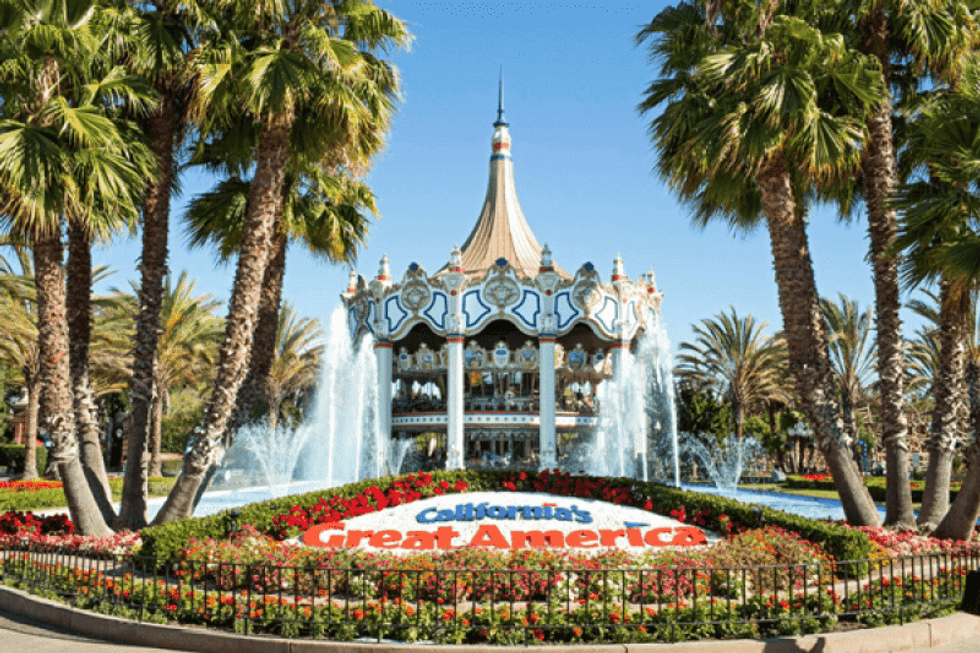
Cedar Fair had actually started this process, prior to the merger, when that chain had accepted an offer from Prologis to purchase the site of California’s Great America, with the park being allowed to operate for a few more seasons before the company would wind things down and remove the rides for good.
While an official closing date has not been set, it was suggested that the 2027 season would likely be that park’s last.
Following the closure of Six Flags America in late 2025, Six Flags Entertainment confirmed that it would look to further streamline the company if and when opportunities arose.
Then, on 5 March 2026, Six Flags confirmed it was entering into a deal to sell seven of its smaller park properties to EPR Properties for a reported $331 million in cash, to be used to reduce debt and further streamline its operations.
The deal would see three theme parks from each legacy chain shed, plus one acquired waterpark: La Ronde (Canada), Worlds of Fun (Missouri), Six Flags St. Louis (Missouri), Valleyfair (Minnesota), Michigan’s Adventure (Michigan), Schlitterbahn Galveston (Texas) and Six Flags The Great Escape & Lodge (New York).
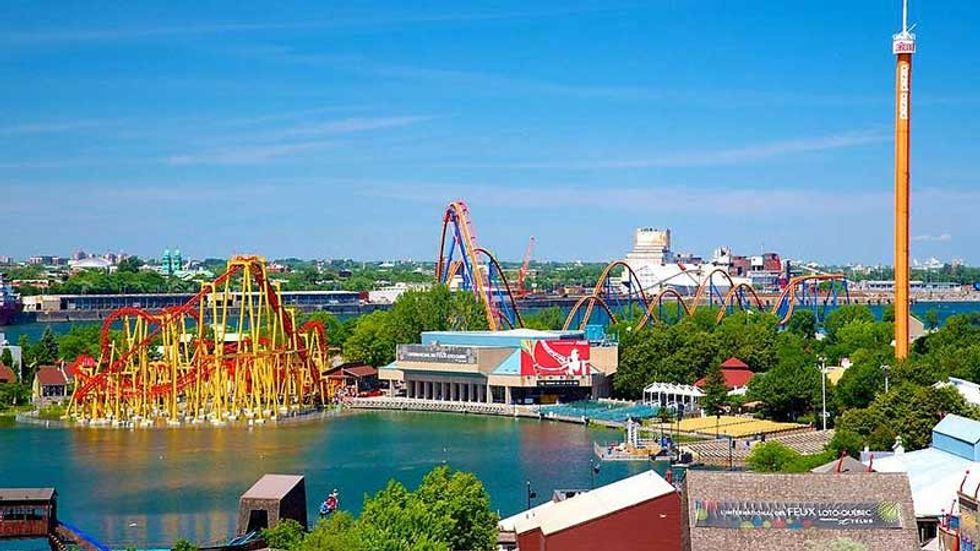 La Ronde
EPR has announced that six of the seven properties would be managed by a new Enchanted Parks chain brand, while La Ronde in Canada would be managed by a new La Ronde Operations, LLC, spearheaded by Premier Parks CEO Kieren Burke.
It would be fair to say that each of these parks was on the smaller end of the scale compared to others within the new Six Flags Entertainment empire.
However, now parks such as Six Flags St. Louis, Worlds of Fun, and Valleyfair will suddenly find themselves the “bigger fish” in their new, smaller pond when it comes to their importance to the new Enchanted Parks chain.
Hopefully, they will benefit from renewed CapEx budgets for future expansions as well to stay competitive.
Will Six Flags be better off?
So the question is, will Six Flags be better off having shed these smaller parks? According to estimates, the seven parks it is selling collectively were responsible for about 4.5 million visitors each year and generated roughly $260 million in revenue. So, clearly, the parks were still profitable…and yet Six Flags chose to sell them.
The reason may also have more to do with the current state of the world and possibly answer the question of whether smaller regional parks are still viable in the modern theme park economy.
So if some smaller regional parks are unable to grow to meet modern guest expectations, then are they holding the rest of the company back?
To better answer this question, it may be best to compare the parks that have been sold with those considered the top-performing parks in the Six Flags chain.
According to the 2024 Global Experience Index report, the most attended parks in the chain that year would be Cedar Point (3.7 million), Kings Island (3.465 million), Six Flags Magic Mountain (3.317 million), Canada’s Wonderland (3.264 million)and Six Flags Great America (3.045 million).
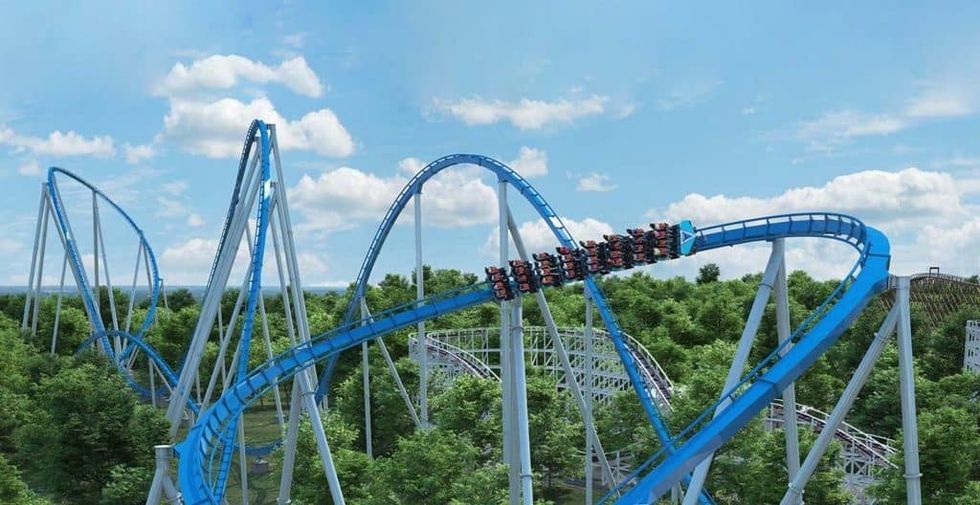 King's Island
Compared to the reported combined attendance of 4.5 million for all 7 parks sold, it is clear there is a world of difference in how these parks are performing.
This is to say nothing of comparing the attendance at regional parks like these to global industry giants like Disney and Universal, where most of their individual parks regularly draw 10 to 15 million guests annually.
Meanwhile, the smallest parks within Six Flags are likely to bring in fewer than a million guests a year.
Historically, most of these parks were built as regional parks, designed to lure guests from nearby markets, attracting visitors from a 2- to 3-hour drive away. These guests would then purchase single-day tickets, while those who lived closer were more inclined to purchase season passes and visit several times each season.
The hope was to attract guests to return next season to try the latest attraction or to lure season passholders to renew their passes by teasing that something new was on the way. While this strategy has worked for decades for most parks, the industry's economics have been changing.
Where to reinvest?
Today, the world's top theme parks will invest in multi-million-dollar expansion plans, new attractions, and highly themed environments to keep guests coming back.
The investment just to build a new world-class roller coaster these days often starts in the $20-30 million range and can climb much higher if extensive theming is involved, as with the rides you might find at Universal or Disney parks.
Meanwhile, the old Cedar Fair and Six Flags business model relied more heavily on high attendance to account for about half of a park’s revenue, with extensive in-park spending on food, merchandise and more to make up the other half.
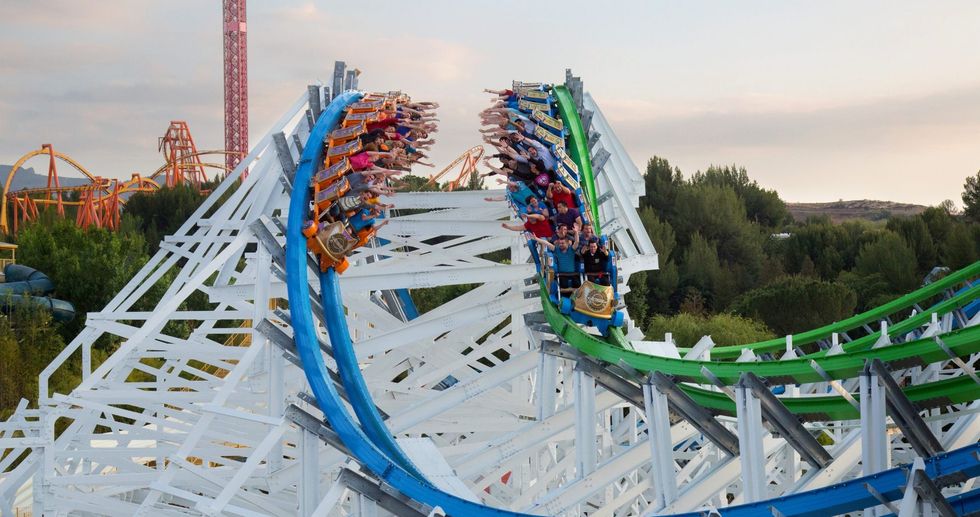 Six Flags Magic Mountain
Given the high cost of adding new attractions these days, it has become much harder for smaller parks, with lower attendance, to keep up with their bigger siblings within some of these chains. This has caused a tremendous performance gap to form between the top- and bottom-tier parks within theme park chains like Six Flags.
This has resulted in a system in which profits from the larger and better-performing parks are not always invested in their upkeep each season.
Instead, the profits of the better-performing parks are being siphoned off to help the smaller parks “keep up” by funding new attractions, much-needed infrastructure upgrades, and maintenance projects they might not be able to afford if left to operate on their own.
In essence, that is both the strength and weakness of the theme park chain system.
A strategic pivot
So in a world where the rapidly expanding performance divide is creating a “the rich are getting richer” aspect, smaller parks within such a system will likely continue to struggle even more to keep up with their larger siblings.
The resulting change we are now seeing at Six Flags is likely the start of a more strategic pivot, indicating a renewed focus on the bigger, better-performing parks. This will also likely result in future investment plans to upgrade and transform its prime destinations into a new “destination”- style attraction, rather than just being seen as a simple regional attraction.
While the legacy Six Flags parks seemed to struggle with this concept, the former Cedar Fair chain had already been seeking to embrace it over the past decade.
For example, it had already re-assessed its own properties, identified parks in markets already drawing large numbers of family visitors, and seen rising attendance levels.
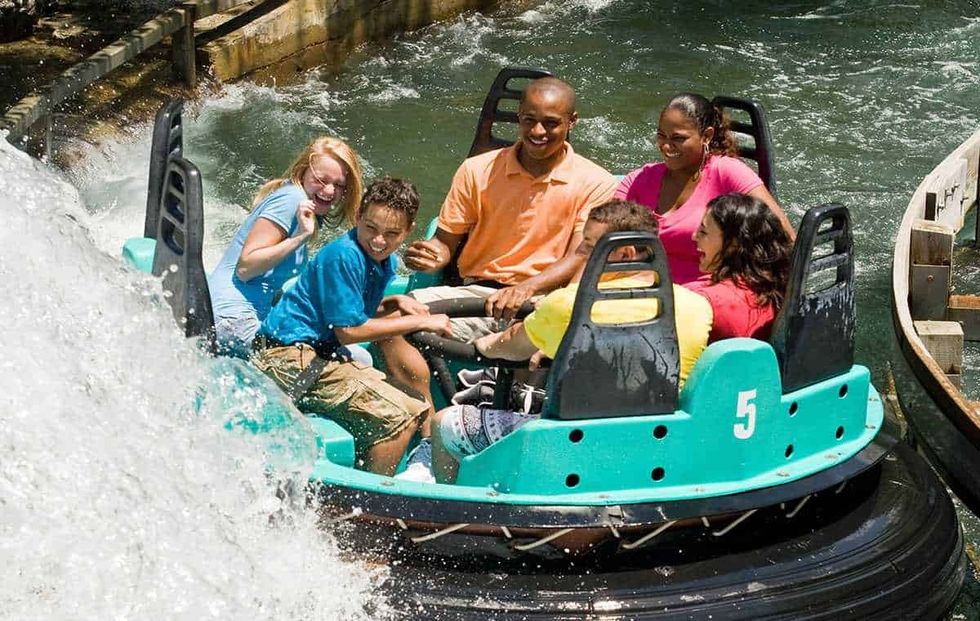 Carowinds
The two parks identified by Cedar Fair management as ones it felt could be pushed to the next level were Carowinds in Charlotte, North Carolina, and Canada’s Wonderland in Ontario.
Both were located in markets that were not only prime for expansion but also featured large water parks and had available property to expand the parks and add some world-class new attractions that would gain worldwide attention, such as Fury 325 and Yukon Striker.
These parks would also be able to add a hotel, elevating them to a more resort-like destination status. (Note: While Carowinds did add a hotel, a proposed hotel for Canada’s Wonderland was put on hold during the pandemic, and the project has not been restarted.)
A new chapter
With this new pivot, I believe Six Flags will be focused not on operating the largest number of regional theme parks going forward, but instead, it should be refocusing efforts on properties that can offer a quality guest experience, properties that are profitable, and properties that they believe will show the best long-term growth potential for this new vision.
In other words, the so-called “flagship parks” will become more important than ever to the future success of the Six Flags Entertainment chain.
However, this does not mean we will see Six Flags attempt to take on the likes of Disney or Universal. Instead, it should focus on transforming select former regional parks into new small destination-style attractions, able not only to draw from their local market but also to offer a quality experience that draws in guests from much further away.
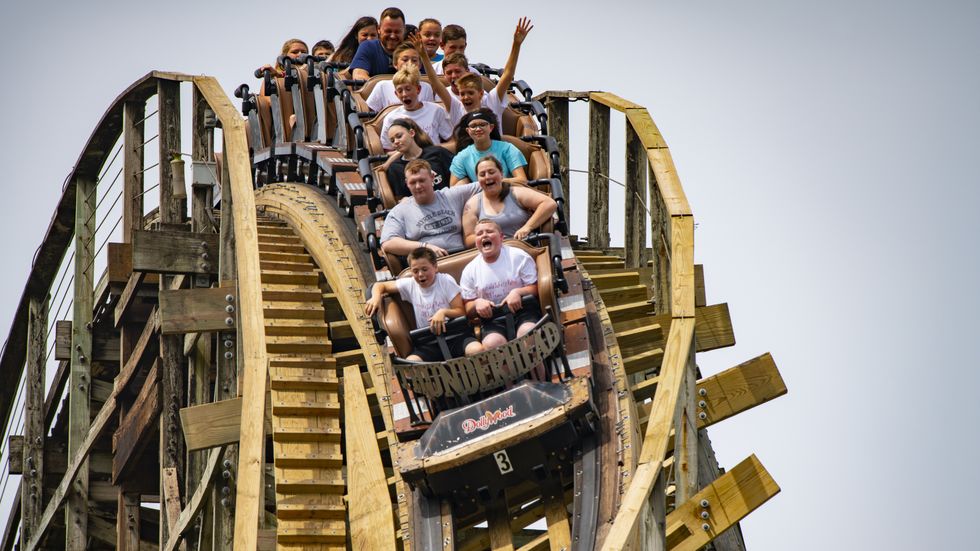 Dollywood
A great example of this is Herschend’s Dollywood and Silver Dollar City properties, where their respective markets (Pigeon Forge, Tennessee and Branson, Missouri) have long been able to attract family travellers by offering their own mid-American tourist strongholds.
For many mid-American families who may not be able to afford trips to California or Florida each year, they have established themselves as the annual family vacation spot for many within their respective regions.
So now let's take a closer look at each of the seven properties that Six Flags has opted to sell.
Schlitterbahn Galveston: estimated annual attendance 500,000 to 700,000
The smallest of all the properties sold, this was an attempt by the original owners of the world-famous Schlitterbahn waterpark in New Braunfels, Texas, to expand.
Located in Galveston, outside the Houston, Texas area, this expansion felt more like a traditional waterpark experience and lacked the quaint, home-built-in-the-wilderness feeling of the original park. This is also partially due to the fact that a second part of this park was built indoors to allow for operations in the colder months.
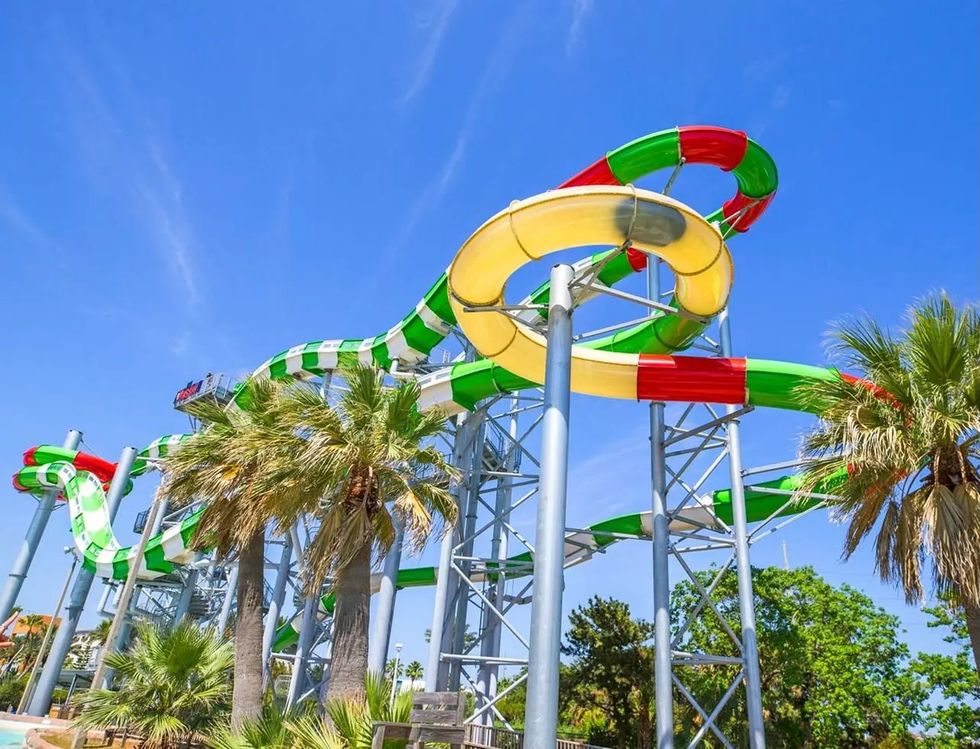 Schlitterbahn Galveston
Unfortunately, Schlitterbahn Galveston does not live up to the reputation of the original, nor does it generate anywhere near that kind of revenue or attendance.
While the new owners can benefit from the Schlitterbahn brand name for the rest of this season, trademark filings show that it will be known as Enchanted Parks Galveston going forward, unless they come up with a more jazzy-sounding name by then.
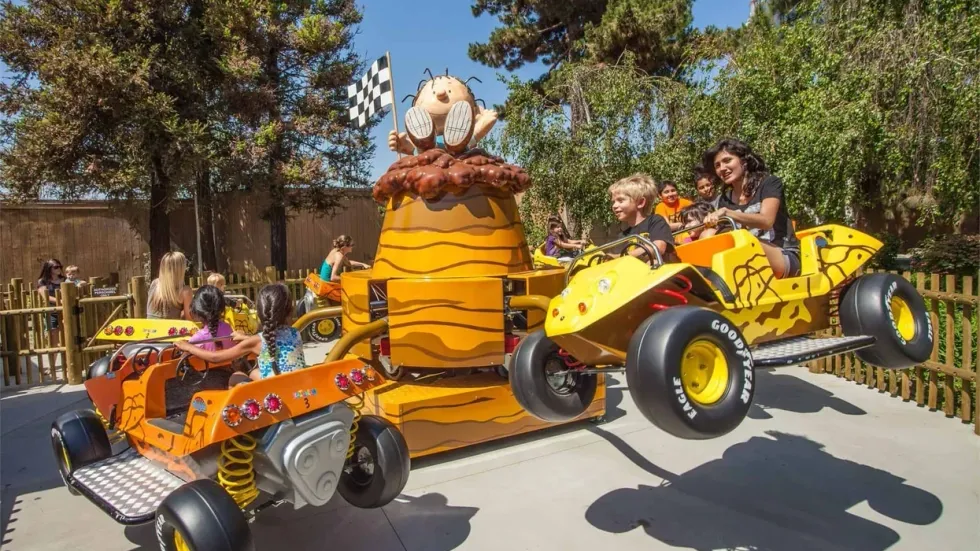
Michigan’s Adventure: estimated annual attendance 800,000 to 1 million
A very small park from the legacy Cedar Fair chain.
Many will wonder to this day what prompted the original Cedar Fair chain to purchase the park in 2001, long before Cedar Fair purchased the Paramount Parks chain in 2006. Even in 2001, Michigan’s Adventure felt like it was in a different class compared to Cedar Fair’s mega-star parks like Cedar Point and Knott’s Berry Farm.
 Michigan’s Adventure
With all that in mind, there is nothing wrong with the park, which has been reported as profitable year after year with minimal CapEx, and thus has kept debt levels very low.
While this goldfish of a park typically got lost in the shuffle over the years, it could be a very fine property going forward under new owners.
The Great Escape & Lodge: estimated annual attendance 1 to 1.2 million
The Great Escape has suffered from a bit of an identity crisis over the years.
The park was purchased by Premier Parks in 1996, which later purchased Six Flags itself in 1998. At the time, Premier Parks opted to rebrand a number of their own Premier Parks as new Six Flags-branded parks. This included renaming Adventure World to Six Flags America and Darien Lake to Six Flags Darien Lake in 1999.
 The Great Escape
 Yet The Great Escape retained its own name for many years. It didn’t adopt the Six Flags branding until 2019, when it became Six Flags Escape. Much like Cedar Fair’s relationship with Michigan’s Adventure, the park was always more of a regional darling that mostly went unnoticed by the rest of the chain.
While major capital expenses were kept to a minimum, the park was reported as being able to keep debt levels low and attendance fairly regular. It did benefit in one major way, however, when the chain invested in constructing a small indoor water park and hotel, allowing it to remain in operation even in colder months.
La Ronde: estimated annual attendance: 900,000 to 1.1 million
This park is somewhat of a unique experiment for Six Flags. The property was originally created by the city of Montreal, Canada, for the Expo 67 world’s fair, and Six Flags now operates it as a theme park under contract with the city.
Due to these restrictions, La Ronde's expansion has been fairly minimal over the years, which aligns with its lower attendance figures.
It also suffers from aging infrastructure, which has been reflected in several stories over the years of locals outraged when older attractions that date back to the Expo days, such as the La Spirale observation tower, are closed and subject to removal.
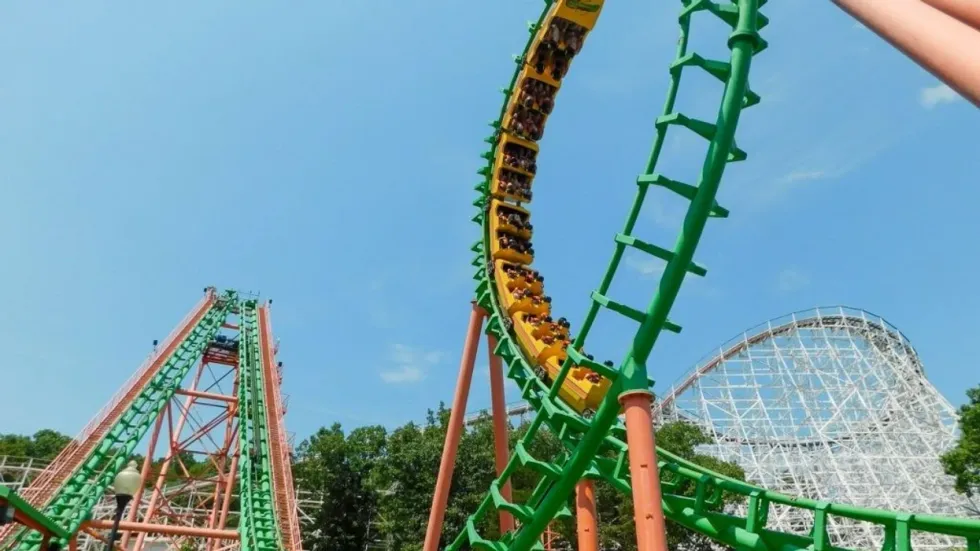
Six Flags St. Louis: estimated annual attendance: 1.2 to 1.3 million
Originally known as Six Flags Mid-America, this is one of the original three Six Flags parks built by the chain’s founders, along with Six Flags over Georgia and the original park, Six Flags over Texas. Every other Six Flags park that followed was actually built by someone else and purchased by the growing regional theme park chain over the years.
 Six Flags St. Louis
So, as one of the original parks, it would have been considered one of the flagship parks in the chain. However, over the years, the St. Louis park has struggled to maintain attendance, profitability and relevance within today’s growing chain of parks that it help found.
The St. Louis market also has a much smaller population (2.8 million) than the substantially larger populations in the Dallas/Fort Worth/Arlington area of Texas (8.2 million) or the greater Atlanta, Georgia area (6.4 million).
Valleyfair: estimated annual attendance: 900,000 to 1.1 million
Valleyfair quite literally represents the “Fair” in Cedar Fair, as one of the two original founding parks of the chain, along with Ohio’s Cedar Point. It has been said that the park’s attendance levels were much higher but have been dwindling over the past decade or two.
Located in Minnesota, Valleyfair serves the Minneapolis-St. Paul region, where the so-called Twin Cities are said to have a population of around 3.76 million.
 Valleyfair
 Despite this, Valleyfair faces a lot of competition for leisure time within the metropolitan areas, including the world-famous Mall of America, which offers an indoor theme park, Nickelodeon Universe, open year-round.
Worlds of Fun: estimated annual attendance: 1.2 to 1.4 million
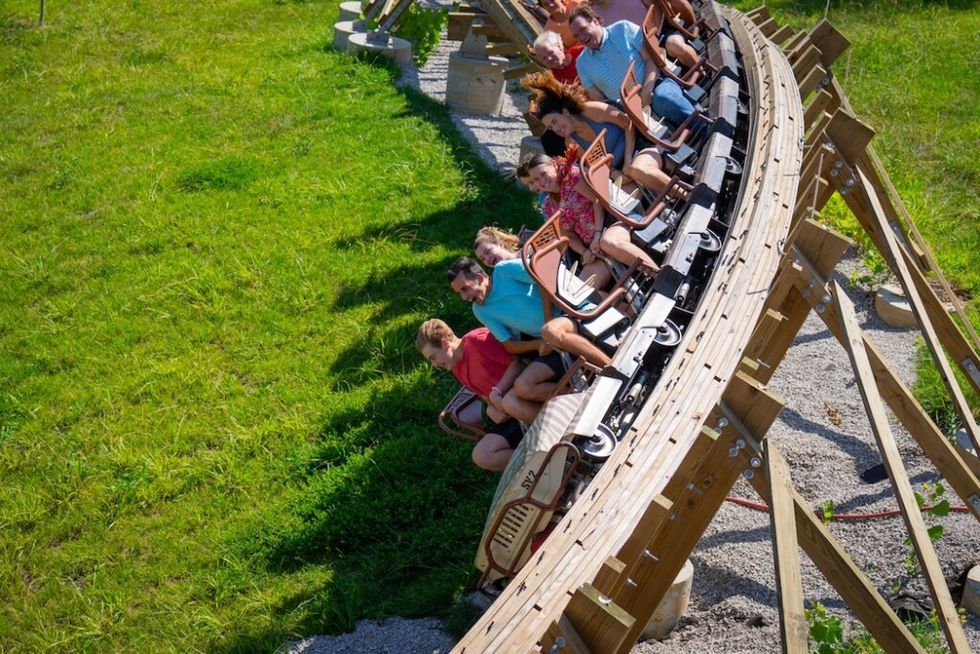
Of all the parks on the list, I found this one the most surprising, as traditionally the park has been a strong performer and one that Cedar Fair was not afraid to invest substantial CapEx in when new and impressive rides were called for. This includes the addition of the new Zambezi Zinger roller coaster to the park for the 2023 season.
 Zambezi Zinger
Worlds of Fun also sits on a large plot of land shared with the popular Oceans of Fun waterpark. However, it also seems that attendance has been in a steady decline over the past decade or more, rumored to have dropped below the 1 million mark on several occasions.
Falling in line with nearby St. Louis, the Kansas City area also features a relatively small population base of about 2.2 million. Though the city is reported to be seeing steady growth, it falls well behind the larger population levels surrounding some of the chain’s larger parks.
More parks to be sold?
If you look at the locations of these parks on a map, there is some variety.
Yet it also seems clear that Six Flags was willing to entirely vacate its parks located along the middle of the continent: Valleyfair, Six Flags St. Louis, Worlds of Fun, along with Michigan’s Adventure to the east of Valleyfair, as well as getting rid of its two most North-Eastern parks (La Ronde and The Great Escape).
Clearly, the question for Six Flags is no longer just about how many parks it can operate, but rather about which parks and market locations it chooses to shape the future of the brand.
In an industry where scale and spectacle dominate, the future of Six Flags will also depend on refocusing its resources where crowds (and profits) are expected to be largest.
It is also worth mentioning that Six Flags may still not be done shedding parks. It currently operates a number of properties for another owner.
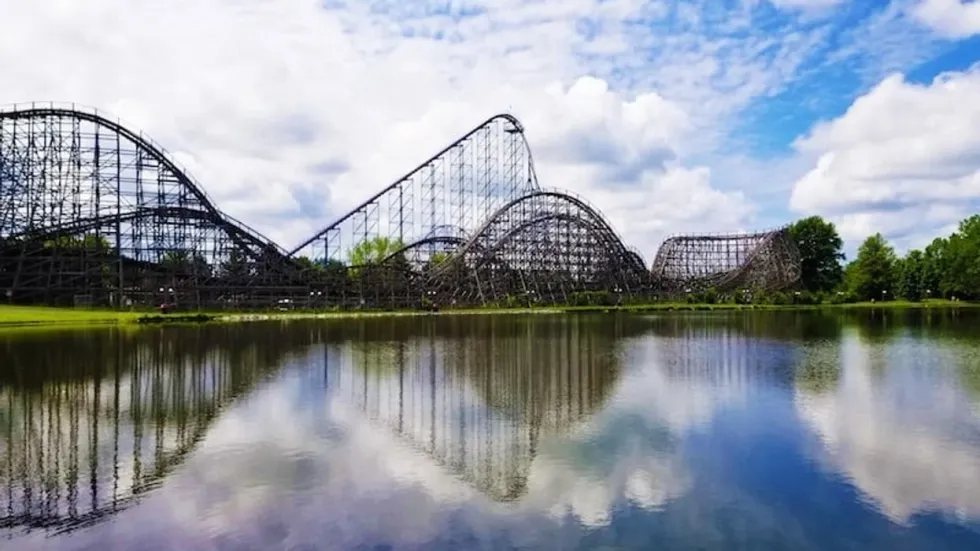 Six Flags Darien Lake
These parks are also on the smaller scale of things, such as Frontier City or Six Flags Darien Lake, and by no strange coincidence, many of these parks are also actually owned by EPR Properties, which means that virtually overnight, as current management contracts come to an end, these parks could also find themselves on the outside of the Six Flags empire.
When looking at the bigger picture, this also seems to mark the end of the era where virtually every major metropolitan region could say that it had its own Six Flags or Cedar Fair theme park.
While the empire may be shrinking, the parks that remain could become bigger and stronger than ever.