As visitor attractions compete with increasingly sophisticated digital entertainment, the pressure to deliver high-impact, immersive experiences has intensified.
Yet across the sector, a persistent gap remains between creative ambition and technical execution. Concepts are often developed in isolation, with feasibility considered later, leading to escalating costs, redesigns, and diluted guest experiences.
XOrdinary, a UK-based creative studio, addresses this issue by integrating creative and technical development from the outset of a project. The company combines creative design with advanced technology to deliver immersive experiences for theme parks and visitor attractions.
It is led by directors Mark Rivkin and Lorna Jones and builds on the expertise of parent company Crucial FX.
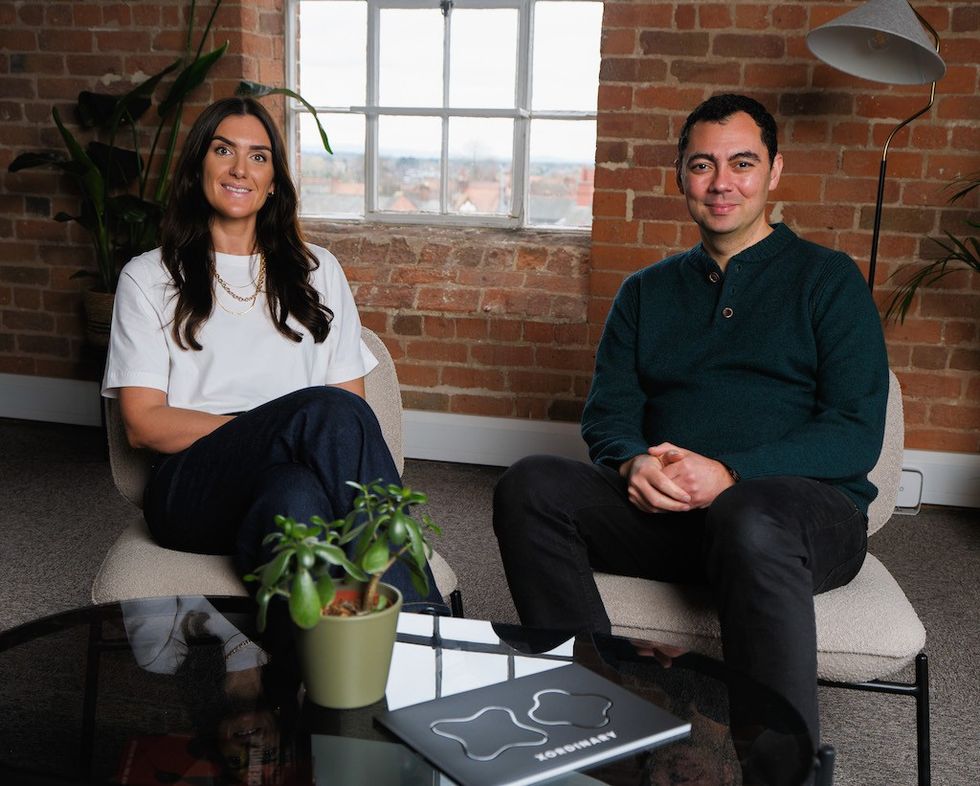 Lorna Jones and Mark Rivkin
XOrdinary describes its role as creating and delivering complete guest experiences, rather than simply supplying technology. Rivkin and Jones speak to blooloop about the studio's formation, their approach to creative and technical collaboration, and selected projects that highlight the company’s methodology.
Building one-off experiences
While XOrdinary is a new name in the theme park sector, the team behind it has a pedigree spanning over 15 years of high-stakes delivery. The studio is the evolution of Crucial FX, a company that has delivered large-scale live productions and immersive installations for global brands like Apple, Nike, and Pepsi.
Crucial FX’s expertise is in high-end, bespoke technical innovation, creating custom, tech-led brand experiences. Its work spans interactive installations, immersive games, VR/AR, real-time tracking, and large-scale projection shows.
“Almost every project we’ve worked on involves a bespoke technical build, often developed through our innovation lab, to create genuinely one-off experiences,” says Jones.
This commitment to delivering "right first time" projects in the fast-paced world of live broadcast and brand activation provided the foundation for XOrdinary.
For Rivkin, branching into the visitor attraction sector felt like a natural step, inspired by a strong desire to bring the company’s no-compromise mindset to permanent installations:
"I founded Crucial FX with a simple belief, which is that taking the best creative thinking and combining that with world-class technology, without limiting either of those things, usually leads to better guest experiences,” he says.
“Over the past 15 years, we've delivered immersive attractions, permanent installations, product launches and live events at the world's highest level. And during that, we've learned how to make ambitious ideas work first time.
“Working in some of those live arenas has given us a lot of experience in delivering under pressure and operating in complex, large projects.”
The XOrdinary ethos
The drive to launch a dedicated attractions brand stemmed from recognising a recurring problem in the industry: the erosion of creative intent.
As guest expectations for digital and immersive experiences have soared, fostered by people’s access to high-quality content on their phones, theme parks have had to move quickly to keep up. Rivkin points out that the traditional siloed approach, where creative and technical teams work in sequence rather than together, is no longer adequate.
"We were seeing lots of problems like creative ideas developed early, and then the technical reality got brought in later, and the guest experience then ended up being diluted," he explains.
"For us, it's when they're developed together from day one that the ideas can stay ambitious all the way through. That's where the guests experience the difference.”
This philosophy is core to the XOrdinary ethos. The aim is to ensure that the final built reality matches the initial spark of inspiration.
"It's a mindset that's driven every decision we've ever made, coupled with the vision to do things that haven't been done before, and this idea of trying to push things further, and that good enough rarely delivers a great guest experience.”
“It has to be better. It has to be pushed further to make it extraordinary.”
A cross-disciplinary approach
To achieve this, XOrdinary adopts a staffing strategy that blurs departmental boundaries. It is not enough for a creative director and a technical director to share the same office; they must also have cross-disciplinary fluency.
"It's having that hybrid approach in our minds,” says Jones.
“Our creative team is technical and has that understanding. It’s the same for the technical team; they understand the creative intent and the creative vision for projects. And it's that power of the combination that unlocks these new possibilities in visitor attractions.”
Rivkin echoes this, noting that when ambition is disconnected from the "how," projects fail. But when the two are harmonised, technical feasibility ceases to be a limitation and becomes a tool for expansion.
"Creative ambition and technical feasibility are not opposites. The ambition only becomes a problem when it's disconnected from how things are actually built. For us, creative and technical thinking are so embedded together from the start, which means we have an immediate understanding of what's possible.”
This approach is backed by the company’s internal Innovation Lab, where it develops proprietary technology and tests systems to destruction. This guarantees that when a blue-sky idea is pitched, the team already knows they can deliver it reliably, day after day.
Reimagining a fan-favourite ride
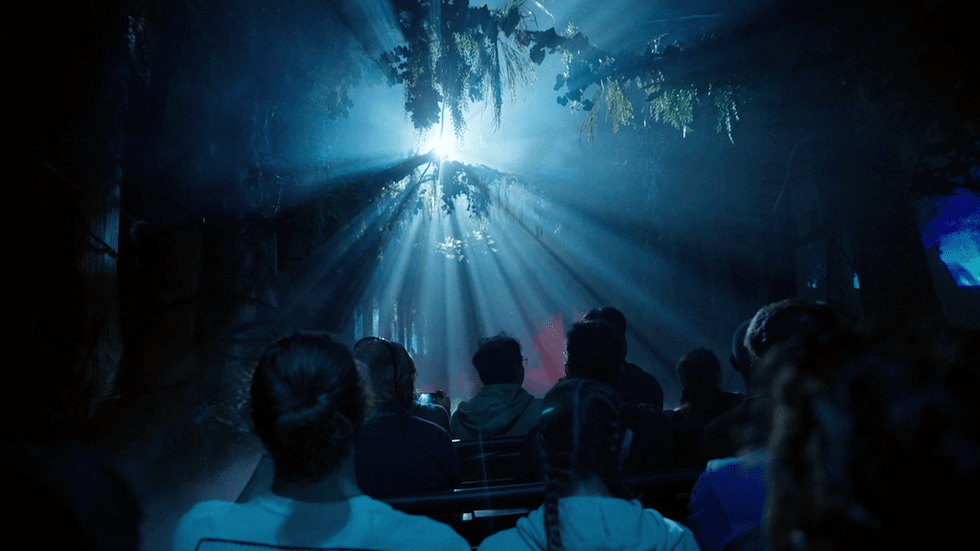
The team’s philosophy was put to the test with a recent flagship project: the complete reimagining of Animal Treasure Island (formerly I Corsari) at Gardaland.
Originally opened in 1992, the ride is a cherished classic, so any changes would be scrutinised by a passionate, multi-generational fanbase.
"It needed modernisation without losing what people love about it," says Rivkin. "So, our approach was about understanding the emotional attachments people had to it, the key moments and what mustn't change. We started by understanding all of that and then working out how we could take it further.”
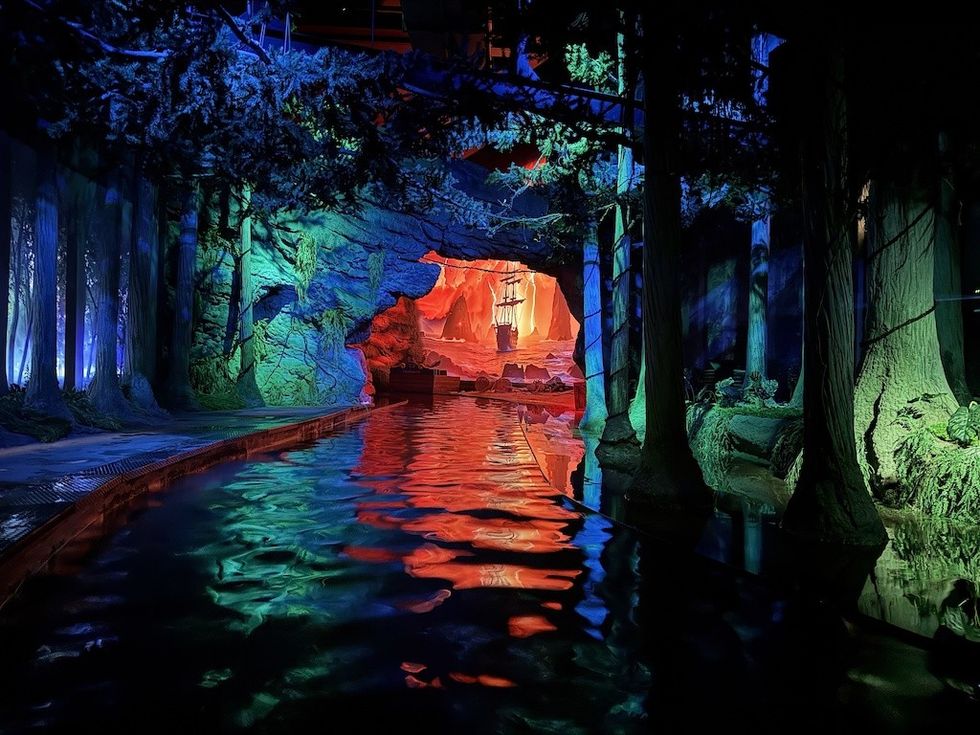 Animal Treasure Island at Gardaland
The scope of the renovation was extensive. Animal Treasure Island is one of the longest dark rides in the world, lasting 8.5 minutes and featuring 19 scenes. XOrdinary’s task was to incorporate modern storytelling and technology without turning the ride into something that felt overly digital, which might alienate purists.
"The last thing we wanted to do was just create a digital experience, replacing the real sets that were built 30 years ago with lots of screens and digital technology. We wanted to bring environments to life rather than replacing them, and make it more immersive.”
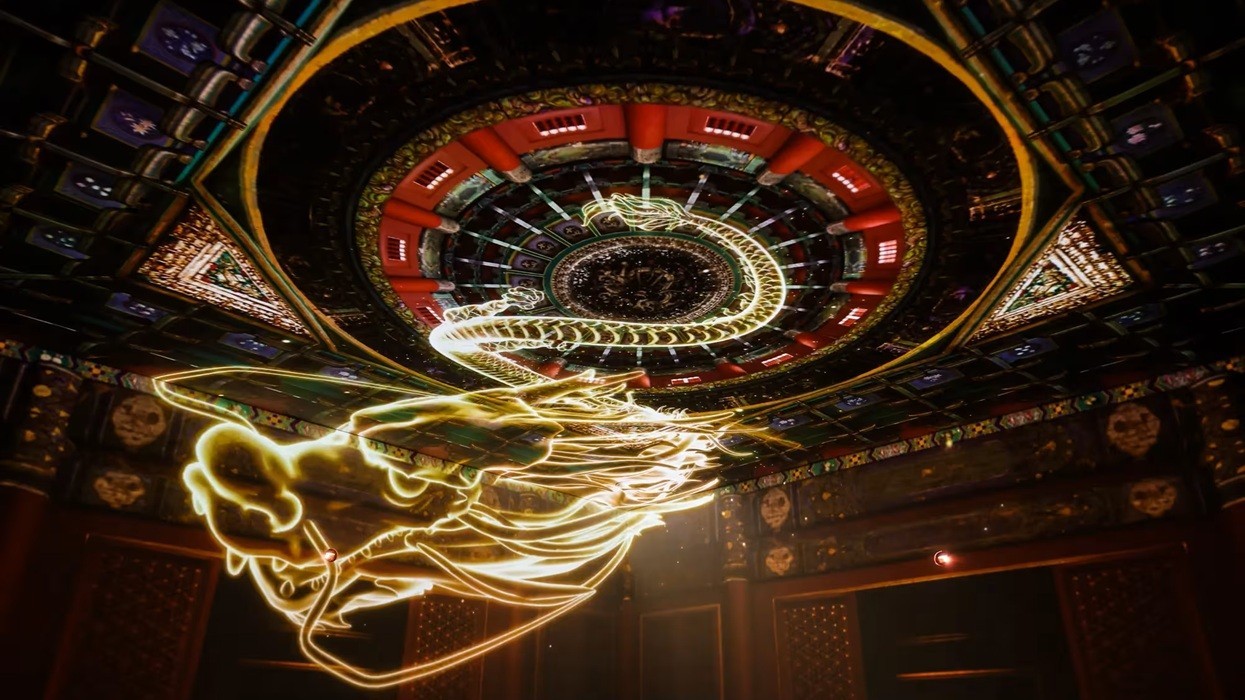
The technical solution involved over 40 projectors, 250 speakers, and extensive real-time control systems, all designed to remain invisible to guests. The team used spatial audio to make sound feel like a physical part of the environment and employed projection mapping to animate the sets.
"We developed entirely new workflows using motion capture and VR and real-time engines, bringing the best possible techniques to create amazing content for it," he adds.
Rising to the challenge
Delivering the project involved working approximately 60 metres underground in damp, cave-like conditions. With boats taken out during refurbishment, the team often stood in freezing water.
“The conditions we were working in were so unusual and so challenging… we were standing in the water in waders for weeks,” says Rivkin.
“To be deep underground in freezing temperatures, waist deep in water, while holding laptops and programming things for weeks on end, was an unusual experience, even for us!”
To manage this complexity, the team laser-scanned the entire ride and brought it into VR. This enabled them to simulate the ride experience and develop content pipelines before they even entered the water, ensuring that the new digital elements would integrate seamlessly with the physical sets.
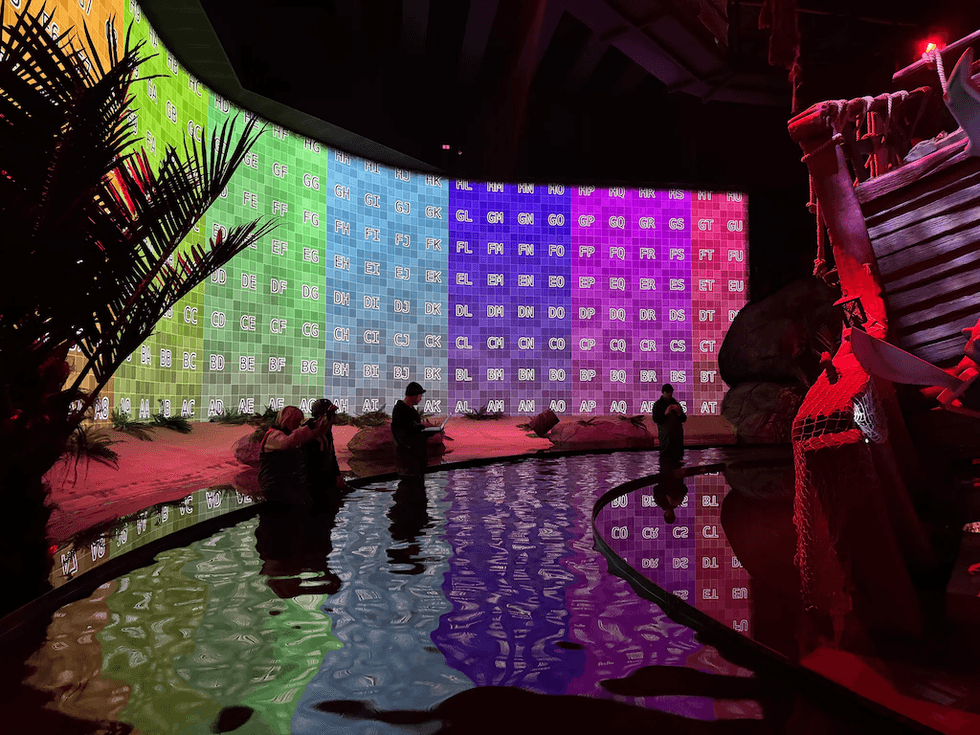 The XOrdinary team behind the scenes at Gardaland
The project involved a significant level of risk. Influencers and fans had launched campaigns urging the park not to alter the ride, fearing it would lose its appeal. However, by sticking to their principle of "technology with purpose"—using tech to enhance rather than replace—XOrdinary won them over.
"One of the most rewarding things for us was bringing those people on site,” says Rivkin.
“People who had campaigned to say, ‘don’t touch the ride’ ended up going, ‘actually, that's great.’ And for us, it shows the scale of what we can deliver, but it also shows how technology can be used but disappear into the experience whilst creating something special and enjoyable.”
Jones adds: "I remember being there on the opening day and speaking to some of those influencers who were sceptical to begin with, and them seeing how it has brought the story to life, and it's given the ride a new lease of life.
"That was one of the proudest moments, because it's such an iconic ride. We wanted to do it justice.”
The project has since received awards, confirming XOrdinary's approach of combining heritage with high-tech innovation.
Creating wonder and surprise with XOrdinary
The studio’s ability to transform spaces isn’t limited to sprawling dark rides. At Madame Tussauds in New York, XOrdinary used its expertise to create a smaller-footprint experience, transforming a music zone exhibit into a 360° projection-mapped experience.
The scale of intervention was significant. Using over 100,000 lumens of projection and a 12K wraparound AV display, the team designed a dynamic environment that set a new benchmark for the attraction.
This project emphasises a core principle of the XOrdinary philosophy: guests are not interested in technical details; they care about the experience it creates.
"We've always believed that guests couldn't care less about the technology. They just want an experience," says Rivkin.
"We've done projects where we brought an iconic TV character to life as an interactive character guests could play with. The technology was huge, complex, and ahead of its time, but nobody cared. They cared about being able to play with the character and the smiles on children's faces.”
Jones agrees, noting that true immersion creates a sense of "lasting wonder" in which the mechanism of delivery becomes secondary to the belief in the world presented:
"As a guest, if you're truly immersed in an experience, and it feels authentic and believable, then that creates lasting wonder, and that's the surprise, and that's what we want guests to feel.”
Shared experiences
Looking ahead, Rivkin and Jones identify several key trends shaping the upcoming wave of attraction design. The focus is shifting towards personalisation, re-rideability, and "natural" interactions that do not require guests to learn a new skill.
"For us, it's about how the experiences become more personal, and how all the systems are finally joining up," Rivkin says.
"A lot of the work that we've been doing with real-time engines, tracking, interactivity, spatial audio, AI and intelligence built within experiences is all coming together to deliver re-rideability on a whole new level... So, it's variation with intent, and natural, effortless interaction.”
He contrasts this with older interactive systems, where guests often felt disconnected from the result:
"Interaction has to be when the system is in harmony with what you're doing, and you can naturally interact, whether you're 90 years old or three years old, and it responds in a really engaging way... Digital characters that are more believable with movement and voice, and you can have fluid, natural conversations with them.”
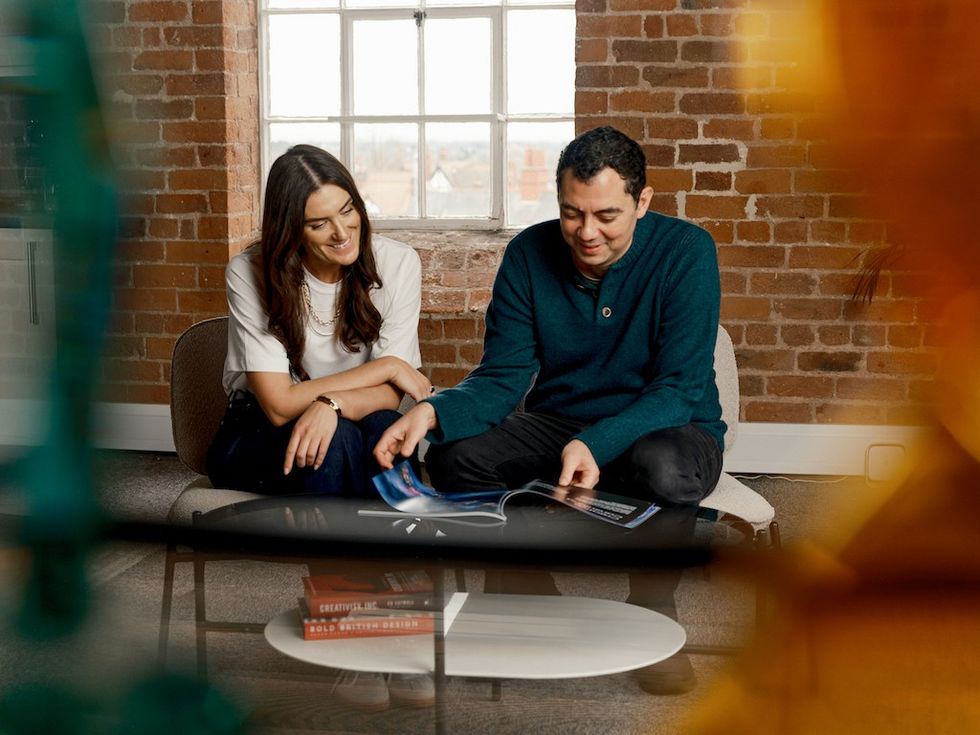 Lorna Jones and Mark Rivkin of XOrdinary
Crucially, XOrdinary believes that technology should promote connection between people, not isolate them in headsets.
"We're passionate about creating shared experiences to bring families together and avoiding isolating guests. It's those strongest moments that people remember and bring people together.”
The "Innovation Lab" at XOrdinary remains a hive of activity, constantly exploring the convergence of projection, screen quality, and AI. However, Rivkin offers a word of caution:
"Technology allows more ambitious experiences to be created than ever before, but just because something can be built, it doesn't mean it should be built. Using technology because it's available, not because it's improved the experience, is a risk".
A call to the extraordinary
As XOrdinary establishes itself in the market, the message to operators and partners is clear: it offers a different way of thinking. By connecting creative ideas with technical implementation, it delivers robust, impactful, and distinctive experiences.
"We don't see ourselves as just AV integrators or a content studio. We're experience builders who are also deeply technical and deeply creative," says Rivkin. "Our culture is built on removing the gap between creative and technical, and it's embedded in every decision we make.”
With a portfolio that already includes transforming legacy rides at major European parks and collaborating with some of the world's biggest brands, XOrdinary is eager to connect with partners who share its ambition.
"We encourage people to come and chat to us. We want to talk to people, explain why our approach is different, and see if it aligns with how they want to work, because when we find people who have a similar way of thinking and are trying to push things further in this way, the synergy we have with those teams is amazing.”
For Jones, the mission ultimately comes back to a refusal to settle for the standard:
"It's about trying to push and elevate what can be done. From the bigger picture of how we improve the overall experience, right down to the details of how each individual works on a project and asks, 'Can I elevate what I'm delivering here?’ Can I make this better? Can I push it to do more?’
With "ordinary" no longer enough to satisfy an increasingly sophisticated audience, XOrdinary is positioning its hybrid, high-tech, guest-first model as a blueprint for the future of visitor attractions.
As its manifesto states: "Guests deserve experiences that surprise, inspire, and create lasting wonder."