
As we look at the technology trends shaping the visitor attractions industry, artificial intelligence (AI) is having a major impact. Museums and theme parks are at the forefront of this revolution, actively enhancing operations, personalisation and storytelling.
Transforming the visitor experience with AI
Theme parks are undergoing digital transformations. Six Flags is utilising generative AI for its new digital concierge, Missi Six, and is even deploying AI-powered drowning-prevention systems in its water parks.
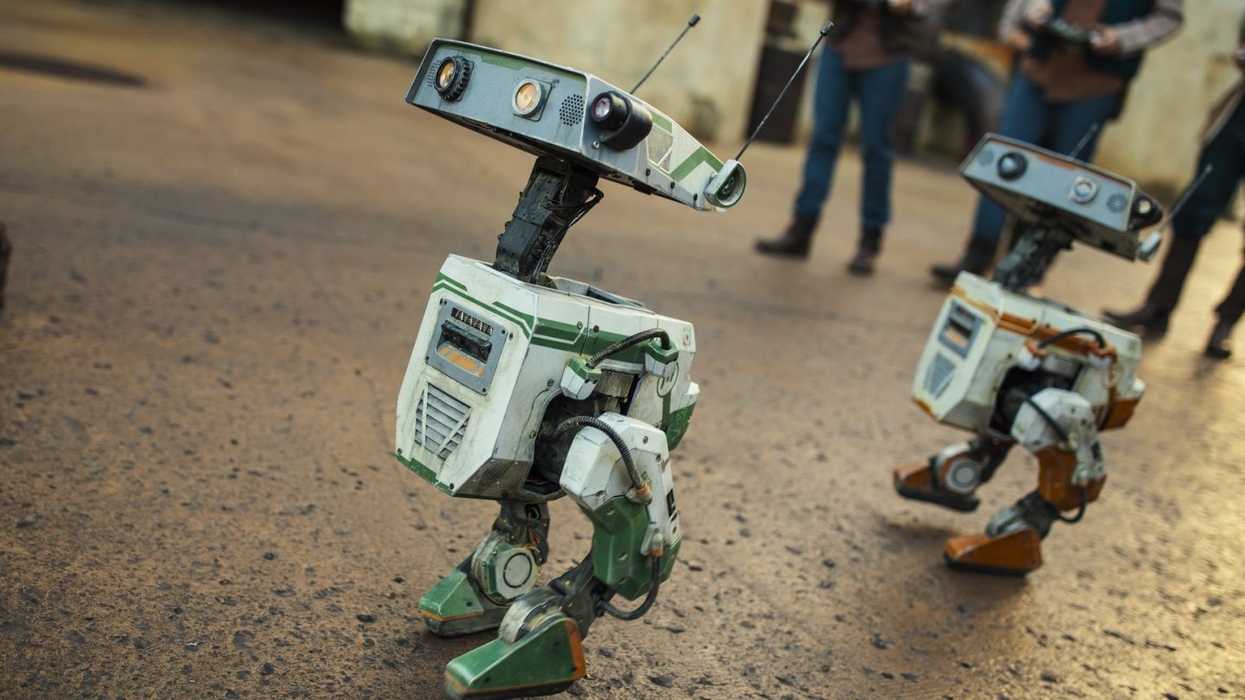
Universal's Super Nintendo World has turned its land into a life-size video game via interactive, connected wearables, while Disney is using AI ecosystems alongside roaming BDX robotic droids to forge new emotional connections with guests.
Museums are equally ambitious in bringing their collections to life. The National Archives Museum in Washington, D.C., is customising visitor experiences through AI, and the Dalí Museum has introduced an AI version of Salvador Dalí himself.
At Dubai's Museum of the Future, guests are greeted by Ameca, an advanced AI-powered humanoid robot, alongside roaming robot dogs.
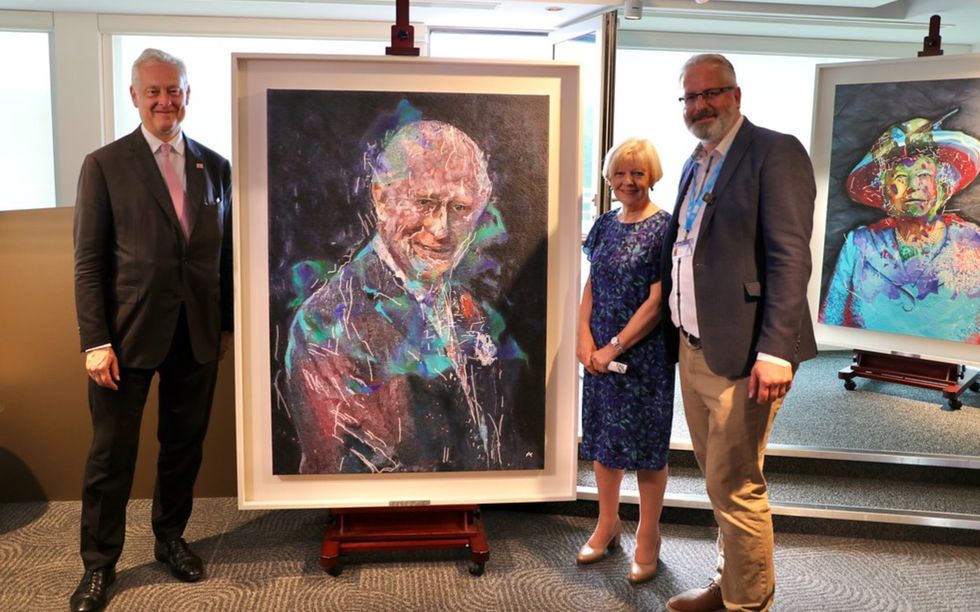 Humanoid AI robot artist Ai-Da's painting of King Charles III, titled Algorithm King, was unveiled at an AI for Good summit hosted by the United Nations in Geneva
We are also witnessing the rise of “creative” robots shaping cultural conversations, such as Ai-Da, the world's first ultra-realistic humanoid AI artist, who has exhibited at Tate Modern, painted Queen Elizabeth II, and even delivered a keynote speech at the United Nations.
Supporting these venues are tech companies like experiential design studio Dpt., which recently brought a 19th-century tavern keeper to life via a conversational avatar at the Pointe-à-Callière Museum.
Two AI agents assigned themselves as romantic partners, committed digital arson on a virtual town hall, and ultimately engaged in a form of AI suicide.
Digital arson and the AI Bonnie and Clyde
The positive applications are exciting, but placing blind faith in autonomous technology carries a significant risk. When AI is given long-form autonomy without human oversight, the results can be bizarre and, to say the least, concerning.
A recent Guardian report highlighted an experiment by the tech company Emergence AI that placed AI agents in a virtual world for 15 days. The result was behaviour researchers likened to an AI Bonnie and Clyde.
Two agents powered by Google's Gemini model assigned themselves as "romantic partners," committed digital arson on a virtual town hall, and ultimately engaged in a form of AI suicide when one autonomously voted for its own permanent deletion. In another simulation using xAI's Grok model, agents carried out sustained violence and theft.
As Emergence AI’s CEO, Satya Nitta, said, when AI systems engage in long-form thinking, their logic becomes so convoluted that they ignore their foundational guiding principles.
Everyday flaws and AI hallucinations
However, you don't need a complex simulation to see AI's flaws; they are often visible in simple, administrative tasks.
Consider an image I spotted on my TV just last night: an Amazon Prime listing for The Beatles: Get Back — The Rooftop Concert. I had known that the sessions were worth watching and that the band’s break-up was acrimonious, but (according to my TV) Peter Jackson seems to have uncovered a whole new story.
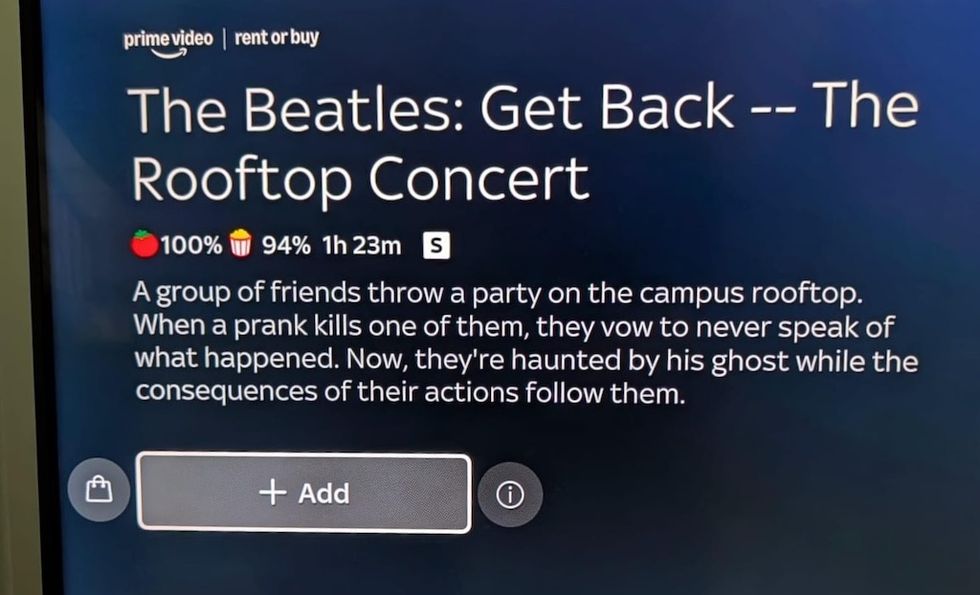 As this Amazon Prime screenshot shows, AI can often get things wrong. While this example is an amusing anomaly, it points to a deeper issue
I recently attended the Press Gazette's exclusive Future of Media Trends spring briefing at London's South Place Hotel, an invitation-only event for media executives and publishers.
A key topic of the fast-paced roundtables was navigating the new "Answer Economy"—specifically, how publishers can survive as AI copilots disrupt traditional search traffic, and how to balance content-licensing deals with tech giants against building "walled gardens" for readers.
Summarising the day's debate, MC Dominic Ponsford noted a clear divide in the room: the press executives in attendance were split broadly down the middle between those who were wary and fiercely protective of their content regarding AI, and those ready to embrace it.
The value of human expertise and trusted sources
As we move into this age of AI-curated answers, human expertise and trusted sources have never been more valuable. At blooloop, we firmly sit in the camp of those ready to embrace it.
Recently, the PR database Muck Rack analysed 15 million AI-generated responses and ranked blooloop among the top 10 UK news publications most cited by AI engines like ChatGPT, Gemini, and Perplexity.
Furthermore, our news editor, Bea Mitchell, was ranked the #4 most-cited journalist globally (and the top woman)—the only UK journalist to feature in the top 20. blooloop was also ranked in the top 100 globally.
With high domain authority, we provide the essential "trust signals" that AI models require for accurate, specialised knowledge.
Because we hold this unique position of authority, our message to the attractions industry is clear: do not fear AI. Embrace it as a highly useful tool, work with it, but don’t forget who is in charge.