There is a moment in a creative meeting that I always enjoy. Someone suggests an effect that seems impossible, and the conversation reaches a familiar question: “Can we actually do that?”
Our team recently developed one such effect for a project: making water appear to flow upward rather than downward.
What interests me is the gap between what the water is doing and what the visitor perceives. The creative intention can remain intact even when the engineering takes a different route from the one first imagined. That leaves room for the most rewarding part of our work: finding a practical answer without losing the surprise.
Of course, an ingenious effect is not permission to ignore physics, budgets, safety, or the demands of a busy venue. Those remain part of the brief. But a constraint worth respecting is not the same as an assumption worth keeping. We should be able to tell the difference before an idea is quietly dropped.
At Mad, we have spent years developing tools for media, sound, recognition, show control, and personal content. We also design, build, and integrate the systems that put those tools to work.
The value of that combination is not simply having more products to offer. It is having more ways to approach a problem, including ways that no single tool was designed to address alone.
Give the idea room to become a design
A creative brief describes what visitors should experience; an equipment list describes one possible way of delivering it. Confusing the two can close off useful options before the design has had room to develop. Asking for a moving wall, for example, is not quite the same as asking visitors to believe the room has changed.
The wall may genuinely need to move. Its weight, texture, and physical presence might be central to the story, in which case media would be a poor substitute. Or the desired effect might depend more on light, sound, and the visitor's point of view.
The best answer follows from understanding which qualities matter, not from favoring one technical discipline over another.
That is where a broad toolbox becomes useful, but breadth alone is not enough. A room full of capable devices can still leave a team spending much of its effort getting them to work together. Shared timing, common information, and clear control relationships need to be designed, not assumed just because each product has a network connection.
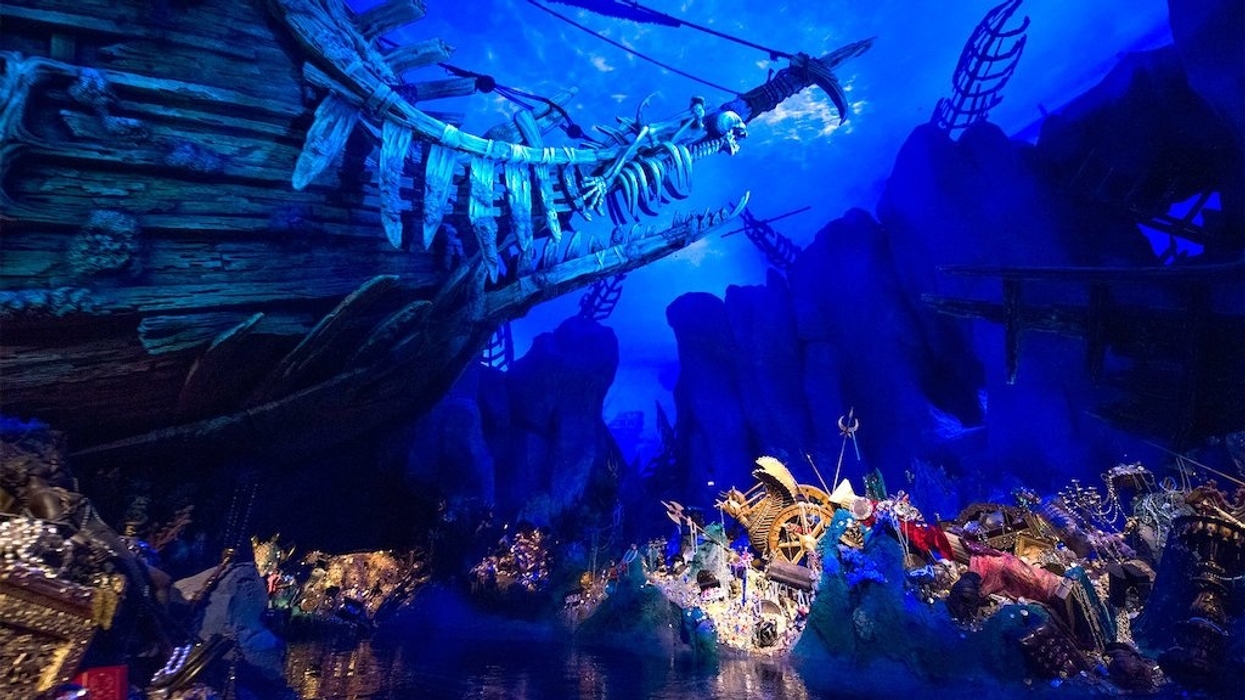
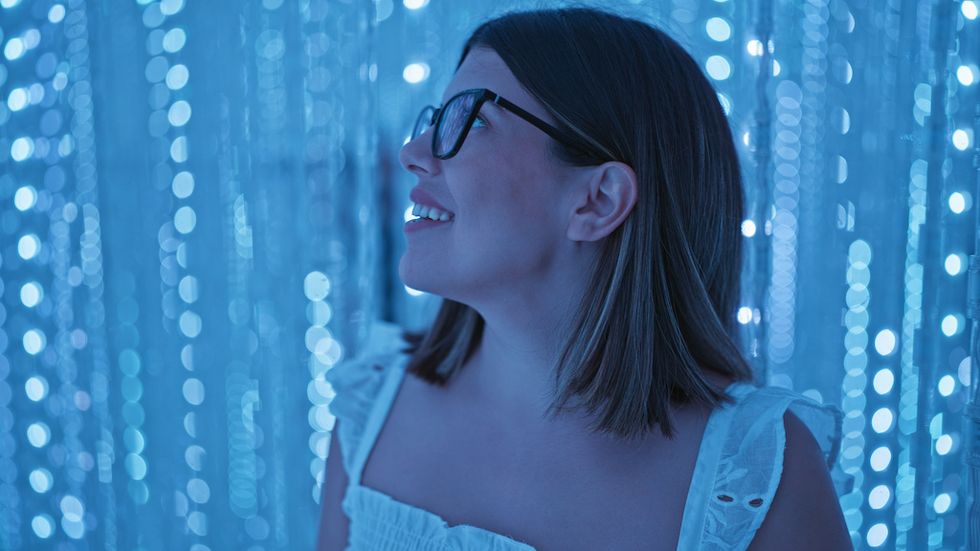 Immersive environments bring together physical design, media and lighting to create experiences that go beyond the individual elements
Our AV++ audiovisual technology family provides a common foundation for media, control, interaction, and personal content on standard computing hardware. We develop these capabilities as part of a wider system, rather than treating each new function as a separate installation.
That gives us a starting point for combining them around a brief, while still allowing other equipment and specialist expertise to play their part.
This is not a claim that integration disappears or that any combination will work without testing. It means we can examine the links between functions early, while there is still freedom to change the approach.
A designer gains more ways to preserve an idea; an owner gains a clearer view of what delivering it will involve.
Give the creature somewhere to hide
Consider a hypothetical attraction set beneath the ground, where visitors sense an enormous creature moving beyond the visible walls.
The creative team wants its presence to emerge through clues rather than a full reveal. A faint sound travels along a surface, shadows shift, and a distant response suggests the creature has noticed the group. Its scale could emerge from the distance between clues, leaving visitors to complete the image.
The design question is not simply how to play a convincing roar. It is how to make people believe something occupies the unseen space. Sound, lighting, imagery, and physical effects would need to support the same illusion, with visitors' actions shaping what happens next.
The authors would decide the creature's behavior; the engineering would help make its presence believable.
An early choice would concern how precisely the system needs to respond to each visitor. If the story depends on a group following movement through adjoining spaces, broad zones might be sufficient.
That could avoid tracking each person continuously, provided the transitions remain convincing as people move between them. Greater precision would serve no purpose if visitors could not perceive its benefit.
A different brief might call for two nearby visitors to hear distinct perspectives. Knowing where they stand would not, by itself, produce that outcome. The sound delivery method would also need to support it, whether through personal listening devices or a suitable loudspeaker arrangement.
We would possibly need to test the chosen approach in the intended space rather than assume that tracking solves an acoustic problem.
A prototype should be tested under more than ideal conditions. Background noise, overlapping groups, and varying walking speeds could reveal weaknesses that an empty-room demonstration misses.
We would also agree on what happens when a visitor misses a cue or when an input becomes unreliable. A simpler shared sequence might preserve the story better than a response that arrives too late.
The decision would therefore concern the whole experience, not the accuracy of one sensor or the sophistication of one processor. The creative team would judge whether the creature feels present; the operator would help judge whether the result can be run and supported.
Our role would be to find the least complicated arrangement that meets both needs, then test it before the design is fixed.
Keep the surprise; question the method
The water effect captures this distinction neatly.
Making water appear to rise is a clear creative objective; it does not prescribe a particular device. The result matters because it asks the visitor to look twice. That is a more useful starting point than choosing a technology and then searching for something interesting to do with it.
That distinction leaves room for invention without making novelty an end in itself. We do not need a new device for every new idea, nor should a promising effect become a reason to overcomplicate the show. The useful question is which part of the brief calls for new work and which parts can rest on methods we already trust.
For another brief, the best answer might be a physical mechanism enhanced by sensing and control. For another, it might be a change in media or timing that avoids a much larger hardware intervention.
The point is not to favor software over physical craft. It is to keep both available until the team understands what the experience really needs.
There is a useful discipline here: agree what would count as success before choosing how to deliver it. A designer may care most about the moment an audience notices something unexpected. An operator may need the effect to reset within the flow of the show.
Testing both requirements together can prevent a beautiful demonstration from becoming a difficult operating problem.
Leave room for the next story
Owners also need to consider what happens after the opening season.
An attraction might gain a new storyline, a museum might revise its interpretation, or a visitor center might need to explain a changed process. Designing for those possibilities does not mean predicting every future brief. It means being deliberate about which choices should remain open.
Content, show logic, and hardware do not have to change at the same time. Suitable displays and loudspeakers may continue to serve a new story, while media and cues change. Other revisions will need new equipment or physical work.
A useful design makes those boundaries visible, so the owner can distinguish a content update from a capital project.
That freedom has to be supported by documentation, access to the right controls, and a clear way to test changes before release. Otherwise, an apparently flexible system may remain difficult to alter in practice. The commercial value is not a promise of cheap updates. It is a better basis for deciding what to renew, what to retain, and where to invest next.
Make the shared experience more welcoming
The same approach can help a creative team serve visitors with different needs without separating them from the main event. A family might share a presentation while choosing different languages or ways to receive it. One person may use hearing assistance, another captions, while someone else prefers a calmer version of the sound or a fuller explanation.
Our Lory technology supports accessible and multilingual media alongside a shared presentation, with timing and device support defined for the installation. Alice adapts content to such choices as age, interests, language, and depth, drawing on material approved by the venue.
These capabilities give authors more ways to shape what people receive while preserving the thread that brings them together.
That still requires thoughtful content work. An alternative soundtrack, captions, or sign-language interpretation must be authored and reviewed, and each delivery path must be tested with the main show.
A guest without a suitable personal device also needs a way to participate. Inclusion is not something a technical feature settles on its own; it is a design commitment the tools should help fulfill.
For museums and visitor centers, this creates room to explain the same subject at different levels without treating any visitor as an afterthought. For attractions, it offers ways for a group to stay within one story while receiving the formats they need.
The shared experience matters just as much as the personal one.
Engineer for the afternoon after opening
An effect that works in development still needs a route into a dependable attraction.
That route includes testing, safety review, maintenance planning, and the needs of the people who will operate it. A busy afternoon brings conditions that a demonstration cannot fully represent, so the engineering brief should include how the experience behaves when conditions are less than ideal.
Our QuickSilver technology places audiovisual functions on standard computing hardware. TeaParty provides show and system control, coordinating cues and events within that wider foundation. Those tools support the work, but the project must still define its equipment, timing, interfaces, and operating limits.
A platform is a starting point for sound engineering, not a substitute for it.
Standard hardware offers options for equipment renewal, but a replacement still needs to be verified for the intended task. Software needs support, settings need to be recoverable, and operators need clear instructions. These details may never appear in the visitor's story, yet they help preserve the experience long after the team that created it has left the site.
The same care applies to responsiveness. A visitor's choice might alter a piece of media without being allowed to change a protected show sequence. When an input is missing, the design should specify whether to continue, pause, or seek help.
Giving the system more ways to respond also means being clear about when it should not respond.
For me, this is where a technology developer's work and an integrator's work strengthen each other. Developing the tools gives us scope to extend them; delivering systems keeps that development tied to practical needs.
The goal is not the most elaborate installation. It is an experience whose engineering earns the creative team's confidence, the operator's trust, and the visitor’s repeat visit or recommendation.
Bring us the part of the brief that gets interesting
The best use of a broad technology portfolio is not to include more of it in every project. It is to recognize which combination serves the idea, which elements add little value, and where another specialist could improve the result. That judgment grows through collaboration with people who see the brief from different angles.
A writer understands the reveal, a fabricator understands the material, and an owner understands the audience and daily operations. We are not there to take over their creative process.
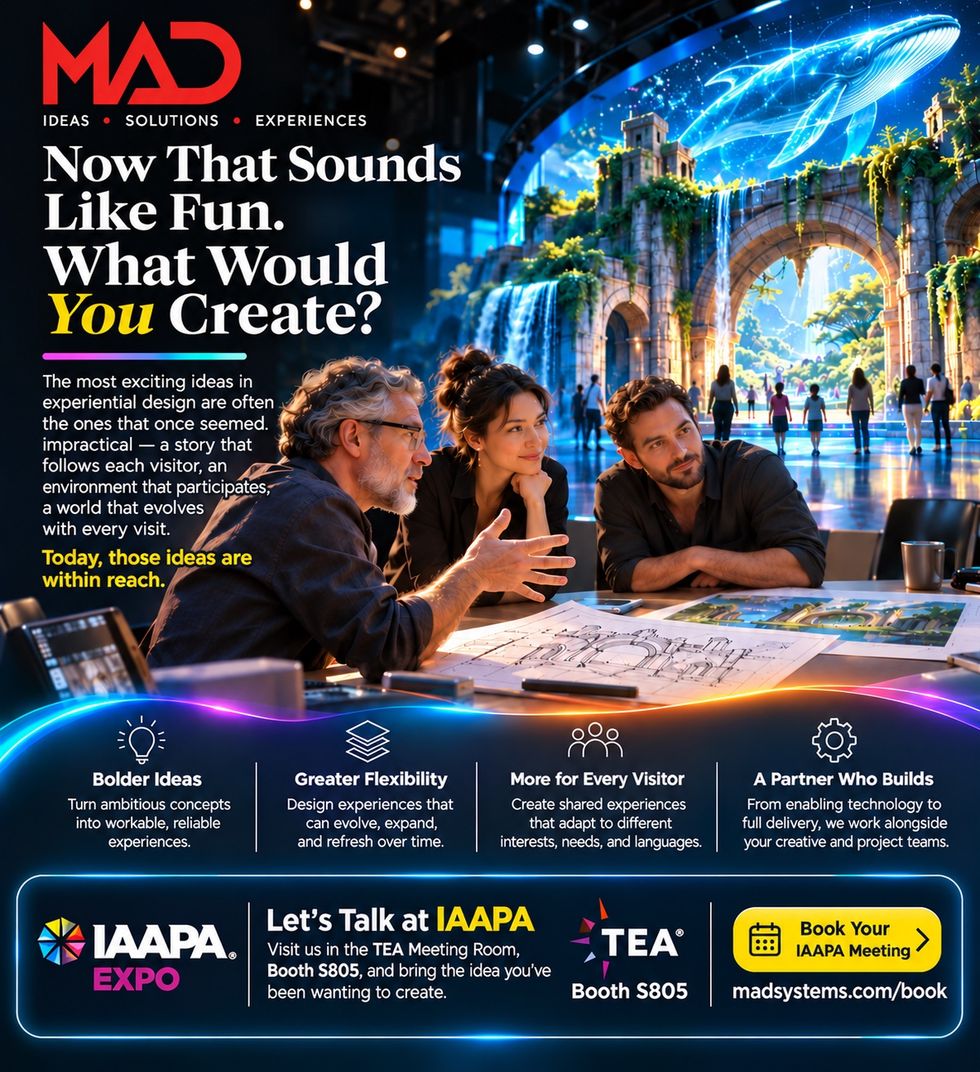 Mad's creative team can plan your next immersive attraction
Mad Systems brings its own design and engineering skills, along with technologies that give the team more to work with. Sometimes we supply the underlying technology, sometimes we collaborate throughout development, and sometimes we design and deliver the complete experience.
The most useful thing to bring is not necessarily a finished specification. A sketch, a short description, or a video of an unresolved effect can give us something concrete to discuss. From there, we can separate the creative essentials from the assumptions, identify what needs testing, and decide whether there is a worthwhile next step.
That is the conversation I would like to have with you at IAAPA Expo in Orlando. We will be in our meeting room at the Themed Entertainment Association (TEA) booth #S805.
Bring an ambitious idea, an unresolved effect, or a project that seems to demand a solution nobody has put together before.
Book a dedicated meeting and bring the difficult part of the brief. We can examine what the visitor should experience, what has held the idea back, and which tools might help. We may already have the right combination, or the brief may give us a reason to develop something new.
Either way, that sounds like fun.