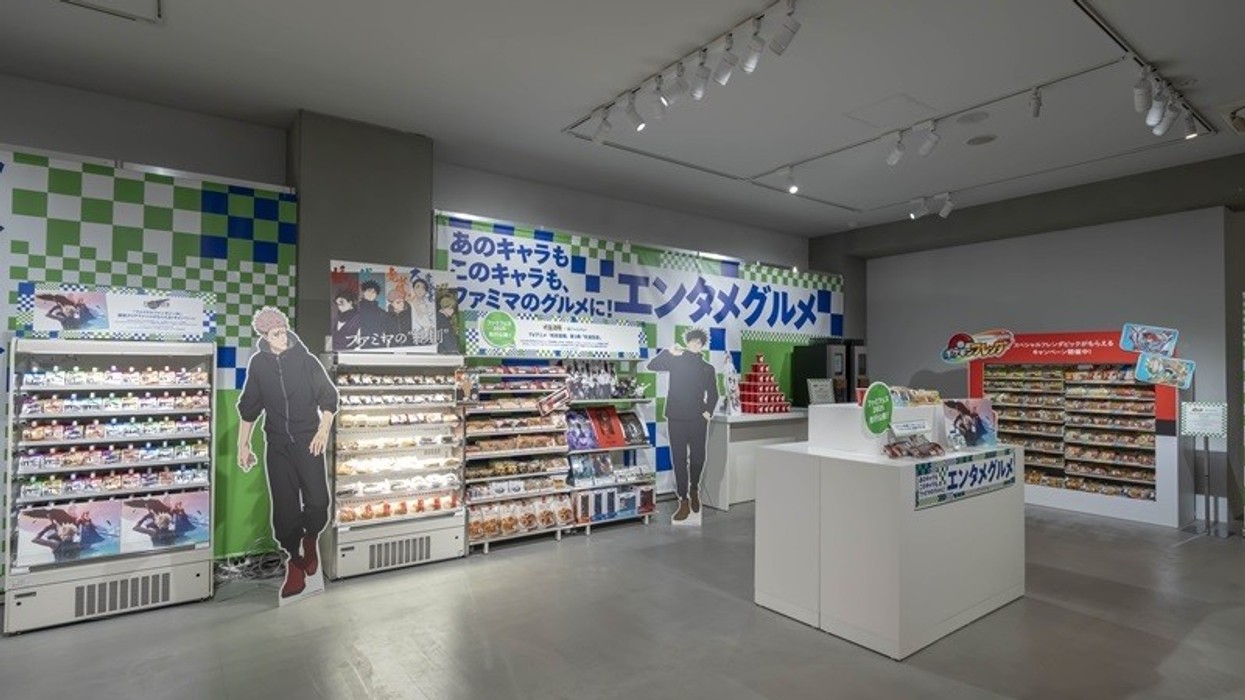

Japan’s convenience store sector is quietly redefining what “everyday retail” means. In December 2025, FamilyMart announced a new wave of store experiments that bring together food, clothing and living essentials with elements of play, entertainment and IP-driven engagement.
While the announcement itself was modest in tone, the strategy behind it reflects a broader shift in how physical retail spaces are being repositioned as experiential platforms.
For FamilyMart, the goal is not to turn convenience stores into theme parks, but to embed entertainment into the rhythms of daily consumption, making play frictionless, incidental and repeatable.
From transactions to micro-experiences
FamilyMart’s recent initiatives focus on leveraging offline IP and cultural touchpoints inside compact store environments.
These include limited-time collaborations with anime, games, and pop culture franchises; in-store merchandise drops; collectable promotions; themed food packaging; and digital campaigns that link physical purchases to online content.
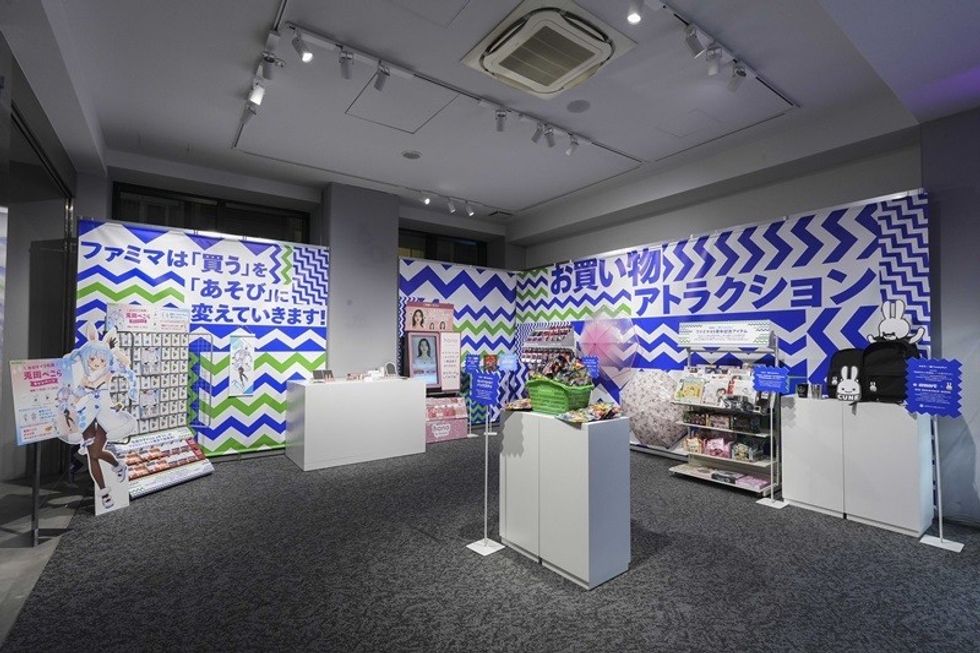
Rather than isolating entertainment into dedicated zones, FamilyMart integrates it directly into everyday actions: buying a bento, picking up socks, or paying at the counter.
QR codes, app-based interactions and digital stamp campaigns extend the experience beyond the shelf, while physical displays and character-driven visuals provide immediate recognition and emotional connection.
This approach aligns with a key principle of Japanese consumer culture: play need not be spectacular to be effective. It needs to be frequent, familiar and socially shareable.
FamilyMart’s stores remain functional first, but are layered with light, ever-changing moments of delight that encourage repeat visits and incremental spending.
When convenience stores become micro-arcades
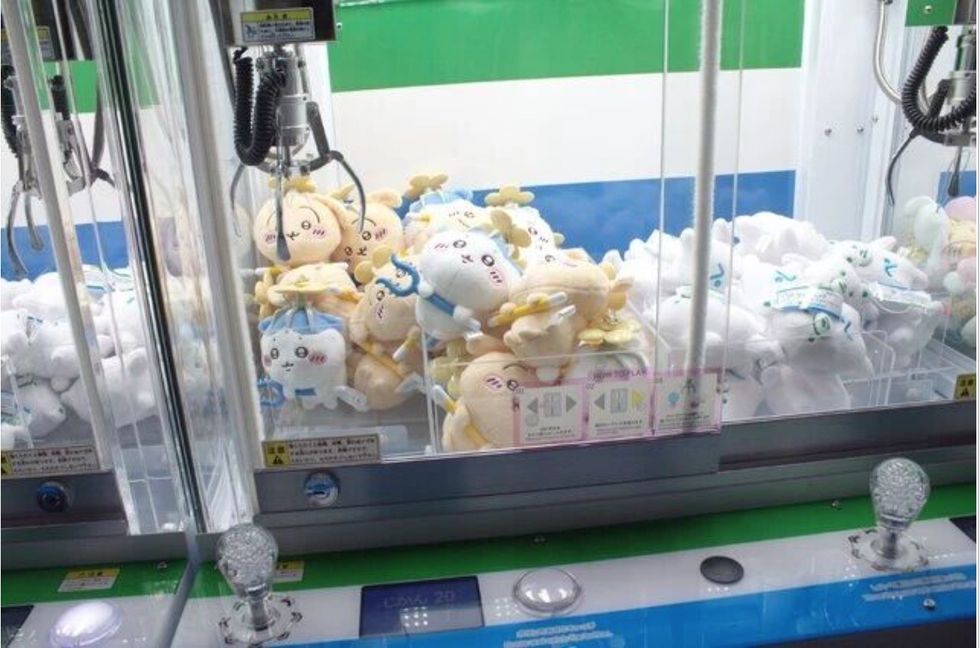
One of the most visible and commercially telling expressions of this shift toward play is the rapid rollout of claw machines and merchandise distribution machines inside these stores.
FamilyMart has announced plans to install claw machines, capsule toy dispensers, and small-format game units in up to 5,000 stores nationwide, representing roughly one-third of its Japanese network.
In many locations, traditional eat-in seating and magazine corners are being removed to make room for these machines, effectively converting underutilised floor space into low-cost entertainment zones.
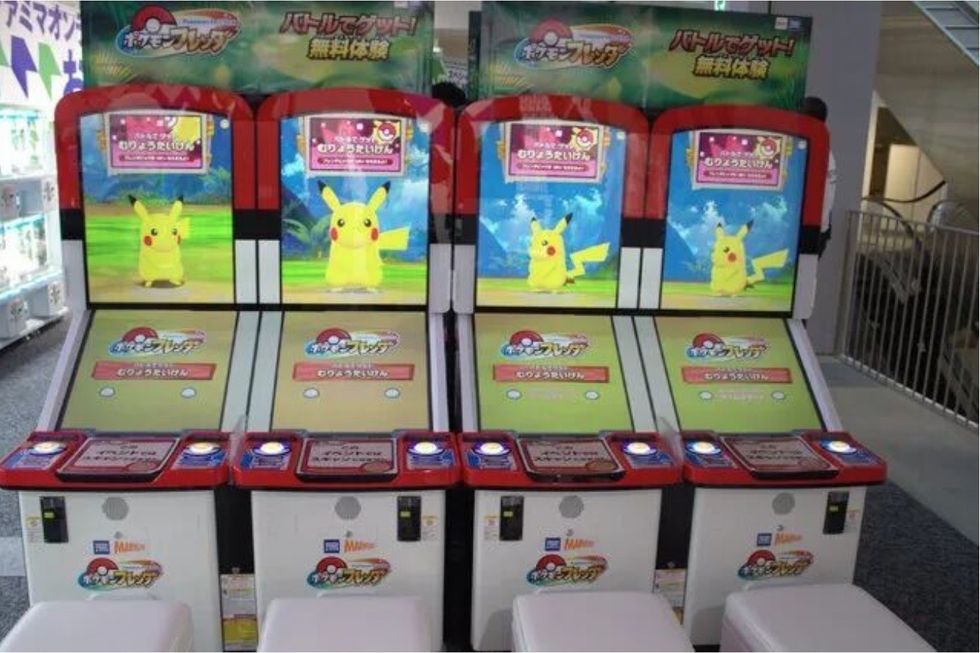
Pokémon-themed units such as Pokémon Friender have also been trialled in selected stores, adding a recognisable, family-friendly IP layer to the experience.
The strategy is deliberately selective. Initial rollouts have focused on tourist-heavy districts, commercial centres and family-oriented residential areas, where dwell time and impulse spending are already higher.
For FamilyMart, the objective is clear: capture customers who are not just “buying something,” but are actively seeking a brief moment of enjoyment.
Crucially, pricing has been kept frictionless.
Most machines operate at 100 Yen (0.6 USD) per play, lowering the psychological barrier and encouraging repeat attempts. The prizes—typically small merchandise tied to globally recognisable IP—offer a disproportionate emotional return relative to cost.
A broader trend across Japan’s convenience sector
FamilyMart is not alone. Other major Japanese convenience chains are exploring similar territory, each in its own way.
Lawson has leaned heavily into collaborations with animation studios, music labels, and live entertainment IP, often positioning stores as distribution points for concert merchandise, lottery-style collectables and limited-edition products tied to fandom culture.
Meanwhile, 7-Eleven Japan has focused on digital loyalty ecosystems, using its app and payment platforms to gamify purchasing behaviour through points, challenges and time-limited rewards.
While less overtly “playful” visually, the strategy still reflects a shift toward engagement-led retail.
Across all three chains, the common thread is the recognition that convenience stores are among the last truly high-frequency physical touchpoints in urban life.
In a country facing demographic pressure and stagnant consumption growth, adding entertainment is less about novelty and more about sustaining relevance.
Why IP works in small spaces
What makes IP particularly effective in convenience stores is scale.
These are not destinations; they are nodes. IP does not need to explain itself or unfold over hours. A character on a coffee cup, a collectable tied to a sandwich, or a digital interaction unlocked by a receipt is enough to activate emotional value.
This “micro-IP activation” model is especially suited to Japan’s dense media environment, where consumers are already fluent in character-driven narratives.
FamilyMart’s strength lies in understanding that entertainment can be modular, integrated into daily routines without requiring additional time or effort from customers.
Implications for China’s convenience store market
For Chinese convenience store operators, FamilyMart’s experiment offers both inspiration and caution. China already has a strong IP ecosystem, spanning animation, games, television drama and internet culture.
However, most IP-driven retail experiences in China remain either too large (pop-up exhibitions, themed cafés) or too promotional (short-term tie-ins with limited depth).
Worth noting are examples such as the Tangjiu (唐久) and Jinhu (金虎) convenience stores in Shanxi Province, China. Both brands were established more than 20 years ago and quickly gained local recognition for their customer-focused approach and reasonably priced, high-quality products.
In recent years, as consumer demand has risen and competition has become more fierce, these two brands have been experimenting with new methods to effectively engage consumers in the digital age.
They have adapted to online shopping and digital marketing, but still struggle to find a better solution.
The Japanese model suggests a different direction: lighter, more frequent and more embedded IP experiences, designed to operate within existing retail footprints.
For Chinese brands, this could mean turning stores into platforms for rotating content rather than static commercial spaces.
At the same time, the Chinese market presents different challenges. IP awareness is often polarised, consumer expectations change rapidly, and maintaining operational consistency across cities remains challenging.
Successful adaptation would require not just IP licensing but also strong operational choreography: supply chains, digital systems, staff training, and content refresh cycles working in sync.
Convenience as the new frontier of experience design
FamilyMart’s move does not point to the rise of “entertainment convenience stores” in the literal sense. Instead, it signals a more structural transformation: the experience economy is shrinking in scale, but increasing in frequency and precision.
As large attractions compete through spectacle, scale and destination pull, convenience stores are adopting the opposite logic. Through low-cost, playable elements such as claw machines, capsule toys and IP-driven micro-interactions, they offer short, repeatable moments of engagement embedded directly into everyday routines.
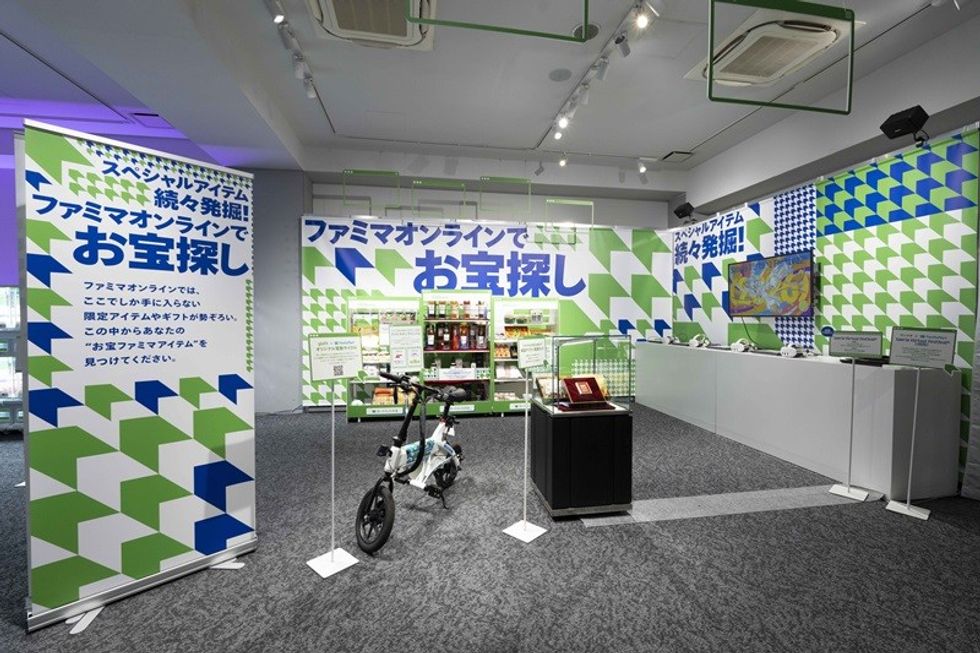
Entertainment here is not a destination or an escape, but a behavioural layer integrated into daily life, designed to extend dwell time, trigger emotion, and prompt return visits.
For the themed entertainment and experience industries, this reframes a familiar question. The future of location-based experiences may not be defined solely by ever-larger parks or flagship venues, but also by distributed, operationally efficient micro-experiences that live inside ordinary spaces.
Places people visit without intention are quietly becoming places where play is normalised—and where experience design operates at its most scalable.