Retail and dining spaces should be essential, well-integrated touchpoints that shape the overall visitor experience, not just afterthoughts or exit-through-the-gift-shop conveniences. At the recent blooloop festival of innovation, industry experts explored emerging trends in retail and dining within visitor attractions and museums.
Hosted by James Dwyer, principal at the international design firm Lumsden, the session provided a comparative overview of two different realms. At one end of the spectrum was the entertainment giant Warner Bros. Discovery, represented by Karl Durrant, senior vice president and general manager for retail.
At the other end was the purpose-driven cultural sector, represented by Anne-Marie Hoogerwerf Hospes, head of commercial activities at the Natural History Museum of Denmark.
 Innovation in retail & dining at the Festival of Innovation blooloop.com
Despite their contrasting subjects—the wizarding world of Harry Potter and the awe and wonder of the natural world—both speakers emphasised how deeply immersive storytelling, strict authenticity, and strategic physical environments are essential for modern commercial success.
Expanding the magic
Durrant brings extensive retail experience to Warner Bros. Discovery, having spent a decade at Nike and significant time with Middle Eastern retail giant Al Shaya and the Arcadia Group.
His current role covers end-to-end retail responsibilities for the Warner Bros. Discovery global experiences group, including managing location operations, logistics, product development, buying, and e-commerce.
The retail journey of the Harry Potter franchise has been a story of impressive, strategic growth since the original Warner Bros. Studio Tour opened in London in 2012. After years of steady expansion, a decision was made around 2018 and 2019 to expand the wizarding presence worldwide through both standalone retail outlets and new tour locations.
This expansion began in 2021 with a large 23,000-square-foot flagship store in the centre of New York's Flatiron district, seamlessly blending retail with food and beverage (F&B) elements.
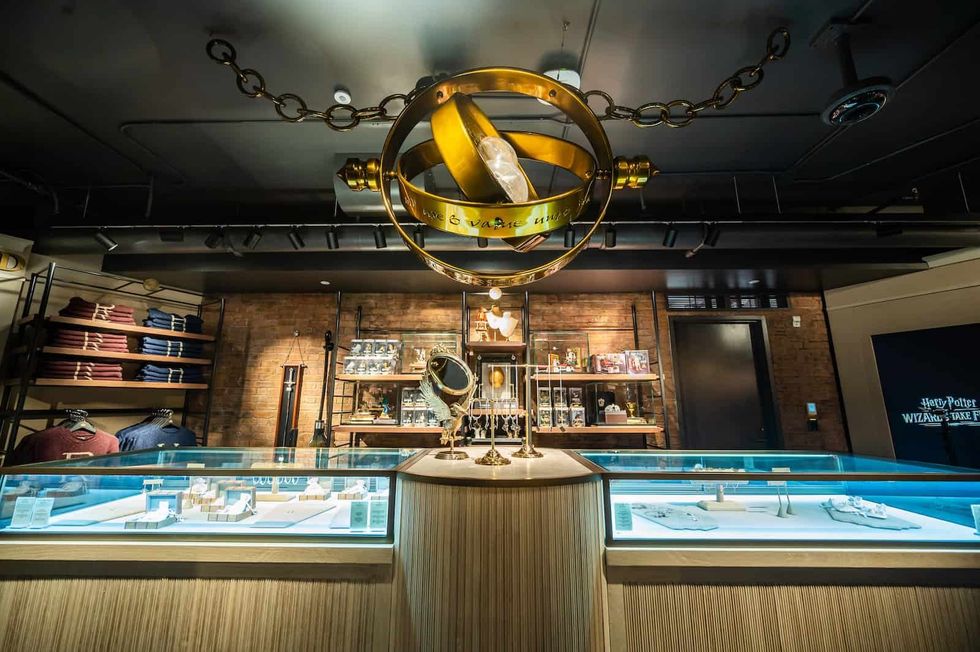 The Harry Potter Store New York
The momentum only accelerated from there. The brand launched its dedicated UK e-commerce platform the following year, and in 2023, it debuted a highly successful studio tour in Tokyo, complete with robust retail and dining components.
By 2025, the brand had successfully opened a 20,000-square-foot standalone flagship in Chicago and an 11,000-square-foot store in Tokyo's Harajuku district. Looking ahead, Warner Bros. is preparing for the highly anticipated opening of the Shanghai tour in 2027.
Durrant emphasised that despite having incredibly high-turnover locations globally, this growth has been "consistent and mindful" rather than simply expanding widely without consideration.
However, scaling a massive intellectual property (IP) worldwide is not without its challenges. "The biggest learning for us is learning about our fans and our customers and how they are so alike in many aspects, and how they are so different in many others," Durrant said.
He emphasised that brands cannot simply force a single concept into a new market and expect immediate success; they must adapt the offer to the local context.
"At the same time, with our Harry Potter IP, we've got a really strong British DNA, and that is also something that fans want to see when we bring our concept to new markets,” he added.
Finding the ideal balance between localising an offer and remaining true to this core DNA is a steep learning curve that can be highly rewarding when executed well, but expensive if misjudged.
The three pillars of experiential retail
When Dwyer asked why Warner Bros. is regarded as a leader in experiential retail, Durrant highlighted three key pillars of its operational philosophy: product, service, and environment.
Firstly, when it comes to product, Warner Bros. ensures that its merchandise is not just a standard distribution of items available online. Instead, it breaks its assortment down using a 70/30 rule.
Approximately 70% of the merchandise forms a "core assortment" of fan favourites and replicated props that visitors expect to see worldwide. The remaining 30% comprises bespoke, seasonal items that are rotated frequently, often staying in the store for up to three months, including location-exclusive merchandise.
This unique product layering provides fans with a compelling reason to visit physical locations.
Secondly, service is essential. The brand diligently focuses on its recruitment processes to ensure that staff are just as passionate about the IP as the guests walking through the doors.
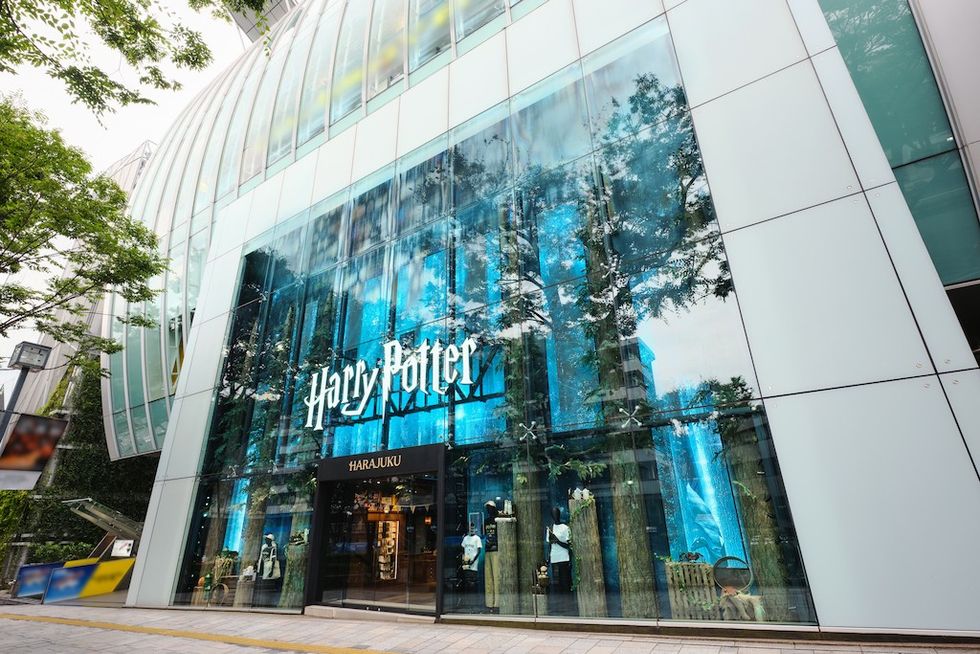 Harry Potter store in Harajuku
By fostering an environment where "fans are serving fans," the stores naturally build genuine rapport, enabling super fans to engage in meaningful conversations and celebrate their fandom with the retail team.
The final pillar is environment. Benefiting from the rich source material and the filmmakers' incredible visual groundwork, Warner Bros. spaces are filled with recognisable, immersive elements.
The store environments are carefully designed to appeal to different levels of fandom.
Casual passersby will be impressed by a visually stunning and unique retail space; regular fans will quickly recognise key iconic elements; and "ultra super fans" will find secret, hidden Easter eggs deliberately placed as "if you know, you know" moments, said Durrant.
This 70/30 philosophy also applies to the stores’ architectural design. While 70% of a store's design will be recognisable globally, 30% draws direct inspiration from its host city.
Durrant highlighted the Harajuku location as a prime example. Situated beside Yoyogi Park, the store was conceptually linked to the Forbidden Forest from the IP.
The Harajuku store incorporates physical Forbidden Forest elements directly into its design, complemented by bespoke product lines tied to that specific theme, seamlessly blending the brand's lore with a localised connection.
Studio tours vs standalone retail
A distinctive aspect of Warner Bros.' commercial strategy is the management of two separate retail formats: integrated tour spaces and standalone flagship hubs. Durrant stressed that the two models demand fundamentally different strategic approaches.
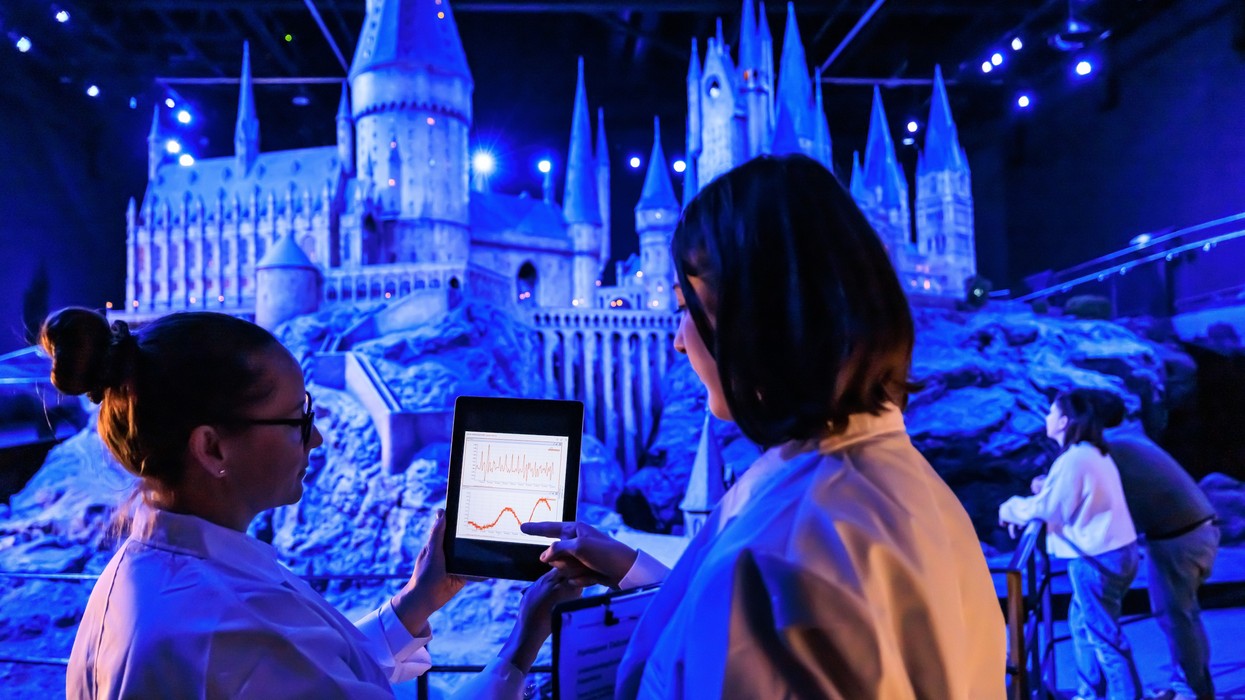
In the studio tours, retail and dining are seamlessly integrated, natural extensions of the overall experience: "When you leave our tour in London and in Tokyo, the grand finale to the tour is a Hogwarts Castle... you walk into our retail space, and you're continuing an incredible journey," Durrant said.
Because these visitors are a ticketed, captive audience who have just experienced the magic firsthand, their spending feels natural rather than forced.
The same applies to F&B on the tour; drinking a Butterbeer with friends is a cherished idea from the books that guests can genuinely recreate. “You can do that for real in our spaces.”
Conversely, standalone stores lack an entry fee, so they don't fully capture the audience, and the spend per visitor naturally decreases. However, standalone stores benefit from high repeat footfall. While a super fan might only visit a studio tour once a year, they might visit a standalone city store weekly.
Consequently, the standalone format requires much higher seasonality, more frequent product launches, and a focus on community engagement. These stores serve as social hubs for fans, hosting interactive events such as book signings and F&B-themed parties that help fans reconnect with the IP regularly.
Balancing this deeply branded, immersive storytelling with strict commercial performance is what Durrant describes as a "tough question" and a clash between finance and brand teams.
"I always view it as a pendulum that can swing...You have the commercial pendulum on the left, and you have the brand on the right, and you've got to try and balance that right in the middle," he explained.
To achieve this, Warner Bros. carefully maps out its real estate, pinpointing high-density zones to generate commercial returns, and intentionally designates other areas for interactive, purely branded experiences.
Personalisation also plays a significant role in enhancing this commercial value, with locations offering custom engraving and embroidery on wands, robes, trunks, and stationery.
Seasonality, social media, and sustainability in the wizarding world
The richness of the Harry Potter IP offers a significant operational advantage during retail seasonality.
Major narrative moments perfectly align with standard commercial calendars: Christmas in the Wizarding World aligns with the holiday retail rush, the Dark Arts season coincides with Halloween, and the Back to Hogwarts event in September aligns with the back-to-school market.
To execute this, the product teams work on 18- to 24-month lead times, while the F&B teams can adapt more quickly, operating on three- to four-week timelines with diverse local suppliers.
Social media serves as the brand's most influential marketing tool. By creating highly photogenic moments, such as the King's Cross Christmas tree, the brand enables fans to capture and share their experiences, generating organic and widespread visibility.
On the operational side, Warner Bros. is very conscious of its environmental impact and supply chain logistics.
The company is actively working to cut waste, having completely replaced plastic bags with paper ones. It has also redesigned its Butterbeer cups to be stackable, saving 30% more space in global shipping routes, and has eliminated plastic packaging from Butterbeer cartons.
Despite the success, Durrant acknowledged the widespread challenges facing the sector, mainly the cost-of-living crisis, which is forcing consumers to be more cautious about their spending, along with ongoing global shipping issues and tariffs.
The Natural History Museum of Denmark
Contrasting the wizarding world's massive IP is the highly anticipated Natural History Museum of Denmark, an institution where the ‘brand’ is the natural world itself.
Anne-Marie Hoogerwerf Hospes, who transitioned from corporate giants such as McKinsey & Company and Clifford Chance to pursue more meaningful work in the cultural sector, oversees all revenue-generating activities for the museum.
The museum is currently undergoing a significant transformation that has been in progress for over 15 years. Scheduled to open in spring 2027, the project brings together Denmark's geological, zoological, and botanical collections under one roof for the first time.
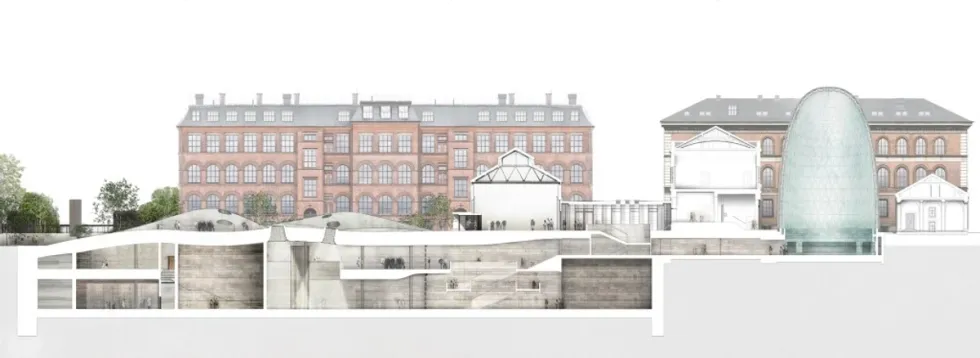
The estate spans more than 30,000 square metres in the centre of Copenhagen. “Half of that is newly built space, and the other half consists of beautifully restored heritage buildings, dating back to the 1890s and early 1900s,” says Hoogenwerf Hospes.
Crucially, the museum's living collection is the surrounding Botanical Garden, enabling the design team to craft a completely seamless transition between the outdoor gardens and the indoor exhibits.
Of this extensive footprint, about 2,000 square metres are strictly allocated to public-facing commercial areas, including a ticketing hall, event spaces, retail shops, and multiple dining venues.
From peripheral services to core touchpoints
Hoogerwerf Hospes argued that the role of retail and dining in museums has fundamentally evolved:
"Traditionally, museum retail and dining were seen as peripheral support services, often outsourced... with a focus on convenience rather than experience," she said. Today, however, visitors expect exceptional, holistic experiences in which commercial areas serve as key touchpoints that shape the overall perception of the visit.
Citing recent discussions with the European Travel Commission, she highlighted a broader industry shift toward "purpose-driven travel," in which guests seek authentic experiences that reflect their personal values.
In this new landscape, F&B and retail are "no longer optional extras. They are core touch points that influence how visitors perceive the entire visit."
Furthermore, with public funding decreasing across the sector and operational costs steadily rising, maximising secondary spend has become a strict strategic necessity for cultural institutions to maintain their resilience and high-quality programming.
To achieve this, the Natural History Museum of Denmark's commercial spaces are designed as seamless, integral parts of the visitor journey. Hoogerwerf Hospes relies on a "clear red thread" that links interior design, staff behaviour, product selection, and menus directly to the museum's core scientific mission.
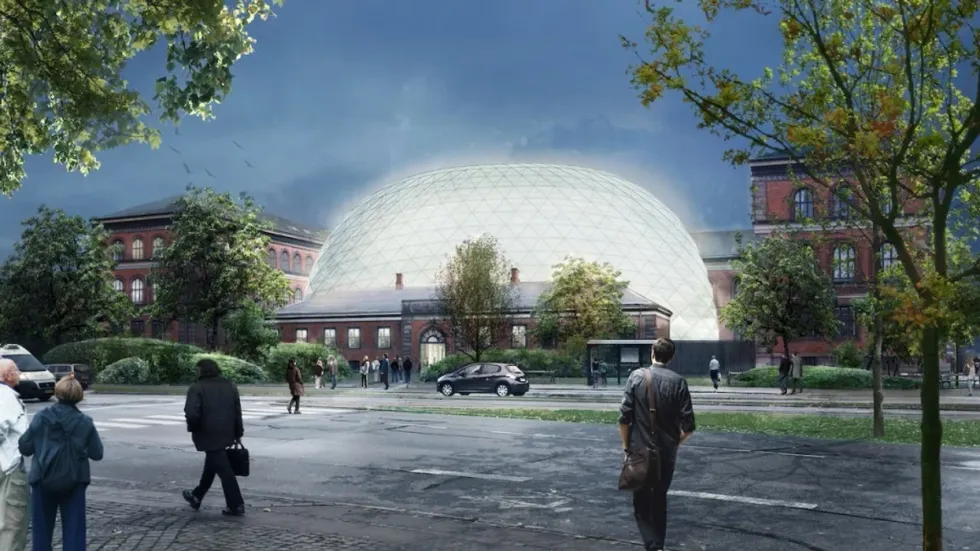
The museum will maintain its highly successful, meticulously curated 30-square-meter plant shop at the Botanical Garden's main entrance, which offers Danish-grown speciality plants, seeds, and bulbs.
However, the highlight will be a new 350-square-metre flagship retail space situated in the former machine hall of the heritage building, featuring impressive 10-metre-high ceilings.
On the F&B side, the museum operates informal covered-wagon kiosks in the gardens selling organic ice cream and coffee. In contrast, the new museum will introduce a café in the main heritage building and a restaurant in the historic former boiler house, featuring an outdoor terrace overlooking the gardens.
For Hoogerwerf Hospes, balancing this deep, mission-driven storytelling with commercial viability is not a contradiction: "For me, authenticity and commercial performance are not opposites.”
The museum's core purpose is to build connections between people and nature and inspire them to care for the natural environment. When retail items and dining menus actively support that exact aim, the commercial spaces feel genuinely meaningful rather than solely sales-focused.
This authenticity fosters trust and emotional bonds, naturally leading to better commercial results as visitors feel encouraged to spend, return, and recommend the museum to others.
Sustainability as the guiding lens
Given the institution's focus on the natural world, sustainability is not regarded as an add-on, but as the fundamental guiding principle for every commercial decision.
“As a museum for natural history, sustainability is a leading principle in all the choices we make. It shapes what we source, what we serve, what we sell, and ultimately, how we demonstrate our values to visitors," Hoogerwerf Hospes explained.
In retail, this commitment entails a strict "no-go" policy on plastic packaging and actively encourages suppliers to reconsider waste.
Sourcing priorities are firmly localised to reduce carbon footprints and support local makers: the museum prioritises Danish suppliers first, Scandinavian second, and European third, deliberately avoiding long-distance freight from the US or China whenever possible.
While this thorough framework may lengthen the supplier selection process, it ultimately simplifies decision-making by clearly outlining what the museum will and will not accept. Furthermore, the products must serve a purpose, specifically designed to inspire visitors to appreciate and care for the diversity of nature.
The F&B strategy is equally strict and deeply rooted in the principles of Nordic cuisine. "Our menus highlight seasonal, locally sourced vegetables as the main focus...with items like poultry or fish as a supplement, rather than the centrepiece.”
This intentional menu design shifts consumer eating habits towards a significantly lower environmental impact without compromising high-quality, destination-worthy dining.
To accommodate the significant fluctuations in seasonal foot traffic related to the Botanical Gardens, the commercial spaces are designed with maximum flexibility. The retail shops use modular fixtures that can be quickly reconfigured for peak summer traffic or major rotating exhibitions.
At the same time, the F&B offerings increase during the warmer months through garden-friendly grab-and-go formats and outdoor points of sale.
Human connection and local craftsmanship
Despite operating at opposite ends of the attraction spectrum, both Warner Bros. and the Natural History Museum of Denmark face similar operational pressures.
While Durrant highlighted macroeconomic factors such as the cost of living, Hoogerwerf Hospes mentioned the significant logistical challenge of managing the complex fit-outs and tenders for a large new museum project planned for 2027, all while ensuring the daily visitors to the existing venues continue to receive a seamless, mission-driven experience today.
Looking ahead to the next five to ten years, Hoogerwerf Hospes believes the future of retail and dining depends less on digital gimmicks and more on authentic, grounded reality.
"In a world shaped by rapid technological change and increasing tensions, the desire for human connection and a real physical experience will only grow stronger," she predicted.
She warned museums against focusing solely on new technology, urging them instead to perfect the fundamentals: creating welcoming, authentic spaces where people can genuinely connect and feel inspired.
To that end, she highlighted an innovation that she believes acts as a blueprint for the future: the 'Future Makers' programme at the Fruitmarket Gallery in Edinburgh.
"They invited a group of Scotland's most exciting makers...to respond directly to their exhibitions and create bespoke merchandise," she said, praising the programme for completely reimagining what exhibition merchandise can be.
Hoogerwerf Hospes aims to implement this collaboration model in Denmark's vibrant design scene, positioning the museum as a meaningful platform for local artisans working with natural materials such as wool, clay, paper, and glass.
This approach allows visitor attraction retail to go beyond simple transactions, transforming into a robust platform that promotes sustainability, safeguards traditional crafts, and generates deep community impact.
Ultimately, whether visitors are entering a faithful recreation of the Forbidden Forest in Harajuku or enjoying seasonal Nordic vegetables in a beautifully restored Copenhagen boiler house, the future of attraction retail and dining is evident.
Success depends on a clear commitment to the core narrative, perceiving commercial spaces as essential parts of the visitor journey, and providing an authentic, immersive experience that cannot simply be recreated online.