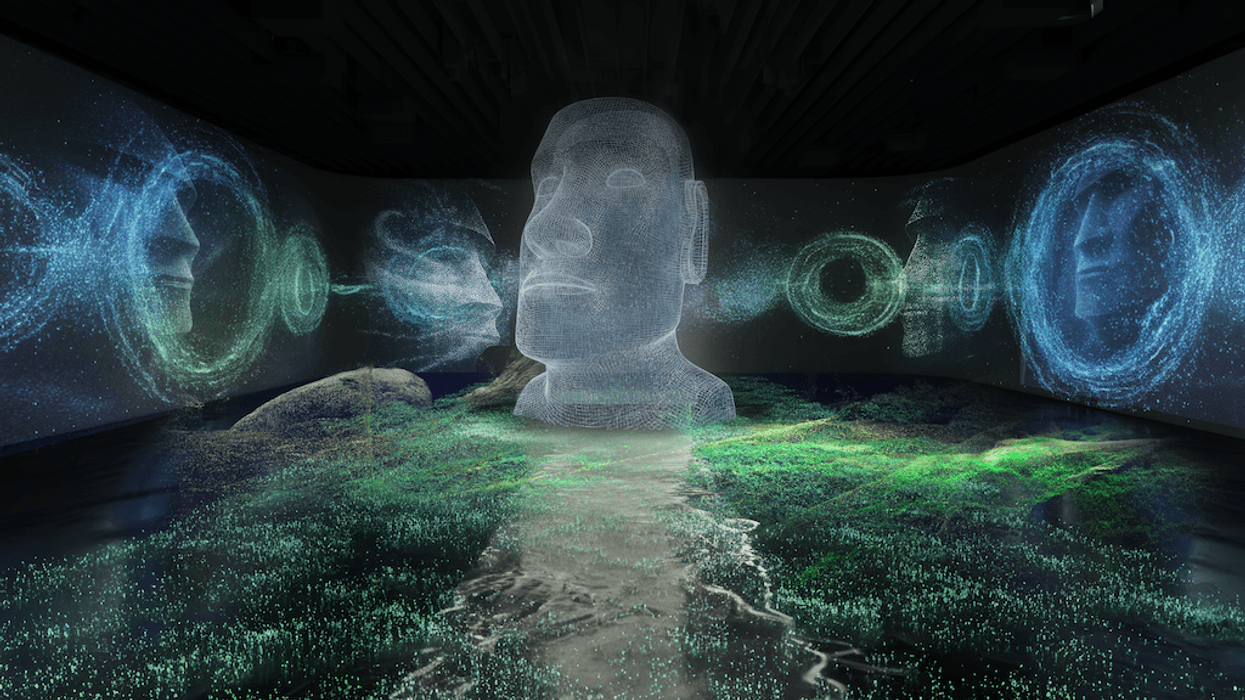
David Bowie: You’re Not Alone opened at London’s Lightroom immersive space on 22 April to much acclaim, described by such publications as TimeOut as ‘phenomenal’, and by the London Evening Standard as ‘Huge, loud, surprisingly emotive’.
- Authentic voice. The 60-minute, 360° experience at London’s Lightroom is narrated entirely by Bowie through archival interviews and personal recordings.
- Exclusive material. The show features rare and unseen footage, photography, and lyrics sourced from the David Bowie Archive to explore his creative philosophy.
- Collective experience. Unlike a solo gallery visit, the cinematic pace and spatial audio create a shared, emotional atmosphere for the audience.
- Thematic focus. David Bowie: You’re Not Alone moves beyond his famous personas to explore universal human themes like spirituality, curiosity, and the artist's view of the world.
- Technical innovation. A combination of high-fidelity visuals, newly reworked music, stems, animation, and Lidar tracking brings the archival materials to life.
Lightroom is known for its standout immersive experiences. Attracting over 1.5 million visitors worldwide, they have included creative collaborations with David Hockney, Tom Hanks, and Anna Wintour, as well as Vogue and Apple TV.
With David Bowie: You’re Not Alone, the venue’s oeuvre moves into music with a multidimensional experience narrated solely by the artist.
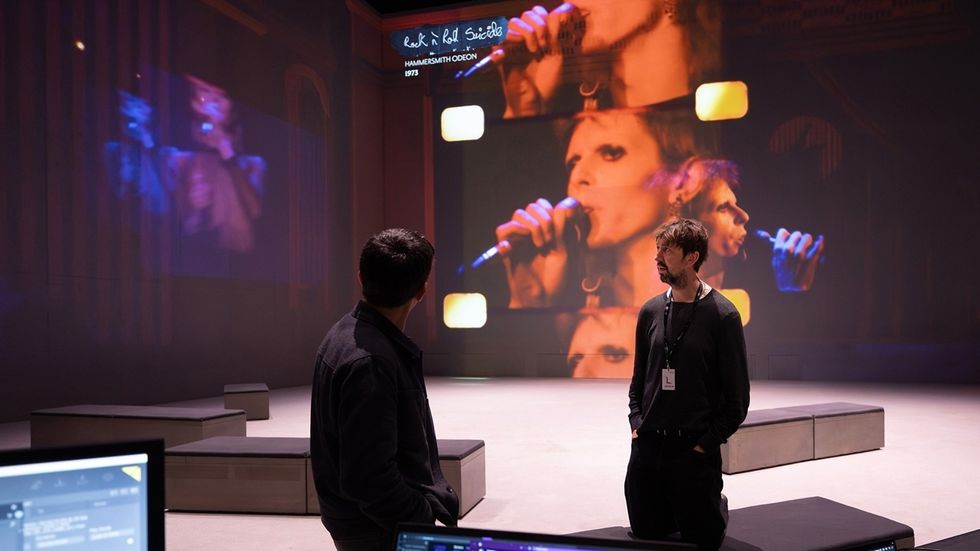 Mark Grimmer and Tom Wexler at LightroomCredit Justin Sutcliffe
The intimate visual monograph brings together hundreds of interviews, film, sound design, and custom animation in a deeply immersive 360° projection that dives into Bowie’s thinking, influences, and creative philosophy.
The show was produced by Lightroom and designed by Journey, in close collaboration with the David Bowie Estate and the David Bowie Archive in New York.
Mark Grimmer, the show's writer, and his co-director, Tom Wexler, spoke to blooloop about the show and offered a deep dive into its design.
Stirring stories
The experience brings together materials from Bowie’s own archive, including photography, drawings, lyrics, personal notes, and audio recordings.
Here, landmark performances sit alongside rare and previously unseen footage, accompanied by a narration by Bowie drawn from hundreds of interviews.
Journey uses this palette of space, sound, light, moving image, and crucially, time, to present the story in an experience- rather than exhibition-led approach.
“You're bringing everyone through that story at the same pace, which gives it a sense of shared experience and a collective atmosphere,” says Wexler. “It offers so many opportunities to stir emotions in people.”
And, while at an exhibition visitors can choose where to spend their time and attention, here the content is more fleeting. Yet the curation across audio, walls and floor offers different experiences for different people, as well as on repeat visits.
“In the context of a show like ours,” says Grimmer, “the point that appears on the wall, relative to the climax in the music, the choice of colour, the way that the thing is lit, means that as a design team you are making a lot more editorial choices about the way that people experience the show.
“And yet, audience members have a huge amount of agency.”
“It's an emerging form, and we're building up that language for what you can do with it,” says Wexler.
“But when it comes to something like a musical artist, the possibilities are extraordinary. And we've really enjoyed making the most of that format.”
A creative philosophy in ten chapters
Working with the David Bowie Archive in New York, they whittled down thousands of hours of material into a 60-minute show.
“It was a daunting mountain to be standing at the bottom of,” says Grimmer. “There were a few work streams happening simultaneously, but one way into the story was the audio. Amassing hundreds, if not thousands, of interviews.”
The team began by transcribing everything.
“We started going through, highlighting and tagging stuff that was interesting, just using Google Docs and comments.
“And what emerged was an annotated master document, in which it was actually relatively easy to see which subjects were coming up time and time again. The themes that were important to Bowie floated to the surface.”
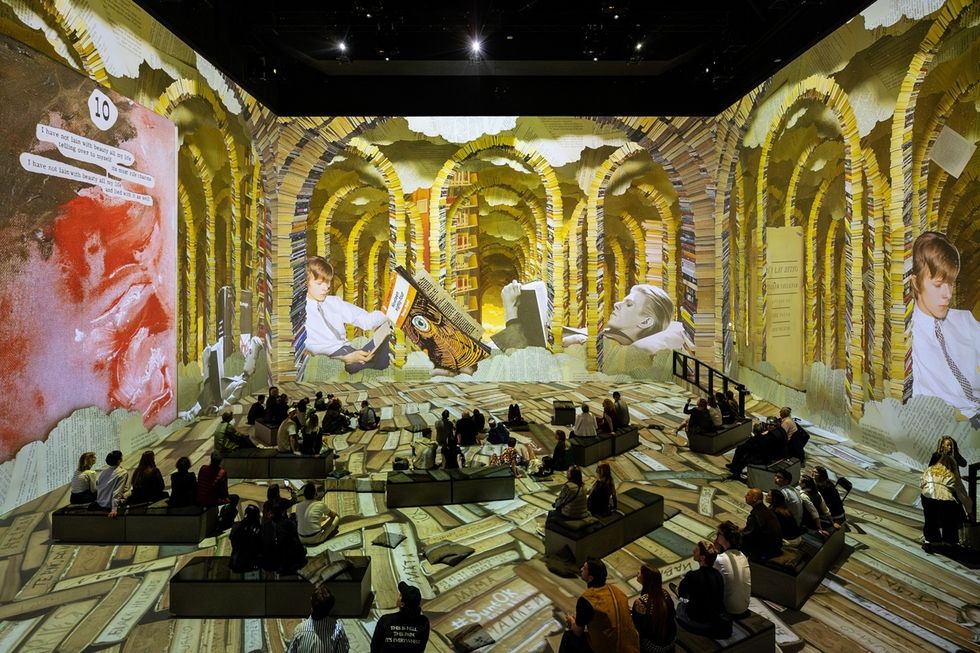 David Bowie: You’re Not Alone at Lightroom, LondonCredit Justin Sutcliffe
Ten recurring themes emerged, from which the team sought to develop mini-stories and a narrative flow. Meanwhile, the visual material was developed in parallel.
“Very early on, we knew that we wanted to make live performance a really big part of this,” says Wexler.
“The way the format is delivered in a large room with a huge sound system, shared with hundreds of people, just lends itself to the atmosphere of a live performance.”
Supported by the Archives, the team sought out ‘tentpole performances’ on which to centre the experience. Some of these are well known, but others are previously unseen.
“That was a thrill,” says Wexler. “We spent ages watching performances, working out what existed, in what quality, and how we could structure a show around these moments.”
Elevated & intimate
From here, the team created a framework of organic, looping thematic chapters that reflect Bowie’s dreamlike thinking, spirituality, and extraordinary creative process.
“It was quite an iterative process, really. It was a big table covered in ideas, shuffling those things around, and then looking for those juxtapositions,” says Wexler.
“You put one performance next to a piece of interview that David gave, and suddenly there's some kind of different reading of that performance when you’ve got those words ringing in your ears, that elevates both.”
A guiding principle of the design was this feeling of a free-wheeling conversation with a friend, which reflects the deep connection many people have with Bowie.
“And then you get into the big performance moments, and it just bypasses your brain entirely and goes straight to your heart,” says Wexler. “That's when the hairs go up on the back of your neck, and it really takes off.”
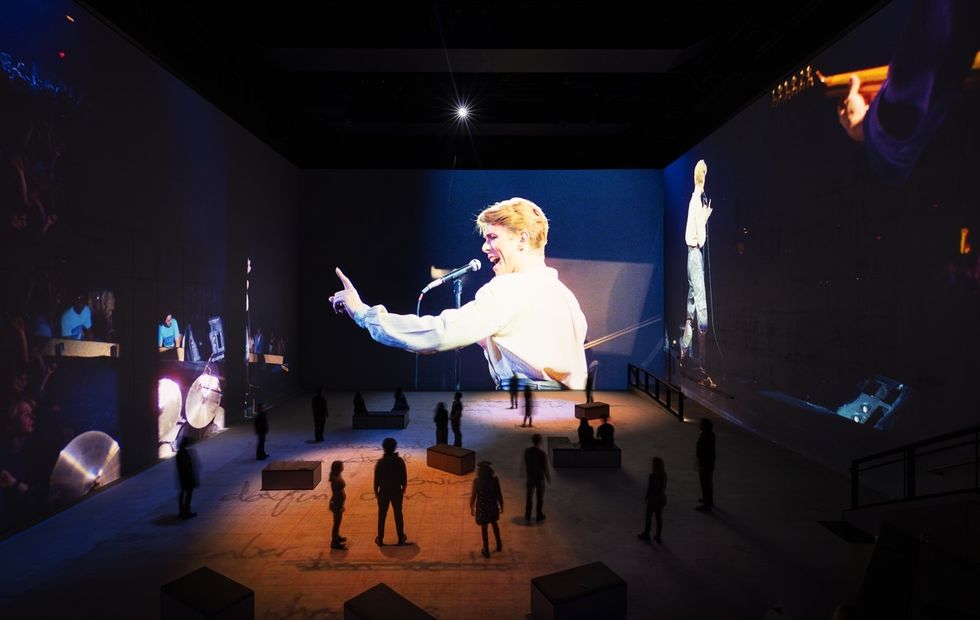 David Bowie: You’re Not Alone at Lightroom, LondonCredit Justin Sutcliffe
Additionally, Wexler says, the show presents “so much material in there from other absolutely incredible artists, like the photographers who worked with Bowie across his life.”
This includes music videos by iconic film directors, such as Mark Romanek and Floria Sigismondi.
“They’ve all been on board with letting us use their work in sometimes really quite extraordinarily destructive ways. They've really engaged with the spirit of what we're trying to do, which has been amazing.”
The result is an intimate, generous show that reflects Journey’s dedication to creating shows that elicit an emotional response.
Sparking curiosity
And this emotional resonance extends beyond Bowie’s dedicated fanbase to casual visitors, for whom the experience serves as a primer on Bowie’s work.
But beyond this, Grimmer says, the team “wanted to turn people on to being more curious themselves.
“In a way, the other guiding principle was to think of this not really as a show about David Bowie but about the way that he saw the world.
“So using him as a kind of catalyst for thinking about creativity, curiosity, openness, trial and error, identity, all those things.”
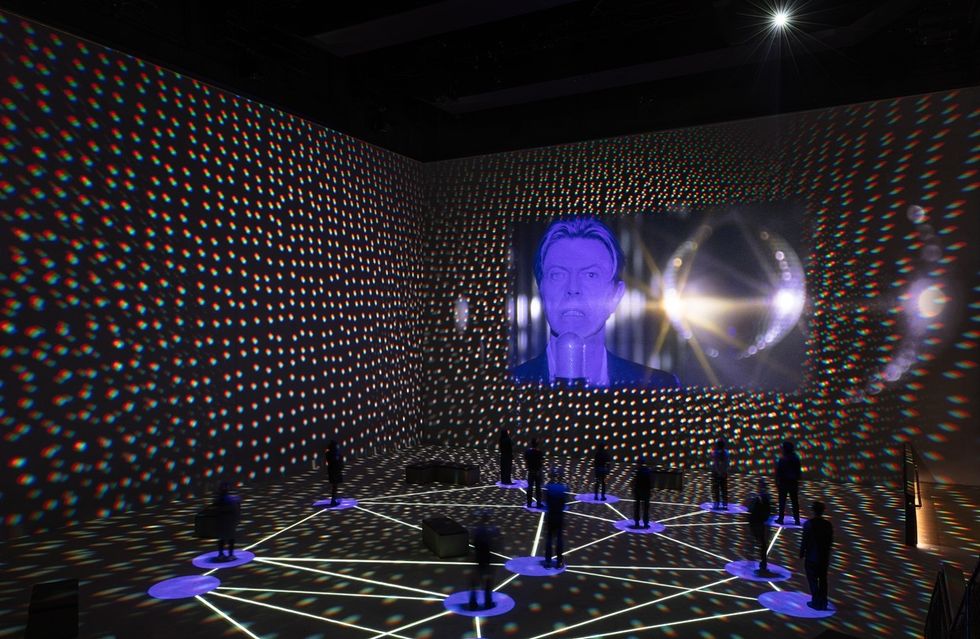 David Bowie: You’re Not Alone at Lightroom, LondonCredit Justin Sutcliffe
In this, the studio focused on Bowie on a human level, rather than his many personas and myths.
“Once we tapped into that, I don't think we worried too much about whether or not we were speaking to the right demographics,” says Grimmer. “It felt like a universal enough story that people would connect with it, whether they were fans or not.”
This sense of universality and emotional connection is a thread throughout the studio’s work for Lightroom.
Audiences at David Hockney: Bigger & Closer (not smaller & further away), Wexler says, tended to leave the show talking about simple pleasures and the beauty of our world.
Likewise, the response to Moonwalkers was not to marvel at the production’s accuracy, but at the ingenuity of human beings.
“It's about feeling somehow transformed, feeling inspired,” says Wexler, “and that's something that David Bowie, as a subject, is a gift for.”
From exhibit to experience
Journey previously looked to Bowie as a subject through the design of the V&A’s David Bowie Is exhibition, the most-visited touring exhibition in the museum’s history, with 2 million visitors across 12 cities.
Grimmer, who served as the creative director for this exhibition, contrasts and compares the two projects:
“The main difference specifically is about time, and the extent to which you're creating a communal experience in Lightroom, versus a quite solo experience at the V&A.
“At the V&A, everyone was wearing headphones, and so the invitation to the audience was to really lose yourself as an individual in this story.”
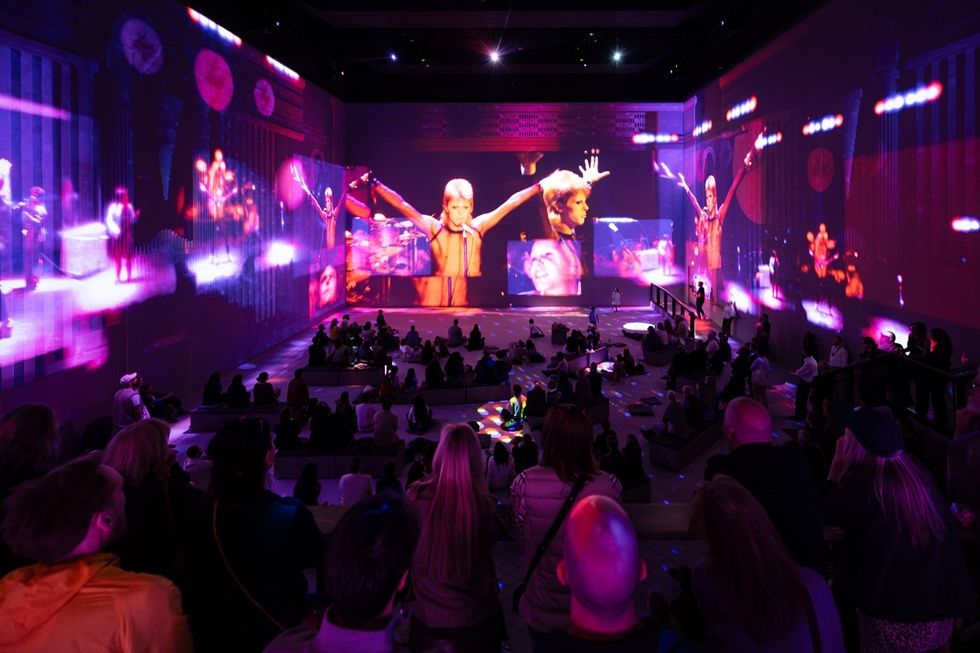 David Bowie: You’re Not Alone at Lightroom, London Credit Justin Sutcliffe
The Lightroom show, he adds, is “more about coming together with other people to experience it.”
First opening in 2013, David Bowie Is served as an inspiration for Lightroom, which followed a decade later as a joint venture between 59 and London Theatre Company.
Its final exhibition space in the V&A’s North Court featured a series of very high-projection surfaces that doubled as costume cases.
“We had a moment where audiences were in a much smaller footprint, inside video footage, and listening to music at high volume,” says Grimmer.
“And at the end of it, we were like, we could make something more of this format.”
Embodying ethereal content
“A massive difference is that we all know how the story ends this time round,” says Wexler, “which does give it a different flavour at moments.
“We haven't really dwelt on David's death in this piece at all, but his music on spirituality and what it felt like to feel alone have a different resonance in this context.”
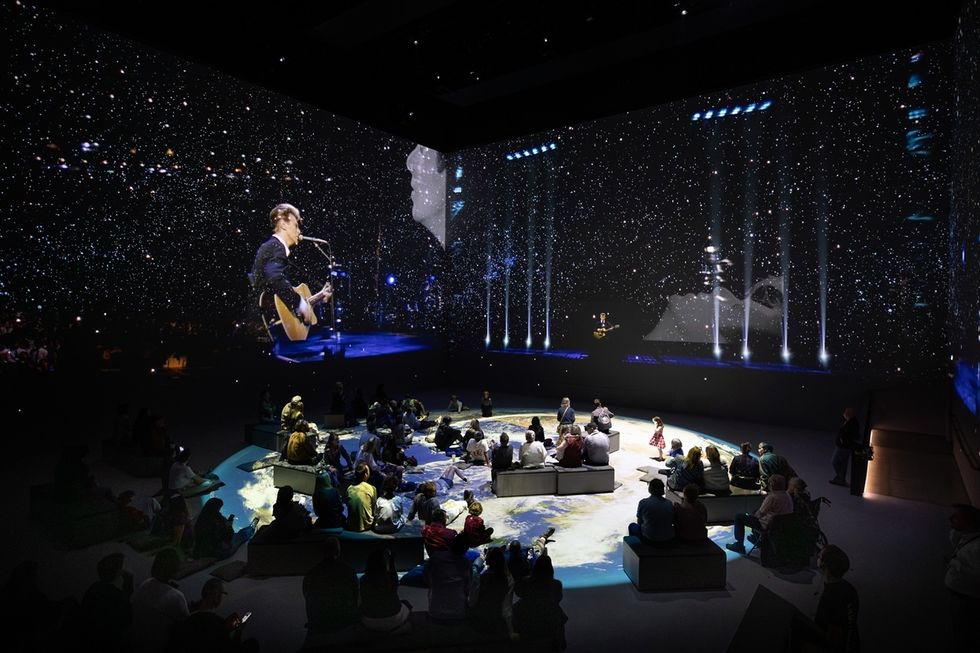 David Bowie: You’re Not Alone at Lightroom, LondonCredit Justin Sutcliffe
Some of the topics explored in the Lightroom show have few physical objects and so are better suited to the immersive format.
“He had this lifelong fascination with spirituality,” says Wexler. “He didn't write a lot down about it. He didn't collect many things. But it's clearly something he wrestled with from a very young age through to the end of his life.
“And that's something that we're able to explore because of the very candid, honest and heartfelt interviews that he gave, especially in the last 15 years of his life.
“There are definitely elements of the story that we can tell in this format that probably just weren't available at that moment that the V&A exhibition was being put together.”
Additionally, the format provides opportunities where materials were scarce: “where all you've got are snippets of VHS quality material and maybe some photographs and this interview footage,” says Wexler.
“That was a big challenge. How do we let it sit alongside really high-fidelity material, without it feeling like a dip? And the animation team knocked it out of the park.”
Intentional collecting
Journey approached the Archive’s material as an active medium for storytelling, rather than a static or reverential exhibit.
In addition to rare and never-before-seen material, the show includes newly reworked music stems and interactive moments.
“We were very lucky to have the blessing of the Estate to do this, and that was critical for us,” says Grimmer. “We wouldn't have done it otherwise because it felt like it had an inbuilt authenticity.”
Archives, he says, are “treasure troves and there's a whole vein of shows to be made that bring archives to life and tap into the stories that they represent.”
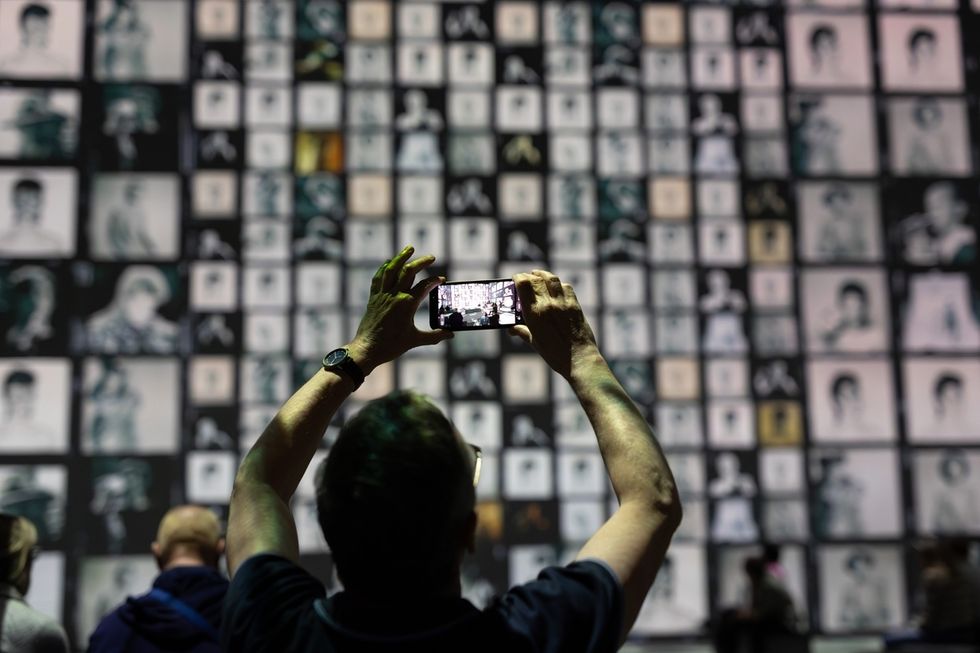 David Bowie: You’re Not Alone at Lightroom, LondonCredit Justin Sutcliffe
In Bowie’s case, the Archive has a marked intentionality.
“I think he knew that these were things which would one day be seen by people, and he kept everything,” says Grimmer.
“And so it didn't feel in any way voyeuristic to be doing this. It felt like we were in some ways delivering on something which had been teased and offered up.
“This was material which was not secretive. It was material that was intended to be shared. But finding the way to do that, finding the right format to do that, is a challenge.”
Spatialised sound
And at Lightroom, the materials could be honoured through amazing visuals and an advanced spatial audio system.
See also: Feel the Sound: exploring audio experiences with Barbican Immersive
The team worked with regular collaborator Gareth Fry, a multiple Olivier and Tony Award-winning sound designer.
As a result, the tracklist was entirely reconfigured for Lightroom’s unique spatial audio system, giving the audio extraordinary clarity and emotional impact.
“The Archive had very generously given us the multitrack recordings from those concerts, so we had all the original microphone feeds,” says Wexler. “And Gareth started putting it into the sound system and working up a mix.
“There was this transformative moment when it suddenly felt entirely different from the recording. It's about the immediacy of hearing David's voice delivered front and centre, with a clarity you can't get in another environment.
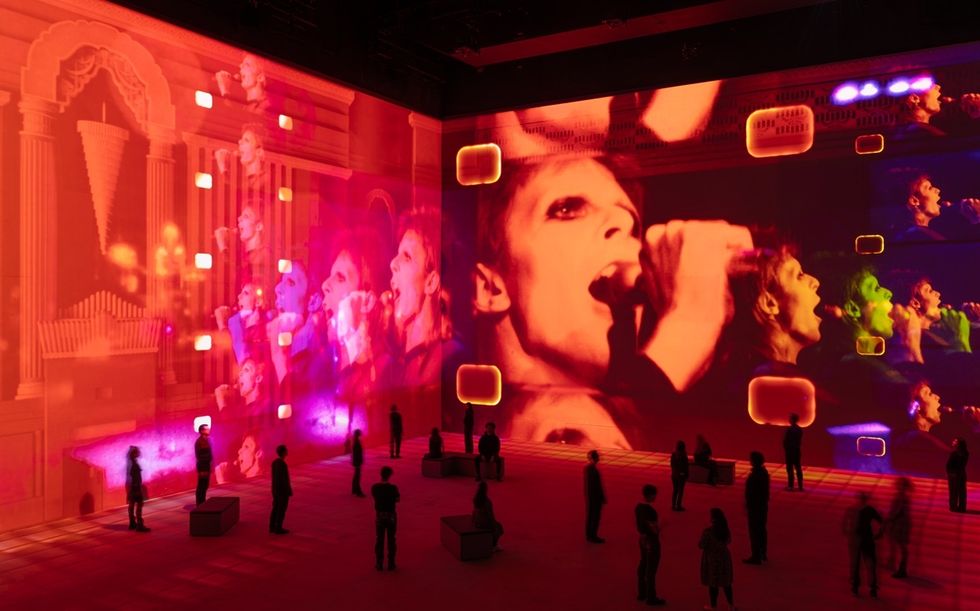 David Bowie: You’re Not Alone at Lightroom, LondonCredit Justin Sutcliffe
“Hearing those moments really cemented how we were building the show. If it's going to be this big when we get to the big moments, that guides us on what we can do and how much weight we can put onto those moments.”
Other technologies used in the show include Lidar, which tracks people's locations in the space.
“It's a very small moment, and it's deliberately small because it absolutely doesn't want to become a technological showcase,” says Wexler.
“We've been exploring that, and it's been successful. We might well bring more of that into future shows.”
Technological evolution
Lightroom’s shows, adds Grimmer, have rapidly evolved in terms of production.
“The Hockney show was incredibly simple in some ways,” he says.
“Those shows were put together using a media server much more in the vein of a piece of video design for a stage show; it was really composed in server. And we’ve moved away from that for the workflow in this show.
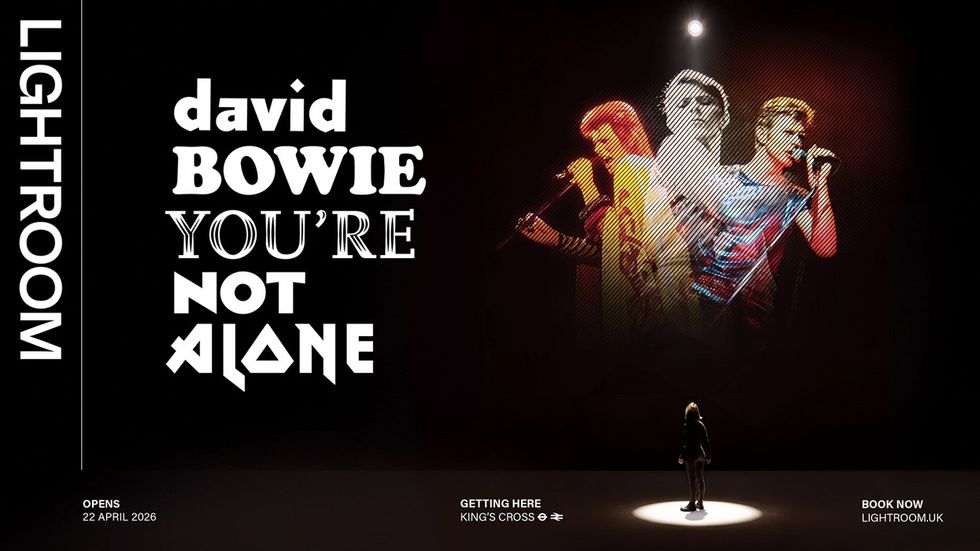 David Bowie: You're Not Alone is currently booking until 10 OctoberImage courtesy of Lightroom
“It's much more like making five feature-length films for the different surfaces. And that has an impact.”
This is the studio’s fifth major production for Lightroom, and each time the studio develops a show, the system needs to evolve.
“It's such a nascent form. We're really having to invent the whole thing as we go, which is a real joy to do, but it's not without its challenges as well.”
“In some ways, we're quite reactive from a technological perspective.
“When you're making shows for large numbers of people, the tech has to be robust, and it has to be affordable.
“So actually working out what the tools are that are going to be suitable for the job, and then what interesting and unexpected things you can do with them, is often the approach.”