I was recently in Budapest, sitting in the outdoor pools at Széchenyi Thermal Bath, surrounded by tourists, locals, retirees playing chess in the water, and the occasional group that seemed to have been there long enough to forget what time it was. And possibly what country.
Nothing about it felt programmed. No host, no onboarding, no carefully structured journey. And yet, something was clearly happening.
People weren't just occupying the space—they were settling into it, aligning with it, participating in something that didn't need to announce itself in order to exist. Conversations drifted. Strangers became temporary regulars. Time stretched just enough to feel shared.
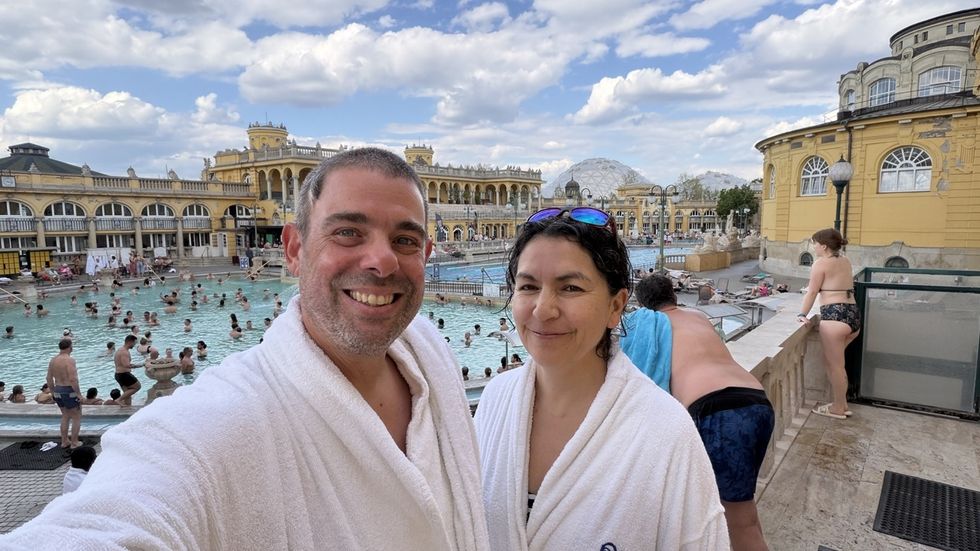 Pizante at Széchenyi Thermal Bath
It would be easy to romanticize a place like this as a relic or an architectural holdover from a different era, preserved more out of tradition than relevance. But what it reveals is something more structural.
For most of history, we didn't need to design social connection this carefully. The conditions that made it possible—time, presence, proximity, a kind of unspoken permission to linger—were simply there.
Those conditions aren't there anymore.
The third place problem
Sociologist Ray Oldenburg called it the "third place"—the space between home (the first place) and work (the second) where social life actually happens. Cafés, bars, parks, barber shops. Places that were informal, accessible, and, most importantly, not trying too hard. You didn't go there for an outcome.
You went there to be around other people, and over time, something like community emerged. The bar didn't have a founding story. The barber wasn't also a thought leader. The park hadn't been curated into an experience ecosystem by a team of urban happiness consultants.
What made these spaces work wasn't the format. It was the conditions. They allowed for time without urgency, presence without performance, and interaction without structure. They were neutral enough to be easy, but consistent enough to matter. You could return without planning. You could belong without being invited.
 Othership
Those conditions have been eroding for a long time. Work has become more diffuse and more demanding. Home has absorbed more of life. Social interaction has been optimized into something faster, more efficient, and more individualized.
Even when people gather, they're often doing so alongside a second layer of attention—messages, feeds, notifications—pulling them elsewhere.
The result isn't that people stopped going out. It's that the environments they go into are less capable of holding anything beyond the moment itself.
We didn't lose the third space all at once. We gradually lost the set of conditions that made it work.
We didn't lose the bathhouse. We dismantled it
For most of history, the bathhouse wasn't a niche offering. It was part of how social life was organized. In ancient Rome, the thermae functioned as entire civic ecosystems—places where bathing, conversation, politics, and leisure unfolded in the same shared environment.
They weren't designed as escapes from daily life. They were extensions of it. Water was the medium. Social life was the function.
That function didn't disappear overnight; it was gradually reduced. By the early twentieth century, public baths had been reframed as instruments of hygiene, part of a broader moral and public health effort to clean the city and, implicitly, civilize it.
The goal was no longer to gather, but to wash. What had once been a place to linger became a place to pass through.
Even as the civic bathhouse faded, the underlying need for communal space persisted. In more marginalized contexts, most notably in gay bathhouses, these environments continued to serve as vital social and cultural anchors, offering connection, safety, and a sense of belonging where few alternatives existed.
Their eventual closure didn't just remove venues. It erased entire social ecosystems that had been doing quiet but essential work.
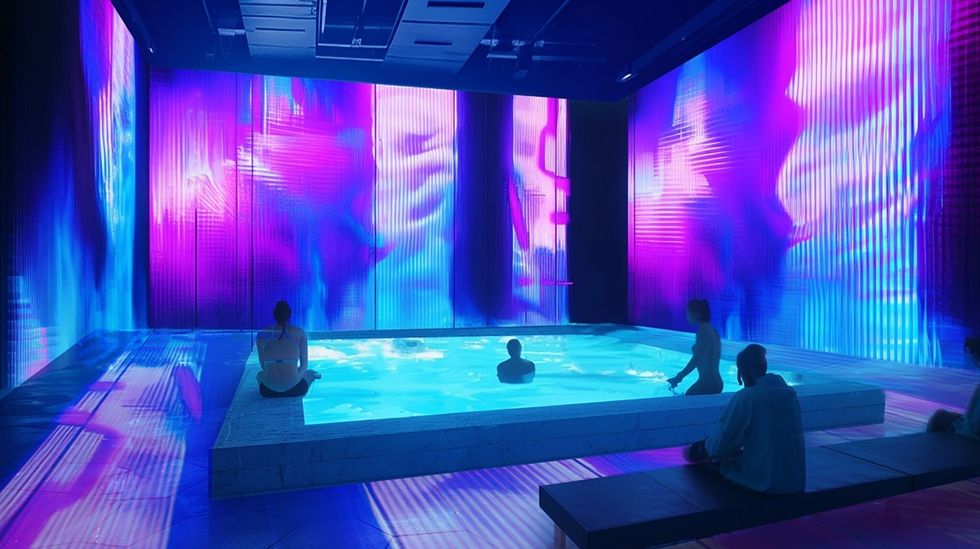 Submersive
By the end of the twentieth century, the core functions of the bathhouse had been fully disaggregated. Hygiene became a skincare routine with seventeen steps and a serum that costs more than therapy.
Relaxation became a Calm app subscription you downloaded in an airport and opened twice. Social life shifted to bars, and then to a group chat that nobody leaves because nobody knows how.
We didn't lose the bathhouse. We dismantled it—and handed each piece to a separate industry to monetize independently.
The experience economy's awkward inheritance
Understanding what these environments are now rebuilding requires understanding what displaced them, not just culturally, but economically.
The bathhouse didn't fade because people stopped wanting communal space.
It faded in two stages: first, the experience economy packaged and sold what it once provided for free—relaxation, social ritual, a temporary escape from the demands of daily life.
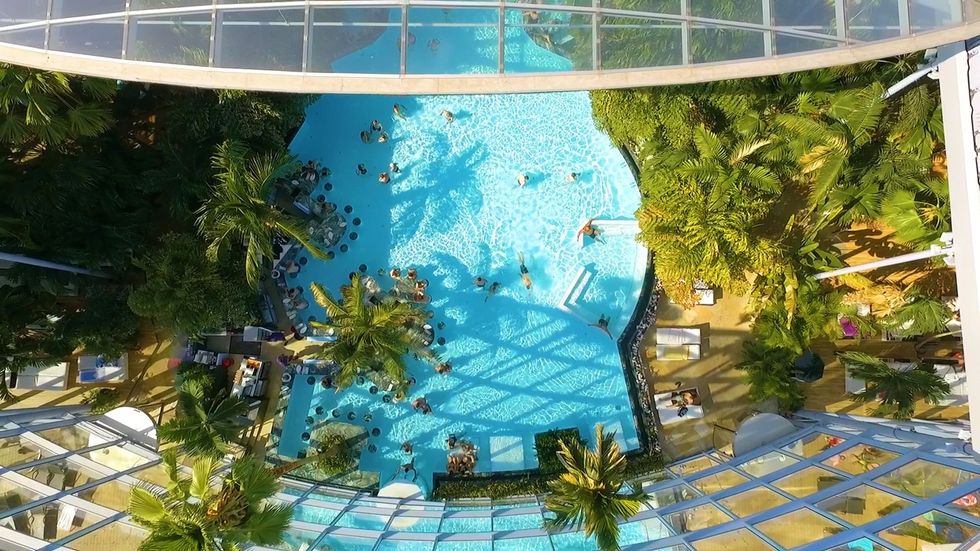 Therme
Then social media arrived and simulated the social parts entirely, offering the feeling of connection without the inconvenience of other people's actual presence.
Both forces made the same essential bet: that the individual was the right unit of design. Not the community. Not the shared state. The guest. The user. Which, for a while, worked brilliantly, and which created exactly the conditions these new bathhouses are now designed to undo.
How much design does human connection need?
What's emerging now doesn't look like a revival. It looks more like a recombination of elements that once lived together, now brought back into alignment with a level of intention they didn't previously require. The modern bathhouse isn't relying on ambient social dynamics to do the work. It's designing for them.
What's notable is that this isn't taking a single form, and that's not an accident.
Because the deeper question these environments are all grappling with is the same one, answered differently: how much design does human connection actually need? Push too hard, and you manufacture something that feels engineered. Pull back too far, and you get ambient space that holds nothing.
Every one of these new bathhouse models sits somewhere on that dial, and where they land tells you something about what they think people are actually missing.
Three builders make the case more clearly than any theory would.
Othership starts from the belief that the conditions for genuine connection don't disappear; they just stop being available. Which turns out to require quite a lot of deliberate design to fix.
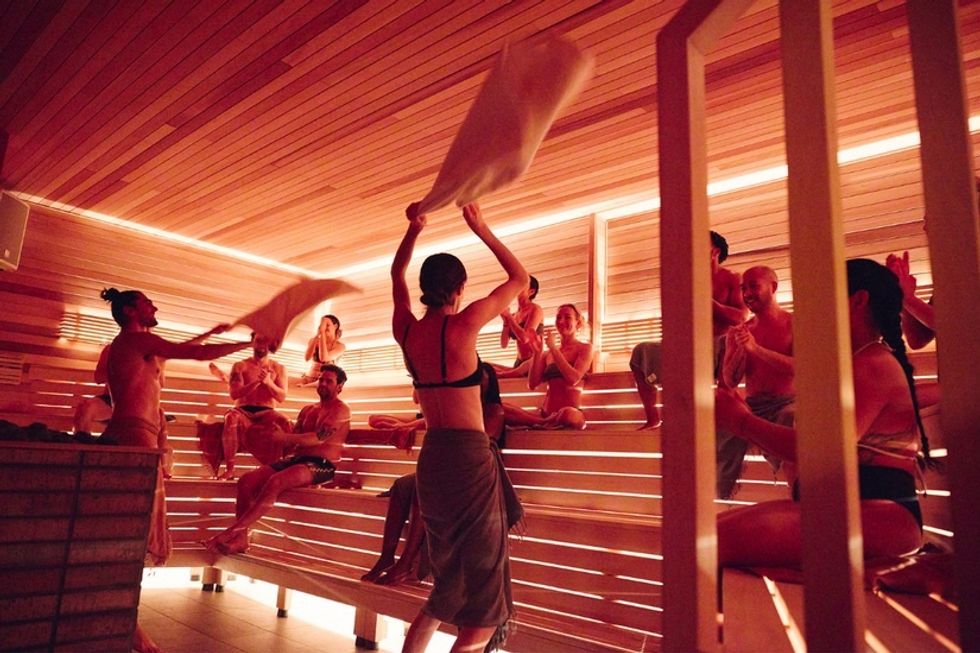
Othership is not a place you simply enter. It is an experience you move through. Sessions are timed. Music builds. Breath is guided. Heat and cold are sequenced into something closer to a shared emotional arc than a passive activity.
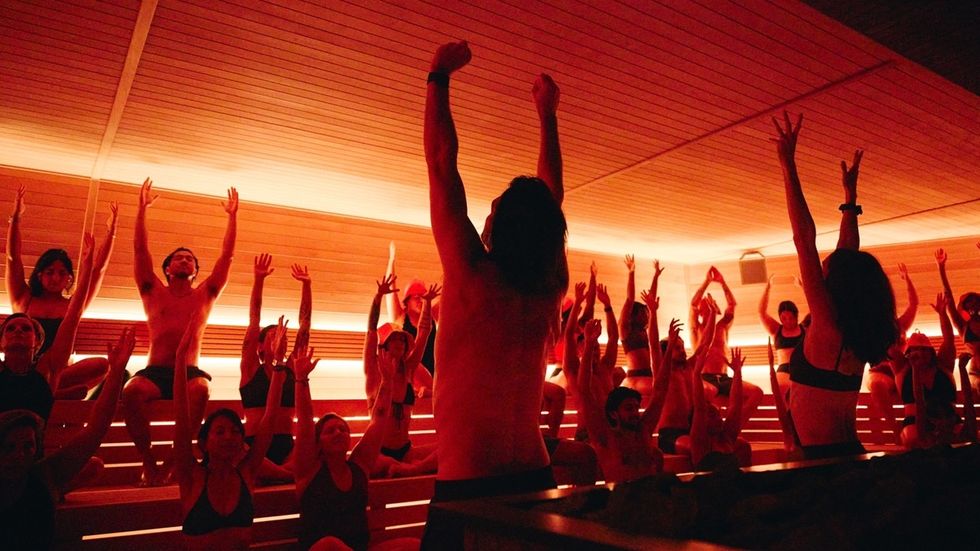 Othership
The goal isn't just to provide space, but to actively produce connection, to lower the friction of participation and replace the loose dynamics of a bar or club with something more synchronized, and more intentional.
It is, essentially, a social ritual that unlocks something most people already have but rarely get the conditions to access. Which, in fairness, is most of us.
That logic has a personal origin.
Robbie Bent, who took his first date to a Russian bathhouse for a cold plunge, married her, and spent the next decade trying to bottle whatever happened in that water and hand it to strangers, built Othership not from a business plan but from a conviction: that the conditions for genuine human connection still exist in people, they just need somewhere to surface.
"People are hungry to connect,” says Bent. “The more emotionally-driven the experience, the more sought-after it is. We're not building a spa. We're building the conditions people have lost.”
Therme Group operates at an entirely different scale, one that asks whether civic integration can restore the ambient conditions themselves. That if you build big enough and open enough, the organic dynamics return.
Here, thermal bathing sits alongside cultural programming, leisure, and public life, forming large, multi-layered environments designed for extended dwell time and broad accessibility.
These are not solitary rituals. They are social ecosystems, places where the bathhouse is one component in a larger, integrated answer to how people spend time together in a city.
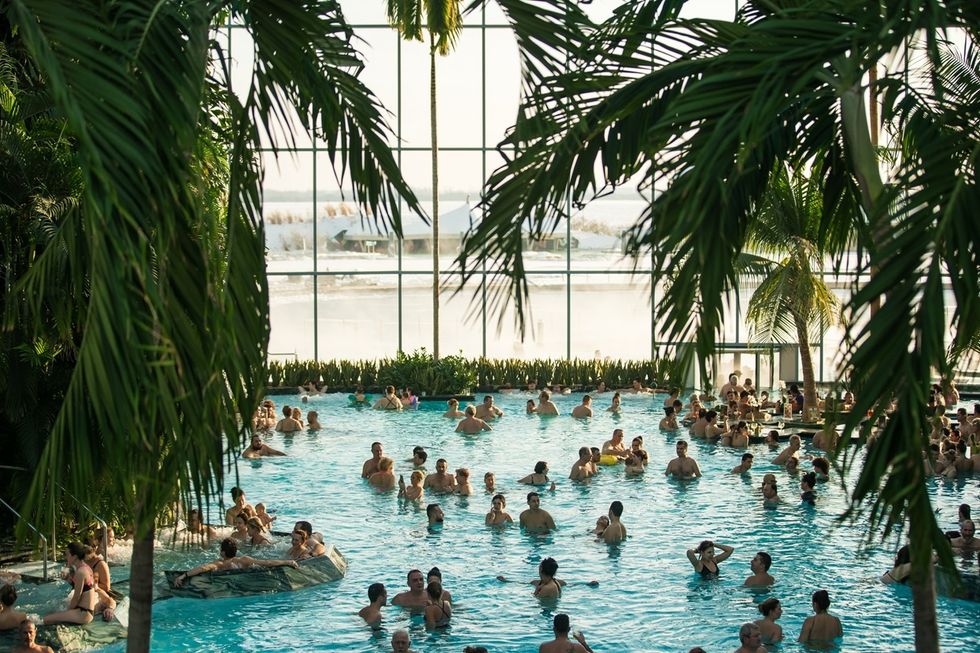 Therme
Think less urban shamanism, more functional civic plumbing. Except the plumbing costs $40 and has a restaurant inside it.
That ambition has a specific intellectual pedigree. Adam Bamba Tanaka, who holds a PhD in Urban Planning from Harvard, has taught at Columbia, and arrived at the wellness industry via city governments and infrastructure policy, is the rare person for whom a thermal pool and a transit hub occupy the same category of thought.
As COO of Therme Group US, he is building what he has always built: the kind of spaces cities need but rarely think to fund.
"Wellness isn't a luxury—it's a civic necessity,” argues Tanaka. ”We're not just building a spa or a bathhouse. We're building social infrastructure for community wellbeing, not so different from parks, libraries, or museums."
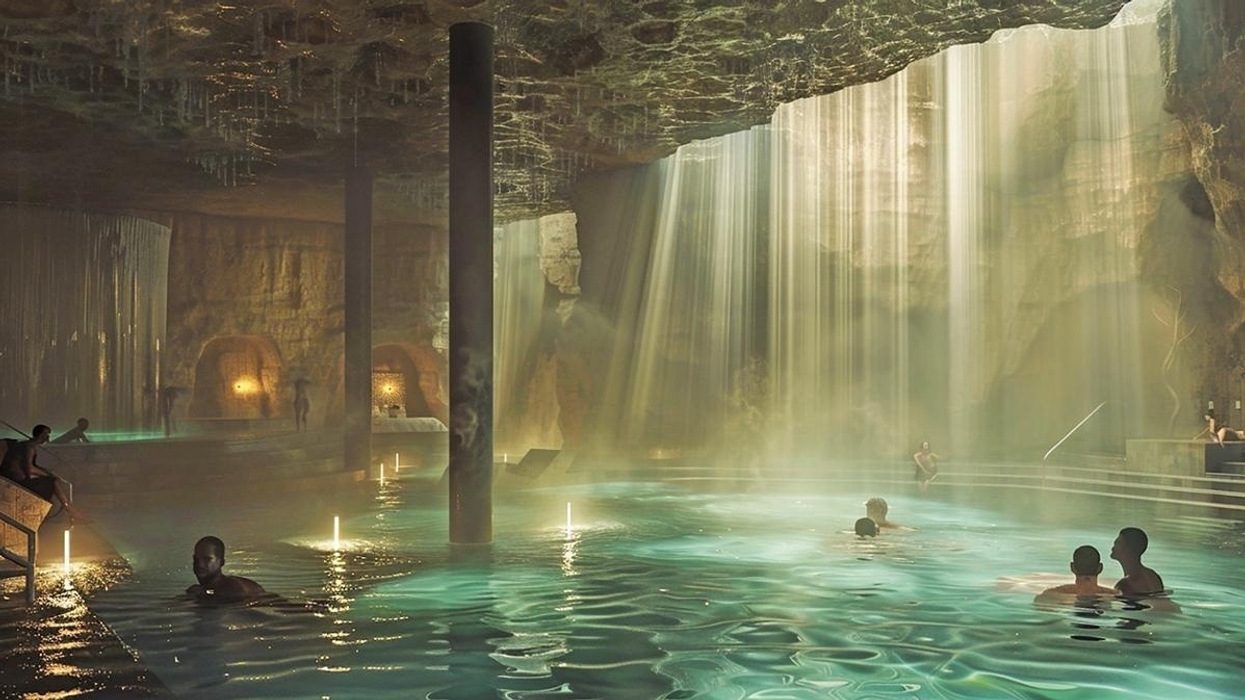
The latest entrant, Submersive, slated to open in summer 2027, starts from the belief that the problem isn’t purely social; it’s perceptual. That before people can connect with each other, they need to reconnect with themselves, and that requires altering the state first.
Light, sound, temperature, and spatial sequencing are used to shape perception itself, not instead of social connection, but in service of it. The idea is that certain states—awe, openness, presence—make connection more likely, more available, and more durable once it happens.
Underlying that is a specific view of how those states work. Submersive draws, in part, on research around the brain’s Default Mode Network—popularized by Dacher Keltner—which suggests that experiences like awe can quiet self-referential thinking and make people more open, and more inclined toward connection.
The goal isn’t to remove the individual from the experience, but to loosen the grip of the self just enough to make room for something shared.
The result sits closer to immersive art than traditional wellness, where the goal is not just to gather people, but to shift them into conditions where gathering actually works. Which is either visionary or a lot to ask of a Tuesday night, depending on how much of yourself you're willing to hand over to a room.
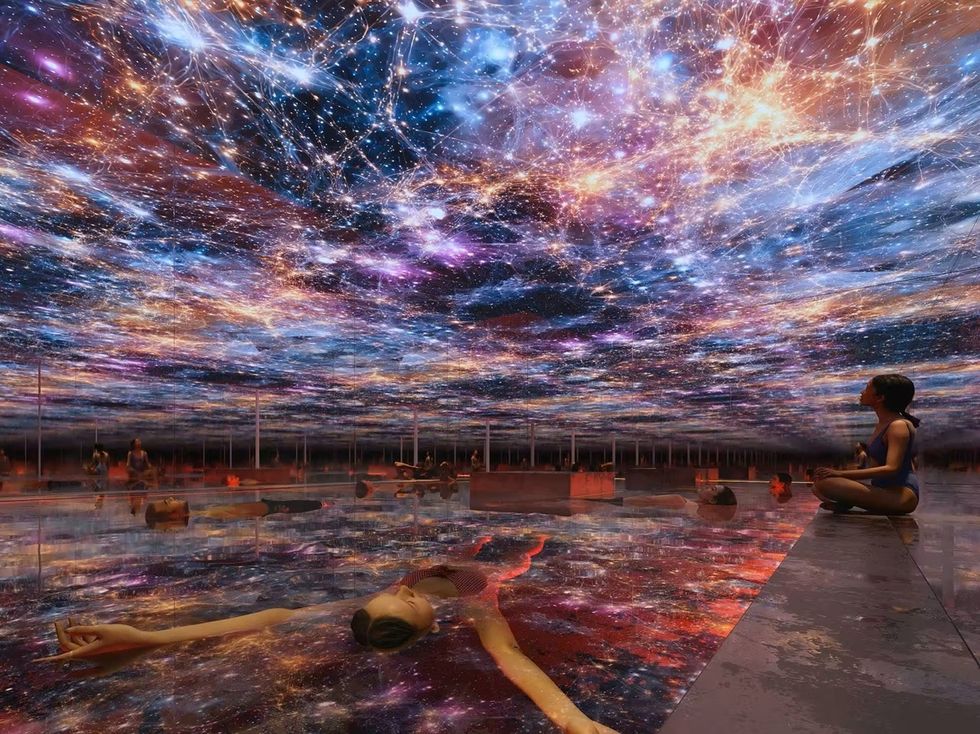 Submersive
That framing tracks when you consider its source.
Corvas Brinkerhoff, a Meow Wolf co-founder who walked into a Japanese bathhouse in Santa Fe and saw, almost immediately, what immersive art, steam, and cold plunges could become together, has built Submersive not as a spa, but as what he describes as a portal.
This is an environment designed to guide the senses into a different register, and, in doing so, make people more available to themselves and to each other.
As Brinkerhoff puts it:
“The bathhouse has always been a place where people go to reset and reconnect. We're taking that ancient impulse and giving it the full power of immersive art and modern neuroscience.
"We're not creating an entertainment experience or a spa experience. We're creating access to an environment that takes people to an elevated state of being.”
And then there are environments like World Spa, löyly, Bathhouse, Remedy Place, and AIRE Ancient Bath, which bet on pluralism: that offering enough modalities creates its own permission structure, where discovery replaces prescription.
Less choreographed, but still structured, these spaces blend traditions into something exploratory and open-ended, inviting people to find their own depth rather than follow a designed arc.
None of these frames are wrong. But they point to something important: there is no consensus on what we lost, which means there's no single design answer for how to get it back. What they share isn't a solution. It's a refusal to accept that the conditions are simply gone.
The mirror has a structural limit
I've written elsewhere in this column about what I call main character energy design—an increasingly prevalent design logic, where experiences are built around individual narrative, personalization, and the sense that everything is, in some way, for you.
It's not a cynical force. In many contexts, it's been a genuinely powerful one, giving agency to guests who were previously just witnesses, and creating emotional stakes where there were none.
But it has a structural limit. An experience built entirely around affirming the individual has no mechanism for producing what the bathhouse produces: the feeling of being part of something happening to everyone at once.
You can't drop a spatial audio installation between two retired strangers playing chess in a thermal pool and call it immersive. They were already immersed. That's the whole problem.
The bathhouse doesn't fight main character energy. It dissolves it. Not through deprivation, but through replacement, substituting individual narrative with shared physical rhythm, personalization with synchronized bodies, identity projection with something closer to collective presence.
The phones are gone, not because they're banned, but because there's nothing to post that would capture what's happening. This is, quietly, a countervailing social force. And it's arriving at exactly the moment the culture is beginning to notice what the mirror costs.
Attention, it turns out, is a fragile foundation. It fragments easily. It competes with itself. And the more aggressively it's pursued, the less durable the experience tends to be. What looks like engagement is often just interruption, repeated at scale.
Attention isn't something being fought over here. It's something being held in place. Which, if you've tried to watch a film recently without checking your phone, you'll recognize as a genuinely radical proposition.
That shift has consequences. It changes what the product actually is. Not content. Not spectacle. Not even relaxation, exactly. What's being produced is coherence—a temporary alignment of people, bodies, and attention within a shared environment.
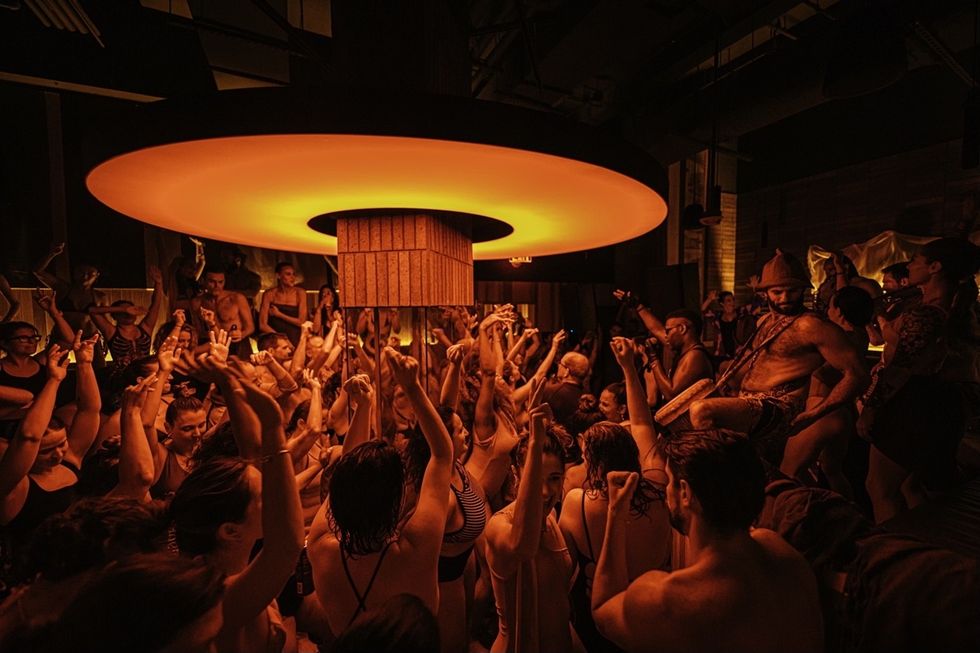 Othership
For most of history, that kind of coherence was ambient. It emerged from institutions, rituals, and social structures that didn't need to be designed because they were already embedded in daily life. Today, it has to be constructed. And increasingly, it has to be delivered with enough consistency to function as a repeatable experience.
The bathhouse, in this sense, isn't stepping outside the modern experience economy. It's pointing to what comes after it.
Joe Pine, who coined the term 'experience economy' in 1999 and has spent the intervening decades watching the world catch up, argues in his new book The Transformation Economy that memorable experiences are no longer enough.
“As goods, services, and experiences are increasingly commoditized,” posits Pine, “what people are seeking is transformation: to achieve their aspirations, to become who they want to be.”
The bathhouse, it turns out, has been in that business for two thousand years. It just never had a framework to prove it.
On purpose
Back in Budapest, nothing about Széchenyi Thermal Bath felt like it was trying to prove anything. There was no narrative to follow, no outcome to achieve, no expectation beyond staying long enough for the experience to take hold. And somehow, that was enough. The space didn't need to facilitate connection. It simply allowed it to happen.
That's what makes it so instructive. Not because it represents a model to replicate, but because it reveals what used to be ambient—what once existed without design, without programming, without intention. A set of conditions that made shared experience feel natural, rather than constructed.
What's emerging now, across this new generation of bathhouses, is not a return to that state. It's an acknowledgement that it no longer exists.
The environments being built today are doing something more deliberate: reconstructing those same conditions, piece by piece, using design, ritual, and operational precision to produce something that once happened on its own.
If the last decade was defined by the capture of attention, this one may be defined by what happens when attention finally has somewhere to settle. Not in content, not in feeds, but in physical environments that can hold it, collectively, and for long enough to matter.
In Budapest, it still works without trying. Everywhere else, we're starting to rebuild it, on purpose.
This article is part of an ongoing exploration of the evolving immersive landscape: how we lost our way, who’s fighting to bring meaning back, and why it matters.
For more on what this column is all about, start with Is this article immersive?, where I lay out the mission: reclaiming immersion from the gimmick merchants and giving it back to those who create experiences worth disappearing into.