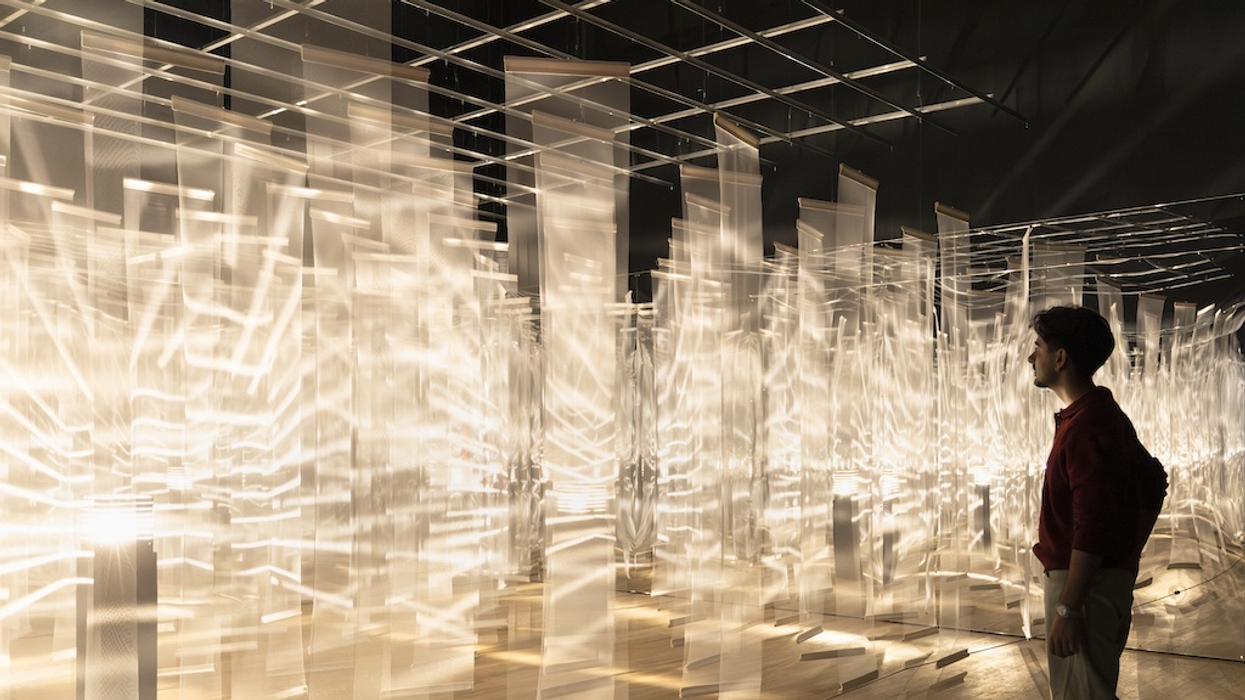

While much of the twentieth century was busy hanging pictures on walls and asking people to admire them from a respectful distance, Julio Le Parc looked at the whole arrangement and decided it seemed unnecessarily sedentary.
He filled rooms with reflections, movement, color, and uncertainty—artworks that behaved less like objects and more like weather systems, turning ordinary museumgoers into explorers wandering through storms of light.
Le Parc died on 30 May 2026, at 97. On June 11, a major retrospective opens at Tate Modern—an exhibition he was still preparing in the days before the end.
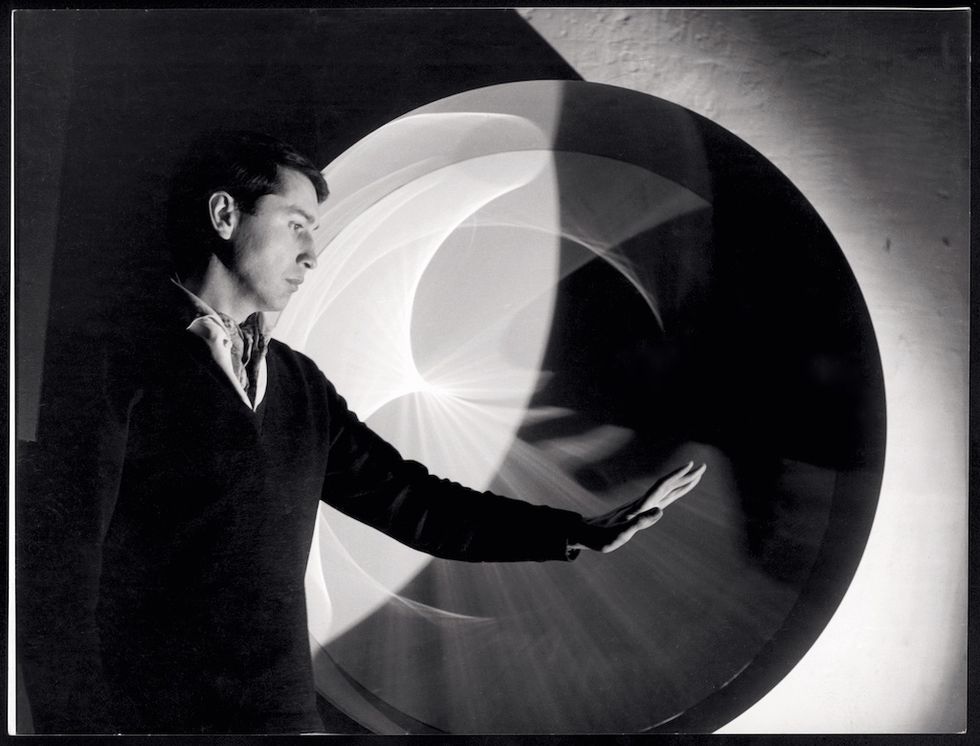 Julio Le Parc with Continual Light Cylinder 1962 © Atelier Le Parc 2026 ADAGP Paris, and DACS London
Most of the tributes have understandably focused on his role as a pioneer of kinetic and optical art. All of that is true. But the immersive field may have just lost one of its most important ancestors without fully realizing he was family.
The work was not something you looked at. It was something you entered.
Sound familiar?
The immersive field has a curious habit of treating participation as a recent technological breakthrough. It seems almost weekly that a new vocabulary arrives, promising to finally explain participation, engagement, wonder, transformation, or human connection.
But long before immersive became a category, and long before anyone discovered that putting the word "immersive" in front of something could increase both ticket prices and investor interest, Le Parc was already wrestling with many of the same questions that animate experiential design today.
How do you turn a spectator into a participant? How do you make someone aware of their own perception? How do you create wonder without relying on a story, a character, a headset, or a screen?
These were not side questions in his work. They were the work.
A room where certainty resigns
If you've never encountered a Julio Le Parc installation, imagine walking into a room where certainty has dutifully tendered its resignation letter.
Light bounces. Shadows drift. Reflections appear where they shouldn't. Objects seem to move, then stop, then move again.
Somewhere nearby, another visitor takes a step and the entire composition changes, as if the room itself has noticed their presence and decided to become collaborative.
Most art asks us to stand still and observe. Le Parc's work politely suggested that standing still might be part of the problem.
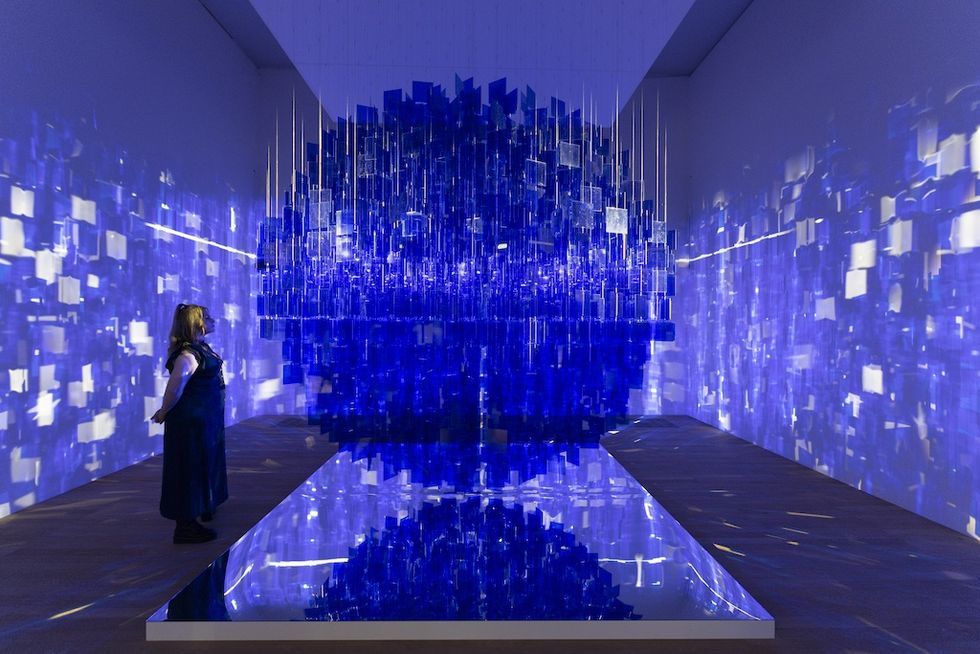 Julio Le Parc at Tate Modern - an installation where visitors are invited to feel like a part of the giant, immersive works of art© Tate Photography (Kathleen Arundell)
Today, when we talk about immersive experiences, we tend to discuss the machinery: real-time rendering engines, projection systems, spatial audio arrays, tracking infrastructure, haptics, sensors, XR hardware, generative AI models, and whatever acronym is currently being demonstrated with great enthusiasm and a substantial capital budget on a trade-show floor.
Le Parc was interested in something more fundamental: what happens when the audience stops being a spectator and becomes part of the system. The machinery may change, but the underlying question does not.
The light was never the point. The point was what happened to people when the light found them.
Many successful location-based experiences understand this instinctively. A visitor inside a teamLab environment, a Balloon Museum installation, or one of Moment Factory's luminous worlds is not simply consuming content. The guest isn't watching the piece so much as completing it.
Step, and it reorganizes around you.
Why he counts as family
So let's be specific about the inheritance.
Le Parc's work dissolves the line between viewer and artwork. You don't simply look at it. You enter it. The experience depends on your presence and participation. Move, and it moves back. Change your position, and the composition changes with you.
The artwork is not a fixed object waiting to be observed. It is a relationship waiting to be activated.
He generated wonder through perception itself. No story world. No cast of characters. No intellectual property. No mythology to memorize. No screen. No onboarding instructions. Just light, movement, space, and the unsettling realization that reality might be a more collaborative process than we usually acknowledge.
Perhaps most importantly, he approached participation through play rather than reverence.
His work was open, joyful, and accessible. Visitors did not need to understand art theory to participate. They simply needed to walk into the room and pay attention.
Taken together, those ideas begin to look remarkably familiar.
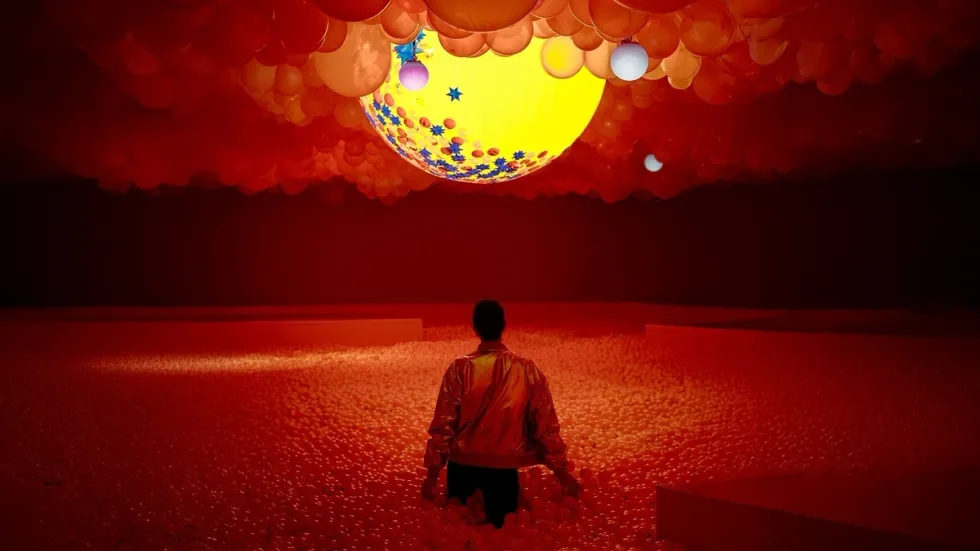 Since its debut in Rome in 2022, Balloon Museum has welcomed more than ten million visitors across Europe, Asia, and North AmericaImage courtesy of Lux Entertainment
A guest enters a designed environment. The environment responds to their presence. Meaning emerges through participation rather than observation. The audience helps complete the work. The experience is not delivered to people. It is realized through them.
That is not merely adjacent to contemporary immersive and location-based entertainment. It is the operating logic.
Roberto Fantauzzi, CEO of Lux Entertainment, whose Balloon Museum has spent the last few years persuading millions of people that contemporary art is considerably more enjoyable once you're allowed inside it, puts it this way:
"What fascinates me is the moment when a visitor stops being a spectator and becomes part of the composition. That is where contemporary experiential art becomes powerful. The most memorable experiences are not delivered to audiences. They are completed by them.
"The artist creates the conditions, but the meaning emerges through participation. In that sense, the visitor is not simply attending the experience. They are helping create it."
Whether the setting is an immersive theater production, a location-based VR experience, a multisensory attraction, an interactive museum environment, a competitive socializing venue, a narrative world, or a large-scale experiential installation, the underlying mechanism remains remarkably consistent.
The formats differ. The technologies differ. The creative approaches differ. The business models certainly differ.
The proposition does not. People enter a space. The space invites action. Action creates meaning.
The skeleton beneath the spectacle
To be clear, Le Parc was hardly alone in exploring these ideas.
A reasonably irritated art historian could point to Yayoi Kusama, James Turrell, Olafur Eliasson, GRAV, Allan Kaprow, Hélio Oiticica, Robert Irwin, and a long list of other artists, movements, and provocateurs who challenged the passive relationship between audience and artwork.
They would be correct.
The point is not that Le Parc invented participation. The point is that he offers an unusually clear view of it.
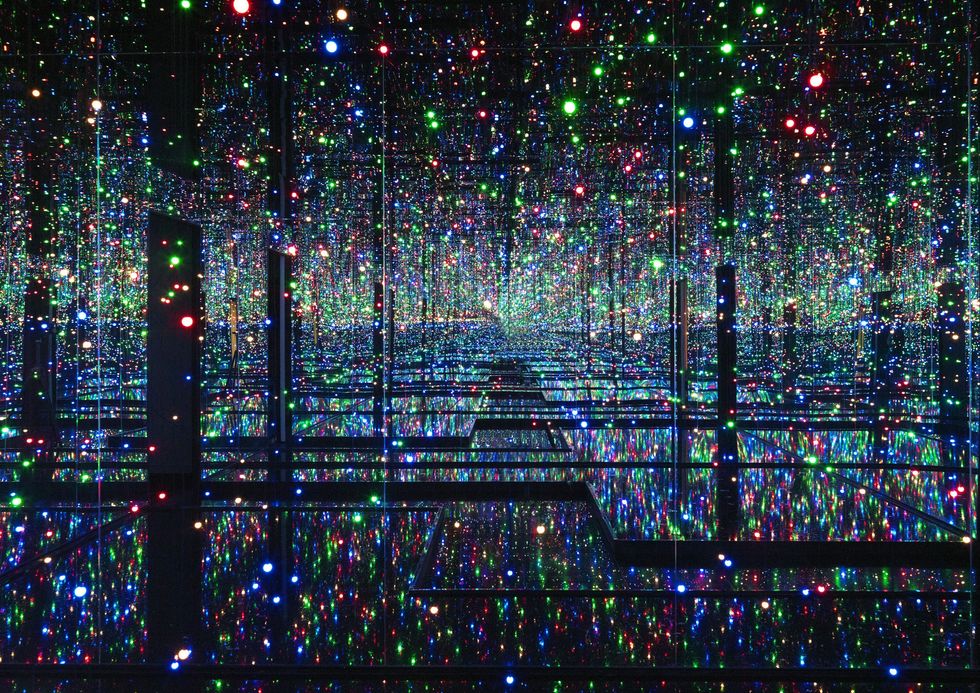 Yayoi Kusama's Infinity Rooms was also hosted by Tate Modern, from 18 May 2021 – 28 April 2024 © Tate Modern/Yayoi Kusama
His work strips the equation down to its essentials. Remove the intellectual property. Remove the narrative scaffolding. Remove the game mechanics, the technology stack, the mythology, the world-building, and the increasingly elaborate vocabulary we have developed around immersive experience design.
What remains is a person, a space, a set of perceptual conditions, and an invitation to participate.
That simplicity is precisely what makes him such a useful ancestor for contemporary creators. Looking at Le Parc is a bit like looking at an anatomical drawing. Much of the flesh has been removed, leaving the underlying structure exposed.
And the structure is remarkably familiar.
A guest enters a designed environment. The environment responds. Meaning emerges through participation. The audience helps complete the work. The experience is not delivered to people. It is realized through them.
Julio Le Parc did not invent immersive experience design. But he understood something fundamental that many of today's creators are still chasing: participation is not a feature of the experience.
It is the experience.
What he leaves us
People do not remember features. They remember moments—the moment they lost track of time, or watched something familiar turn strange. That moment, the small change in the person standing in the room, was Le Parc's entire body of work.
It is also, if we're honest, the only thing the “immersive” field has ever really sold. I have argued elsewhere that state change matters more than story. The same principle applies here.
The real work of experiential design is not the delivery of content but the orchestration of change—change in perception, attention, emotion, or understanding.
Le Parc understood this instinctively.
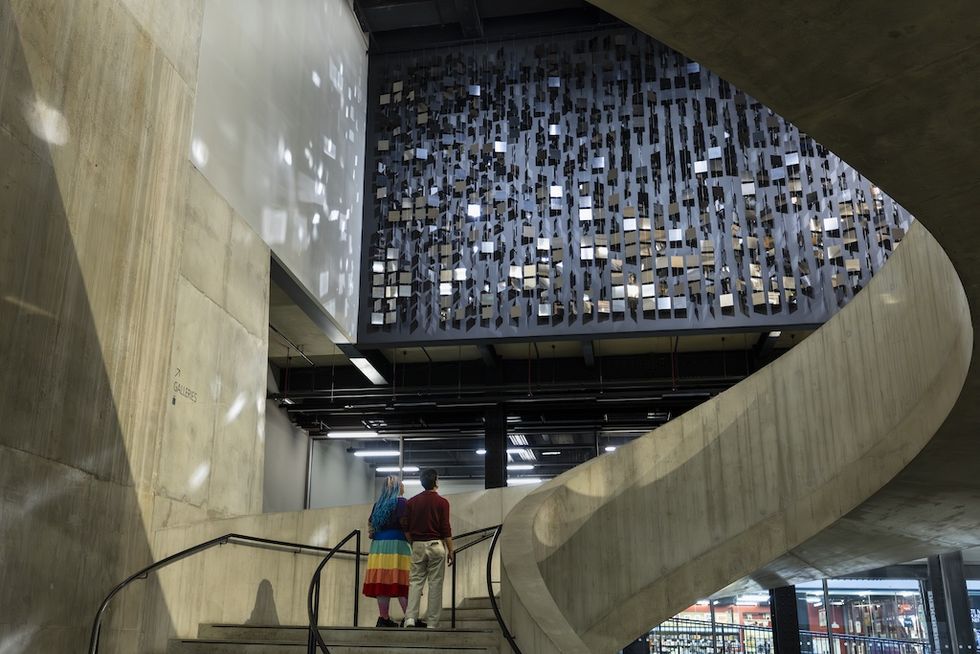 The Tate Modern exhibition features over 60 works spanning Le Parc’s 70-year career, including interactive installations, light sculptures, and geometric abstract paintings© Tate Photography (Kathleen Arundell)
And that is the inheritance worth claiming. As value moves from what we watch to where we go, the asset is not the room, the rig, or the IP—it is what happens to the visitor inside it.
Design for that, and you own a moment no competitor can copy: someone walks in, and walks out seeing the world, and perhaps themselves, a little differently.
Julio Le Parc spent a lifetime pursuing that transformation, and the rest of us are still trying to catch up. His work, meanwhile, continues to shimmer, sway, and gently insist that the audience has a role to play.
This article is part of an ongoing exploration of the evolving immersive landscape—how we lost our way, who’s fighting to bring meaning back, and why it matters.
For more on what this column is all about, start with Is this article immersive?, where I lay out the mission: reclaiming immersion from the gimmick merchants and giving it back to those who create experiences worth disappearing into.