Commercial success metrics: look beyond attendance—track lifetime value, 4.5+ star reviews, customer acquisition cost (CAC), dwell time, and repeat visits.
Common pitfalls: avoid treating immersion as the end goal rather than a tool, relying on technology as "digital wallpaper," and overspending on capital expenditures (CapEx) before mapping the guest journey.
Operations vs. WOW factor: high-tech visuals mean nothing without reliable throughput, swift wayfinding, and consistent performance on quiet days as well as busy weekends.
Early collaboration is essential: bring operators, creative teams, tech suppliers, and legal/financial experts together during the initial concept phase—not after design is locked in.
Storytelling outperforms hardware & IP: famous IP gets guests through the door, but emotional resonance and narrative depth drive long-term profitability and word-of-mouth.
Creating an immersive experience that captivates audiences while remaining commercially viable requires a balance of art, operational strategy, and storytelling.
To understand the anatomy of a successful project, we spoke with five industry leaders.
Our experts
Jessie Fu
Jessie Fu focuses on commercial strategy, go-to-market execution, and strategic partnerships. She specialises in launching new ventures, structuring complex deals, and scaling revenue across international markets. Over the past decade, she has worked across consulting, startup operations, and high-growth tech companies, leading market expansion and partnership strategies across Europe, Asia, and the US. Fu currently leads a team of business development professionals focused on driving new partnerships and commercial growth
Our experts
Our experts
Wendy Heimann-Nunes
Wendy Heimann-Nunes is co-founder and managing partner at Nolan Heimann. Here, Heimann-Nunes champions the world of location-based, experiential, and immersive entertainment. Drawing on her unique vantage point as an attorney, entrepreneur, and former Universal Studios executive, she empowers creators and industry leaders to transform innovative ideas into enduring experiences. She serves on the boards of industry pillars and is a passionate advocate for authentic creative expression.
Our experts
Mark Grimmer
Mark Grimmer is principal creative director at Journey, the multidimensional experience agency. He served as creative director of the Victoria and Albert Museum’s landmark exhibition David Bowie is, which toured to 11 cities globally. His work has shaped collaborations with institutions including the National Theatre, The Metropolitan Opera, the Anna Wintour Costume Institute at The Met (Met Gala), the Bob Dylan Center, the United Nations, and the BBC. He also wrote and directed David Bowie: You're Not Alone and Bigger & Closer (Not Smaller & Further Away)— immersive digital experiences at Lightroom, a joint venture between Journey and London Theatre Company. Alongside his work with Journey, Grimmer has also written for television and film, including projects for Netflix, Channel 4, Fox, Comedy Central and Sony Pictures Television. In 2024, Grimmer delivered a talk at the TED Global Conference in Vancouver on the future of immersive entertainment.
Our experts
Jonathan St-Onge
Jonathan St-Onge has over 18 years of experience working in entertainment business development, creation, production and operations. Previously at Cirque Eloize, he helmed 10 original productions, presenting 4500 performances in 450 cities and 40 countries. He joined Moment Factory, a multimedia studio with a full range of production expertise under one roof, in 2016. A lawyer by training, his negotiation, problem-solving, and business development skills are complemented by his passion for multimedia experiences. He specialises in transforming inspired artistic visions into inspiring, emotionally compelling realities.
How do you measure ROI on an immersive experience?
While attendance figures are a baseline, true commercial success encompasses a much broader range of metrics.
For Fu, sustainable demand, lifetime commercial value, and operational performance metrics—like capacity utilisation, queue times, staffing efficiency, and refund rates—are leading indicators of a healthy margin.
She also highlights the importance of marketing efficiency, which can be assessed by tracking customer acquisition cost, conversion rates, and return on ad spend.
Fever puts this into practice by renewing the lifecycle of proven touring experiences; for instance, returning the Van Gogh: The Immersive Experience to Cincinnati with refreshed content to tap into repeat audiences and generate new lifetime value.
Norman agrees, pointing out that a minimum 4-star Google review rating is essential; without it, hitting ticket sales targets in the profit and loss statement is nearly impossible.

The FRIENDS Experience: The One in London brought the iconic show to life at Immerse LDN
Image courtesy of Immerse LDNAt Immerse LDN, this metric is obsessively tracked: the Formula 1 Exhibition boasts a 4.7-star rating, while The FRIENDS Experience sits at 4.5 to 4.6 stars, proving the direct link between peer reviews and commercial viability.
Heimann-Nunes, who has spent over three decades helping bring these experiences to life, says that success is achieved when guests become active advocates. If they bring friends back and recommend the experience, they transform a simple transaction into long-term commercial value.
Crucially, she notes that while contracts allocate risk and reward, it is the experience itself that ultimately creates the value.
Grimmer measures success by an attraction’s ability to draw in new demographics and generate international appetite for a roll-out, alongside ancillary spending in retail and food and beverage.
St-Onge adds that dwell time is a critical indicator of engagement. How long people choose to stay and explore a space reveals its genuine cultural impact, which is further validated by organic social media shares, post-visit surveys, media reviews, and industry awards.
The biggest mistakes when building an immersive attraction
A frequent pitfall when developing immersive attractions is prioritising visual spectacle over the core purpose.
The biggest mistake is confusing immersion with the objective. Immersion is not the goal; it's a tool. — Wendy Heimann-Nunes
Heimann-Nunes says that many creators mistakenly forget to define the emotional objective of the guest journey, failing to ask how they want guests to think, feel, behave, or change.
Furthermore, she warns against treating design, operations, finance, and legal matters as sequential workstreams rather than deeply interconnected elements, noting that mistakes made early on are vastly more expensive to fix later.
Similarly, Grimmer warns against underestimating the audience's need for a genuine emotional connection.
He says that relying on visual spectacle or cynically exploiting public domain IP usually leads to failure, especially as the novelty factor of "immersive" entertainment begins to wear off.
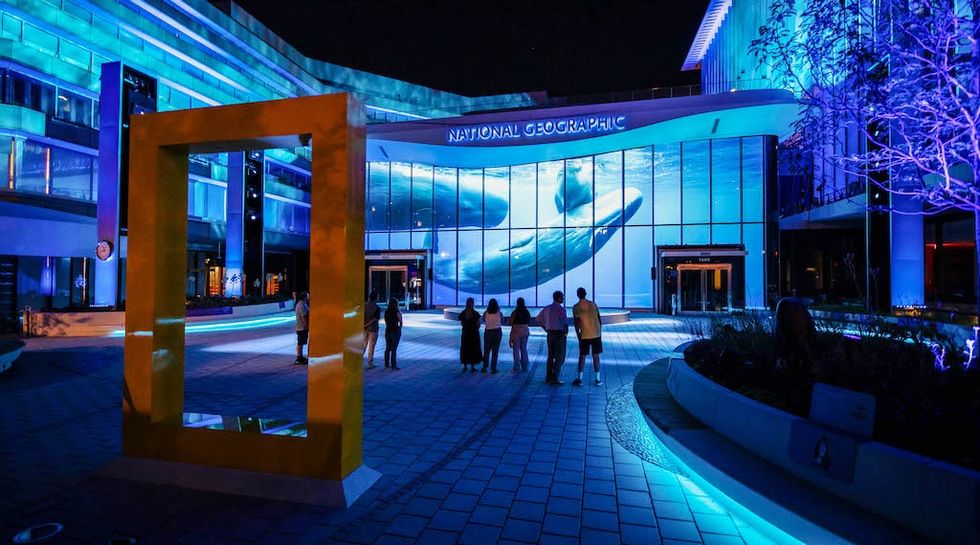
The Wonders Of Our World: Ocean immersive experience at National Geographic Museum Of Exploration
Image courtesy of Moment Factory
St-Onge points to a fundamental misunderstanding of physical space, where technology is often treated like "digital wallpaper" rather than being seamlessly integrated into the architecture at a human scale, leaving visitors overwhelmed.
To avoid this, Moment Factory's recent work at the National Geographic Museum of Exploration utilised large-scale smart-glass technology to turn the building's facade into a multi-layered projection surface, wrapping the technology naturally into the architecture.
Norman cautions against overspending on capital expenditures, particularly when converting existing venues, as construction is incredibly complicated and expensive.
He stresses the importance of working with trusted supply chains early on and keeping operational expenditures lean to ensure long-term viability.
Fu adds that designing an experience before fully mapping out the customer journey—from discovery and ticketing to post-event sharing—is a costly oversight, as is confusing massive scale with actual profitability.
How to balance technology with throughput and operations
Guest expectations for the "wow factor" must be carefully weighed against throughput and reliability.
You must give the audience a 'goosebump' moment. You must make them feel something. Whether this is through technological innovation or great acting, you need to create an IRL moment that you can only experience by being there.— Damian Norman
Norman notes that in a world dominated by digital and social algorithms, physical experiences have a unique superpower, but they must deliver a moment that works just as flawlessly on a quiet Tuesday as a busy Saturday, without driving up operating costs.
Jurassic World: The Exhibition—which sold over 314,000 tickets at ExCeL London—is a prime example of balancing high-quality production values and live actors with a reliable operational model.
Fu says that every creative decision must be tested against practical questions regarding reliability, accessibility, and throughput. She notes that simpler solutions guided by audience data often yield better commercial outcomes than prioritising unproven creative visions.
For Heimann-Nunes, operational excellence should never be viewed as a constraint; rather, it is a core part of the guest experience.
Guests rarely separate the two, meaning that waiting too long, poor wayfinding, inaccessible design, or unreliable technology instantly breaks the immersion.
The 'wow factor' doesn't come from simply piling on more hardware; if you rely solely on adding more expensive technology to impress people, your show will always be more expensive, less reliable, and harder to scale.— Jonathan St-Onge
St-Onge says that technology should always serve the emotion and creative vision, drawing a comparison to traditional theatre, which has successfully moved audiences on the exact same stage for centuries.
Grimmer adds that innovation doesn't necessarily have to be technological. It can be a moment of narrative surprise or musical beauty, provided the ambition is properly scaled to the budget and audience size from day one.
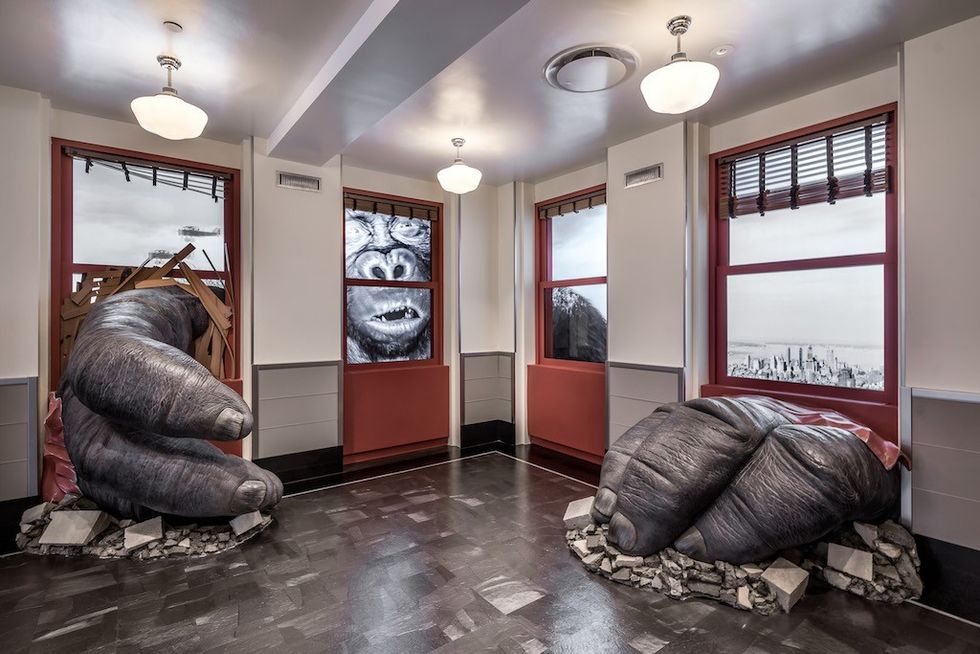
The Empire State Building Observatory Experience was redesigned to make it more immersive and engaging
Image credit Evan Joseph
An example is Journey's work on the Empire State Building Observatory.
To accommodate 4 million annual visitors, the team helped to deliver immersive exhibits that were translated into nine languages and spread across 35,000 square feet, ensuring massive throughput without sacrificing the experience.
IP vs. storytelling: what drives ticket sales and repeat visits?
When balancing IP, technology, and storytelling, our panel was clear: storytelling is what drives the experience.
Although IP acts as the initial hook to sell the first ticket, Norman says that storytelling transforms effects into a memorable journey that drives repeat visitation and advocacy.
St-Onge agrees, noting that while recognisable brands drive immediate awareness, long-term profitability relies entirely on the authenticity of the story, with technology merely acting as a supporting bridge.
Heimann-Nunes says that, despite having negotiated transactions for some of the world's most recognised brands, she has learned that even extraordinary IP is merely an invitation, not the experience itself.
A lack of emotional resonance cannot be compensated for with technology, as guests rarely remember the hardware, but they always remember how an experience made them feel.
We've seen original concepts without famous IP become highly successful because they tell a great story. Equally, well-known brands don't always succeed if the experience itself lacks a story and emotional connection.— Jessie Fu
Fu echoes this sentiment, warning that large IPs can bring burdensome expectations and expenses. She highlights that success often comes down to matching the right IP to the right format, leveraging behavioural data from over 200,000 experiences to guide those decisions.
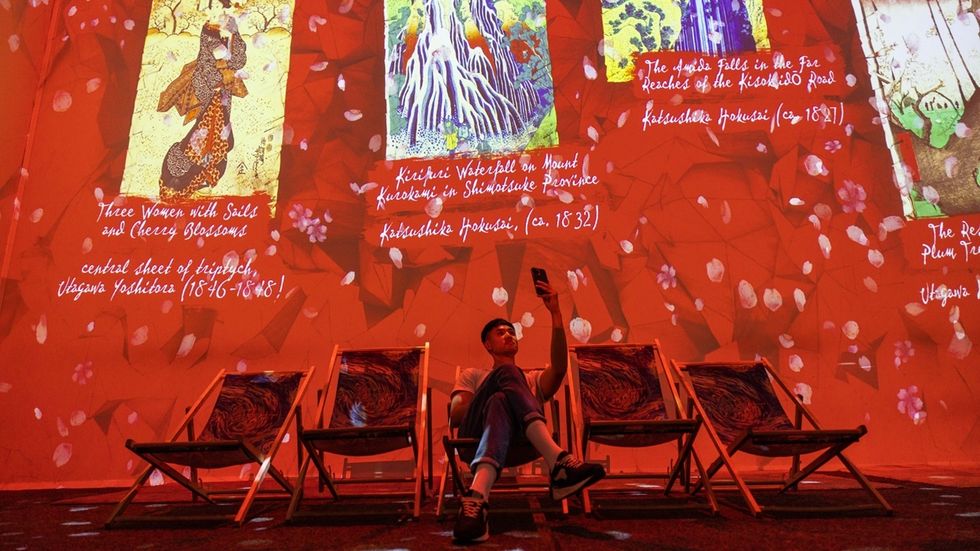 The new version of Van Gogh: The Immersive Experience demonstrates how travelling exhibitions can be refreshed and their lifespan extended. Image courtesy of Fever
To ensure its IP-driven experiences resonate on an emotional level, Fever continually deepens the storytelling; in the Cincinnati Van Gogh installation, a "Letters Room" was introduced to explore the artist's personal correspondence and his relationship with his brother Theo, proving that narrative depth is just as important as visual projection.
Call me old-fashioned, but if you’re not telling a great story in an engaging way, you’ll be fighting an uphill battle to get people to spend their hard-earned money on your show.— Mark Grimmer
Grimmer agrees, adding that audiences are rarely interested in technological prowess alone. Furthermore, while major IP provides a marketing advantage, it can quickly become a disadvantage if mishandled by overly protective IP holders who are not generous collaborators.
When should operators and suppliers start working together?
All five experts agree: operators, suppliers, and creative teams must collaborate as early as possible.
Fu advocates for an ideal partnership that evolves through three distinct phases: a concept phase that validates market demand and capacity, a launch phase that aligns ticketing and CRM, and an operational phase where live data informs ongoing adjustments.
Fever's own digital infrastructure acts as this collaborative backbone for major heritage sites, such as Spain's Patrimonio Nacional, where its ticketing and capacity management tools successfully manage over seven million annual visitors.
Norman says the importance of appointing dedicated teams focused solely on the build and supply chain early on, as getting it wrong in an always-on live environment is incredibly difficult to fix once the doors open.
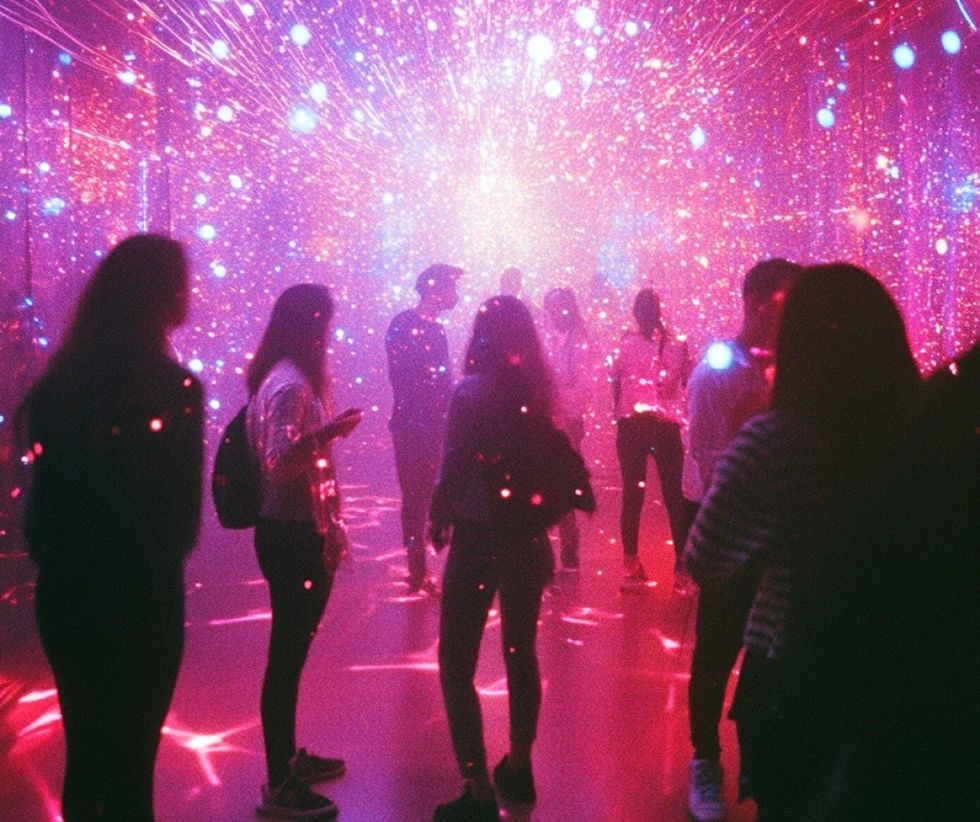
The Super Neon immersive experience at Mall of America, which was conceived, designed, and realised by Merlin Magic Making and presented by Fever
Image courtesy of Fever
Heimann-Nunes believes collaboration should start before any major commercial assumptions or individual designs are made, ensuring that the business model and guest experience evolve together.
She notes that collaboration shouldn't end on opening day; immersive attractions should not be viewed as finished products, but rather managed as "living experiences" that continuously adapt to guest feedback.
St-Onge says that pairing the operator's insight into guest flow with the supplier's technical know-how from day one prevents costly downstream adjustments and eliminates siloed working.
While Grimmer agrees that early collaboration is best, he points out that the exact parameters will depend heavily on the specific scale and lifespan of the project, expressing frustration that the catch-all term "immersive" is used too broadly to cover everything from short brand activations to permanent visitor attractions.
Future trends in immersive entertainment and location-based tech
Looking to the next generation of attractions, personalisation and deeper engagement will lead the way.
Norman anticipates that artificial intelligence and emerging technology will allow creators to craft deeply personalised, 75-to-90-minute experiences that leave a lasting emotional impact, comparing the potential emotional resonance to reading a great book or watching an incredible film.
Immerse LDN is putting this into practice with upcoming spaces that incorporate RFID technology to capture, personalise, and edit content for guests in real time, alongside plans for interactive, room-to-room stories driven by real-time leaderboards.
Heimann-Nunes also highlights AI and adaptive storytelling, saying that future success will depend on designing for human psychology—focusing on agency, presence, motivation, and transformation—rather than just upgrading technology.
Fu predicts a continued blending of physical and digital realms, where the guest journey extends well before and after the physical visit, driven by the intelligent and human use of real-time data to optimise operations.
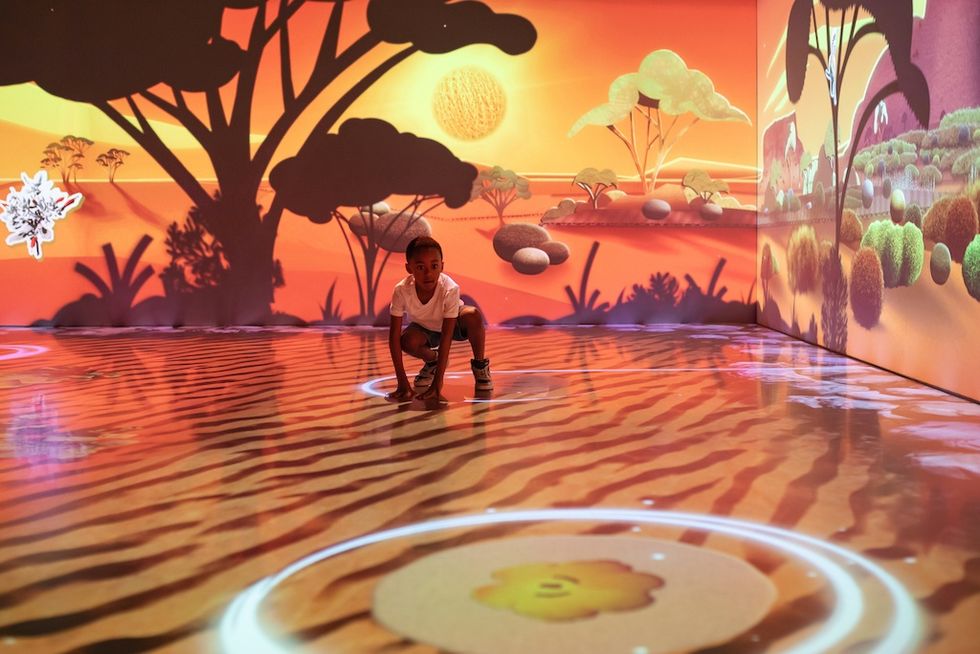
A Day in the Desert at the National Geographic Museum Of Exploration's Geoverse
Image courtesy of Moment Factory
St-Onge sees a shift toward active participation where audiences influence the action and shape their own journeys.
Moment Factory is exploring this through projects like A Day in the Desert at the National Geographic Museum of Exploration, where interactive floors allow children to explore ecosystems through curiosity-led gameplay rather than passive observation.
He also predicts that as the sector matures, its business model will begin to look more like film or theatre, with dedicated exhibition networks touring top-tier experiences globally for a public that is becoming much more educated and demanding of creative quality.
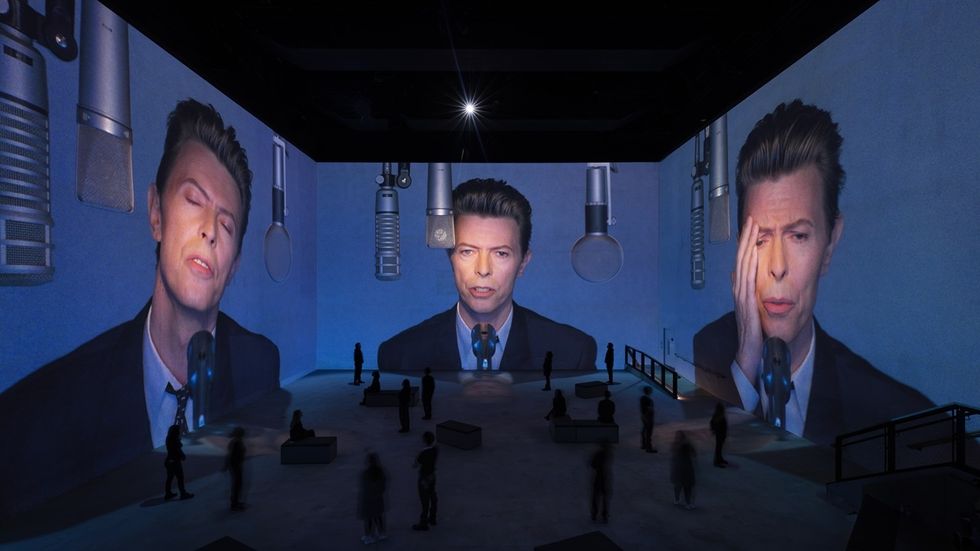
David Bowie: You’re Not Alone at Lightroom, an immersive music experience in London
Credit Justin SutcliffeFinally, Grimmer expects to see a surge in music-based immersive projects as record labels bring their catalogues to life, as well as more partnerships with established cultural institutions to provide credibility in a landscape increasingly filled with AI-generated content.