Katapult, the international guest experience design agency, will mark its 25th anniversary on 1 July. As the company prepares to celebrate this milestone, it has released a podcast episode charting its evolution from a small student startup in Derby, UK, into a globally recognised, B Corp-certified themed attraction design agency.
Co-founders Dawn Foote and Phil Higgins share the story of how Katapult went from managing club nights to engineering pure magic for over 95 million visitors worldwide every year.
From creative collective to Katapult
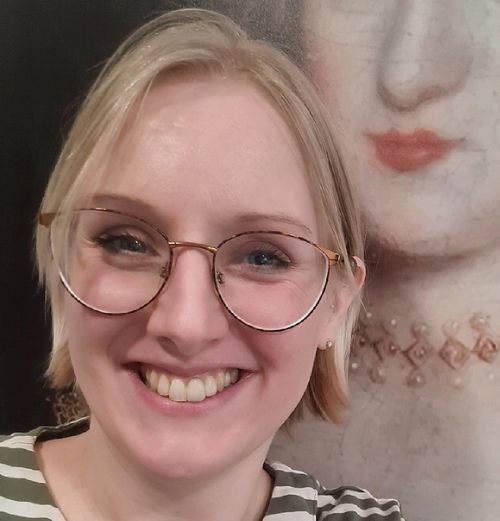
Foote and Higgins first met while studying A-level psychology at Franklin College in Grimsby, and both later studied creative courses at the University of Derby.
Here, they were surrounded by a diverse mix of new friends and new ideas, with the freedom to experiment with a huge range of university technology and equipment.
Foote, who studied photography and video, says: "Even though I was on a photography and video degree, you could access anything in the university...It was just like a playground of equipment."
Together with fellow students from Derby University's creative courses, Foote and Higgins combined their student loans to buy photography gear, editing suites, and digital equipment, forming an experimental space dubbed the 'Techno Room'.
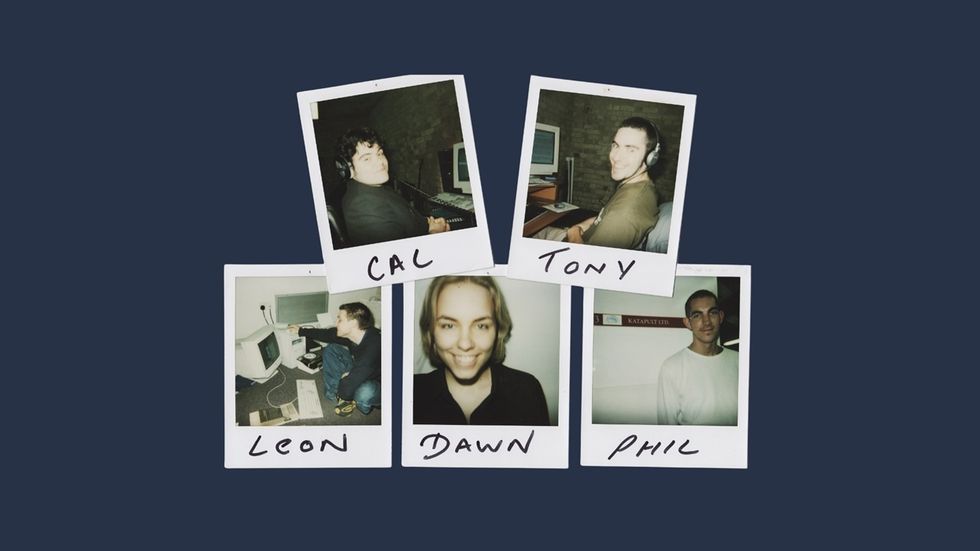 The collective was composed of five students from Derby University's creative courses, who pooled their student loans to buy equipment Image courtesy of Katapult
At the time, Derby's nightlife was teeming with drum and bass, hip hop, and house nights. Driven by a love of music and a curiosity about technology, the collective immersed themselves in the local club scene. They soon launched their own branded club nights, officially taking on the name 'Katapult'.
"We were booked in to come and provide all the visual projection, installation and basically transform the nightclub space, doing kind of live mixing with the DJs," says Foote. "I'd be up there against the other DJ, and then we'd be there VJing... we'd even be doing live footage shots of dancers and bringing it all in."
As graduation neared, the collective began to look to the future.
"It was a strange time because it was like that make-or-break kind of moment of do we go off and get jobs?" says Higgins. "I think we knew without saying it that that would probably be the end of Katapult... So it was that kind of like, 'Okay, let's do this.'"
The day after completing their courses, Foote and Higgins opened their first office. With no furniture and computers set out on the floor, this space was "scrappy"; however, the work was serious. To prove their commitment, the collective entered the Shell Livewire Entrepreneur of the Year Awards.
"We entered the local round, and then we got through that and won that...," says Foote. "And then at the end [of the regionals], we got announced as the overall winner, and we were like, 'Whoa, didn't expect that.
"...It was validation for us to be able to say we're entrepreneurs, we know how to run a business, we're not just playing around."
Rooted in storytelling and emotion
Katapult's early creative experiments forged creative skills that drive its themed attraction designs today.
By DJing, Higgins learned the vital importance of a sensory guest journey—how sound, visuals, and atmosphere converge to evoke an emotional response in a crowd.
Meanwhile, Foote’s love for visual storytelling is rooted in a passion for purpose-driven documentaries and environmental activism, in which she learned how to guide an audience through compelling narratives.
And as the digital landscape rapidly evolved throughout the 2000s, Katapult mastered new technologies as they emerged. It also founded the Creative Industries Network in response to a lack of cohesion in the local creative industry.
This ran for a decade, securing regional funding, hosting monthly events, and serving as a critical platform for local creative businesses to collaborate and launch.
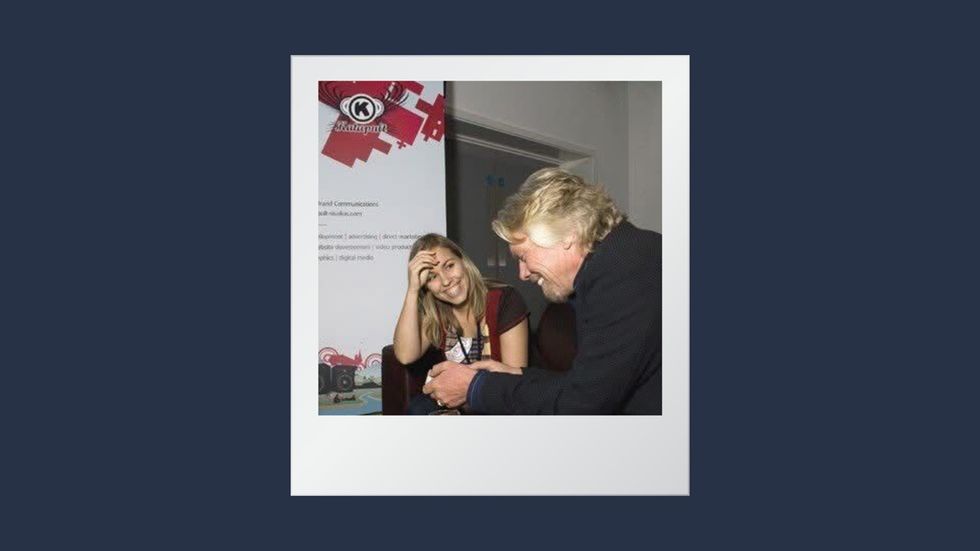 Katapult co-founder Dawn Foote with Sir Richard Branson. Today, the guest experience design agency's work entertains more than 95 million visitors each year.Image courtesy of Katapult
By 2007, Katapult's work in the leisure sector was gaining momentum, and it began delivering themed entertainment attractions worldwide. Since then, it has built a reputation for creating experiences that bring people together in extraordinary ways.
In the early 2020s, the company became the world's first B Corp-certified attraction design company, and Foote and Higgins both stepped into board-level positions with internationally recognised trade associations.
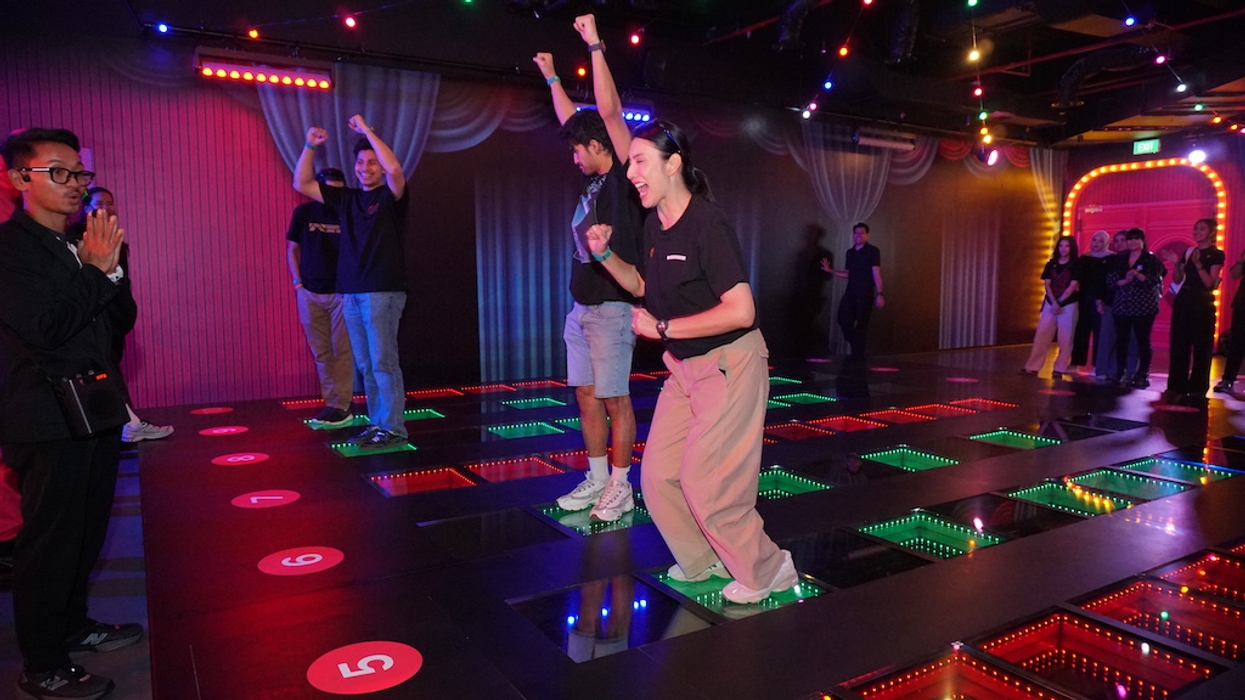
Foote and Higgins continue to lead Katapult in creating unforgettable experiences. In addition to entertaining more than 95 million visitors at 120 different attractions across 26 countries every year, the company is committed to remaining people-first, values-driven creative collaborators.
Now, as Katapult celebrates its quarter-century, the company will reflect on its beginnings, achievements and exciting future plans, culminating in a celebration at IAAPA Expo Europe 2026 in London this September.
Last month, Katapult was named in The Sunday Times Best Places to Work 2026. The national awards honour the best employers in Britain based solely on honest, anonymous employee feedback.