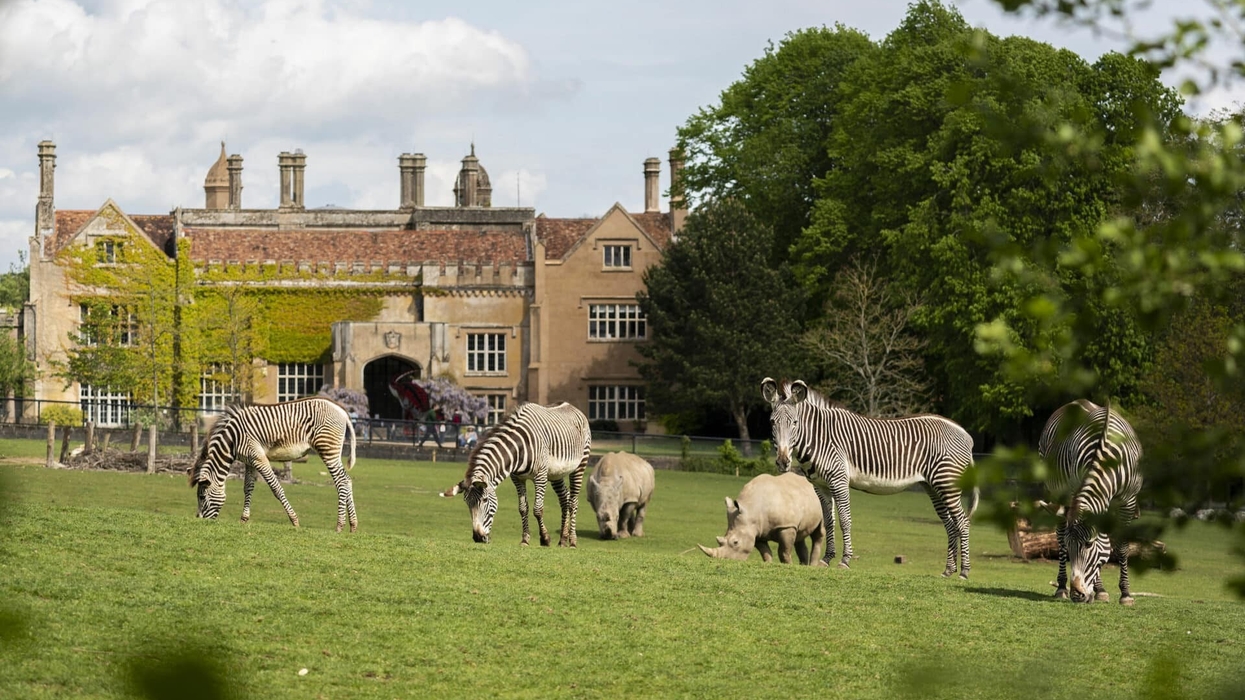

Marwell Wildlife, Hampshire's leading international wildlife conservation charity and the owner and operator of Marwell Zoo, is hosting screenings of The People's Emergency Briefing.
"We want our team to be front and centre as we prepare for how we move forward in a much warmer world, and to do that, they need to know what the outlook is," says Laura Read, chief executive of Marwell Wildlife.
Following an internal briefing on 8 July 2026, the organisation intends to hold one or more public briefings in its 120-seat lecture theatre.
What is The People's Emergency Briefing?
In November 2025, ten of the UK’s leading experts briefed an invited audience of more than 1,200 politicians and leaders from business, culture, faith, sport and the media at Westminster. This National Emergency Briefing set out the implications of climate and nature breakdown for the UK's health, food systems, national security and the economy.
The People's Emergency Briefing is a 50-minute film featuring key points of the longer film, public reactions and discussions with some familiar faces.
For over 50 years, Marwell Wildlife has dedicated itself to conserving some of the world's most endangered species, both in the UK and globally. Some of Marwell’s conservation efforts focus on arid regions like North Africa and northern Kenya.
Coupled with increasingly extreme temperatures in southern England in recent years, this provides it with firsthand insight into how climate change is affecting wildlife, landscapes, communities, and the organisation.
It has had far-reaching impacts, from the resources needed to address more frequent droughts to the disease and parasite challenges faced by captive, semi-captive, and wild animals. Marwell's conservation strategy is rooted in the One Health principle, which highlights that the most significant threat to health is now very clear.
Taking a proactive stance
The considerations extend beyond welfare and wellbeing, involving financial factors driven by climate change that endanger the organisation's survival.
For instance, at Marwell Zoo, the organisation's main funding source, warmer weather has increased energy and water use for cooling and irrigation. Climate impacts have also reduced visitor numbers, especially during summer peaks, which previously helped cover the costs of quieter winter months.
Moreover, wetter winters hinder efforts to boost winter visitation to fill the revenue gap. These combined pressures mean Marwell faces higher costs and declining income, likely prompting a strategic shift to diversify revenue sources beyond the traditional zoo model.
"Given the huge impact that climate change is having and will have on our organisation and on the everyday lives of people who work and volunteer for us, we have decided to screen The People’s Emergency Briefing this month, amidst another heatwave, to our teams," says Read.
"I would encourage all attractions to screen The People’s Emergency Briefing," she adds.
"Using it to gauge reaction, prompt debate, and inform strategy will set you in better stead than those who choose to stick their heads in the sand. And with desertification of European landscapes already starting to occur, that sand may be closer than you realise.
"At Marwell Wildlife, we are dedicated to Hands-on Conservation; Supporting Nature's Recovery. We believe that the biggest threat to our wildlife, ecosystems and communities is our warming climate.
"We also believe that by screening The People’s Emergency Briefing, we are taking a proactive stance on informing and engaging people about how we can prepare for what is ahead of us and how we can still make a positive change. We would encourage other attractions to do the same."
In the video below, Read talks about why Marwell have taken this action and how you can apply to host a briefing.
And here are some of the reactions from people who saw the first Marwell screening:
Find out more
If you'd like to watch with blooloop, we are hosting an online viewing of The People's Emergency Briefing on 16 July 2026 at 4 pm BST.
You can find out more about the People's Emergency Briefing and what action you can take here.

Charlotte Blanco Coates is blooloop's editor. She is from Brighton, UK and previously worked as a librarian. She has a strong interest in arts, culture and information and graduated from the University of Sussex with a degree in English Literature. Charlotte can usually be found either with her head in a book or planning her next travel adventure.