Bea is a journalist specialising in entertainment, attractions and tech with 15 years' experience. She has written and edited for publications including CNET, BuzzFeed, Digital Spy, Evening Standard and BBC. Bea graduated from King's College London and has an MA in journalism.
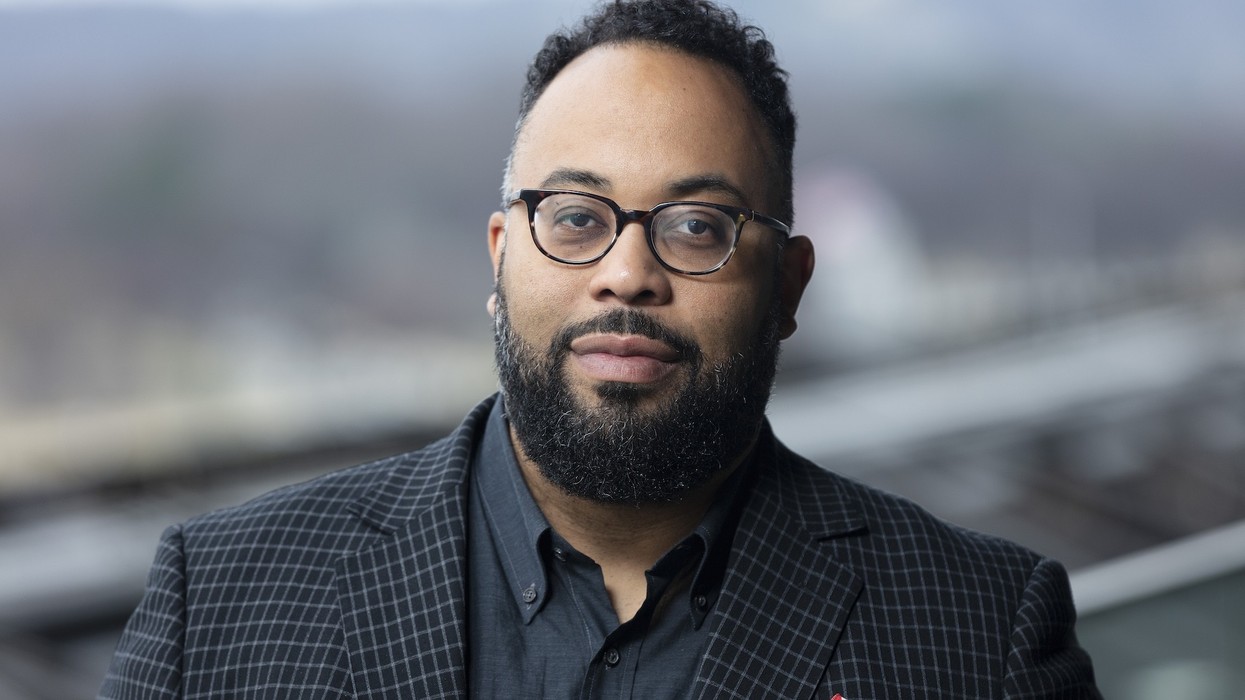
Kevin Young, the director of the Smithsonian 's National Museum of African American History and Culture, has stepped down from his role.
Young, who has led the institution since 2021, stepped down on Friday (4 April) after four years in the role, the New York Times reports.
In a statement, the museum said that Young said he wanted to focus on his writing. He still serves as the poetry editor of The New Yorker.
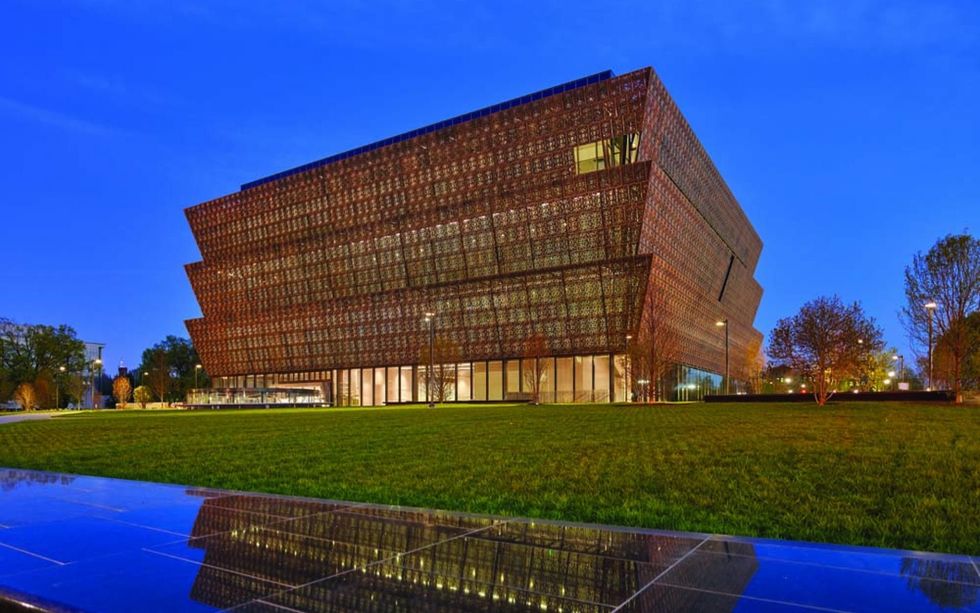
NMAAHC
His departure from the museum comes as US President Donald Trump has targeted theSmithsonian Institution in an executive order.
The order states that Congress should not fund Smithsonian exhibits and programmes that “divide Americans by race”.
Titled “Restoring Truth and Sanity to American History”,it explicitly mentions the National Museum of African American History.
The order instructsVice-President JD Vance, who became a member of the Smithsonian Board of Regents due to his position in government, to remove any “improper, divisive, or anti-American ideology” from the institution's sites.
Trump executive order targets Smithsonian
However, Young had already gone on personal leave before the order was issued, on 14 March, the Washington Post reported.
Since then, the museum's associate director of operations, Shanita Brackett, has been working as interim director.
The National Museum of African American History opened in 2016. Young became its second director in 2020, after founding director Lonnie Bunch, now secretary of the Smithsonian.
After Trump's executive order, Bunch sent an email to Smithsonian employees last week that said the organisation will "remain committed to telling the multifaceted stories of this country’s extraordinary heritage".
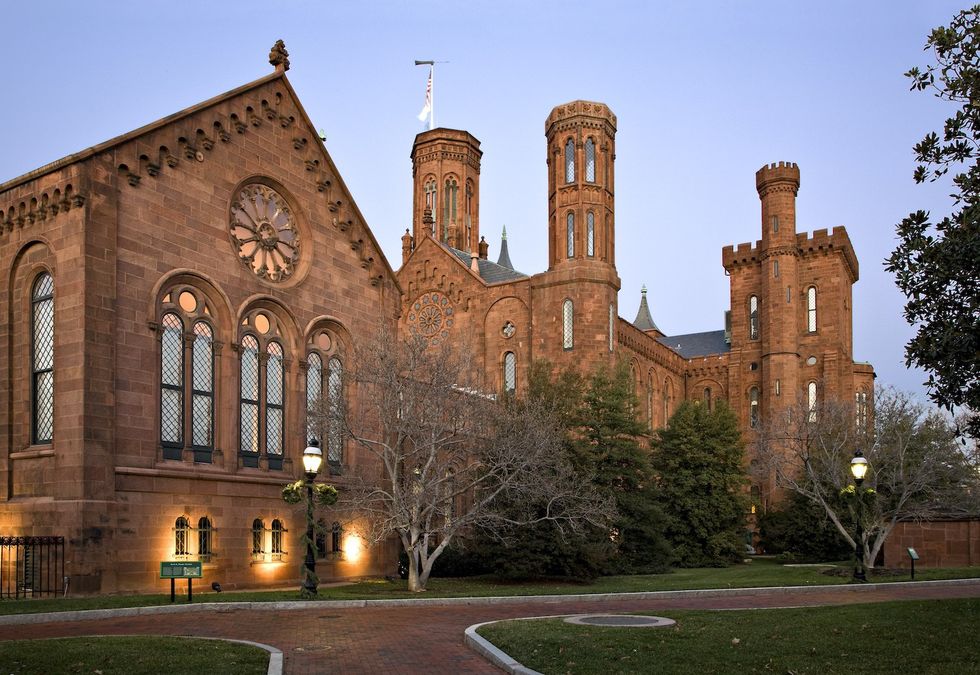
The Smithsonian museums welcome between 15 to 30 million visitors annually without charge. The institution manages 21 locations across Washington, Virginia and New York.
Earlier this year, Trump signed several orders to eliminate diversity, equity and inclusion programmes from the federal government.
Bea is a journalist specialising in entertainment, attractions and tech with 15 years' experience. She has written and edited for publications including CNET, BuzzFeed, Digital Spy, Evening Standard and BBC. Bea graduated from King's College London and has an MA in journalism.
SSA Group has been working on a transformative approach to operations. By weaving its signature 452 Hospitality ethos, rooted in a legacy of welcome and human connection, into Scout, a new AI-driven operating system, the company demonstrates how AI can enhance rather than replace the human side of hospitality.
For nearly 60 years, SSA Group has been a staple in the cultural attractions sector, collaborating with zoos, aquariums, and museums to provide comprehensive guest services. As a family-owned business, the company has continually adapted, but its core mission remains centred on a simple, powerful concept: hospitality.
We speak with CEO Sean McNicholas and vice president of people and culture, Jason Stover, to unpack Scout's mission and learn how it can open the door to both greater efficiency and more memorable moments.
SSA reimagines the industry
Starting by looking at the bigger picture, McNicholas says: “What I love about SSA and our family business is our curiosity for continuing to reimagine the industry.
"Those are pillars of our plan. We approach 60 years as a family business in 2030, and what’s exciting to us is continuing to innovate, not just our business, but the guest experience for our clients and partners.”
Sean McNicholas and Jason Stover
This culture of curiosity is what prompted McNicholas and Stover to investigate the potential of artificial intelligence long before it became the industry buzzword it is today.
"Five or six years ago, Jason came to me as one of the early adopters of AI. We started talking about it, and the more we looked at tools like AI, we asked a very simple question: what one, two, or three areas could AI positively impact our business?"
For SSA, the goal was not to replace staff or remove the human element from the museum or zoo experience through automation. Instead, the emphasis was on liberation.
"The thing that became clear was how tools like AI could help us become more efficient with data, back-end systems, and administrative work," adds McNicholas.
"If we can be more efficient there, we can spend more time meeting guests where they need us, which is on the front line.”
The outcome of this exploration is Scout, an AI-assisted tool and ‘unified intelligence layer’ designed specifically for cultural attractions.
Scout is positioned not as a replacement for human workers, but as a co-pilot. It is an operating system that gathers data from across the industry to provide real-time insights. Unlike general-purpose AI tools, Scout has been built for the sector's operational realities.
"AI is trending now, but it’s not new," says Stover.
"I’ve been with SSA for almost 30 years, and my journey with AI in this company has existed since day one. When I first became a manager, we were already experimenting with predictive analytics, trying to forecast attendance and staffing.
"That was AI at the time."
However, the leap to generative AI offered a new opportunity to support SSA's secret sauce: its people.
Stover employs a cinematic analogy to describe Scout’s role within the workforce:
"I compare it to Tony Stark," he says. "He’s brilliant, but he doesn’t become Iron Man until he has Jarvis. That’s what Scout is. It’s a co-pilot that takes away routine, monotonous work so our people can focus on what matters."
Real-time, useful insights
Designed to support guest-journey walkthroughs, the platform collects real-time observations and converts them into actionable insights tailored to each attraction.
The tool was created in accordance with SSA’s core belief that technology should never replace connection; it should enhance it. The idea is that data and design can collaborate to create memorable guest experiences.
This supports SSA’s wider focus on innovation, which aims to turn curiosity into meaningful change that advances partners' missions. By automating data analysis, Scout helps operators make more informed decisions about designs, platforms, and revenue strategies.
"Guest expectations are evolving faster than ever," says Stover. "Scout was built to meet this moment as a tech-forward AI tool that allows us to keep experiences deeply personal.”
The heart of the system: 452 Hospitality
Although the technology is impressive, the engine driving Scout remains entirely human. At the centre of Scout’s design is 452 Hospitality, the cultural ethos that defines SSA Group’s purpose and character.
Named after 452 Leyden Street, the Denver home where SSA’s founders first lived and practised hospitality, 452 has since become both a numeric and philosophical code for what the company stands for: a spirit of welcome, belonging, and genuine human connection.
At 452 Leyden Street, anyone could come in for a meal, a chat, or a place to rest. And that sense of genuine warmth now lives on in every SSA service encounter.
Today, 452 Hospitality reflects SSA’s ongoing dedication to creating authentic, memorable moments that uplift guests, partners, and colleagues alike.
That same spirit guides Scout’s purpose: rather than replacing people, the AI system aims to enable staff to embody 452 Hospitality more fully, freeing them from administrative burdens so they can provide the personal engagement that makes guests feel welcome and valued.
In practice, this involves a particular method for engaging with guests and monitoring operations. Scout develops a digital framework for this using the SOQ model: Observation, Opinion, and Question.
"Scout is being trained by the entire zoo, aquarium, and cultural attraction industry," Stover says. "Every conversation, every audit, every partner insight gets ingested and shapes how Scout operates.”
Within the Scout ecosystem, there are various ‘agents’ dedicated to different tasks, such as labour optimisation and inventory management. However, the ‘452 agent’ is unique.
"It has vision and voice capabilities. As you walk through operations, it analyses images and observations in real time and evaluates them against our hospitality standards. It acts as a co-pilot for auditors and operators, making observations, offering insights, and matching them with best practices and solutions.
“You might miss something as a human, but Scout won’t.”
Scout in action
The deployment of Scout is already producing tangible outcomes, progressing from theoretical ideas to solving complex on-site issues. This highlights SSA’s focus on turning insights into action by combining data, technology, and human connection.
McNicholas emphasises that the team is "continually evolving Scout by testing it across multiple attractions," noting that "every new site adds more data and sharper insights.”
Stover offers an example of Scout’s operational intelligence in action from a working session with the Detroit Zoo. The team was exploring a complex “what-if” scenario: opening a new entrance near a new exhibit while navigating compliance considerations, budget constraints, and a nearby rail track.
“Using Scout as a sandbox alongside their team, we pressure-tested the constraints, surfaced relevant regulatory considerations, explored alternative approaches like repurposed shipping containers, and generated rough-order cost ranges. It was less about committing to a final plan and more about accelerating discovery.”
“What’s exciting is that every audit surfaces a new real-world question, and we ask: Should this become a new sub-agent? That’s how Scout keeps evolving.”
Another success story comes from the Dallas Zoo, where Scout was instrumental in helping the zoo team explore their own AI journey while SSA conducted an inter-department relationship audit.
Scout is tailored to each user’s psychology
What makes Scout different from typical business AI tools is its incorporation of behavioural psychology. Acknowledging that strong operations don't happen by accident, SSA has combined leadership development with its technological roadmap.
Stover, whose background is in people and culture, insisted that if they were to create co-pilots, they had to understand the humans who would use them. So, instead of providing generic recommendations, Scout adapts its guidance to each leader's thinking and communication style.
"One of the first things we decided was that if we were going to build AI co-pilots, they needed to integrate Behavioural Essentials," Stover says. "We already use behavioural assessments that give leaders a 21-point profile, with strengths, tendencies, and blind spots. We’ve now incorporated that into Scout.”
This means that when a manager logs into Scout, the system is tailored to their specific personality profile.
"It understands how I communicate, where I might need softer language, or where I might need more structure," Stover says.
He adds that McNicholas served as the ‘guinea pig’ for this feature:
"We merged his traits and blind spots into Scout as he was working through our future roadmap. Scout isn’t just an AI tool; it understands your psychological makeup and helps cover your blind spots as you operate in your role.”
The future of the workforce
A common concern about AI is the risk of job displacement. However, SSA’s leadership firmly states that their investment in technology aims to safeguard, not eliminate, their workforce.
"As CEO, culture is my responsibility, and culture starts with values," McNicholas says. "Hospitality, human-to-human interaction, has always been our foundation. I don’t want a world of all robots and automation. I love people too much.
“That’s why Scout exists. It helps us live what we love to do: creating special moments for people.”
Stover shares this view, considering AI as a safeguard against the decline of interpersonal skills observed in other industries:
"We have to be proactive in shaping the future. Many companies will use AI purely to impact the bottom line. That’s their choice. But SSA has always been people-focused. We’re adopting AI safely and intentionally to better our people. As interpersonal skills decline elsewhere, we’re protecting them by freeing people up to reconnect.”
The efficiency gains are clear. Stover notes that tasks like scheduling, which previously took hours to analyse against weather and sales history, now happen in seconds. "That frees managers up to spend time with their team. That’s the point.
“We’re hospitality people. We want to be in front of guests, not behind a screen.”
A vision for 2030
Looking ahead, SSA has set bold goals for the next five years. As the company approaches its 60th anniversary in 2030, the vision is for a fully enabled workforce where each employee has a digital partner.
"By 2030, every person in our company will have a co-pilot that helps them be more efficient," predicts McNicholas. "We’ll also bring a unified revenue strategy to attractions, something the industry lacks.”
He also believes the metrics of success are shifting. It is no longer enough to simply count heads at the gate:
"The future metrics won’t just be attendance. They’ll be revenue, guest experience, and fulfilment," he says.
"There’s more competition than ever, and we have to be the place where guests leave thinking, 'That felt right.' To do that, our people need tools like Scout so they can spend more time creating those moments.
“That’s how we reimagine the industry.”
The future of hospitality
Summing up the benefits, COO Travis Kight says:
"AI is the future of hospitality, but not in the way most imagine. We see AI as a co-pilot, not a replacement, designed to protect the human connection that defines our industry.
“Tools like Scout allow us to turn data into real-time insights, freeing our teams from repetitive tasks so they can focus on creating unforgettable guest experiences.
"As Sean mentioned, by 2030, our vision is for every team member to have a digital partner that amplifies their strengths, covers blind spots, and helps us deliver hospitality at a level the industry has never seen.
“AI isn’t about automation. It’s about empowerment.”
As SSA Group looks towards the attractions of tomorrow, its message is clear: the path to the future is built on data, but the goal remains human connection.
By anchoring Scout in 452 Hospitality's philosophy of creating meaningful, human-centred moments, SSA isn’t just adopting AI for efficiency. It’s enhancing its ability to deliver heartfelt experiences that define its brand and shape the future of the guest experience.
"That’s the foundation of Scout," Stover says. "If a tool doesn’t protect hospitality or make us better people-facing operators, it doesn’t get built.”
Oceanside Museum of Art (OMA) in Oceanside, California, has announced its plans for a significant campus expansion, designed by Safdie Rabines Architects from San Diego.
This marks a key milestone in the museum’s development and its $10 million Campaign for Expansion.
The expansion includes the historic Oceanside Fire Station No. 1 and will increase OMA’s campus size by 50%, covering a full city block. It also preserves two Irving J. Gill landmarks: the former 1934 City Hall and the 1929 Fire Station.
OMA’s size will grow from 20,000 to 30,000 square feet, increasing space for exhibitions, a dedicated education centre, and public programmes.
Outdoor areas will also be expanded to accommodate public art, an informal gathering terrace, and a café. The design improves flow between galleries, public zones, and outdoor plazas, integrating indoor and outdoor spaces to highlight Southern California artists in the Oceanside Cultural District.
“As Oceanside Museum of Art grows, our commitment to the community grows with it,” says Maria Mingalone, executive director of Oceanside Museum of Art.
“This expansion allows us to preserve an important historic landmark while boldly investing in the future of artists and our cultural community, creating new opportunities for arts education, and meaningful public gathering spaces.
"This ensures OMA remains a vibrant cultural hub for generations to come.”
Honouring iconic architecture
Safdie Rabines Architects is a local firm with a long-standing history of shaping the region’s architecture, including numerous civic structures and the campuses of UC San Diego and UCLA.
The design adopts a contemporary style that honours the historic architecture of Fire Station No. 1. Constructed in 1929 and designed by modernist pioneer Irving J. Gill, the station will be restored to preserve its original features, including the distinctive arches, windows, and the historic fire hose drying tower.
Gill’s iconic arcades will link OMA’s central pavilion and terrace to the surrounding outdoor areas, enhanced by sculptures, public art, gardens, gathering spaces, and landscape elements.
“This project is an opportunity to expand the museum as a vital community hub," say Taal Safdie and Ricardo Rabines, founding partners of Safdie Rabines Architects.
"We have designed new indoor-outdoor spaces that create fluid connections between all three buildings and activate this coastal area. Art al fresco, from Gill to Gill."
The expansion will grow the gallery space from 7,000 to 10,000 square feet. It will include two new galleries: a community space in the old fire station bay and a dedicated area for OMA’s expanding permanent collection, highlighting Southern California art.
Collection storage will also expand from 600 to 2,000 square feet, and a dedicated arts education centre will support the growth of OMA’s award-winning education programmes.
New multi-purpose spaces will host lectures, workshops, community gatherings, rentals, and informal social events.
In March 2024, OMA commenced the quiet phase of its $10 million Campaign for Expansion and surpassed 90% of its fundraising goal in just over 18 months.
Before officially launching the public phase in February 2026, the campaign raised over $9 million through major gifts from nearly 80 donors, including individuals, foundations, civic organisations, county funds, and public partners.
Construction is expected to start in early 2027, with a planned public opening in spring 2028.
Elsewhere, the New Museum in New York has announced that its 60,000-square-foot expansion, designed by the architecture firm OMA, will open on 21 March.
Currently the director of the Palace of Versailles, Leribault was chosen by the French president, Emmanuel Macron.
An art historian, Leribault previously led the Musée d’Orsay and the Musée de l’Orangerie, both in Paris, before joining the Palace of Versailles in 2024.
His appointment at the Louvre comes four months after the high-profile theft of €88 million worth of jewellery from the institution.
During a seven-minute raid of the Louvre's Galerie d'Apollon in October, thieves stole eight pieces of jewellery,
"Leribault's priority will be to strengthen the safety and security of the building, the collections, and people, to restore a climate of trust, and to carry forward, together with all the teams, the necessary transformations for the museum," France's culture ministry said in a statement.
New leader for crisis-hit Louvre museum
Des Cars, who had offered to step down in the immediate aftermath of the robbery, submitted her resignation to Macron on Tuesday (24 February).
Macron praised her decision and described it as "an act of responsibility", the Elysée Palace said.
He said the Louvre needed “calm and a strong new impetus to successfully carry out major projects involving security and modernisation”.
Following the daylight break-in at the Louvre, the museum has faced a series of setbacks, including water leaks, a suspected ticket fraud plot, and ceiling safety issues.
In response, staff at the museum have been striking over building maintenance and staffing increases, as well as a rise in ticket prices for most non-EU visitors.
Adding to these difficulties, activists on Sunday (22 February) hung a photo in the Louvre of Andrew Mountbatten-Windsor being driven from a police station after his arrest.
Avius, a provider of real-time customer experience solutions, including feedback and customer relationship management systems, has collaborated with the Norton Museum of Art to transform real-time visitor feedback into a powerful tool for audience growth and engagement.
The Norton Museum of Art is Florida's largest art museum, with a collection that includes European, American, Asian, contemporary art, and photography. It attracts a wide range of visitors, lifelong learners, and community members.
As the museum grows and evolves, it has become increasingly important for the marketing and operational team to understand how visitors experience exhibitions, spaces, and services.
The challenge
Like many museum marketing teams, the Norton faced a series of common challenges.
Visitor preferences varied widely across different demographics, interests, and expectations. Traditional feedback tools such as comment cards and lengthy surveys proved time-consuming and inefficient, resulting in lower participation rates as many visitors opted out.
Additionally, manually collecting and entering data slowed the process of deriving insights. These insights were often difficult to present clearly for leadership and board discussions.
To address these issues, the marketing team needed a way to capture honest visitor sentiment in real time, increase participation without disrupting the visit, and transform the feedback into actionable data to support marketing strategies and inform leadership decisions.
Feedback for museums and other attractions goes beyond just satisfaction scores. It should be easy for visitors to provide, even if they are in a hurry. The feedback should capture emotional responses, not just long-form opinions. Timeliness is important so that teams can act while the experience is still fresh.
Also, the feedback needs to be clear and credible to influence leadership decisions effectively. Ultimately, it should support strategic planning rather than just serve as a reporting tool.
The solution
Avius assisted the Norton Museum of Art in transforming immediate visitor feedback into an effective tool for audience development and engagement.
By replacing traditional approaches like comment cards and lengthy surveys, the museum can now collect visitor insights more quickly and efficiently with custom-built survey kiosks.
Visitors are encouraged to provide feedback during their visit and can choose to join the museum’s email list to stay informed about upcoming exhibitions and programmes.
To maintain data quality, email fields include validation rules that prevent visitors from continuing unless they enter a valid email address. This ensures the marketing team receives clean, dependable data for campaigns, audience building, and future planning.
Feedback is automatically gathered and shared with the leadership team, enabling insights to be quickly reviewed and acted upon, thereby fostering faster decision-making and a more audience-focused, responsive strategy.
By capturing real-time feedback, the marketing team can understand changing preferences, balance the needs of diverse audiences, and create campaigns and experiences grounded in genuine visitor insights.
Charlee Nolan, chief marketing and communications officer at the museum, says: "Theaudienceisthemostimportantthing.Itisthereasonbehindeverythingwedo.Soifwe'renotgettingitrightfortheaudience,we'renotgettingitrightatall.
"We think we know what the audience wants, and a lot of the time we are right, but we need to have the data that backs it up and helps us inform our leadership, so we can make better decisions."
She continues: "The data is really only as good as the reporting is, and the reporting has been an absolute game-changer for us. As a marketer, I have worked with many vendors over the course of my career, and one of the challenges I have historically faced is a set-it-and-forget-it mindset: we sign the contract and then never hear a peep again.
"That has not been the case with Avius. They really are partners to us. They help us achieve our goals, and that makes all the difference in the world."
Des Cars, who had offered to step down in the immediate aftermath of the robbery, submitted her resignation to French president Emmanuel Macron on Tuesday (24 February).
Macron praised her decision, calling it "an act of responsibility", the Elysée Palace said.
He said the Louvre needed “calm and a strong new impetus to successfully carry out major projects involving security and modernisation”.
During a seven-minute raid of the Louvre's Galerie d'Apollon in October, thieves stole eight pieces of jewellery, including a diamond and emerald necklace that Emperor Napoleon gave to his wife.
The burglary took place in broad daylight as four masked thieves used a truck equipped with a mechanical lift to gain access to the gallery via a balcony close to the River Seine.
A parliamentary inquiry into the failures is under way, with its findings due out in May.
However, a preliminary report released last week pointed to "systemic failures" that led to the break-in (via Le Monde).
Report points to "systemic failures"
Since the robbery, the Louvre has faced a series of setbacks, the most recent being a water leak that damaged a 19th-century ceiling painting.
This came a day after French police reportedly detained nine people, including two museum staff and several tour guides, over a suspected ticket fraud plot.
The alleged operation is thought to have defrauded the museum of more than €10m (£8.7m) over the past decade.
In November, a water leak damaged hundreds of items in the Louvre's Egyptian department, and a gallery of nine rooms was later closed due to ceiling safety issues.
Staff at the museum have been taking strike action, demanding building maintenance and staffing increases, and protesting against a rise in ticket prices for most non-EU visitors.
Adding to these issues, activists on Sunday (22 February) hung a photo in the Louvre of Andrew Mountbatten-Windsor being driven from a police station after his arrest.