
AI can help zoos and aquariums improve operations and conservation, but adoption requires addressing employee concerns, data security, and environmental impact. At the 2026 Association of Zoos and Aquariums (AZA) Annual Conference, SSA Group, a best-in-class provider of integrated guest services, discussed responsible AI strategies with industry leaders.
SSA Group's COO Travis Kight opened the discussion by highlighting a key challenge for organisations considering AI: “Where do you lean in, and where do you pause, and where do you lean out?”
The panel examined how zoos and aquariums can identify practical AI applications while maintaining human oversight and ensuring new technology supports their organisational missions.
Putting people at the centre of AI strategy
A key session theme was involving employees in decisions about AI adoption. As technology changes how tasks are done, operators need to openly address staff concerns about job security and shifting responsibilities.
Kight emphasised the value of questioning assumptions, highlighting two questions his team regularly uses: “Is it true? And are you sure?”
Jason Stover, executive vice president of AI strategy at SSA Group, drew on his experience across different roles in the zoo sector to underline the importance of including employees at every level in discussions about AI.
Staff working directly with visitors, animals and operational systems may be well placed to identify where technology could help. Giving them a voice can also help organisations understand concerns and set realistic expectations.
The panel suggested leaders don't need all the answers before starting these conversations. However, transparency about what is known, what remains uncertain and how decisions will be made can help employees navigate the changes.
Establishing safeguards and maintaining trust
Responsible AI use also requires clear guidelines covering data protection, transparency, and human oversight.
Dr Alejandro Grajal, president and CEO of Woodland Park Zoo, highlighted the importance of protecting the trust and integrity on which mission-driven organisations depend.
Charles Hopper, president and CEO of Santa Barbara Zoo, emphasised the need to keep a human in the loop when using AI-generated information or recommendations.
AI tools can organise information, spot patterns, and support decisions, but teams must review outputs, verify facts, and retain responsibility for important decisions.
At Woodland Park Zoo, Grajal said his management team flags when AI has been used, helping to maintain transparency about its role in decision-making.
The aim is to establish practical safeguards that enable staff to explore useful applications without compromising sensitive information or the institution's credibility.
Applying AI to everyday operational challenges
The panel also explored how AI could help zoos and aquariums address specific operational needs, ranging from administrative tasks to animal management and facility maintenance.
At Cincinnati Zoo, staff created an AI-assisted scheduling and assessment tool for animal ambassador programmes. It consolidates availability, activity and welfare information to support decisions that prioritise animal wellbeing.
Other potential applications discussed included analysing attendance patterns, streamlining administrative tasks and interpreting complex utility data.
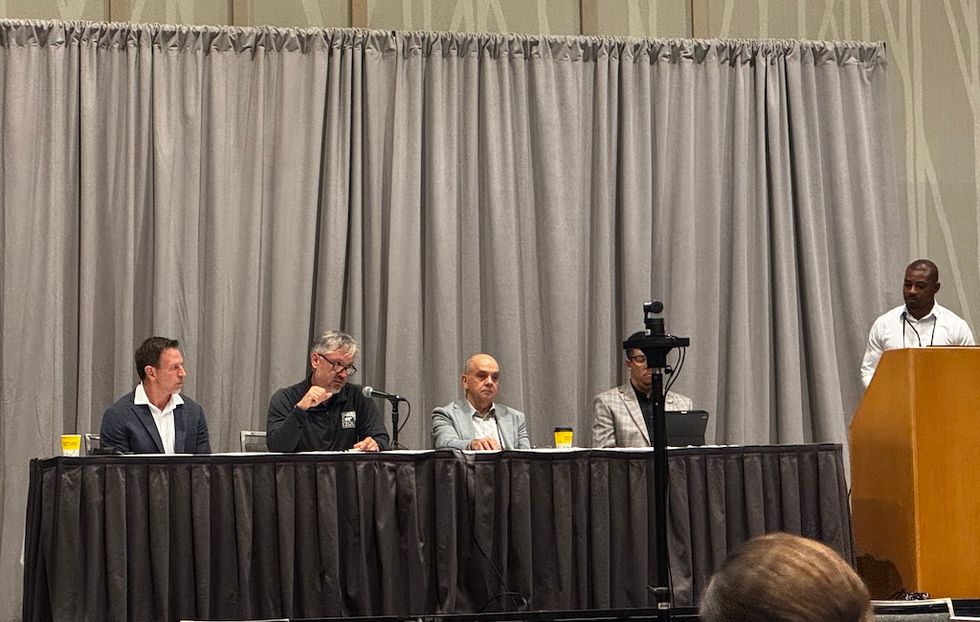 SSA Group hosted a panel on AI at the AZA Annual Conference 2026
These examples illustrate an approach that focuses on identifying a specific operational challenge before deciding whether AI is an appropriate solution.
For organisations managing competing demands on staff time and resources, the potential benefit is not simply increased efficiency. Automating repetitive tasks or making information easier to interpret could free employees to spend more time on activities that directly support visitors, animals and conservation.
See also: AZA 2026: hope, hard truths, and innovation in Portland
Balancing AI innovation with conservation
AI's environmental impact adds another consideration for zoos and aquariums. The energy and water AI systems require raise questions for organisations whose work centres on protecting natural resources.
Cincinnati Zoo is partnering with groups including the Ohio Environmental Council to measure AI’s impact and explore offsetting it through its community solar programme, which helps nonprofits such as food banks and schools install panels.
The zoo is also investigating whether AI could help identify inefficiencies in its utility systems and reduce energy consumption.
Mark Fisher, COO of the Cincinnati Zoo and Botanical Garden, described the challenge of analysing data from hundreds of utility meters across multiple systems.
“Utility data is what drives your carbon footprint more than anything,” Fisher said.
He suggested AI could help technicians identify issues that need attention each day, reducing time spent reviewing complex datasets and letting teams focus on resolving problems across the site.
AI could also aid conservation programmes.
In Washington's North Cascades, where about 14 wolverines remain, camera traps capture tens of thousands of wildlife images. AI helps researchers identify relevant observations and study populations that are difficult to monitor manually.
Grajal said: “The idea of really changing the trajectory of the planet and the trajectory of populations and endangered species and habitats ... shifting from a science of scarcity to a science of action that is data-driven by outcomes, is blowing my mind.”
The example illustrates AI's potential to support research by helping scientists process large volumes of information. However, the panel's broader discussion highlighted the need to consider the technology's environmental costs alongside its potential benefits.
An evolving approach to AI
The session highlighted that no single approach to AI adoption will suit every zoo or aquarium. Priorities, resources, and potential risks will vary, so institutions should evaluate applications in the context of their own operations and missions.
Engaging employees, setting clear safeguards, and starting with practical challenges can help organisations assess where AI offers real value.
Recently, SSA Group published its 2026 Attractions Trends Report, which combines industry research with findings from 25,228 written guest reviews to reveal eight key trends shaping the visitor experience.