
The World Association of Zoos and Aquariums (WAZA), the global alliance of regional associations, national federations, and institutions, has wrapped up its 81st Annual Conference, hosted by Cologne Zoo in Germany from 25 to 29 October 2026, advancing international cooperation in conservation and animal welfare.
Guided by the theme Stewards of Tomorrow: Purpose. Direction. Global Responsibility, the conference welcomed 319 participants representing 58 countries and regions for four days of scientific exchange, strategic dialogue, and collective learning.
The event concluded with two significant milestones: honouring outstanding achievements at the 2026 WAZA Awards and approving the WAZA 2030 Conservation Goal.
From the conference-opening spectacle of Cologne Carnival to the resolutions adopted at its Annual General Assembly, the gathering celebrated the global zoo and aquarium community’s achievements and affirmed its ambitions for the future.
The 2026 WAZA Awards
A standout event at the conference was the WAZA Gala Dinner and Awards Ceremony, held on Thursday, 29 October, at Cologne's Chocolate Museum.
The ceremony honoured outstanding contributions to animal welfare, species conservation, environmental sustainability and professional leadership, recognising individuals and institutions whose work is making a meaningful difference for animals, people and the planet.
Interest in the WAZA Awards continues to rise. In 2026, the three institutional award categories received 25 nominations from five regions.
WAZA presented the Heini Hediger Award, its highest honour for individual professional excellence, to Karen Fifield for her outstanding leadership and enduring contribution to the global zoo and aquarium community.
As chief executive of Te Nukuao Wellington Zoo from 2006 to 2026, Fifield spent two decades advancing progressive zoo leadership, animal welfare and sustainability.
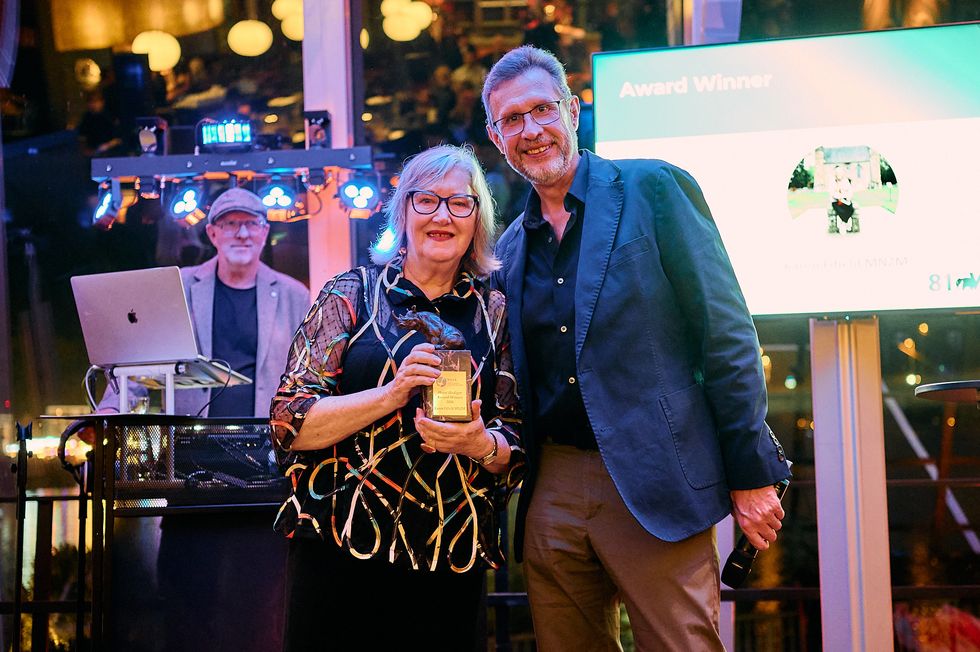 WAZA President David Field FRSE presents the WAZA Heini Hediger Award to Karen Fifield MNZM MInstDImage © Cologne Zoo and WAZA
Her impact reaches well beyond New Zealand. She has served as president of the Zoo and Aquarium Association Australasia (ZAA), chaired WAZA's Ethics and Animal Welfare Committee, and led WAZA as president from 2023 to 2025.
Her career embodies the award’s core values: strengthening institutions through leadership, fostering collaboration, and creating a lasting legacy for the profession.
Lincoln Park Zoo received the 2026 WAZA Animal Welfare Award for its science-based approach to positive welfare. It centres animals' individual needs, behaviours, and preferences through monitoring, tailored assessments, and research, continually improving habitats, care, and choice.
By sharing free welfare assessment tools, the zoo also helps other institutions strengthen their practices.
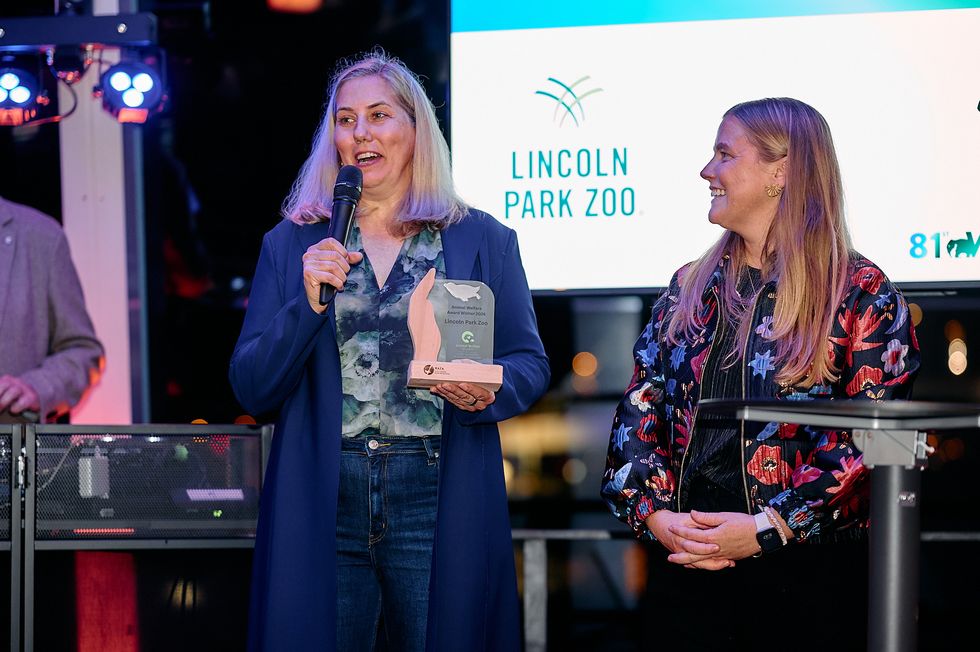 Dr Sally Sherwen presents the WAZA Animal Welfare Award to Megan Ross, President and CEO of Lincoln Park ZooImage © Cologne Zoo and WAZA
San Diego Zoo Wildlife Alliance received the WAZA Conservation Award for its pioneering Wildlife Biodiversity Bank, a long-term initiative safeguarding biological resources for future conservation. Established in 1975, the Bank holds biological materials from over 2,000 species, supporting genetic rescue, species recovery and habitat restoration.
The Alliance also shares expertise and helps partners build biodiversity banking worldwide, turning decades of scientific investment into practical conservation.
Kansas City Zoo & Aquarium won the 2026 WAZA Environmental Sustainability Award for integrating environmental responsibility across its operations.
Its Pathway to Net Zero tracks annual emissions and improves building efficiency, electric transport, and waste and water reduction. A gravity-fed aquarium filtration system cuts energy use and saves over 500,000 gallons of water yearly. The approach makes measurable progress part of daily culture and engages staff and visitors.
WAZA congratulates the four recipients, finalists, and nominated institutions, and thanks the award judges and nominators for their contributions.
WAZA 2030 Conservation Goal Approved
In addition to recognising individual achievements, the conference represented a significant step towards enhancing the collective conservation impact of the world's progressive zoos and aquariums.
At the WAZA Annual General Assembly on 29 October, members approved the WAZA 2030 Conservation Goal. It sets out a shared global framework that will enable WAZA Member Associations to support, document and report their institutional members’ conservation contributions more consistently.
For the first time, WAZA's global community has agreed on a shared framework to align conservation reporting across regional associations and clarify zoos' and aquariums' collective biodiversity contributions.
By 2030, WAZA Member Regional Associations should have two essentials: a conservation framework requiring institutional members to help halt extinctions, reverse declines, restore populations, and secure threatened species’ futures; and a standardised reporting system for members to document their conservation work and associations to report it to WAZA.
The framework will recognise diverse conservation contributions, including in situ and ex situ population management, research, science, capacity development, health, pathology and social impact.
It builds on regional systems while supporting a shared global approach to reporting conservation contributions. Shared indicators will be refined during implementation.
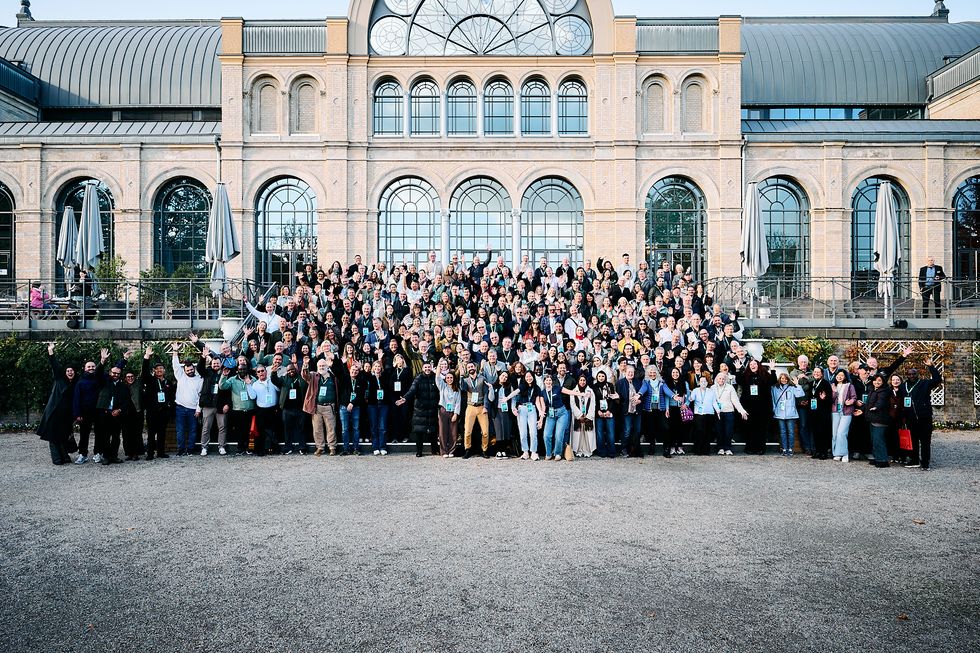 Delegates of the 81st WAZA Annual Conference gather for the official group photograph in front of Flora Köln, the conference venue, during the international gathering hosted by Cologne Zoo from 25 to 29 October 2026Image © Cologne Zoo and WAZA
The Goal aligns global zoos and aquariums with the Kunming-Montreal Global Biodiversity Framework to help halt and reverse biodiversity loss.
As it develops, the 2030 Conservation Goal will help WAZA and its associations demonstrate conservation impact, find collaboration opportunities, and strengthen engagement with governments, international conventions, and conservation partners.
"Across the world, WAZA member zoos and aquariums are already making extraordinary contributions to conservation. But if we want to demonstrate the true scale of that work, we need to be able to collectively report on those contributions," says Dr Martín Zordan, CEO of WAZA.
"The approval of the 2030 Conservation Goal is an important step towards doing exactly that. It gives our global community a shared global direction while recognising the diversity of our regional associations and their members.
"Cologne was a reminder of what makes this community so valuable: the expertise we share, the relationships we build and our willingness to work together for the future of wildlife."
The Annual General Assembly approved the new WAZA Strategy 2027–2031, guiding the Association's work ahead.
The 81st WAZA Annual Conference
The WAZA 2030 Conservation Goal milestone followed a conference that challenged participants to consider what modern zoos and aquariums can achieve, as well as their responsibilities in advancing science, leading institutions and earning public trust.
Four keynote speakers offered distinct perspectives. Dr Mona van Schingen-Khan of Germany’s Federal Agency for Nature Conservation opened with cross-border and cross-sector collaboration in species conservation, highlighting CITES.
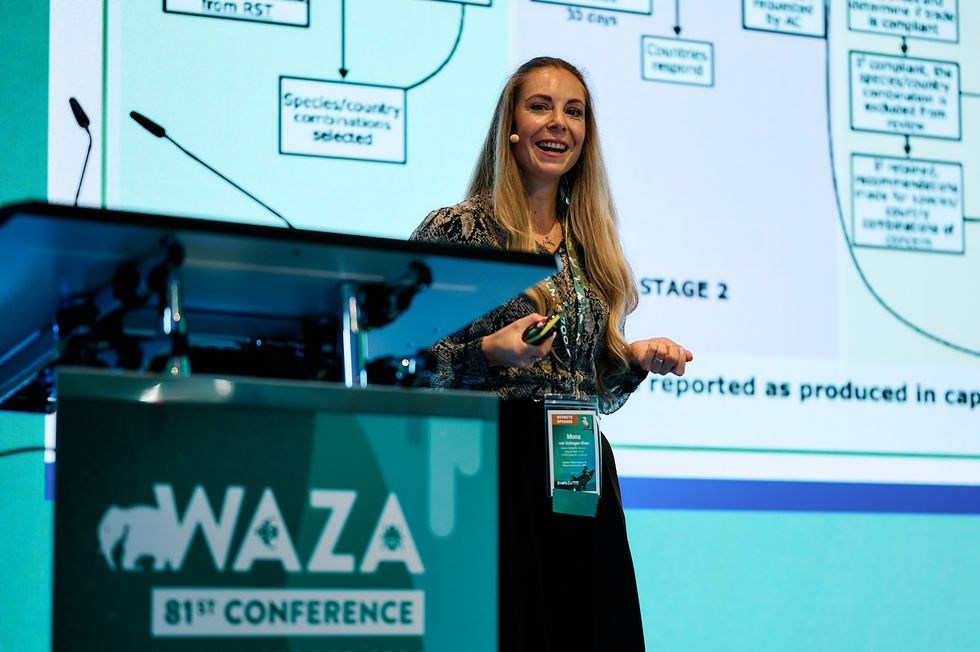 Dr Mona van Schingen-Khan explores the importance of collaboration across borders and sectors to strengthen global species conservation during her keynote address at the 81st WAZA Annual ConferenceImage © Cologne Zoo and WAZA
Professor Carolyn Calloway-Thomas of Indiana University discussed empathy and intercultural understanding as vital to leadership and cooperation. Professor Philip Seddon of the University of Otago examined the opportunities, limits and ethics of de-extinction technologies.
Dr Mark Erdmann, ReShark’s executive director, closed by showing how aquariums and conservation partners are working to return threatened sharks to the wild.
Alongside panel discussions, case studies and interactive sessions, contributions underscored the need to unite scientific expertise, ethical judgement, collaborative leadership and measurable conservation outcomes.
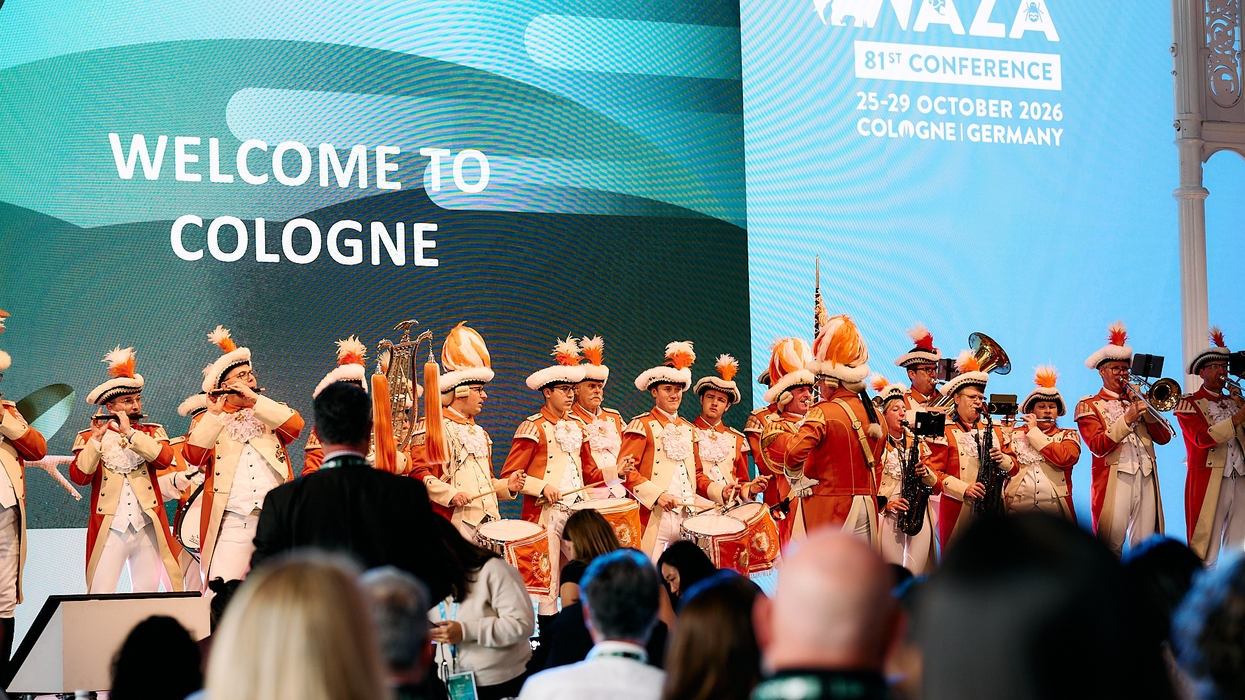
WAZA thanks Cologne Zoo, director and CEO Professor Theo B. Pagel and the hosting team for their outstanding organisation and hospitality. A performance celebrating Cologne's Carnival traditions welcomed delegates.
Visits to Cologne Zoo, one of Europe's oldest zoological institutions, enabled delegates to share experiences and learn about its animal care, research and conservation work.
WAZA also thanks all speakers, delegates, sponsors and partners for helping make the conference a success.
The momentum from Cologne continues in Cape Town, South Africa, which will host the 82nd WAZA Annual Conference from 17 to 21 October 2027 at the Cape Town International Convention Centre.