Sustainability is now a core operational focus in the visitor attractions industry, and blooloop’s new greenloop webinar series showcases best practices and promotes ongoing discussions.
The first session of this new format, titled An unexpected collaborative conservation partnership, provided detailed insight into one of the most distinctive collaborations in the conservation sector.
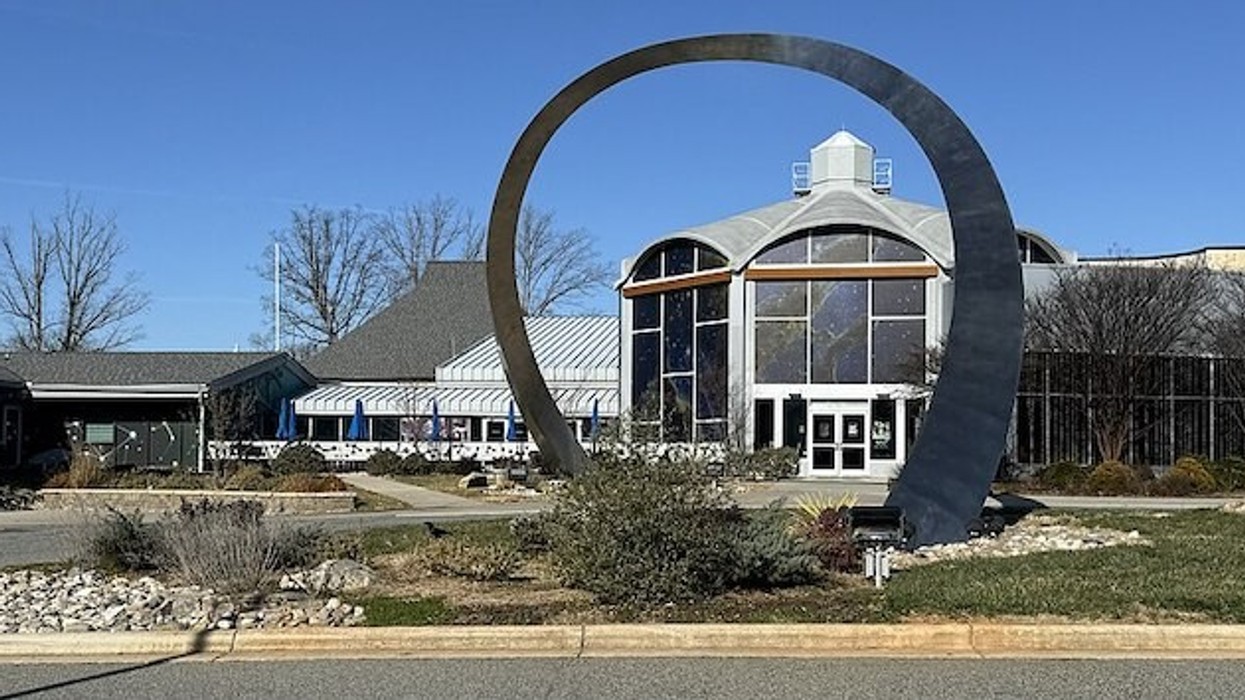
Located on 500 acres of waterfront land at Tampa Electric's Big Bend Power Station, the Florida Conservation and Technology Center (FCTC) demonstrates how heavy industry and public attractions can work together to create a sustainable future.
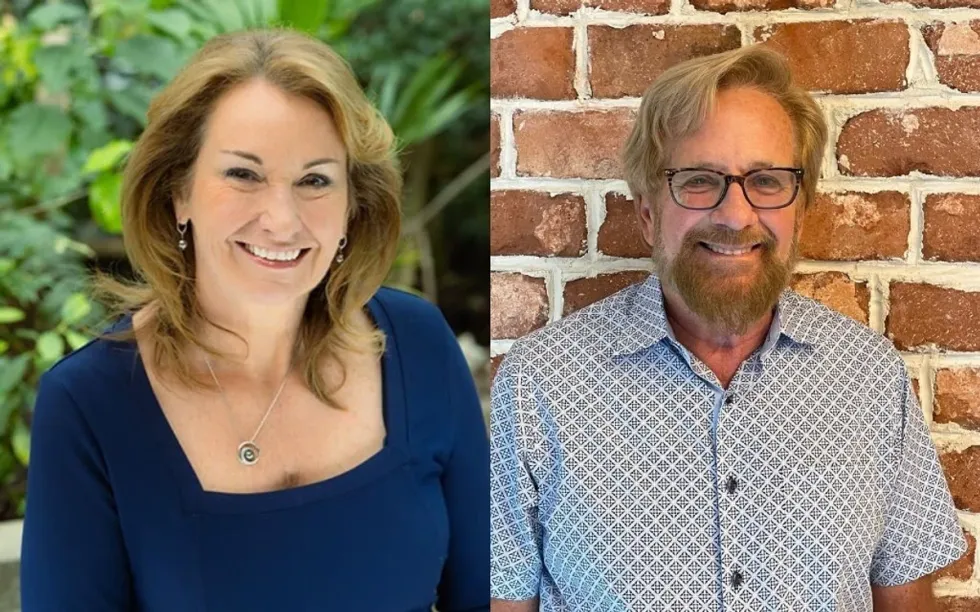
Joining the session to share their insights were two key figures behind this initiative: Stanley Kroh, senior manager for land and stewardship programmes at Tampa Electric, and Dr Debborah Luke, senior vice president of conservation at The Florida Aquarium.
The discussion explores how a major utility company and a world-leading aquarium collaborated with state agencies to establish a hub for manatee protection, sea turtle rehabilitation, and globally recognised coral restoration.
The Manatee Viewing Center
This remarkable campus originated from an unintended but crucial outcome of industrial power generation. Kroh explains that the collaboration truly started because of the Manatee Viewing Center at the Big Bend Power Station in Apollo Beach.
"We discharge the cooling water to help cool down the power plant equipment," Kroh says. "And that attracts a lot of manatees in the wintertime, because that's a species that is very sensitive to cold, and if the water temperature drops below 68 degrees, they can actually start showing signs of cold stress.”
During unusually cold winters, such as when water temperatures in Tampa Bay plummeted to 51 degrees, the warm discharge canal becomes a critical sanctuary.
"Literally, we've had 1,000 or more out there at one time. So, it's a really phenomenal thing to see. In fact, peak winter days have seen counts closer to 1,300 manatees congregating in and around the mouth of the canal."
Since opening in 1986, the Manatee Viewing Center has welcomed over 10 million visitors, offering free admission and parking.
To accommodate these massive crowds and provide unparalleled access to wildlife, Tampa Electric has continuously developed the site:
"We have a viewing platform that's out over the water, so people can get really close to the manatees," Kroh shares, mentioning the addition of a second platform to account for tidal movements.
The site also features a 50-foot-high wildlife observation tower linked by a quarter-mile boardwalk that meanders through restored coastal habitat. Importantly, this infrastructure was designed with environmental enhancement in mind.
Clean energy and habitat restoration
Building upon the success of the Manatee Viewing Center, Tampa Electric expanded the campus to include a Clean Energy Center, designed to educate the public on renewable innovations.
Open seasonally, this facility features flexible solar panels, a parking-lot solar array, a supercapacitor, a wind turbine, a flow battery, and a smart flower, all of which are explained by on-site docents and educational signage.
Beyond energy, the Florida Conservation and Technology Center is deeply invested in habitat restoration. Kroh highlights a recently completed 5,500-foot living shoreline project.
Decades ago, Apollo Beach was developed by dredging canals with vertical banks that provided virtually no wildlife habitat. "We came in, and... we smoothed out those vertical banks, and also added some shoreline stabilisation, and then added some native habitat," Kroh explains.
"Now, instead of this straight canal with vertical sides, we have a more meandering creek type effect that's going to have a variety of habitats that will greatly enhance wildlife habitat, but also provide learning opportunities.”
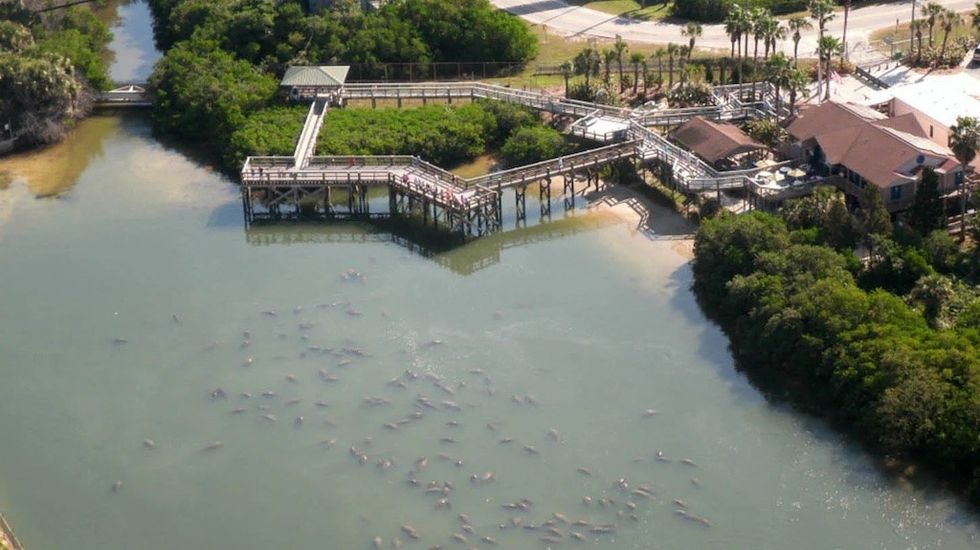 Image courtesy Tampa Electric
Furthermore, Tampa Electric has cultivated three acres of seagrass to serve as a local food source for the wintering manatees.
Since a 1,500-pound manatee consumes about 10% of its body weight (roughly 150 pounds of seagrass) each day, maintaining this population presents a significant challenge.
To prevent the manatees from destroying the restoration efforts, Tampa Electric carefully selected seagrass species:
"Some species, manatees are likely to pull them out by their roots, and so then they won't regenerate. We used a couple of species that are not as likely to be uprooted... the manatees will just eat the tops off the grasses, but then it'll grow back, just like your lawn does when you mow it.”
Joining forces with The Florida Aquarium
The remarkable public interest in the Manatee Viewing Center attracted the attention of The Florida Aquarium. Facing significant space limitations at its main campus in downtown Tampa, the Aquarium viewed the vast, undeveloped coastal land at Apollo Beach as a perfect opportunity.
"Downtown Tampa has become a really hot real estate market, and so it would be really hard for a not-for-profit organisation to come in and do anything there," Kroh says. Beyond financial barriers, setting up quarantine and field research operations in a busy city centre is logistically complex.
Dr Debborah Luke, who oversees the Aquarium's conservation efforts both locally and internationally, emphasised the transformative nature of this partnership.
"Often times, groups and families who may not be able to see some of these things will come to this centre and spend the whole day there. And it's really fabulous.”
She also praised Tampa Electric’s broader corporate philosophy: "Tampa Electric itself, as a company, is elevating the bar for sustainable energy... reducing its coal usage, building solar, and using the sustainable practices that we all have heard about.
"Partnering with an organisation that raises the bar for others to follow is just a no-brainer for us at the Florida Aquarium.”
The FCTC campus is not just a two-party partnership. It also hosts the Florida Fish and Wildlife Conservation Commission (FWC), which operates a massive fish hatchery that aims to produce 1 million sport fish (redfish and sea trout) annually.
Furthermore, the FWC runs the Suncoast Youth Conservation Center on-site, offering young people the chance to experience kayaking, fishing, and archery. "They get a lot of inner-city kids who have really never been out in nature before," Kroh adds.
"They have a summer camp programme that typically sells out within 10 to 15 minutes of going online.”
Sea turtle rehabilitation
A large part of the Aquarium’s footprint at the Apollo Beach campus is dedicated to its Sea Turtle Rehabilitation Center. The Florida Aquarium, a non-profit organisation, is deeply committed to safeguarding endangered wildlife, and it is recognised for its sea turtle programme.
"Most of our turtles actually come in from cold stun," Luke explains. "Yes, in Florida it does get cold... And oftentimes in the early fall, when we open up to the public, we are getting turtles from New England that have been cold-stunned.”
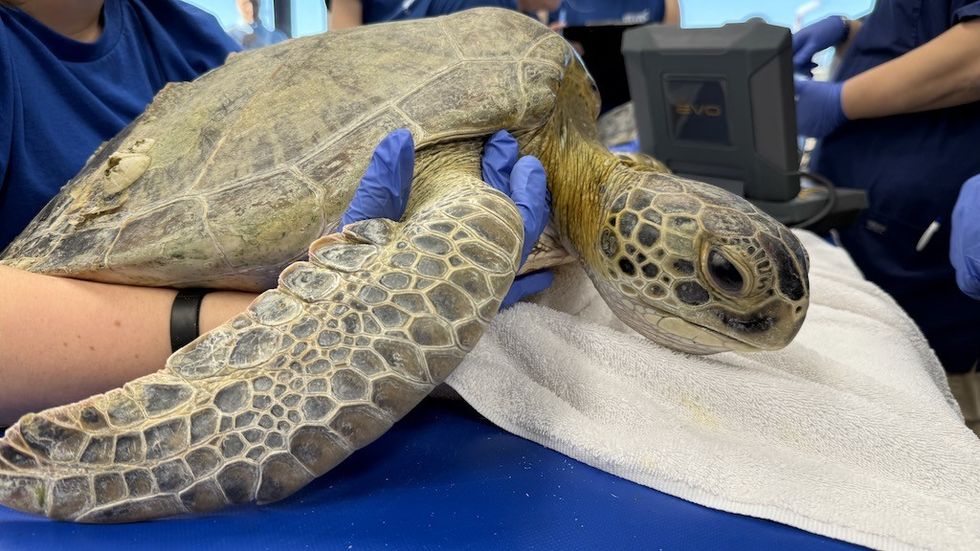 Cold stunned turtle arrives at The Florida Aquarium’s Sea Turtle Rehabilitation Center in Apollo Beach
These turtles often arrive as the most critically ill and malnourished patients, needing up to a year of intensive care before release. The scale of the operation is impressive; last year, the facility cared for 62 turtles at once and successfully reintroduced nearly all of them into the wild.
The Aquarium also uses this rehabilitation process to fill critical data gaps in marine biology. By attaching satellite tags to turtles stranded in New England and released off the coast of Florida, researchers trace their migration routes.
"We see them just hopping right back on the turtle trail and migrating the way turtles do. So pretty cool research.”
Additionally, the Aquarium's team carries out in-water health assessments, serving as an essential ecological warning system.
"If we're seeing malnourishment and other things, that's an indicator of other issues in the environment that we can then address," she explains, “comparing the sea turtles to a "canary in a coal mine.”
Innovations in coral conservation
Perhaps the most remarkable technological achievement at the FCTC is the Aquarium's Coral Conservation and Research Center.
Luke outlined the severe challenges confronting Florida's coral reefs, which have been ravaged by stony coral tissue loss disease, a highly lethal, fast-spreading disease affecting over 30 hard coral species, as well as increasingly warm summer waters.
"We now have some species of corals that are considered literally, functionally extinct on the reef," she says. Because surviving corals are too far apart physically, their gametes cannot naturally fertilise during their annual spawning event.
To combat this, the Aquarium embarked on highly experimental research, partnering with researchers to replicate the exact conditions of the Florida Keys inside the Apollo Beach laboratory.
"We were able to replicate the conditions in the Florida Keys for a whole year in a laboratory environment, all computer-controlled, including moon phase, including length of day, lumen level, salinity, temperature," Luke explains.
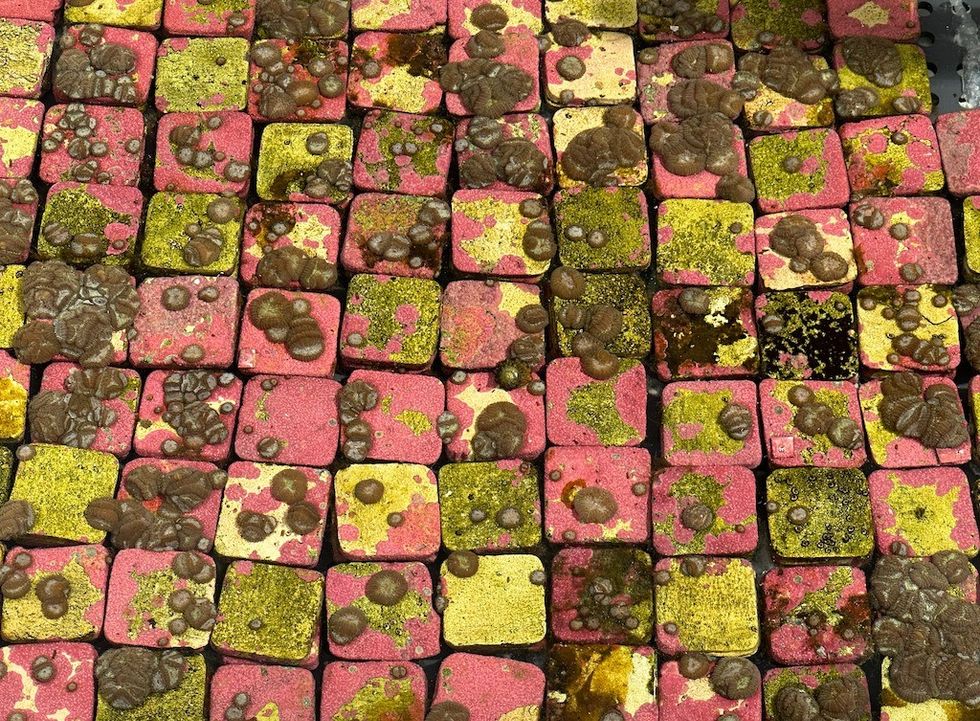 Baby corals, courtesy of The Florida Aquarium
The results have been historic. Several years ago, the team successfully spawned pillar coral, a large reef-building species, in the lab. Today, the facility reliably spawns 14 different species.
This controlled environment facilitates advanced genetic management. "We have so many corals that are brood stock, we've done all the genetic testing... so we know which coral is who and we can put corals that we want to breed together in the same tanks.”
By crossing native Floridian corals with more heat-tolerant Honduran corals, the team has successfully created thermal-tolerant corals and out-planted them in the wild to test their resilience.
The production volume is impressive, with last year alone seeing the Aquarium produce 2,500 of these new “Flonduran” corals, along with hundreds of thousands of larvae and settled corals sent to international partners.
Moving forward, the Aquarium plans to expand by constructing a new classroom to train global researchers in coral spawning and is set to inaugurate the world's first IUCN Coral Center for Species Survival.
Welcoming rays back home to Cownose Cove
Operating a conservation hub on Florida’s coast involves significant environmental risks, a challenge the partners confronted directly after Hurricanes Helene and Milton. One of the most popular attractions at the Manatee Viewing Center is the cownose ray touch habitat.
"Tampa Electric owns the habitat and all the life support equipment, but the aquarium owns the animals and also provides veterinary staff and educational staff on site," says Kroh.
In September 2024, Hurricane Helene caused significant flooding at the Manatee Viewing Center, submerging the habitat and damaging parts of the filtration system.
Weeks later, Hurricane Milton presented further difficulties when strong winds scattered fibreglass insulation from a nearby destroyed building into the area, contaminating the habitat and filtration components. Consequently, aquarium teams carried out a comprehensive rebuild of Cownose Cove.
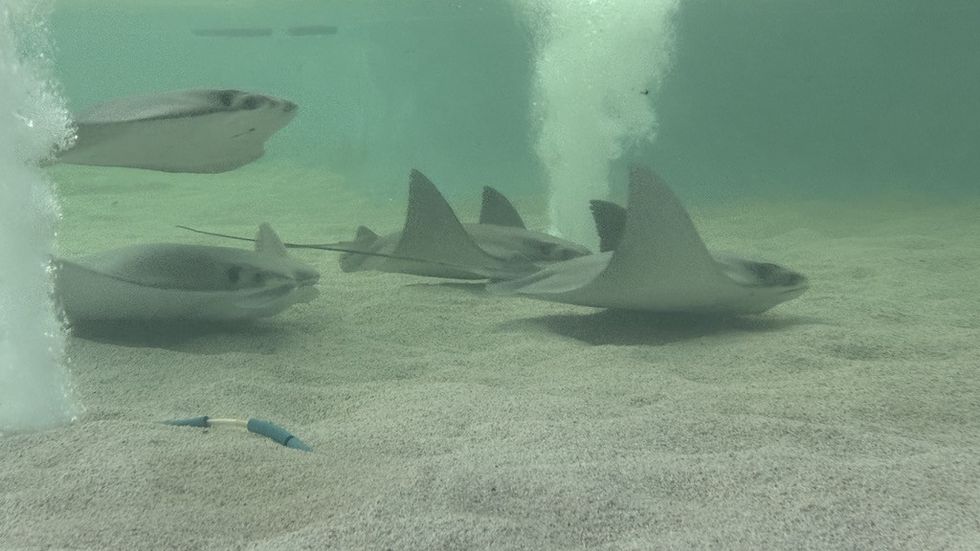 Rays enjoying their newly refurbished home
As of January 2026, seven cownose stingrays from The Florida Aquarium are once again gliding through Cownose Cove.
The seven male cownose rays, recognised for their distinctive "cow-like” noses that lend the species its name, were absent from their Apollo Beach habitat during both storms and were cared for at The Florida Aquarium’s downtown Tampa campus during construction.
After months of work, the animal care team relocated the rays to their newly restored 8,300-gallon habitat. Since their return, the team has been closely observing the stingrays’ behaviour to ensure they are comfortable in their renewed environment. Now fully acclimatised, touch interactions are open to the public.
Reframing the sustainability conversation
During the greenloop Q&A session, the discussion shifted to the political and corporate challenges of sustainability.
When asked how to educate industry leaders who may be reluctant to engage with climate initiatives, Kroh acknowledged the difficulty, noting the abundance of "misinformation" and "climate deniers."
Luke adopted a strategic approach successfully used by the Aquarium when lobbying in Washington, D.C. Instead of beginning with politically charged language, it concentrates solely on observable data and practical solutions:
“We don't necessarily approach it by saying you have to do this because of climate change. Instead, we explain, here's a reef issue, and it's because of warmer water. And here's what we're doing," she explains.
This approach to reframing the dialogue makes the main issues more accessible and less off-putting, enabling diverse partners to cooperatively focus on shared aims, such as operational savings, habitat repair, or community engagement, without becoming entangled in ideological disputes.
Designing unexpected partnerships
For attractions industry professionals and master planners aiming to establish their own corporate-conservation partnerships, Kroh and Luke provided practical advice drawn from their 20-year journey.
When asked if the collaboration was mandated by city zoning, Kroh confirmed it was entirely voluntary, stemming from the Aquarium's vision and Tampa Electric’s willingness to support it. However, the logistical execution demanded great dedication.
"My best advice would be just to be patient, because clearly, something like this doesn't happen overnight," Kroh advises. "We had at least five years of serious talks before we even got to the planning phase.”
To foster cohesion across the campus, Tampa Electric invested significantly in infrastructure, including constructing a bridge over Newman Branch Creek with pedestrian and golf-cart lanes, expanding parking facilities, deploying a fleet of solar-powered electric golf carts, and installing a saltwater well to meet the daily needs of the FWC and the Aquarium.
Overcoming coastal flooding zones and strict permitting regulations tested their resolve, but Kroh adds that these challenges "are all overcomeable, and you can have success in the end.”
Although the FCTC is already a success, the partners are not resting on their laurels. When asked about the future, Kroh shared an ambitious vision: building a dedicated manatee rehabilitation centre on the site.
While critical care facilities exist, there is a desperate need for "bed space" where non-critical manatees can grow and recover before release.
The FCTC's location makes it an ideal site for a "halfway house," as rehabilitated manatees are already often released back into the wild directly from the site's viewing centre. However, turning this idea into reality will require substantial external financial support.
Raising the bar together
The ongoing development of the Florida Conservation and Technology Center demonstrates what can be accomplished when seemingly unrelated organisations pool their resources for a common purpose.
It shows that the attractions industry does not need to sacrifice operational success to reach significant conservation objectives.
Luke ends with a heartfelt reminder to both the industry and the public. "This is an unusual relationship, typically, to have a power company and a nonprofit conservation organisation partnering together... but we're all consumers. We just have to figure out how to be consumers in a better way."
By leveraging each other's strengths, Tampa Electric and The Florida Aquarium have established a blueprint for the future of sustainable attractions. As Luke says, the ultimate goal is simple but profound: "Partner with others. Raise the bar together."