Wellness has become an increasingly important part of the guest experience across the hospitality, visitor attractions, and leisure destination sectors.
As demand for experiences centred on health, relaxation, and wellbeing grows, owners, operators, and developers are looking beyond traditional treatment-led spa facilities to more immersive thermal and wellness environments.
Hydrothermal experiences, from hot, Nordic-style saunas and steam rooms to cold-water rituals, are attracting growing interest. For resorts, hotels and wellness destinations, these facilities can attract guests, extend dwell time and differentiate a property. But delivering them requires considerably more than creating a relaxing-looking environment.
Behind the heat, steam and cold-water experiences lies a demanding combination of aquatic engineering, smart controls, and specialist technical infrastructure.
This is where Orlando-based Martin Aquatic is innovating to transform the market. The aquatic design and engineering consultancy, which has worked across the attractions and hospitality sectors since 1987, has launched Blue Mar Wellness by Martin Aquatic, an integrated design and supply division focused on the thermal spa market.

Martin Aquatic has designed and engineered over 3,500 projects worldwide, spanning luxury and family resort amenities, waterparks, lagoons, show fountains and cruise destinations.
Blue Mar Wellness extends that experience into the commercial thermal spa market, combining Martin Aquatic's design engineering and technical documentation with hydrothermal product supply, as Matt Kent, vice president of business development, explains to blooloop.
Additionally, Martin Aquatic is doubling down by investing in its own Blue Mar Wellness facility, which will serve as both a working hydrothermal destination and an R&D facility in Orlando, from which to continue innovating the guest and operator experience.
Martin Aquatic’s approach
Blue Mar Wellness brings together Martin Aquatic's experience in mechanical, electrical and plumbing (MEP), structural and chemical engineering, alongside water treatment, controls, and lighting. The approach treats hydrothermal spa facilities as integrated aquatic systems, rather than a collection of individual spa elements.
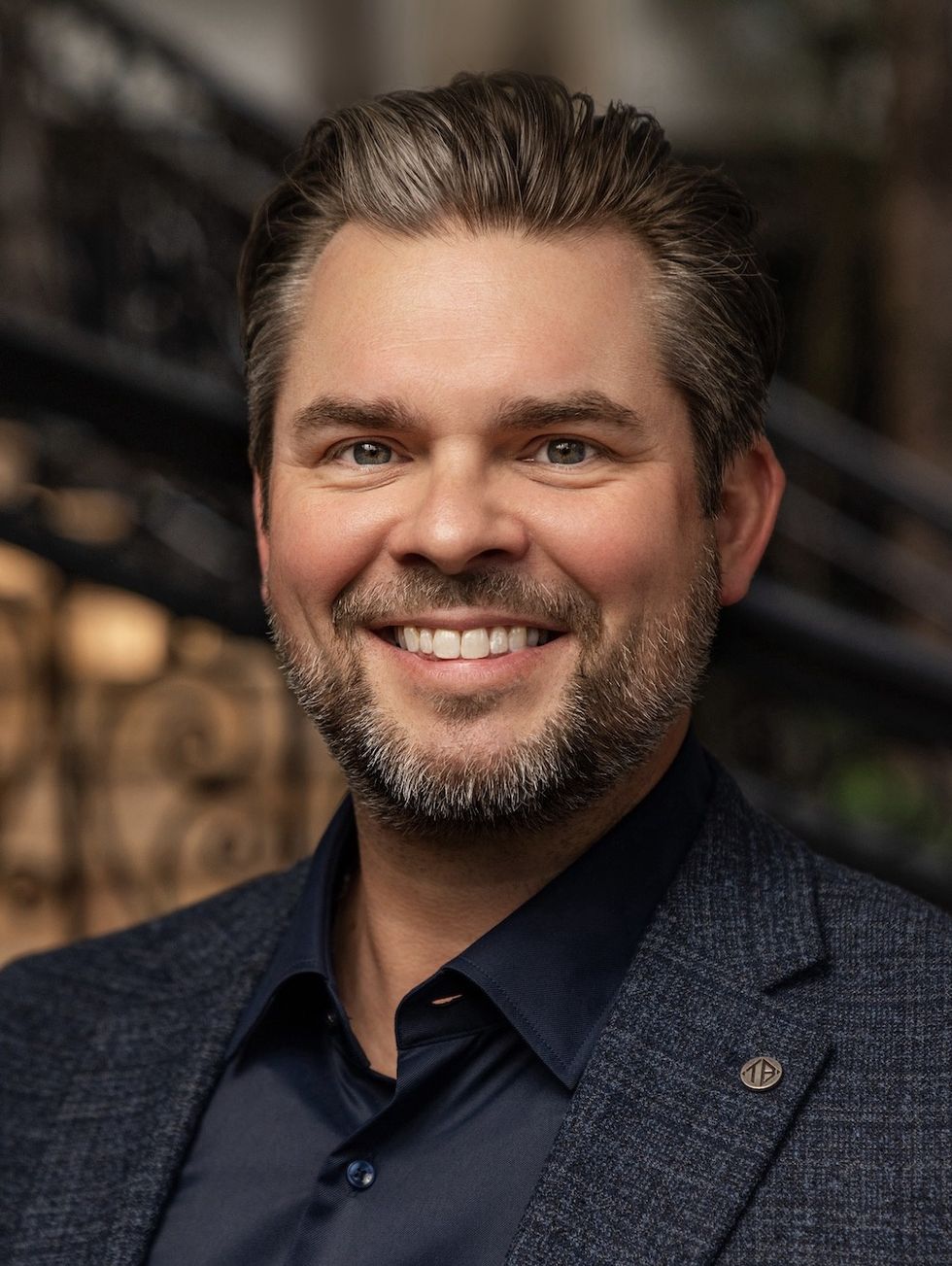
Matt Kent, vice president of business development at Martin Aquatic
The distinction became apparent as the company began exploring the wellness market. It had traditionally worked through a design-bid-build model, commonly used on major architecture and themed entertainment projects.
An independent consultant develops and coordinates the design and technical specifications, after which owners can competitively bid the work to contractors.
The spa market, however, has often followed a design-build model, with one company responsible for both design and construction and typically supplying its own equipment, sometimes to the detriment of the original conceptual design.
Blue Mar Wellness combines technical design with product supply rather than operating solely as a consultancy or product supplier.
The team develops designs in Revit covering the mechanical, electrical, chemical, and structural requirements, then supplies preassembled equipment and mechanical and controls systems. The aim is to resolve technical interfaces during the design stage, reducing the risk of changes or problems later in the project.
It also applies lessons from decades of aquatic engineering to a sector where complex technical infrastructure is largely invisible to the guest.
European thermal culture
One of the challenges facing the North American wellness market is cultural as much as technical.
While many US spas have traditionally centred on individual treatments such as massages and facials, European and Scandinavian facilities have a longer-established culture around thermal bathing and contrast experiences.
Instead of visiting for a single treatment, guests at thermal facilities typically move through a sequence of hot, cold and relaxation experiences. That model has become an important reference point as Martin Aquatic develops Blue Mar Wellness.
The company began exploring the model firsthand, with team members travelling to Germany and Italy to experience thermal destinations as guests, rather than from the back-of-house perspective familiar to an engineering team.
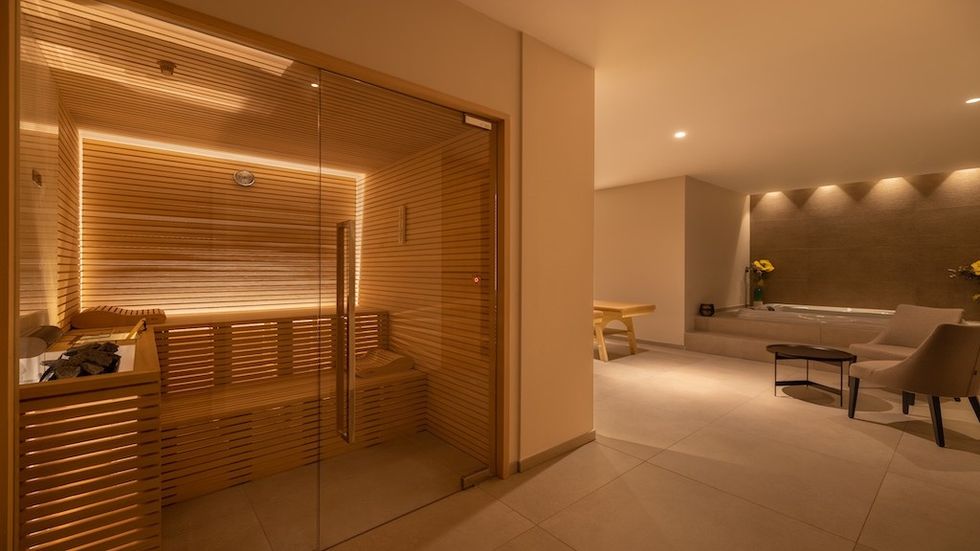
Hydrothermal experiences, from saunas and steam rooms to cold-water rituals, are attracting growing interest
Image courtesy of Martin Aquatic
For Kent, the experience highlighted how difficult it can be to understand the appeal of thermal wellness without experiencing the journey itself.
"Trends seem to be focusing more on personal wellness. There's a real uptick in self-care, but buzzwords aside, I think people are really hungry for a bit of peace and relaxation.
“Other cultures are centuries ahead of us in understanding thermal wellness and the healing benefits of contrast therapy, a term used to describe guests’ exposure to hot and cold water or environments to stimulate circulation and ease muscle soreness."
That difference in familiarity is a challenge for operators introducing thermal experiences to a North American audience. Guests may understand the appeal of a sauna or steam room individually but be less familiar with how different elements are intended to work together.
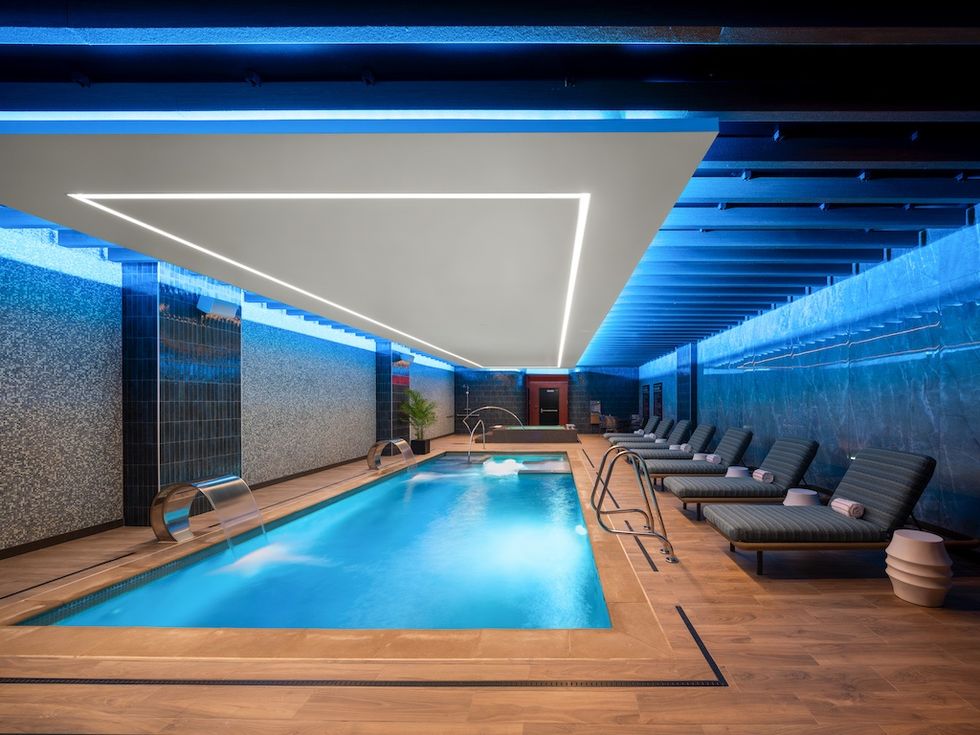
A previous Martin Aquatic project for Gun Lake Casino Resort
Image courtesy of Martin Aquatic
Blue Mar Wellness aims to deliver a final result exactly as the spa consultant and owner-operators intend.
Rather than simply supplying standalone equipment that may or may not have been originally designed, the company works with spa consultants and designers to understand how guests will move through and experience the space, and deliver on that vision.
For a sector still developing its thermal wellness culture, the physical design of the space can therefore help educate guests while delivering the experience.
Blue Mar Wellness in action
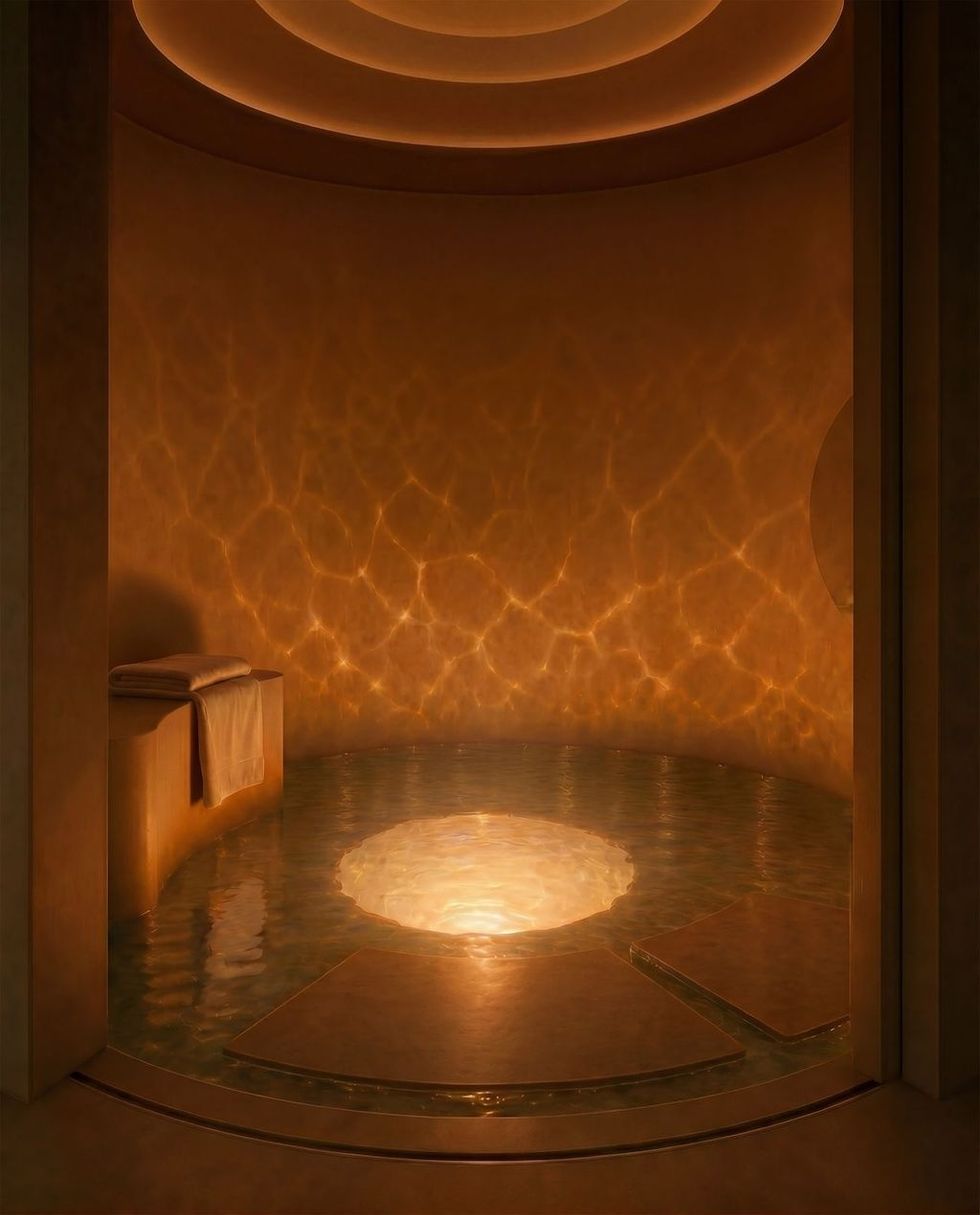
The world's first Midjourney Spa is planned for San Francisco
Image courtesy of Midjourney
Blue Mar Wellness has already been named as one of the teams working on the world’s first Midjourney Spa, planned to open near Union Square in San Francisco.
The approximately 2,100-square-metre spa combines traditional hydrotherapy bathing rituals with innovative body imaging technology developed by Midjourney. This technology uses sound waves in water to create detailed 3D images of the body, allowing users to track changes over time.
The San Francisco site will be the first Midjourney Spa, aiming to forge a new connection between preventive health, wellbeing, and architecture.
Invisible technology and innovative controls
Blue Mar Wellness believes the technology behind a thermal experience should be largely invisible to the guest. The objective is to create an environment where temperature, sound and lighting feel seamless, without exposed equipment or complicated controls interrupting the experience.
“The goal is not to highlight the technology,” says Kent. “The goal is to make the technology invisible. We're not featuring the product; we are featuring the experience, and the experience doesn't belong to us. We are supporting our clients and making sure that their vision is what we're bringing to life.”
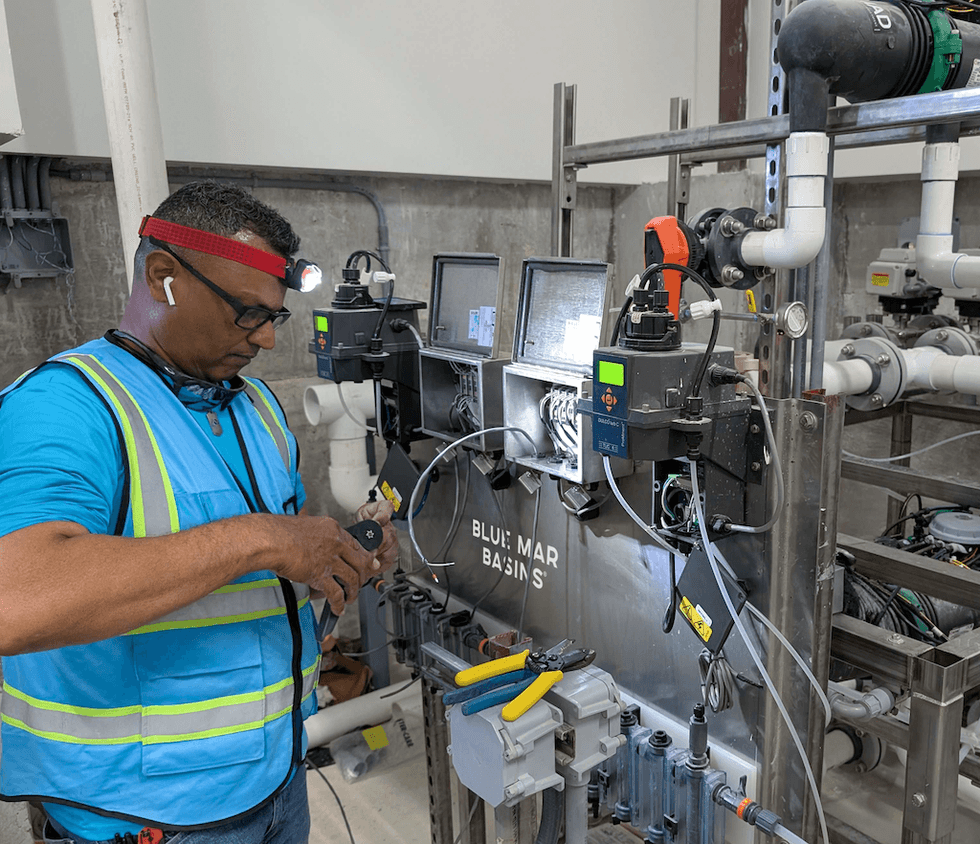
Blue Mar Wellness is underpinned by Martin Aquatics' extensive technical experience
Image courtesy of Martin Aquatic
Achieving that seamless experience, however, depends on what happens behind the scenes. Hydrothermal facilities can involve equipment from multiple manufacturers, with separate systems for saunas, steam rooms, cold plunges, sensory showers and other elements.
Managing these systems independently can also create practical problems for operators. Each spa element has its own control panel, so staff must locate the right equipment and troubleshoot it when something goes wrong.
“If you're the operator and a guest says the steam room isn't working, someone has to run around to back-of-house, locate the controller specific to that room and begin to diagnose the issue.”
Blue Mar Wellness is applying Martin Aquatic's experience of integrating innovative control systems to this challenge. The offering also incorporates Martin Aquatic's patented Blue Mar Basins innovations for water treatment and controls, connecting these functions within an integrated operating environment.
“With our all-in-one control system, there is one place. And it's not just for the spa elements themselves; it’s also for the audiovisual equipment as well as the lighting. We're connecting all of those points so that things can quickly be identified and resolved.”
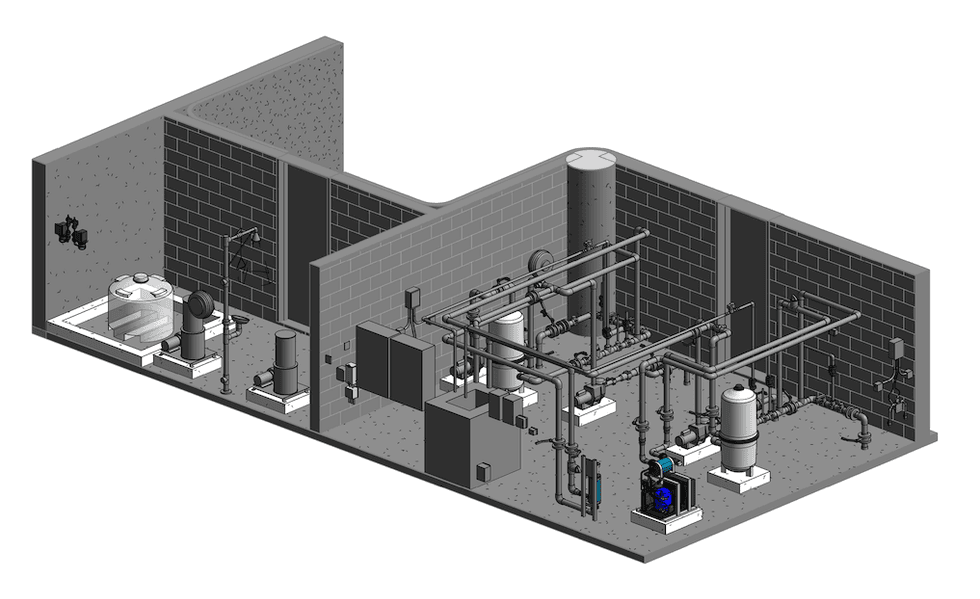
Revit-modelled mechanical spaces eliminate construction challenges in the design phase and create efficient back-of-house operations
Image courtesy of Martin Aquatic
The system gives operators a single point to monitor key aspects of the facility, including temperature, humidity, water quality, and equipment status. Its integration of water treatment and controls is intended to streamline operation and make problems easier to identify and address before they affect guests.
From an operator standpoint, this is a massive win, as it cuts the time it takes to identify, diagnose, and correct an issue, which results in less downtime and money saved.
This reflects the broader philosophy behind Blue Mar Wellness:
Budget and customisation
A recurring challenge in attraction and resort developments is balancing creative ambition with the realities of budget, space and construction. Early concepts can be deliberately ambitious, but as a project moves into detailed design and costing, those ideas have to become practical, buildable solutions.
“Regardless of industry, what tends to happen after a conceptual blue-sky effort is a costing exercise, and someone is designated on the project team to kill the client’s dreams. The client gets so excited about what has happened in ideation, and they have become married to an idea they can’t afford.
“If you're able to offer a solution at the table during blue sky, it is always to your benefit as a consultant or a client. We want to come to the market with solutions.”
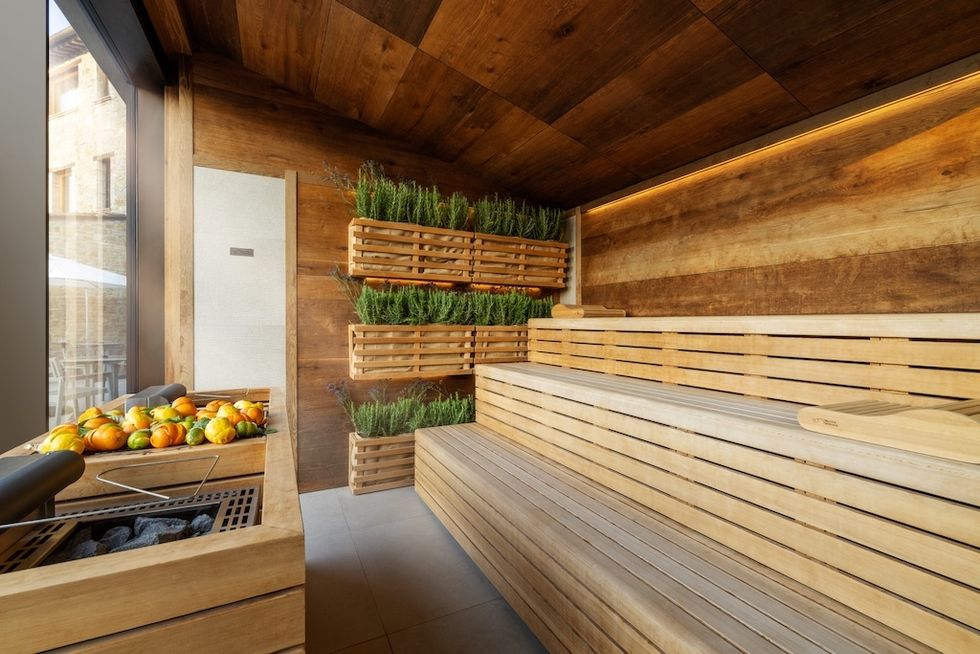
Blue Mar Wellness offers standard spa cabins and bespoke creations
Image courtesy of Myrtha Wellness
Blue Mar Wellness responds by offering different levels of customisation.
Through a partnership with Italian manufacturer Myrtha Wellness (a division of Myrtha Pools), its portfolio includes a range of standardised spa cabins, covering sauna, steam, and Hammam environments; hot and cold plunges; experience showers; hydrotherapy and vitality pools; and salt, relaxation, and snow-room environments, and more.
Myrtha’s products deliver the functionality of stainless steel construction, which is recognised worldwide as one of the preeminent manufactured solutions for pools and aquatics.
This lets Blue Mar Wellness create a hydrothermal element within a standardised, watertight cabin, with the flexibility to customise it with whatever finishes the client envisions.
The company can also give designers and developers an alternative when an ambitious concept proves difficult to deliver within the available budget. Their standardised cabins use repeatable dimensions and fabrication processes, which can reduce the cost and complexity of manufacturing, shipping and installation.
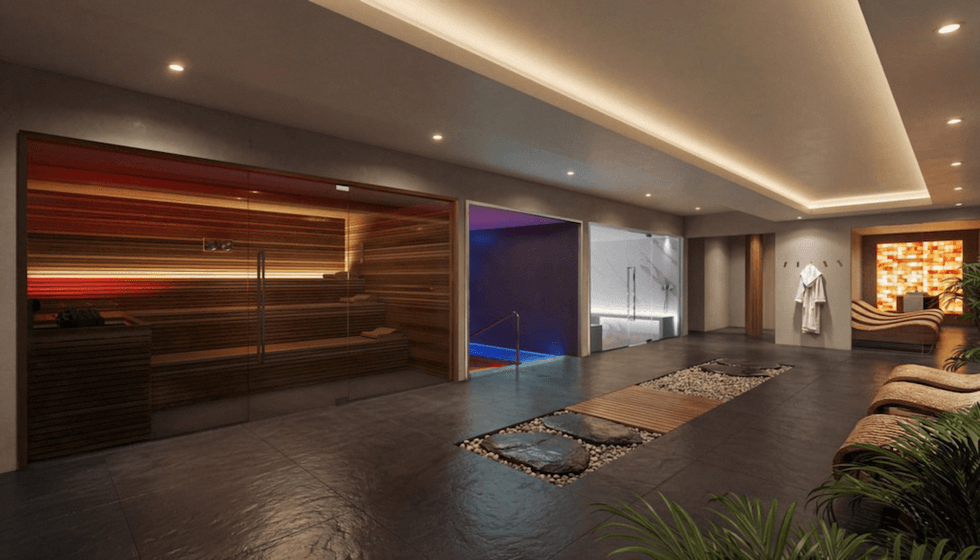
The flow between the different experiences is also taken into consideration
Image courtesy of Martin Aquatic
At the other end of the spectrum, the company can develop highly customised solutions where the design and budget justify additional engineering.
"We are happy to provide solutions for custom designs, too. Having that range of costs in our solutions is something that we wanted to come prepared with."
This gives developers greater flexibility when deciding where to invest in a thermal suite. A project might use a bespoke feature as a focal point while relying on more standardised elements elsewhere, allowing the design team to balance visual impact with practical considerations such as cost, fabrication and installation.
Early involvement in the design process
For Blue Mar Wellness, early involvement is key. Rather than coming in once the design is fixed and the project is in the eleventh hour, the team aims to work with owners, developers, architects, spa consultants and other project partners from the outset, supporting the project through design, documentation, procurement and installation.
“A turnkey approach for us would be to be engaged as the aquatic consultant at the earliest phase of engineering, when a concept and site layout have been determined.
“We come in and try to preserve that vision as much as possible, and sometimes that means we have to request that we knock down a wall or make a pool size smaller to be within the local code compliance. That's just something that we sometimes have to do as engineers to guide a project and make its design constructible.”
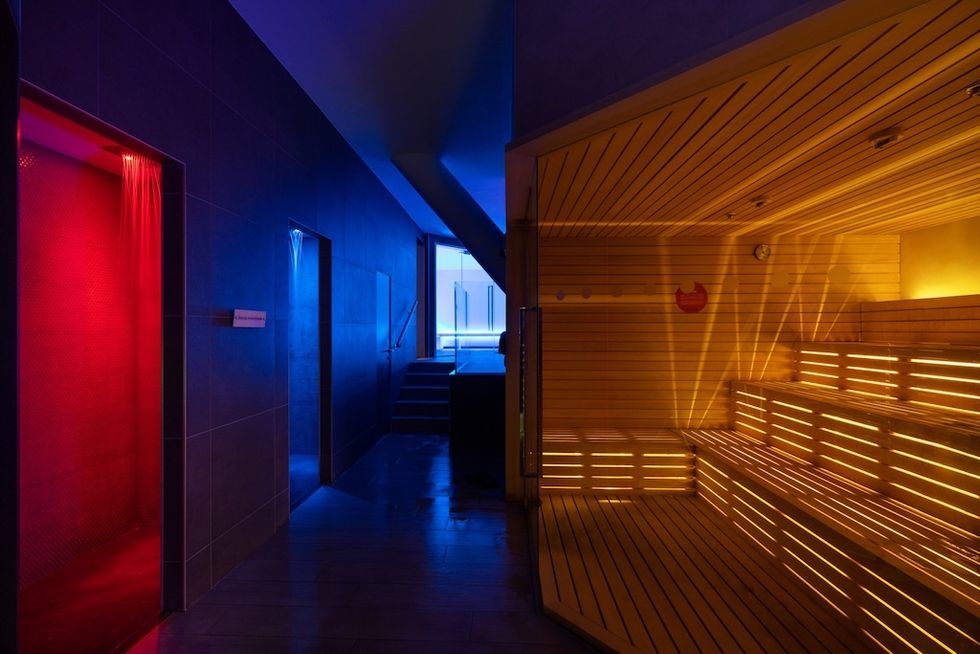
LED lighting helps to set the atmosphere and take the guest through an intuitive hot/cold thermal circuit
Image courtesy of Myrtha Wellness
Revit is used throughout the design and documentation process. Working within the same three-dimensional environment as the wider project team allows Blue Mar Wellness to integrate its work with architects, landscape architects, civil and structural engineers, MEP consultants, interior designers and spa consultants.
This is particularly important in a guest-facing hydrothermal environment, where equipment, pipework, electrical connections, and structural requirements must all fit within the architectural design. Resolving those interfaces digitally can help identify potential conflicts before work reaches site.
Martin Aquatic also brings its engineering and regulatory experience to the process.
Blue Mar Wellness manages product supply, with planning around equipment lead times and site schedules. Where appropriate, components can be preassembled before being delivered to the project, reducing the amount of work required on site.
The team can also provide installation oversight, maintaining a link between the technical design and its implementation.
New R&D and demonstration facility
For developers and hospitality operators considering a hydrothermal facility, experiencing the model firsthand can also inform the design process.
Martin Aquatic is addressing this with a dedicated test and R&D facility for Blue Mar Wellness in Orlando, Florida. Located within two miles of the company's headquarters, the facility will allow clients and project partners to experience hydrothermal environments while providing a base for product testing and development.
“We can't wait to open our facility up to clients and partners so that they can experience it as a guest. The front-of-house areas will allow visitors to experience the sequence of thermal environments and consider how guests might move through a finished wellness space.
"Equally importantly, it's going to allow us to continue to innovate within a dedicated research and development facility.”
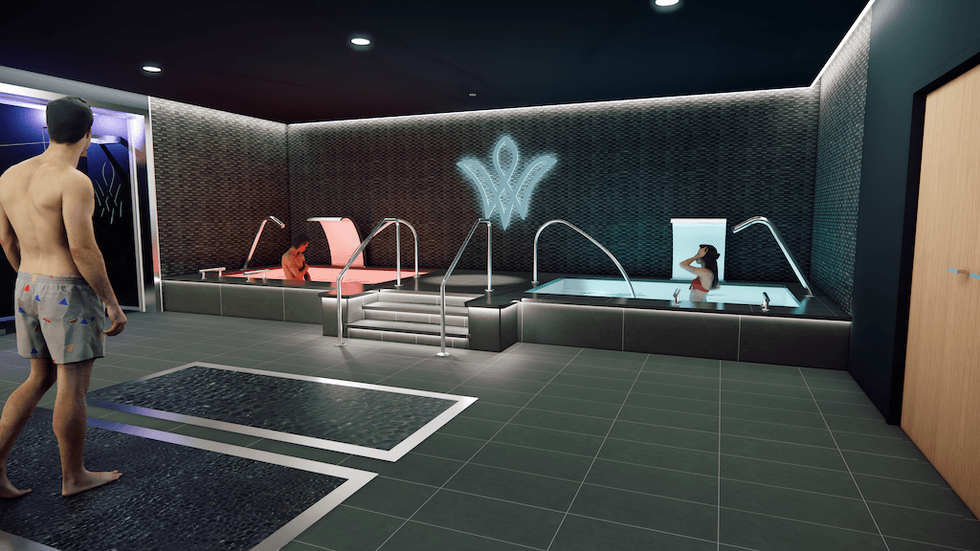
Render of Orlando's new Blue Mar Wellness show facility
Image courtesy of Martin Aquatic
The team can assess equipment and systems in operation while considering how they affect the guest experience.
It will also give the company a setting to demonstrate the thermal model to a North American audience. If developers are unfamiliar with European-style thermal bathing, experiencing the sequence in person can provide a more tangible understanding of how the spaces work and what they could offer in a resort, hotel or other hospitality environment.
The facility comes as interest in wellness tourism and thermal experiences continues to grow. The Global Wellness Institute values the total global wellness economy at $6.8 trillion, underlining the scale of the wider market in which thermal experiences are developing, and the US remains a major market for wellness-related spending.
Future tech
Blue Mar Wellness is also exploring how technology could change the way hydrothermal facilities are operated. Two areas in particular are emerging as priorities: understanding how guests use a space and using that data to operate facilities more efficiently.
Wearables are already used across visitor attractions for functions such as payments and access, but hydrothermal environments present a different opportunity.
Guests may be less likely to carry smartphones while moving between saunas, steam rooms and pools, making waterproof wearables a potential way to understand how they move through the facility.
Kent says the company is exploring how this data could eventually inform the guest experience:
“We're already taking steps to develop solutions to understand the data on the guest experience better. We're looking at how we can understand the guest's journey within the space: where and how people are experiencing the facility, so that operators can then personalise a guest's experience further down the line.”
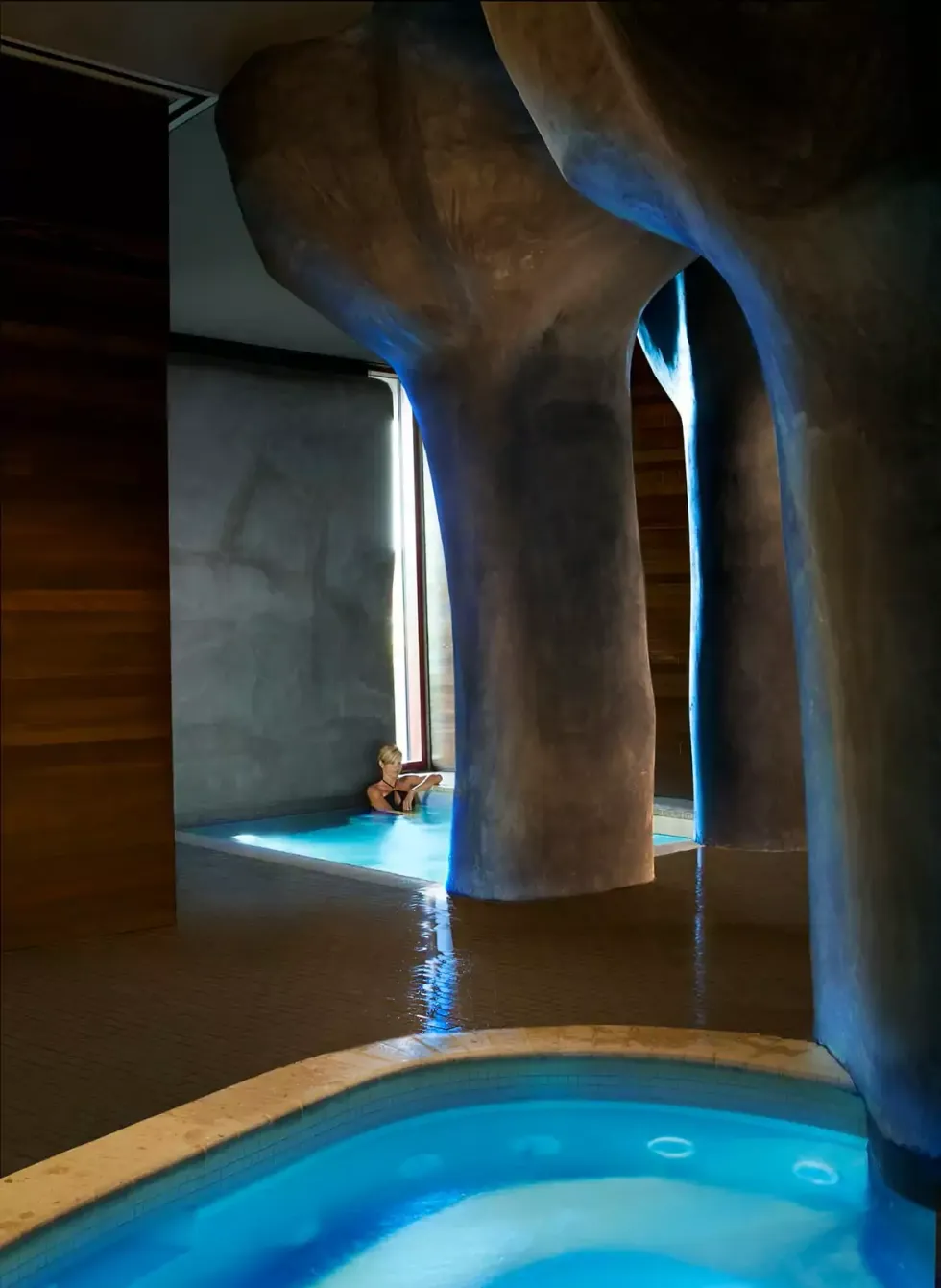
A visitor relaxes at Streamsong Spa
Image courtesy of Martin Aquatic
Understanding when different areas are being used could also inform how the facility's systems are operated.
“The flip side operationally is that we can programme the entire suite of products to be variably operated. If the steam room is not being used for hours, then we can cut power consumption down a bit while keeping it as hot as it needs to be. For example, if you have a guest booked to come in at 2 p.m., it may not start ramping up heat until 1:30.
“That is the planning and controllability, based on the backend data that owners will have access to as a result of our innovations.”
The principle also reflects a wider shift towards more responsive building operations.
Hydrothermal facilities still depend on the fundamentals of water treatment, heating, ventilation, and structural design, but those systems are increasingly connected to digital controls and operational data.
Blue Mar Wellness aims to bring these elements together without allowing technology to dominate the guest experience.
The result is a model in which increasingly sophisticated systems operate quietly behind a simple proposition: a thermal environment that feels intuitive and seamless to the guest.