Zoos and aquariums are complex workplaces that combine animal care, conservation science, education, guest services, operations, and hospitality, often operating under intense public scrutiny and with limited resources.
In recent years, many organisations have taken steps to enhance accessibility and inclusion, often motivated by legal requirements or external standards. However, for neurodivergent staff and volunteers, compliance alone does not always lead to feeling supported, understood, or able to thrive at work.
Zoos and Aquariums for a Neurodiverse Ecosystem (ZANE) has emerged to address this gap. ZANE is a nonprofit organisation dedicated to fostering genuine inclusion and belonging for people working in the zoo and aquarium sector, regardless of neuro-identity.
Its work focuses on recognising neurodiversity not as a challenge to be managed, but as a source of valuable perspectives that can strengthen teams, enhance problem-solving, and support conservation and community objectives.
Instead of endorsing one-size-fits-all solutions, ZANE encourages organisations to examine their cultures, systems, and expectations closely. This includes how roles are structured, how communication occurs, and how support is provided daily.
The shift ZANE promotes is practical: moving from meeting minimum standards to creating environments grounded in empathy and understanding.
We speak to ZANE founder Grayson Ponti about how that shift is taking shape across the sector, and what it could mean for the future of zoo and aquarium workplaces.
A love of zoos and aquariums
Ponti traces his love of the zoo and aquarium world back to childhood holidays, when his family would venture away from their home city of Orlando, Florida, to visit other cities around the US.
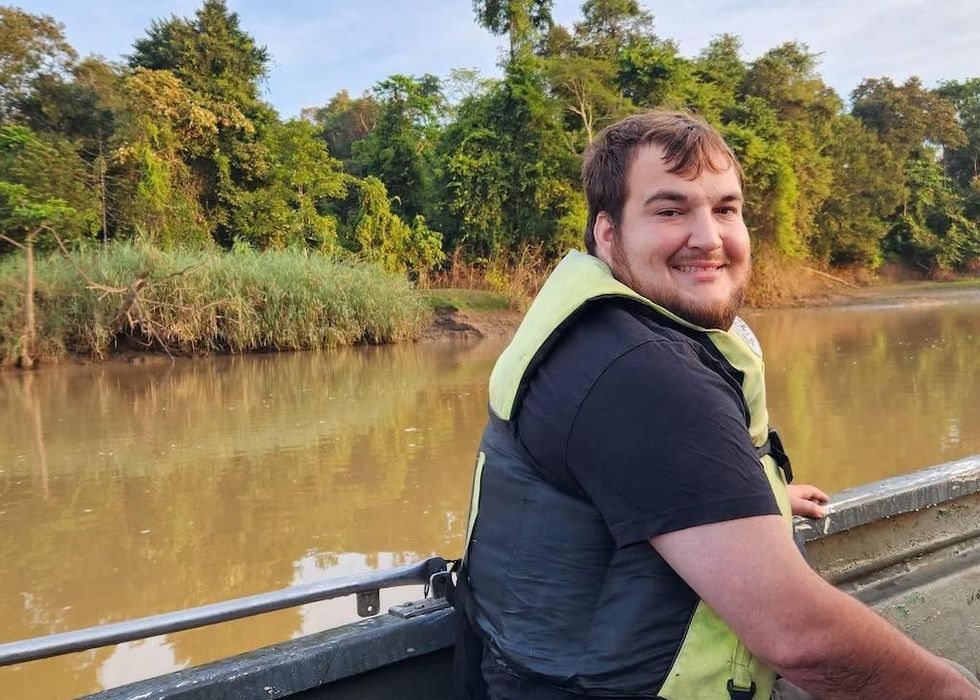 Ponti on the Kinabatangan River in Borneo
“We always went to the zoo, and I got to see how they were all different.
"I was always fascinated by animals from books and movies, and from reading about them. But getting to see the different zoos on vacation really showed me that all zoos are unique and have a bigger purpose, which is helping animals and people thrive together and forging a more sustainable world.”
This fascination with zoos and animals has always been mixed with his drive to create a more just world, he adds:
“That cause of social and environmental justice and the need to do better has always been fuel to the fire in my zoo career. And for a while, I thought I couldn't work in zoos because I wasn't a very good science student. But then I realised that there are all of these different professions within zoos, and that there's very much a place in the zoo world for everyone.
“So, I started writing about zoos and going to conferences, and the rest is history.”
Helping people thrive
With a professional background deeply rooted in zoo conservation, education, and engagement, Ponti’s career has progressed from a teenage volunteer to roles across three AZA-accredited institutions.
On what sparked the idea for ZANE, he says he had observed throughout his career that, while the zoo and aquarium world is very strong in animal care and conservation, there was greater potential to build on the human dimension.
“Zoos do so much great work on the animal side, I wanted to help from the people and culture side to take them to the next level. When we help the people thrive, we're helping the animals thrive too.”
Ponti is a self-advocate for Autism Spectrum Disorder, Anxiety, ADHD, and Sensory Processing Disorder. “I am neurodivergent, but I actually prefer the term neurocomplexity, coined by Lindsey Mackereth.
"Neurocomplexity is a framework that says, rather than trying to differentiate, we all have unique brains that are wired differently, and the way these different identities intersect creates our narrow complexity.”
This change in looking at it was transformative, he says:
“For so much of my life, I was made to believe that my neurocomplexity was something I had to overcome and something I had to mask, and that any success I had was in spite of it.
"But I really came to realise that my neurocomplexity was allowing me to have unique gifts and superpowers, and my biggest obstacle was actually my anxiety related to the stigma of being neurodivergent.
“I want to help others make the same realisation I made, because one out of five people is neurodivergent, and studies show that that's much higher in environmental-related fields.
"I wanted to create a platform where we could come together, support each other, and celebrate each other.”
ZANE’s mission
The other motivation was that, while people and organisations do want to be inclusive, they don’t always know how, or who to ask for help.
“I wanted to create a space where people can get guided in the right direction. They can ask the questions they're nervous about and figure out how to best engage in neurodivergent-affirming practice.”
“We've traditionally used equity and inclusion almost like an act of charity, like we're doing it because we're being good people, but in reality, being inclusive helps organisations thrive.”
Essentially, having more neurodiverse staff allows institutions to be more innovative. ZANE is all about helping zoos and aquariums move from compliance to compassion and creating an environment where all professionals can thrive, no matter their neuro identity.
“We do this in three ways. We spark conversations to promote inclusivity and belonging, we connect self-advocates and allies through community, and we provide institutions with guidance and growth to help them know what they don't know and move toward neurodivergent-affirming practice.”
This helps both individuals and institutions:
“We're helping people know they're not alone in advocating for themselves and giving them a platform to do that, as well as assisting institutions to develop the eyes, ears, minds and hearts to be as inclusive as possible.”
While there can be a tendency to want a one-size-fits-all magic formula, ZANE isn’t setting out to tell people what they should do.
“It doesn't work that way, because every situation is different, every person is different, but we're helping shape people's attitudes and understandings so they can pivot and be accommodating to whatever situation comes to them.”
The benefits of a more neurodiverse ecosystem
Neurodiversity in zoos and aquariums can positively impact animals, conservation, and guests.
“Zoos and aquariums have really complex and challenging missions,” says Ponti. “Not to be cliché, but we want to save the world. We want to help people and nature thrive together. And I feel like we're going to need really out-of-the-box thinking to make these things work.”
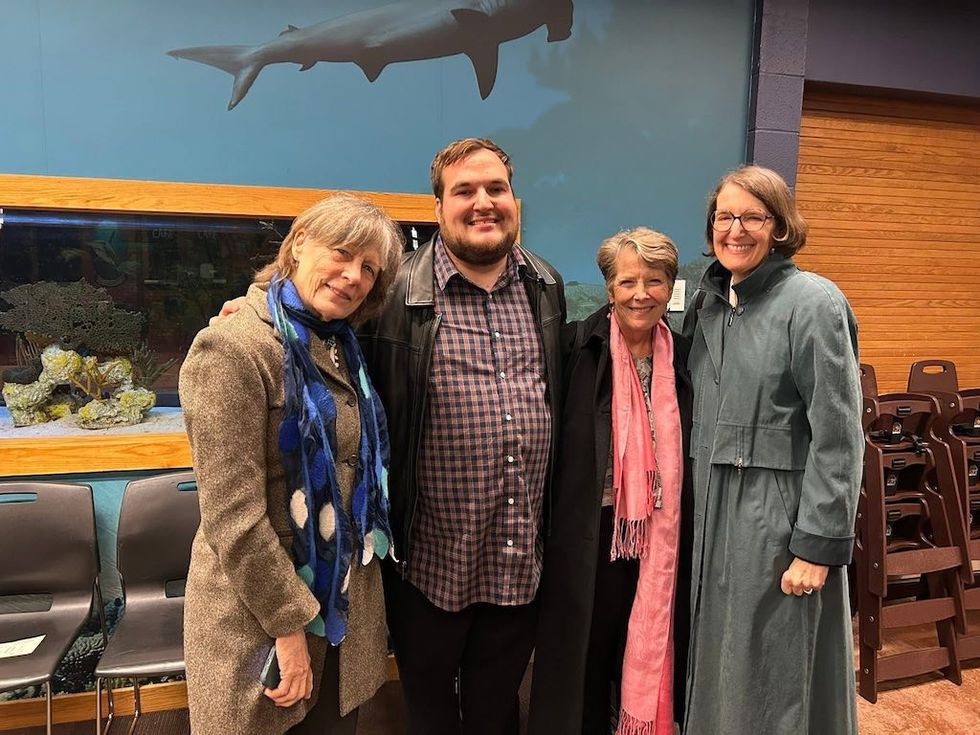 Ponti with mentors Suzanne Gendron, Jackie Ogden and Kris Vehrs
Neurodivergent people bring different perspectives to this challenge, he explains.
“Often, people who are neurocomplex have creative problem-solving skills, have excellent attention to detail, have really good pattern recognition, and I think that these unique skills help us find bigger and better ways to do what we do.
“It's also common for neurodivergent people to have intense interests and to understand things differently. That passion, that intensity, and that perspective help us think bigger and better about how to take care of animals, create a great guest experience, and put our conservation impact into action.”
Sharing experiences and best practices
Exploring some of the work that ZANE has done so far, Ponti gives examples at both the institutional and individual levels.
At the organisational level, ZANE conducted a pilot for its workshop series with Utah's Hogle Zoo in Salt Lake City.
“That was a really great experience. We gave two different talks and brought people from all over the zoo, from various departments, into the same room. I talked about what neurodiversity is and how it shows up."
“We broke them up into small groups and had them brainstorm and talk about how they can make the zoo more inclusive. And what I found really valuable was that different departments of the zoo were at different points in their neurodiversity journey, and having them share best practices was really helpful.”
On a more personal level, Ponti set up a support group with fellow ZANE members.
“It's all confidential; we have our WhatsApp group and our monthly Zoom calls, and we're able to talk about things with each other that we're used to not being able to talk about at work.”
ZANE supports individuals and organisations
ZANE launched in October 2024, and the response from the zoo and aquarium community so far, says Ponti, has been “really heartening.” The organisation already has 100 institutional members and almost 1200 individual members.
“We had a get-together at the AZA annual conference in Tampa, and we had over 400 people there. It was a bit overwhelming, but in a great way.
“People really want to do the right thing, and there are so many people who want to learn, who want to do better, as well as neurodivergent professionals – this is their chance to shine, and they now feel like they can show their authentic colours in their profession.”
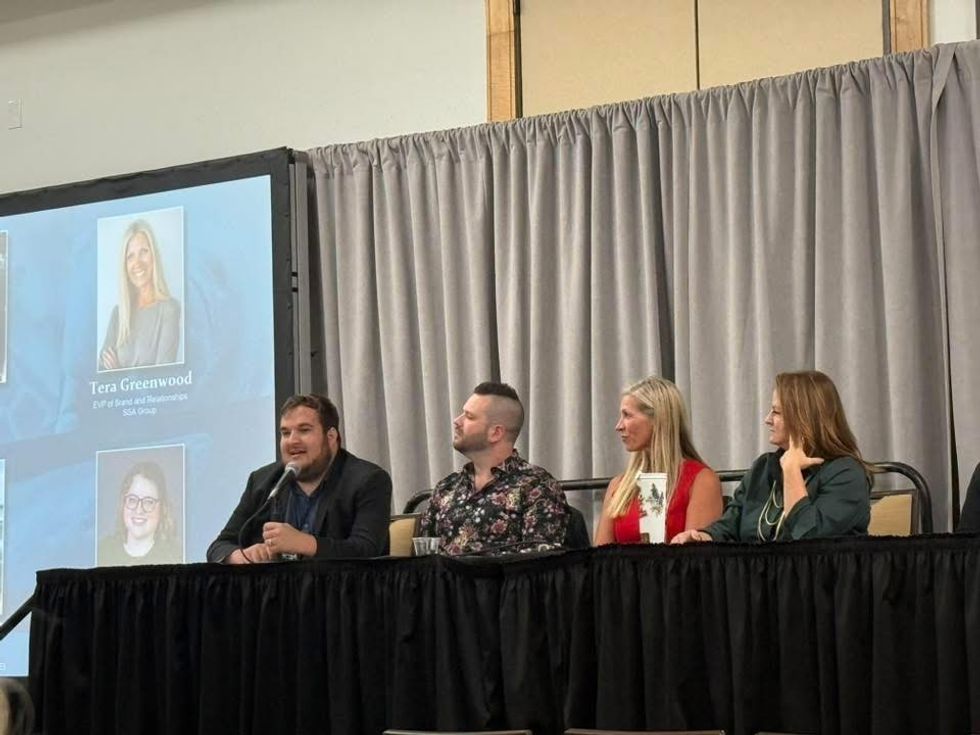 Ponti speaking at AZA Annual Conference 2025
One of the challenges, he adds, is that many of the barriers to inclusion for neurodiversity are very subtle. “Bringing attention and consciousness to this has been a real game-changer.”
A lot of the work done in this space previously has focused on the visitor side, such as sensory certifications.
“They have their place, but we want to do something different. We didn't want to give somebody a stamp; we didn’t want to be transactional, we wanted to create a community, and we wanted people to be able to use this as a sounding board, no matter what comes up.
“We've created a platform where, as neurodivergent professionals who are experts in our lived experience, zoos and aquariums can talk to us.”
Support at all career stages
ZANE also aims to be a resource for those just starting their career in zoos and aquariums.
“One of the biggest things that we already are doing is that we're a platform where people can reach out to us, and we are weaving together a welcoming, inclusive community where people can easily join the table.
“A big part of inclusion is making people feel like they belong.”
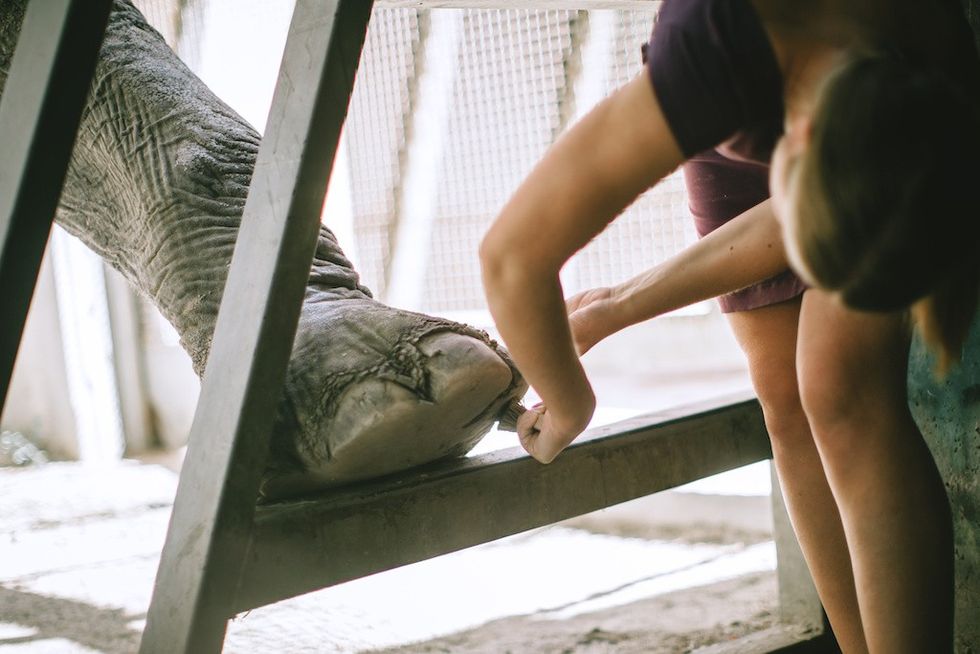
In the medium- or long-term future, he also hopes to provide scholarship and funding opportunities for early-career neurodivergent professionals to attend professional development events, such as conferences. “That's very high on our priority list.”
Additionally, the organisation serves as a confidential sounding board and support network for individuals in all stages of their careers.
What’s next for ZANE?
When asked what he would change about how the industry approaches diversity and inclusion, Ponti says the answer is twofold:
“One is helping institutions understand the need to make more flexible systems that can easily pivot to the unique needs of neurodivergent individuals. For a long time, we've had this idea that things must be a certain way and fit into a certain box.”
In practice, this can involve rethinking how meetings are conducted, how feedback is given, and how sensory-rich environments are managed for staff and visitors alike.
“The second part is getting people to understand that inclusion isn't an act of charity. It's really helping organisations thrive from both a mission and margin perspective.”
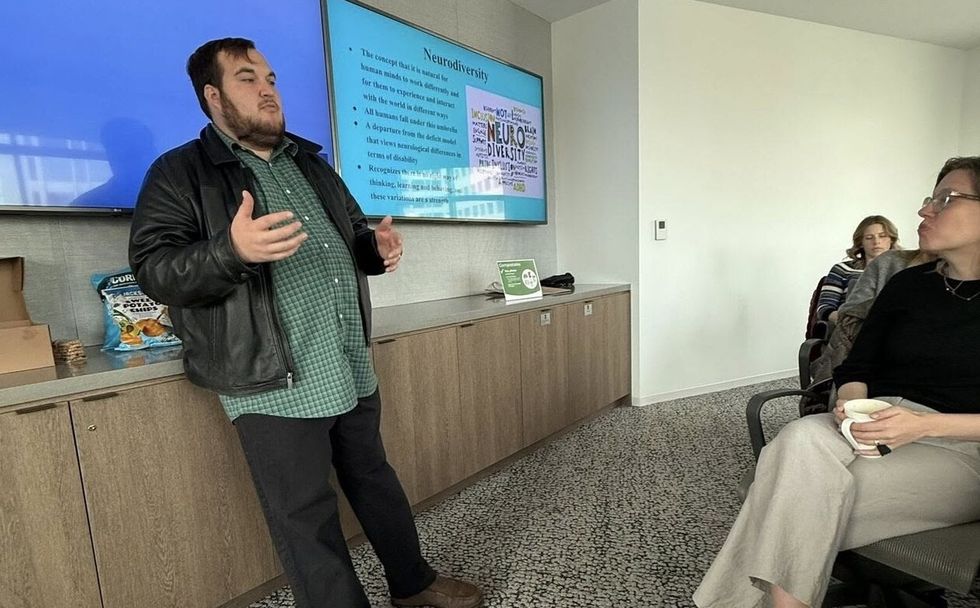
Looking to the future, ZANE is about to embark on its first-ever strategic plan and organisational assessment. “That’s really going to be our guide for the next couple of years.
“One high priority for me is deepening the partnerships and the seeds we've already planted and coming together with these groups to fulfil their potential, to be inclusive, and to set up our organisation to outlive the current team and be there as long as it's needed.
“We are really excited about the future, and we can't do it without all of our members and institutions.”
ZANE’s approach emphasises that inclusion is not a fixed outcome or a checklist, but a continual process shaped by listening, learning, and adapting.
By encouraging organisations to move beyond minimum requirements and adopt more flexible, compassionate working methods, ZANE reflects a wider shift in the sector.
This shift recognises that supporting neurodivergent professionals is not only about fairness but also about strengthening institutions, enriching workplace culture, and ultimately achieving better outcomes for animals, guests, and conservation alike.