
Connect&GO, a leading global provider of integrated technology and RFID solutions for the attractions industry, has shared insights on how attractions can effectively set up for a record season.
In the weeks before opening, operators are making key decisions around pricing, visitor experience, and operational workflows.
And with rising costs of fuel, food, and everyday expenses, guests are more deliberate about discretionary spending. The most successful parks will be those that make it easy to say yes.
Connect&GO has identified four approaches being adopted by the best-prepared parks.
1. Dynamic pricing
Dynamic pricing has become standard practice in the airline and hotel industries. Attractions are now adopting AI-driven pricing models and are seeing a 10 to 21% increase in revenue on peak days, while leveraging higher yields during slower periods.
"The concept is straightforward," says the company.
"Rather than setting a flat admission price, operators establish a floor and ceiling (say, $30 on the low end, $40 at peak) and let an algorithm adjust pricing automatically based on factors like forecasted attendance, historical patterns, weather, booking timing, and how far in advance guests are purchasing.
"The best implementations update prices up to four times a day and forecast demand up to 14 days out, so the system is always working with the most current picture of what's coming."
 Dynamic pricing can reward guests for booking early while supporting operators
A key advantage is the versatility. In contrast to early systems that applied dynamic pricing across the board, operators can specify which products, dates, and periods are subject to dynamic pricing.
For example, a park might choose to fix weekend pricing, while allowing weekday prices to float. A special event might benefit from capacity-based tiered pricing, with early-bird rates and prices that increase as availability decreases. Both approaches can run concurrently across different products.
This approach results in rewards for guests who book early, with walk-up demand priced at market rate. For operators, it delivers real-time visibility into pricing and attendance forecasts, with the option to override any AI recommendation at any time.
Connect&GO recommends that operators look for a system that enables floor and ceiling rules to be set per product and per time period, automatically updates, surfaces a clear manual override when required, and includes a dedicated report to track performance and forecast accuracy over time.
2. Reduced cart abandonment
"Cart abandonment is one of the most frustrating problems in e-commerce, and attractions aren't immune," says Connect&GO.
"Research consistently shows that checkout friction, entering card numbers, expiration dates, and CVV codes on a small screen, is one of the top reasons mobile users abandon a purchase.
"Given that the majority of e-commerce traffic now happens on mobile devices, this is a problem worth taking seriously."
And this can be overcome by offering payment options that meet visitors where they are.
Wallet-based payments like Apple Pay and Google Pay allow purchases to be completed in one or two taps using biometric authentication, without needing to manually enter card details. The visitor simply adds tickets to their cart, taps their preferred wallet, and confirms with Face ID or a fingerprint.
According to sector benchmarks from sources such as IAAPA and Shopify, mobile conversion rates have improved by 15-25% for parks that have utilised these options.
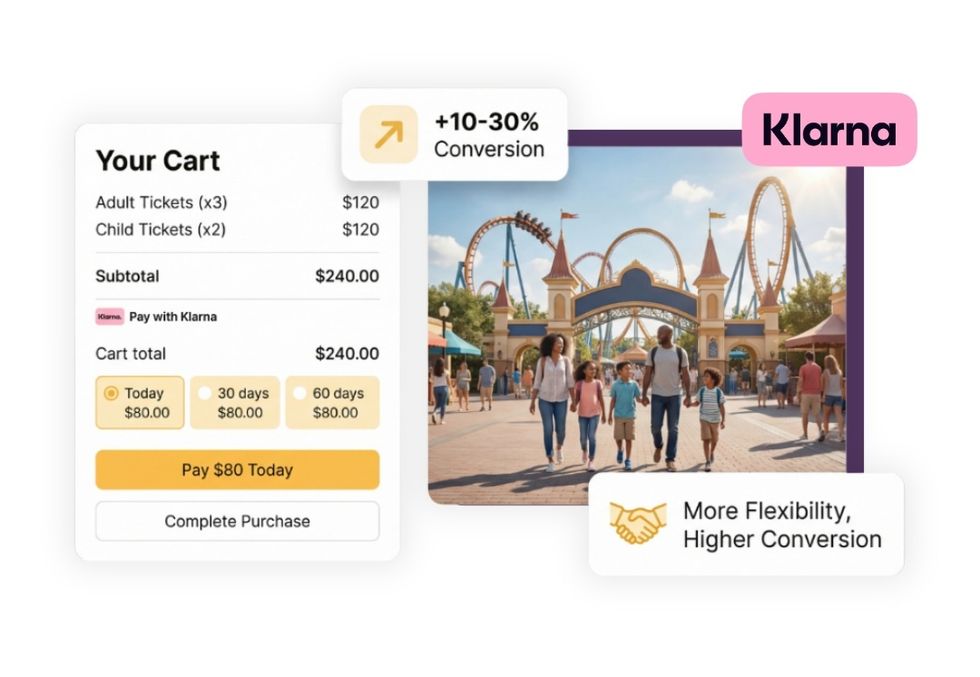 Instalment options can help increase average order value
Furthermore, buy now, pay later removes the price-sensitivity barrier for higher-value transactions such as family season passes and group admissions, with industry data indicating a 10 to 30% increase in average order value for transactions where instalment options are available.
These instalment options mean that a $200 season pass is paid in four payments over six weeks. The park receives the full amount upfront, while the payment provider manages all collection, risk, and refund complexities. As the payment provider absorbs the risk, there is no change to how the park reports or reconciles revenue.
Operators should look for wallet payment support (Apple Pay and Google Pay) built directly into the e-commerce checkout, and an instalment option for higher-value transactions. Ideally, the instalment option should allow a minimum order threshold to be set so it only appears when relevant.
3. Season pass management
Season passes drive loyalty, but also create one of the most persistent operational problems in the sector: the visitor who arrives on opening day without a photo on file.
The downstream effects are highly evident. Team members direct pass holders away from the main queue to a secondary desk. Photos are taken under pressure, and visitors who arrive excited become frustrated. On busy days, this creates congestion and places unnecessary strain on front-line staff.
"The solution is to move photo collection to the point of purchase, not the point of entry," says the company.
"When photo upload is a required step in the online checkout flow, guests arrive with a verified image already attached to their account. Staff at the gate have instant visual confirmation. The line keeps moving."
This is easier to set up than many operators expect.
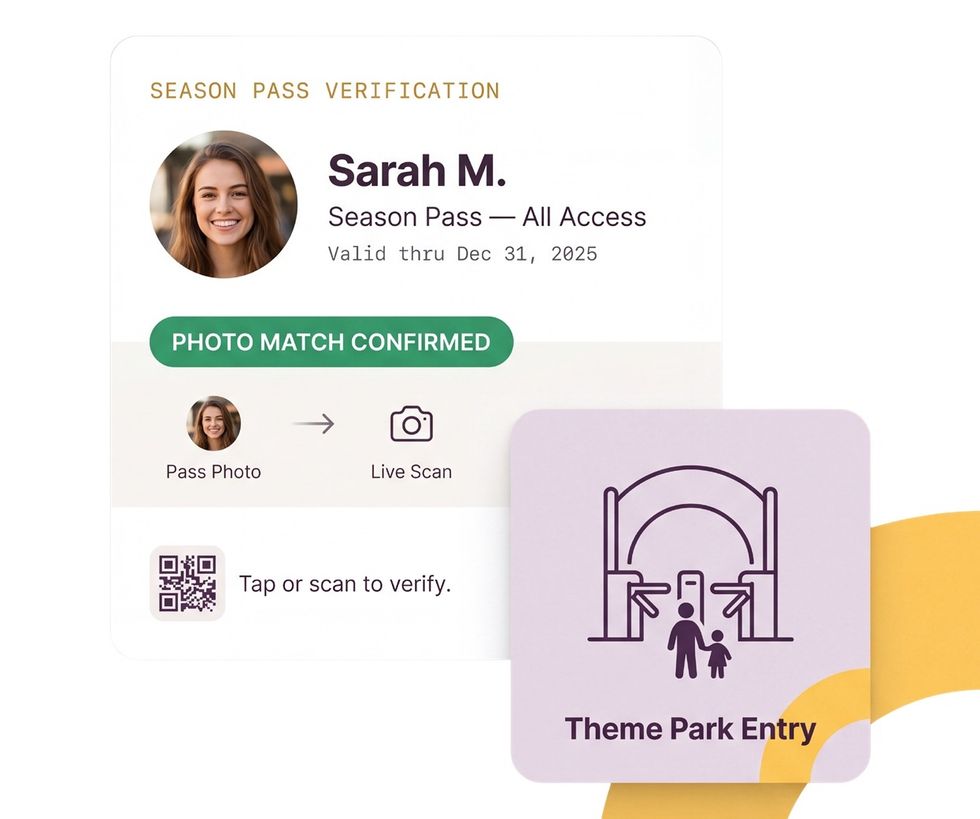 Season pass holders arrive with a verified photo already in the system
On most modern platforms, no development work is required as a required image field can be enabled on the visitor account during checkout. The guest is then prompted to upload a photo before completing their purchase, and that image travels with the season pass through the access control system.
Secondary benefits include reduced pass sharing, which sector estimates suggest can recover up to 5% of season pass revenue. And because the upload is triggered anew with each new-season purchase, the system stays up to date as appearances change over time.
Operators should look for an e-commerce checkout that supports the required image upload at the account or ticket level, with the photo surfaced automatically at access control. The ability to require a new photo upload each season rather than reusing a previous year's image is a meaningful fraud-prevention detail, says Connect&GO.
4. Self-serve RFID wristband top-ups
For attractions that use RFID wristbands for cashless spending, the reload queue is a persistent source of friction.
When visitors want to add funds, they usually need to find a staffed booth and wait in line to complete a transaction.
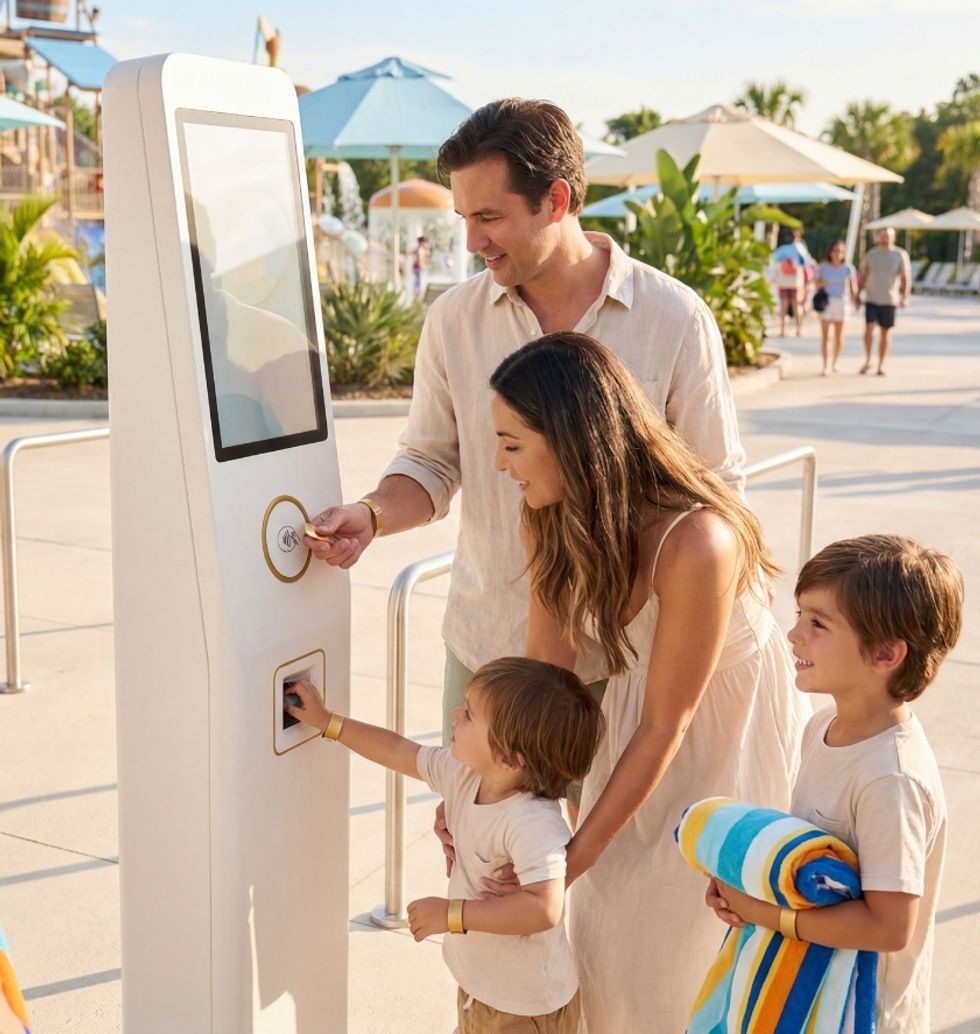
An RFID reload kiosk
"The irony is that a guest who wants to spend more money is the one being asked to wait," says Connect&GO.
"Self-serve kiosks address this directly. A guest taps their wristband, selects a reload amount, pays by card or tap, and is done in under 30 seconds. The same kiosk handles the initial admission purchase and wristband association at arrival, and gives guests a way to check their remaining balance without involving staff at all.
"The result is fewer transactions routed through staffed booths during the hours when pressure is highest."
Visitors who can reload quickly spend more. When the friction between wanting to buy a snack or an upsell and being able to pay for it is removed, the decision window shortens, ensuring uninterrupted spending throughout the visit.
Connect&GO suggests that operators look for a kiosk solution with tap-to-pay support and a built-in receipt printer that handles the entire flow, from initial admission purchase to wristband association, cashless reload, and balance check, without requiring staff support.
The company recommends planning early to factor in hardware lead times.
Removing the gap between intent and action

Parks can benefit by removing friction between intent and action
All of these approaches seek to remove the gap between intent and action. A visitor who wishes to buy tickets should be able to do so in seconds, while a season pass holder should walk straight in. A family wanting to top up a wristband should spend 30 seconds at a kiosk, rather than 10 minutes in a queue.
"The parks positioned to have a record season aren't necessarily the ones with the biggest marketing budgets," says the company.
"They're the ones that made it operationally easy for guests to spend money, and made sure the people who love their parks the most had the smoothest possible experience."
Last year, Connect&GO and ACME Ticketing were acquired by Peek, an operating system for experiences, cementing Peek's position as a market leader in the $330bn experiences industry.