Tivoli Gardens in Copenhagen, Denmark, is set to open a new Japan-themed area, Hikari, this August. The immersive zone will be the largest themed development in the historic park's nearly 200-year history.
Founded in 1843 by Georg Carstensen, Tivoli Gardens has become an integral part of Copenhagen's cultural landscape.
Throughout its history, the amusement park has influenced multiple creative figures, including fairy-tale writer Hans Christian Andersen and Walt Disney, the latter of whom reportedly drew inspiration for Disneyland after visiting Tivoli in the 1950s.
This August, Tivoli Gardens will unveil Hikari—meaning 'light' in Japanese—marking the most ambitious architectural and placemaking investment in its long history.

Rasmus Altenborg, Tivoli’s design and development director
Replacing the park's former Asian-inspired district, the new 2,000-square-metre (21,500-square-foot) immersive zone is the result of a two-year closure of the area and a three-digit-million-Danish-kroner investment.
Hikari features an atmospheric Japanese streetscape, highly themed attractions, authentic dining, and original art.
To learn more about how one of the world's oldest amusement parks balances heritage with contemporary immersive design, we speak with Rasmus Altenborg, Tivoli’s design and development director, about the creative journey behind the new land.
Taking inspiration from Japanese culture
The decision to completely overhaul the former Asian-inspired area, rather than simply update it, was motivated by a desire to elevate the park's offerings.
"The vision was to completely rethink the area," explains Altenborg. "It was only 22 years old, but we saw an opportunity to create something much stronger. We decided not to copy Japan, but develop an interpretation inspired by Japanese culture [and] street life.”
This bold strategy was made possible by the destination's recent economic successes, as Susanne Mørch Koch, chief executive officer of Tivoli Gardens, said in a press release announcing the new land:
"The strong financial results achieved by Tivoli Gardens in recent years have given us the opportunity to invest even more ambitiously in the future of the Gardens. We are therefore delighted to unveil Hikari, a truly visionary new area.”
For Altenborg and the design team, developing Hikari meant creating an authentic connection to existing park landmarks. "We have a long history of bringing Japan and other countries to Tivoli," he says.
"Right next to this area, we have a Japanese pagoda, which meant that if we were going with Japan, it actually could connect to the pagoda on the other side as well.”
Interpretation over imitation
Tivoli's founder, Georg Carstensen, built the park on the principle of balancing tradition and renewal, famously declaring that "Tivoli will never, so to speak, be completed".
Hikari is an extension of that philosophy.
The area is not a nostalgic reconstruction, but rather a contemporary interpretation of Japanese architectural, landscape, and urban design principles.
"For us, renewal and tradition are not opposites," says Altenborg. "We have a lot of history in here, but we also want to create new experiences continuously, and it's part of [Tivoli's] DNA. We have always brought inspiration from around the world.”
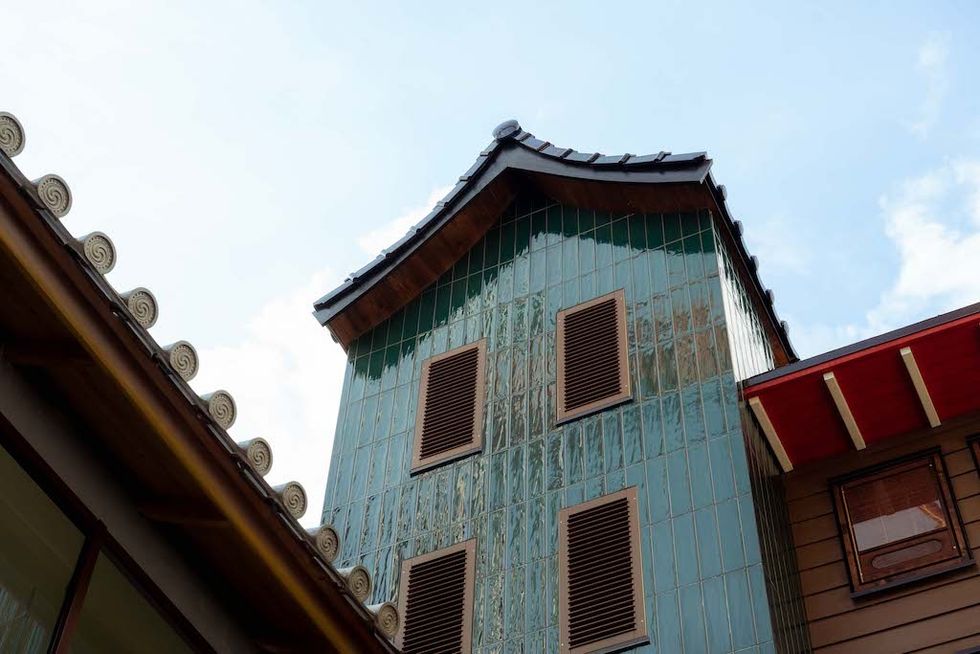
A teaser of some of the theming details that guests can discover at Tivoli's new land, Hikari
Image courtesy of Tivoli Gardens, credit Anne-Sophie Rosenvinge
To ensure the execution was respectful and accurate, the development process was highly collaborative.
"We went to Japan to get inspiration, and we cooperated with Danish, but also Japanese designers and architects to ensure that what we did was correct," Altenborg adds.
The park also established a unique advisory board. "We had what we call a reference group; it was five Danish and Japanese experts within their own field," he says.
"One was within architecture, another one was in literature and travel, and we used them to give us comments on everything, from design and food to signage and colours. It was a very nice collaboration, because it's not just designers and architects; it's also a broader branch of people.”
Despite this focus on authenticity, the creative team was determined to ensure the area still felt uniquely like Tivoli Gardens. "The key is not to create something that is imported or artificial. Everything we do has this [Tivoli] touch," Altenborg emphasises.
"We went through Japanese architecture and design, but we have done it ourselves... I think compared to the old area, we want to be true to the theming with Japanese atmosphere, so the food is original Japanese food, and the retail we have down there is also Japanese.”
An illusion of scale
Hikari is designed as a bustling, dynamic street rather than a traditional plaza or garden.
Because Tivoli is landlocked in the centre of Copenhagen, the park cannot expand its 80,000-square-metre (20-acre) footprint. Instead, the team had to masterfully manipulate sightlines and architecture to make the 2,000-square-metre Hikari feel expansive.
"One of the key matters from the beginning was to make sure that you didn't have a totally straight line; there should be something around the corner," Altenborg says.
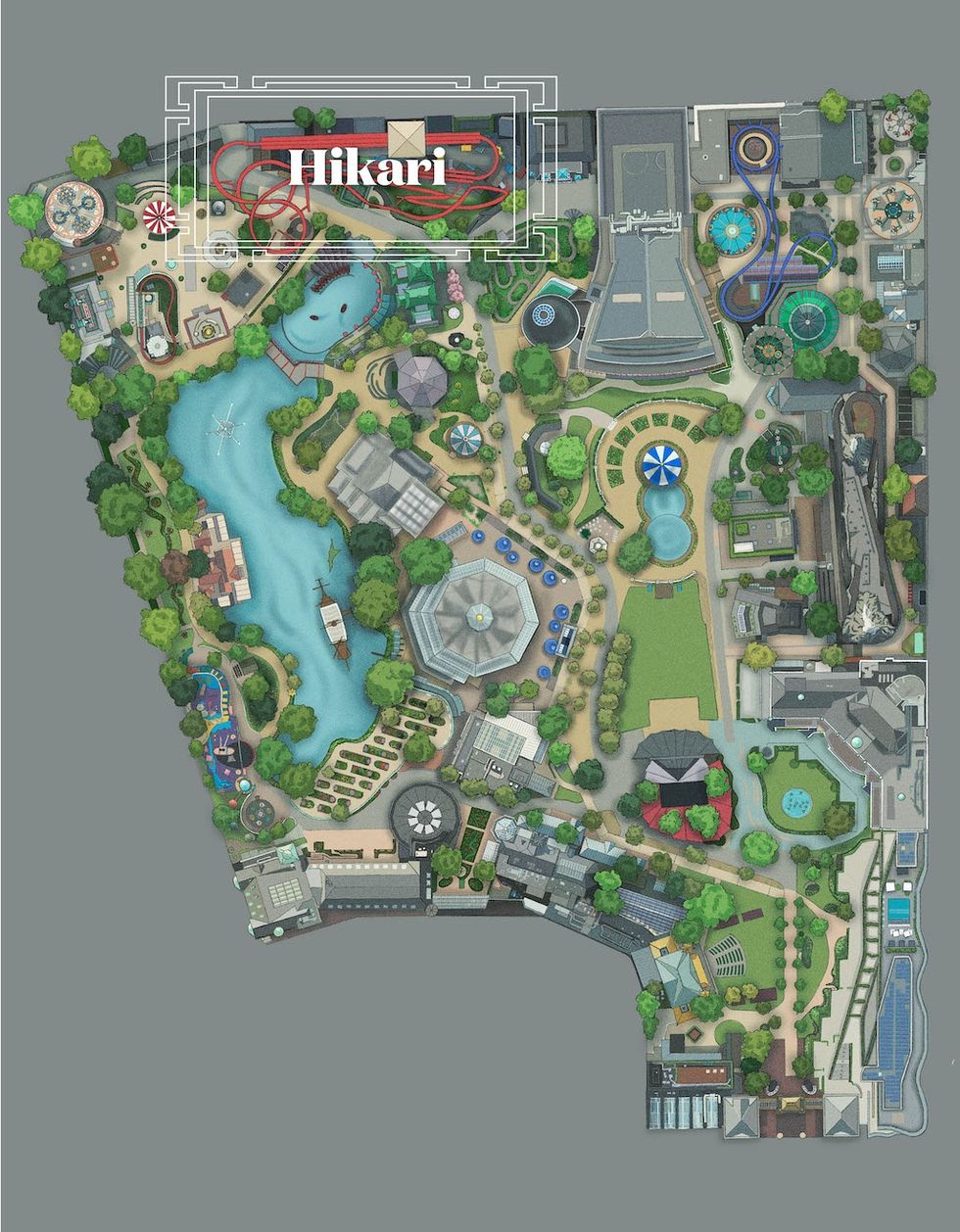
Map of Hikari, the new themed land at Copenhagen's Tivoli Gardens
Image courtesy of Tivoli Gardens
"For us, we are a very small park with a lot of guests. If you can see straight through it, it looks very small, and it's too easy to have an overview.
“So, I think we managed to make it look a lot bigger than it is. The street can be entered from two sides, and from each side you can have a look inside, but you don't see everything at once. You have to go in and get the experience.”
The eclectic architecture reinforces this illusion of scale. Visitors will encounter atmospheric lighting, landscaped gardens, and a combination of structural styles.
"We have very narrow buildings, some of them, and some of them are bigger, but this mix-match of architecture also makes it look bigger," says Altenborg.
"There's this particular view where you actually get three or four different kinds of architectural styles in one view, with a more old-school temple-like facade, and a very high-tech and more contemporary piece of architecture.”
To ground this design in reality, Tivoli imported authentic materials directly from Japan. Hikari features reclaimed doors, vintage objects, and 60 tonnes of traditional roof tiles supplied by Japanese manufacturers Tsuruya and Eishirou Kawara.
The landscaping is equally deliberate, featuring a signature sculpted pine tree, Ginkgo biloba (temple tree), Japanese azaleas, and bamboo.
Furthermore, the area will be anchored by an original artwork from internationally acclaimed Japanese artist Takashi Murakami, alongside various street art installations.
Encouraging guests to linger and enjoy Hikari
A major goal for Hikari was to shift guest behaviour, encouraging them to linger rather than simply passing through.
"I hope that the guests can experience the atmosphere, because that is actually the most difficult to create," Altenborg says
"It's all different kinds of layers with the food and the lighting in the evening and the diversity of the architecture and the buildings. I hope that the guests can come back several times and discover new details.”
To facilitate this increased dwell time, the park greatly improved the area's amenities. Hikari will feature five street-food venues, developed in collaboration with renowned Danish restaurateurs, each with covered seating areas.
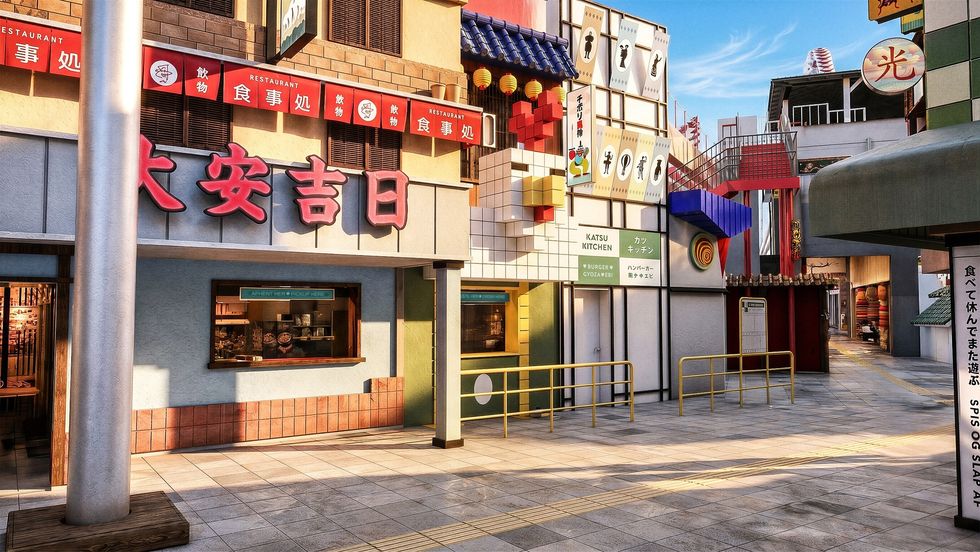
Hikari brings new street food venues to Tivoli Gardens, encouraging guests to stay for longer
Image courtesy of Tivoli Gardens
"We also want to ensure that people would stay in this area for a longer period," says Altenborg. "We didn't have toilets in the area before, and if you travel with smaller children and you're eating and have to go to the toilet, then maybe the whole family leaves the area and doesn't come back.
“Now we actually created a small street or small living village where you can stay for a longer period.”
This operational upgrade benefits the entire park, as guests lingering in Hikari are not adding to queues in other areas of Tivoli.
Lighting and environmental storytelling play a massive role in creating this "living village."
"We also created an area where we have a lot of signs that don't have a meaning in the sense of promoting a shop or restaurant; it's just signage for the matter of the signage," Altenborg explains.
"We also wanted to create a good evening and night atmosphere with the lighting, and everything is programmable so that we can dim it, or we can change the colour on it.
“We actually wanted to make it possible to change the light in the area during the season as well.”
Hikari’s key attractions
Hikari introduces two brand-new attractions while revitalising a well-loved classic, effectively increasing the land's capacity without losing any existing rides.
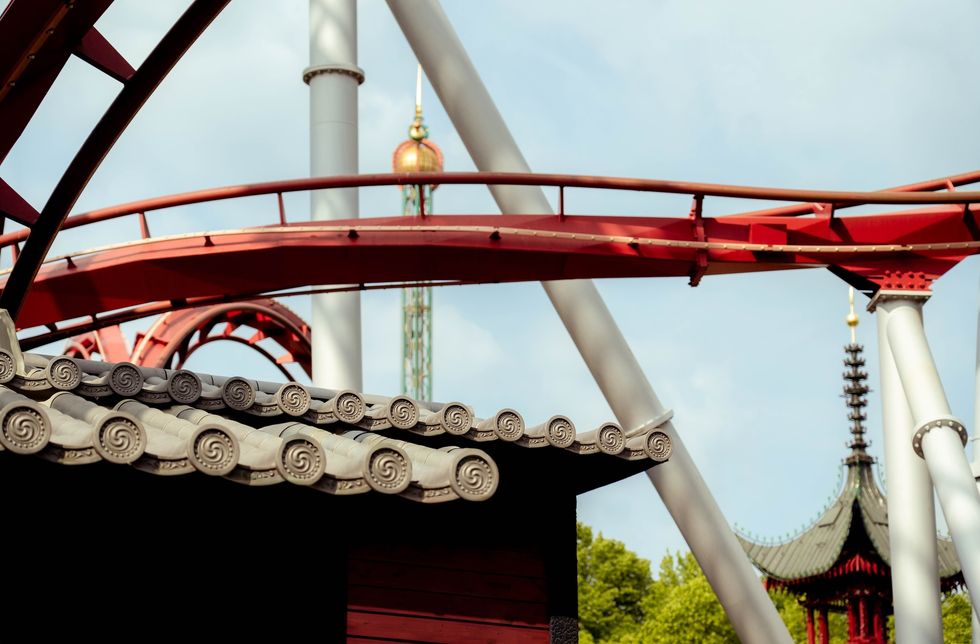
At the centre of the land is The Demon, one of Tivoli's iconic roller coasters. While the ride experience remains the same, it has undergone a complete visual transformation.
Running through Hikari like an elevated railway, The Demon now features an immersive, themed design that fully integrates it into the streetscape as a dramatic visual landmark.
The new Hikari themed land at Tivoli Gardens is inspired by a vibrant Japanese streetscape
Image courtesy of Tivoli Gardens
Joining the coaster is Hotel Hikari, a family-friendly funhouse attraction.
Guests enter what appears to be an ordinary hotel lift, only to be transported through unexpected environments. Designed for all ages, the experience features mechanical illusions, a vortex tunnel, a tilted hotel room, and an infinity mirror maze, creating a feeling of wonder.
For adrenaline seekers, Hikari offers Typhoon’s Eye, a zero-gravity rotating drum ride. After passing through a queue building inspired by the historic Katsura Imperial Villa, riders board the attraction and are spun at high speeds.
As centrifugal force takes over, the floor drops away, holding guests suspended against the drum's walls for an intense, high-G experience.
Rising to the challenge
Building a highly detailed 2,000-square-metre land area within an operating amusement park with a tiny footprint is quite an achievement.
"I think our biggest challenge is that we have such a small footprint, and when we have a building site inside an operating park, it's a bit difficult," Altenborg says.
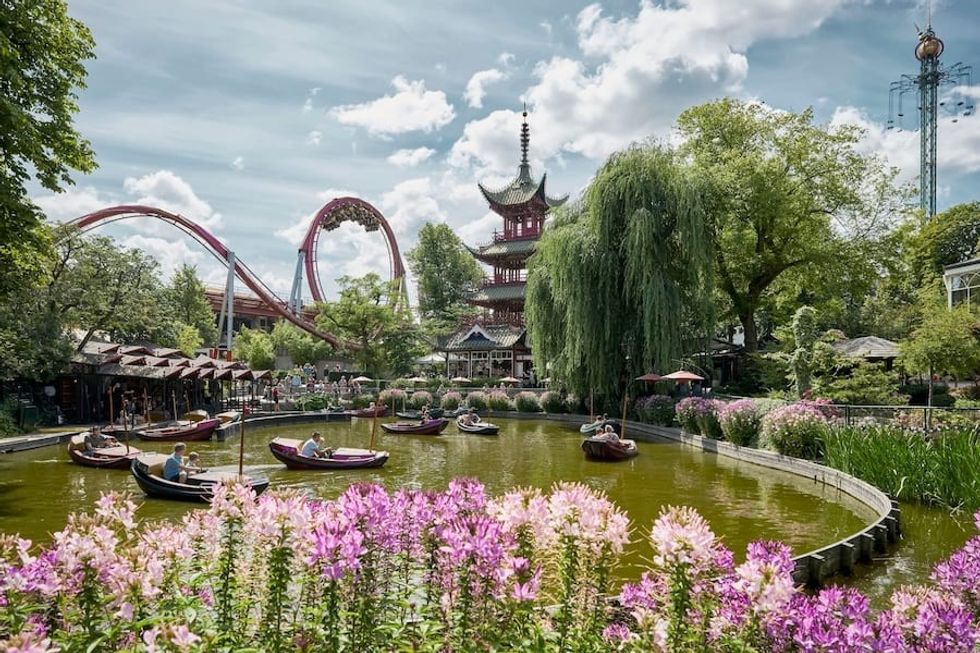
Tivoli Gardens blends unique landscapes and architecture with rides, live concerts, and diverse dining options
Image courtesy of Tivoli Gardens
Additionally, constructing on ground that has been occupied since 1843 comes with archaeological risks. "Of course, we are on historical grounds. Whenever you dig in the ground, there's also a risk of finding something historical underneath," he says.
"We excavated for a small basement and found the leftover of an old beach. It was just four metres long… and the historical department came out, and they found some historical objects.”
The continuous evolution of Tivoli Gardens
Hikari is more than merely a new themed area; it is a statement about the lasting relevance of historic amusement parks in a highly competitive global market.
"I think it's a good example of even if you are an old player, as we are, we can develop, and we are actually willing to make something new," says Altenborg.
"We don't have to lean on what competitors do. I don't think many parks have a more pedestrian-friendly, city-street feel; most parks I have seen around the world with a Chinese or Japanese theme are very small, historical temple lookalikes. We want ours to be a lot more modern and more inflected by pop culture.”
This continuous evolution is vital not only to Tivoli Gardens but also to the city of Copenhagen. As Søren Tegen Pedersen, CEO of Wonderful Copenhagen, noted on Hikari’s announcement:
"Copenhagen competes with other European capitals for visitors, talent and international attention.
"To remain an attractive destination, we must continue to evolve and renew what we offer. Tivoli Gardens is one of Denmark’s most iconic cultural landmarks and has a unique ability to combine heritage with innovation.”
Ultimately, Hikari is designed to be an experience that cannot be replicated anywhere else.
As Altenborg concludes: "Even though we have used real Japanese building materials to get a higher level of detail, you can't find Hikari anywhere else than in Tivoli. It is something totally unique.”
Hikari opens at Tivoli Gardens this August.