Linda Conlon is one of the most highly respected figures in the science centre sector. As part of the team that founded the International Centre for Life (Life) in 2000, she has helped shape the £90m science village’s focus, strategy, and culture.
In the years since, the centre has earned an international reputation for its innovative approach to providing an accessible and inclusive environment for all visitors.
- Unique "science village" model. The International Centre for Life operates as a self-sustaining "science village", blending a public science centre with research facilities and commercial tenants.
- Purpose-driven commercialisation. Conlon champions a ‘profit with a purpose’ approach, using income from rent and commercial activities (such as events and parking) to financially support the centre’s educational mission.
- People-centric experience. Beyond high-tech exhibits, the centre prioritises human interaction and community connection, training staff to foster a welcoming environment that caters to diverse visitor needs, from families to neurodiverse individuals.
- Commitment to inclusion. The centre actively builds accessibility into its core operations, seeking to make the space welcoming and build confidence over the long term.
- Navigating future challenges. Looking ahead, the centre aims to help the public understand rapidly developing areas such as artificial intelligence, focusing on critical thinking skills to keep people informed and confident in a changing technological landscape.
Life's approach has earned honours such as the prestigious international Mariano Gago Award, dubbed the ‘Oscars’ of the professional science engagement world.
Conlon, too, has been widely recognised for her contributions.
She has served on an array of boards and committees and was admitted to the elite Fellows of the ASTC for ‘exemplary service to the field of furthering the public understanding of science’.

Linda Conlon, Life CEO, was awarded an Honorary Doctor of Science degree from Northumbria University in July 2026
Image courtesy of Life
In 2016, Conlon was awarded an MBE for her outstanding service to science and science education in North East England. And in 2020, she was made a Deputy Lieutenant of Tyne and Wear.
Now, as she receives an Honorary Doctor of Science Degree from Northumbria University, we speak to Conlon about the forces shaping the sector, a radical rethinking of funding and public science provision, and profit with a purpose.
Science at the heart of Newcastle
As a founding member of the team that established the International Centre for Life, Conlon helped launch the organisation in 2000.
At this time, the National Lottery was funding projects to mark the new millennium.
While there was no designated funding for science projects, many regional UK science centres grasped the opportunity to deliver an ambitious project with appreciable public engagement, while also fulfilling their own science engagement objectives.
For Conlon and the team, the resulting project combined a visitor attraction with the region's life sciences excellence in a facility located right in the heart of Newcastle.
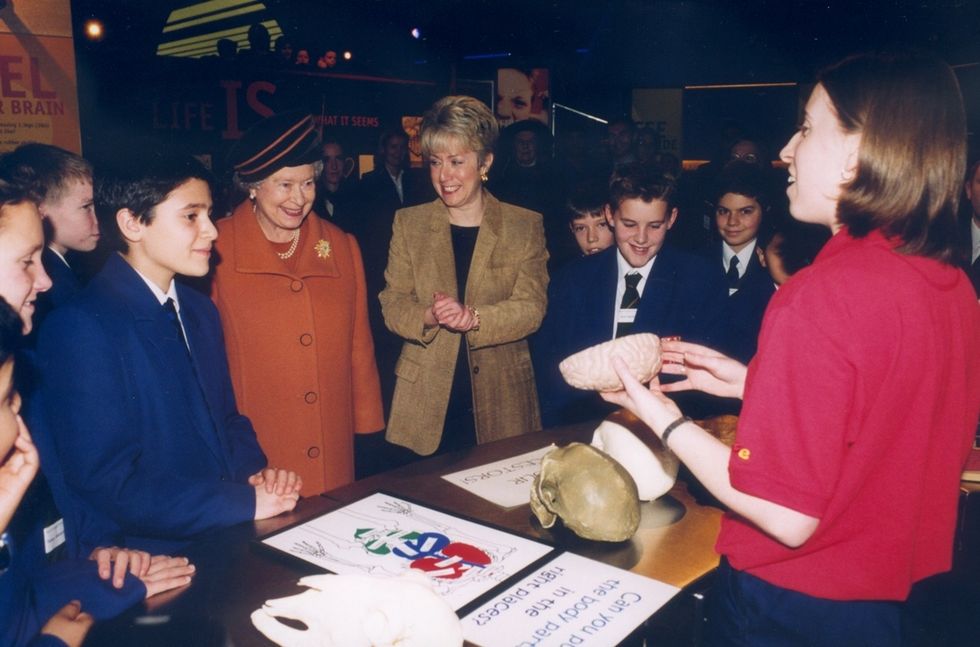
Linda Conlon alongside Queen Elizabeth II during a visit to the International Centre for Life in 2000
Image courtesy of Life
Today, Life is home to NHS clinics as well as Newcastle University’s Biomedicine research facilities, and also pubs and an event space. The award-winning Life Science Centre lies at the heart of this unique development.
“It's a funny old eclectic mix,” says Conlon. “And it does a lot of things.
“There's the groundbreaking science, life-enhancing work that takes place, but also I think it makes a big statement about science being part of the city.”
Equitable access
Science centre funding is hard to come by, hence the glut of millennial projects. At Life, Conlon says, the science village model offers a mix of vital income streams, including rental income, ticket sales, events, and a car park.

Life's outdoor ice rink is part of a diverse commercial model
Image courtesy of Life
And this model is highly unusual. “I know a lot of colleagues in the science centre sector in the museum world globally, and I've not seen anything quite like it.
“I've seen interesting income generators, but I think what is very unusual about our science village is that the income generators are complementary to the purpose.”
As CEO, Conlon sees her role as providing the right environment for the community of scientists, clinicians and researchers to flourish.
“It's really, really important to let the synergy between the parts blossom, and to support it and look after it.”
The centre is shaped by its location in the northeast of England. This is a region that boasts significant strengths in science and innovation, notably in dementia, cancer, and rare diseases.
However, significant inequality remains. Life’s model seeks to provide equal access to science for everyone, even as the field and wider world rapidly evolve.
“But I think what hasn't changed in amongst all of this change is what people fundamentally need is connection; they need belonging and a sense that they matter,” says Conlon.
“For me, the job's about bringing those things together, helping people engage with fast-moving science but doing it in a way that still feels human, relevant and inclusive.”
 The International Centre for Life opened in 2000 in Newcastle, UKImage courtesy of Life
Serving the community
This ethos was highlighted during the COVID-19 pandemic, when Life was the first science centre globally to be repurposed by the NHS to serve as a vaccination centre.
“I can remember in the early days when the vaccination had just been discovered, lots of incredibly frail and older people were coming into the centre for their jabs,” says Conlon.
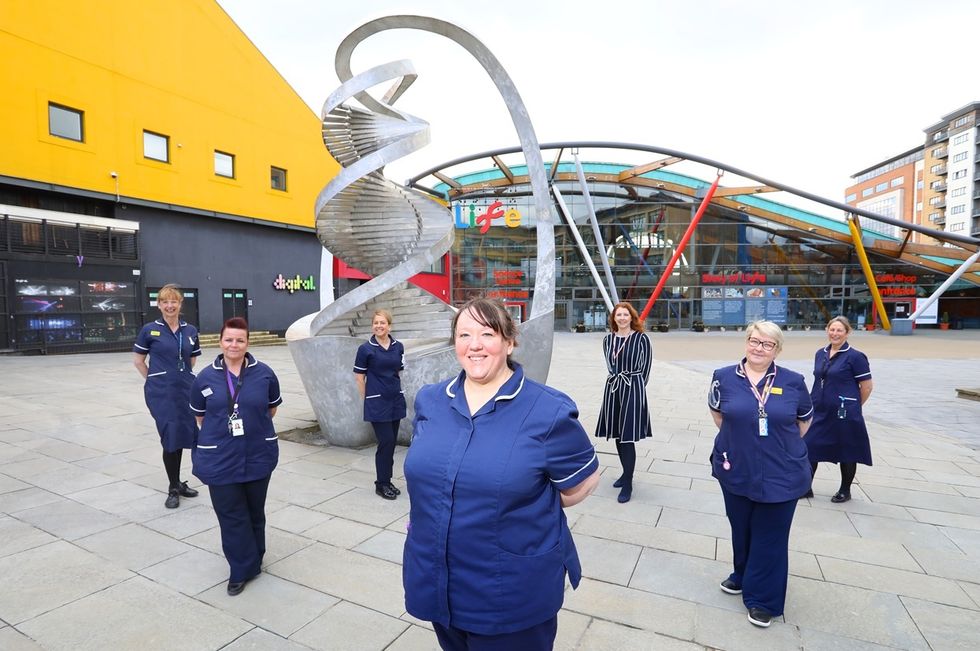
The International Centre for Life served as a vaccination centre during the COVID-19 pandemic
Image courtesy of Life
“It was probably the first time that a lot of them had been out in months and months and months.
“And we did consider if we ought to explain about the virus and how this vaccination works.
“But it was quite clear that these people didn't want to lecture on viruses and COVID; they wanted to sit down with a cup of tea and a biscuit and Frank Sinatra on the sound system. It was their opportunity to socialise again.
“We were providing a warm, friendly, convenient environment which didn't shriek hospital or clinic.”
The BBC chose Life as a location for a special programme to mark the first anniversary of the Prime Minister’s announcement of lockdown.
“That was because this organisation, which already was lots of different things to different people, seemed to be an automatic choice to handle one of the biggest things that the world has ever handled,” says Conlon.
“My heart was fluttering with pride when I watched that programme. It was quite something.”
Opening up careers in the space sector
Looking forward, Life aims to support the region’s emerging space sector, with the new £50 million North East Space Skills and Technology Centre (NESST) set to open later in 2026 at Northumbria University’s Newcastle city campus.
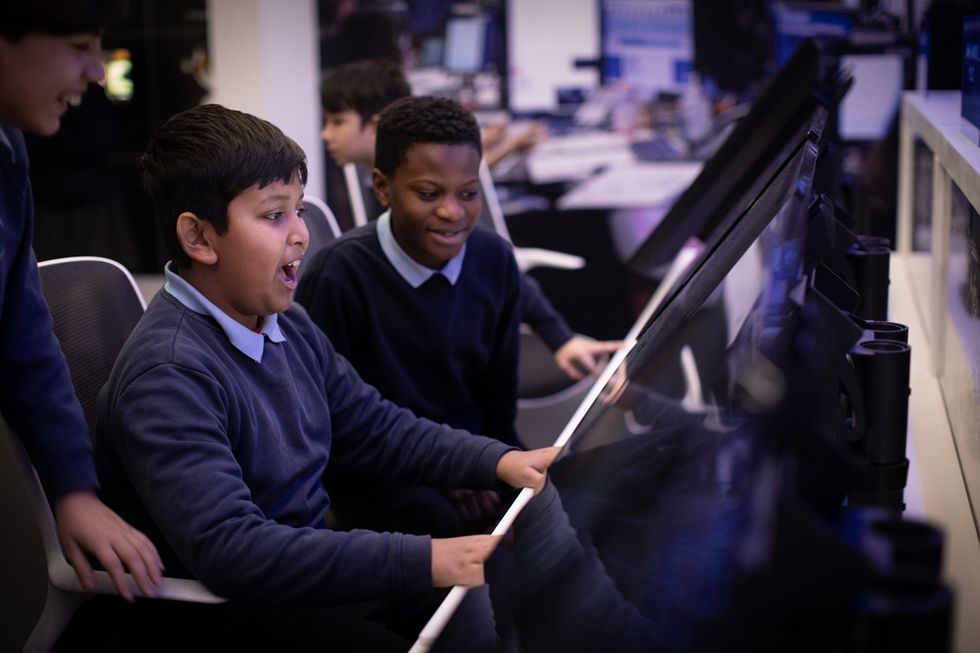
School children at the launch of Life's Space Zone Exhibition
Image courtesy of Life
“We have been trying to play our part in helping to put a focus on the opportunities that the space sector can offer,” Conlon says.
“Everybody wants to know about astronauts, and every child wants to be an astronaut and wants to know how they poo in space and all that.
“Then there is a tonne of careers which perhaps you don't automatically link to space but can be rewarding. And it's our job to try and capitalise on the wonder and the awe. Why wouldn't you?
“But at the same time we can help to gently introduce it to school children, and particularly children from more underprivileged areas, rural communities who don't always get the chance to enjoy this sort of thing.”
Life offers more school workshops on this topic than on any other, and its Space Zone exhibits include replicas of the International Space Station and mission control.
Other attractions include the biggest planetarium in the North of England, entry to which is included in the ticket price.
Life also produces its own planetarium shows. Its fulldome show, Life: The Greatest Story, was awarded the prestigious Best Education Film Award at Dome Fest West 2026.
Critical thinking and hands-on learning
Climate science is also an important thread.
“We try and weave something about that, about the sustainability message, into everything that we do.”
Life empowers visitors of all ages to contribute to a greener, healthier, and fairer future through a wide range of workshops, exhibitions, and events.
For example, live shows explore themes such as green energy, and experiments, such as extracting hydrogen gas from water, offer hands-on learning.
And AI, of course, is a key topic.
While, as Conlon points out, the centre is working to use the technology to improve efficiency in normal business practices and processes, it also has a responsibility to help parents better understand artificial intelligence.
Workshop events have shown an appetite for learning, so the team is now looking for ways to embed AI into its offering.
“The education programme now is looking more and more at artificial intelligence, where it sits, and critical thinking.
“And critical thinking is at the heart of what science centres do.
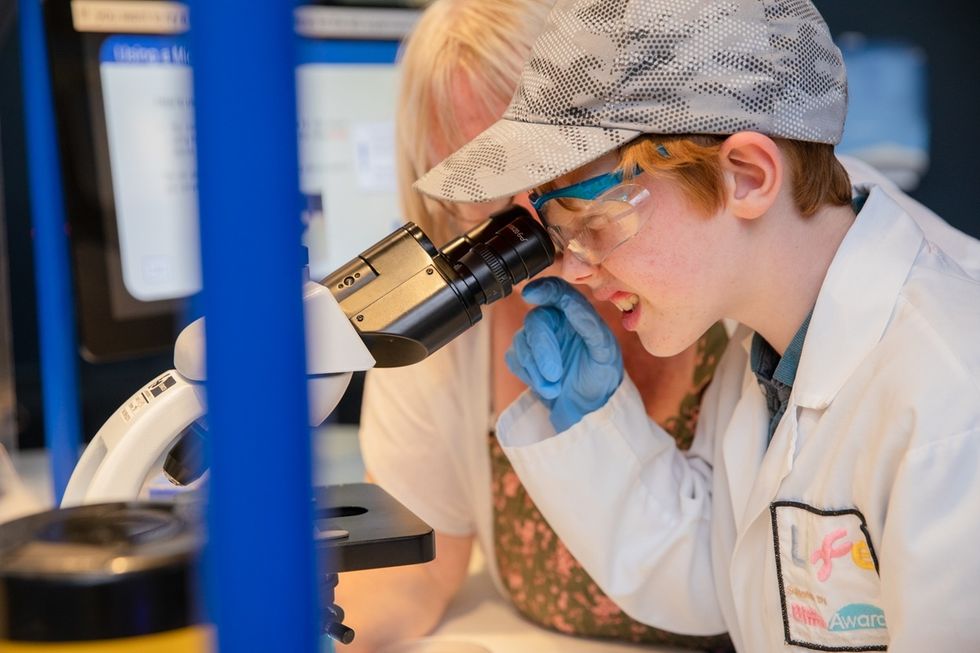
A young visitor uses a microscope in the International Centre for Life's Experiment Zone
Image courtesy of Life
“I think using the scientific process, or elements of it, to try and understand artificial intelligence has got to be a good thing.
“It's trying to get the rigour of that process into artificial intelligence to help people not to take at face value what they see and what they hear. Stop, think, challenge. Where's the source? Is it reputable? What is the contrary view?
“Artificial intelligence is moving so terrifyingly fast. I think we've got a big role to play there.”
What makes a great science centre?
With experience including serving as president of the global Association of Science and Technology Centres and as a non-executive director of the Newcastle upon Tyne Hospitals NHS Trust, among others, Conlon has extensive knowledge of the sector.
So, drawing from this expertise, what key qualities does she feel make a great science centre?
“I think science centres the world over are very similar,” says Conlon. “They all do roughly the same things. The big ones do more of it than the little ones.”
All science centres, she argues, have hands-on interactives. Almost all have a schools and outreach programme. Most will work to “get under the skin” of contemporary science by engaging in debates.
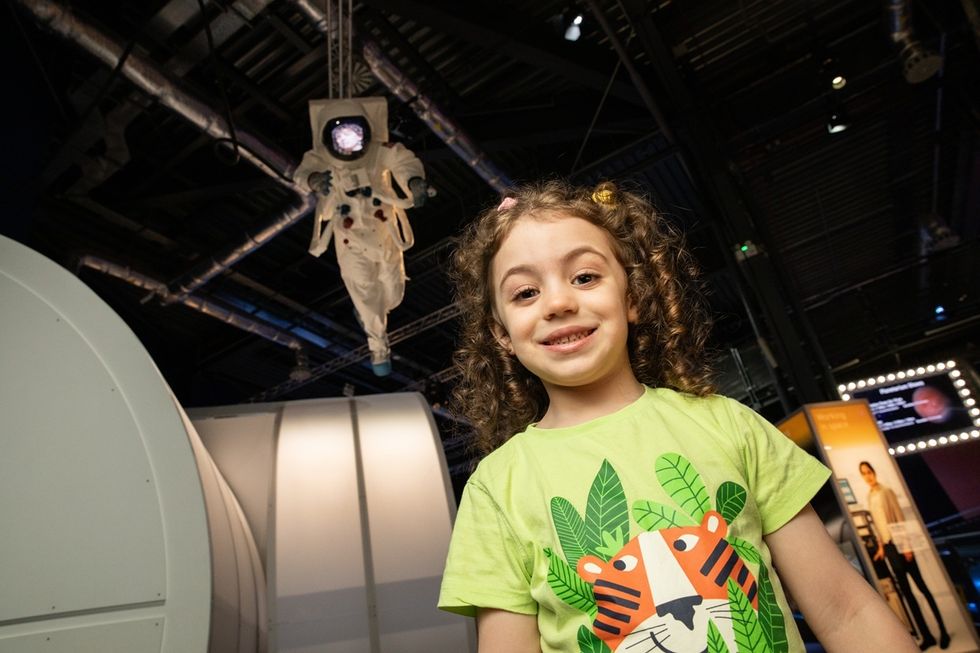
Life's Space Zone examines how space exploration impacts our everyday lives
Image courtesy of Life
However, she says that there are two key differentiators.
“One is the way that they are funded.
“Funding models around the world vary widely. We are much more commercial than many others that I have met, because we have to raise all of our own money.”
In the UK, regional science centres are not eligible for DCMS (Department for Culture, Media and Sport) funding.
“I think it's a complete and utter national disgrace,” says Conlon.
“We are told that the future of the UK depends on its prowess in science and technology.
“And yet here are bodies trying to complement what the schools do, raise aspirations amongst poorer kids, and help people to switch on to science, and yet there is no substantive funding available to do that.
“Often, how you are funded dictates how you behave.”
Creating connection
The other differentiating factor, she says, is human connection.
“We're very much people businesses.
“Science centres spend huge amounts of money on staffing, because exhibits and activities without human intervention are not as powerful.”
Great staff, she explains, can help balance the pace and rhythm of a visit.
“You can't have constant excitement throughout the entire visit. But what you can do is ensure that the welcome people get is a warm one, a friendly one.”
At Life, the person who welcomes visitors immediately assesses each group and provides relevant information.
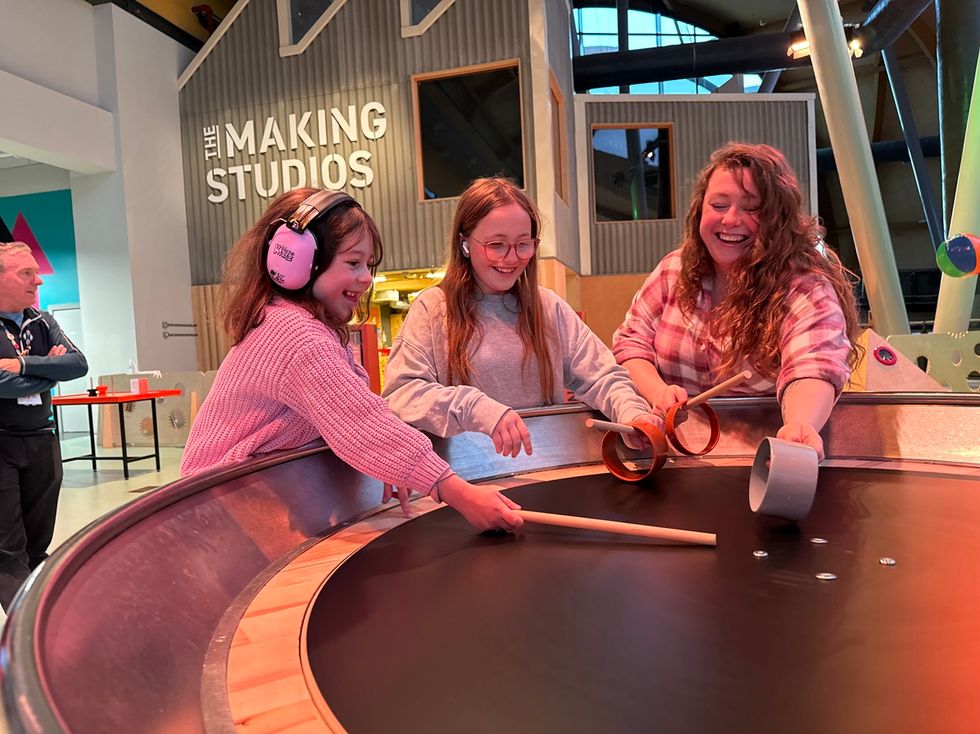
Monthly Relaxed Sunday Sessions offer a dedicated quiet time for visitors to access and enjoy the science centre
Image courtesy of Life
“If somebody welcomes you and says, "Oh, we've just got a show on, and I think it would be perfect for your child," that sets the tone.
And this approach is successful. The Centre’s strongest visitor feedback, she shares, is about interaction.
Additionally, science centres should look to include “the best exhibits that you can afford, a variety of activities where the pace is moving from contemplative to gentle, to participatory, to excitement,” she adds. “You're getting all of those emotions.”
Then the pace and rhythm need to balance the memorable ‘oh my goodness’ moments with periods of reflection - crucially with somewhere to sit.
Other important elements include photo opportunities, trails, and the chance to make something to take home.
“This is all very basic stuff. This isn't high-tech, immersive, top-of-the-range technology. This is basic human interaction and connecting.”
Accessibility built in
This approach is exemplified by Life’s commitment to providing an accessible and inclusive environment for all visitors.
In recognition, the centre won the Accessibility and Inclusion category at the Destination North East England Tourism Awards in 2026 for the second time. It was also named the region’s Best Large Visitor Attraction.
“We've pinned our colours to the mast on this,” says Conlon.
“We want to be one of the most accessible and inclusive science centres in Europe. We've done a lot of very good things. We've still got a long way to go.
“But we have to live and breathe by those values, and it's got to be more than having accessible exhibits.”
For example, for over seven years, Life has been working with the Northeast Autism Society.
By creating a space where autistic children feel welcome and that recognises some of their triggers, the centre both supports the children and their carers and parents, who may avoid going out in case it induces a meltdown.
In addition to dedicated sessions for visitors with neurodiverse conditions, all staff members now undertake autism training.
Life also engages a wide range of access consultants spanning physical, social, and learning needs.
 Life was awarded a Gold Award for Autism Acceptance by the North East Autism Society
Image courtesy of Life
However, Conlon cautions that “access is relatively easy to articulate.
“Inclusion is harder. Because I can give you access to something, but do you feel included?
“They're two halves of one coin, and they need to be considered together.
“We're making good progress, but we've got a long way to go.”
Profit with a purpose
Continuing from the qualities that Conlon feels make a great science centre, what key skills does she feel their CEO’s need to succeed?
Having previously worked in regional development and urban regeneration, she was struck when entering the field by how many of her peers had only ever worked in science centres.
“I wasn't sure that they necessarily had the experience or the skills to run an organisation which was a business,” she says, and highlights that understanding what things cost is key to purpose-driven, responsible decisions.
 Linda Conlon, chief executive of the International Centre for Life, in its Space Zone
Image courtesy of Life
“People didn't really talk about science centres as businesses. It was almost as if profit was a dirty word. I have never understood that, and I always describe ourselves as for-profit, but profit with a purpose.”
Now, Conlon says, that silo mentality has greatly diminished, but there is still room to increase understanding that it's not commercial or purpose. One echoes the other.
Furthermore, marketing and communications are essential, and are often the mechanism by which the impact happens.
“We are running integrated businesses.
“Each part needs to understand and respect the role of others. What we do with our profits, and I love making profits, is important because the more money you make, the more you can do of the pure mission-driven stuff.
“It's an inexorable cycle, you can't do anything without money. And money is not a dirty word; it's what we all want. It's what we do with the money that counts.”
Rapid evolution, rooted in people
Being nimble, Conlon adds, is also vital.
“The only certainty is uncertainty. We need to be fleet of foot. And I think sometimes the way that we have been set up is not conducive to that. Because most of us have great big buildings with hungry mouths.”
So, she asks, if you were setting up a science centre for the next 40 or 50 years, would you set it up like a science centre now?
“I still think you need something which excites kids and the wonder and the awe and the exhibits and the playing. I think there's still a role for that basic physical hands-on doing.
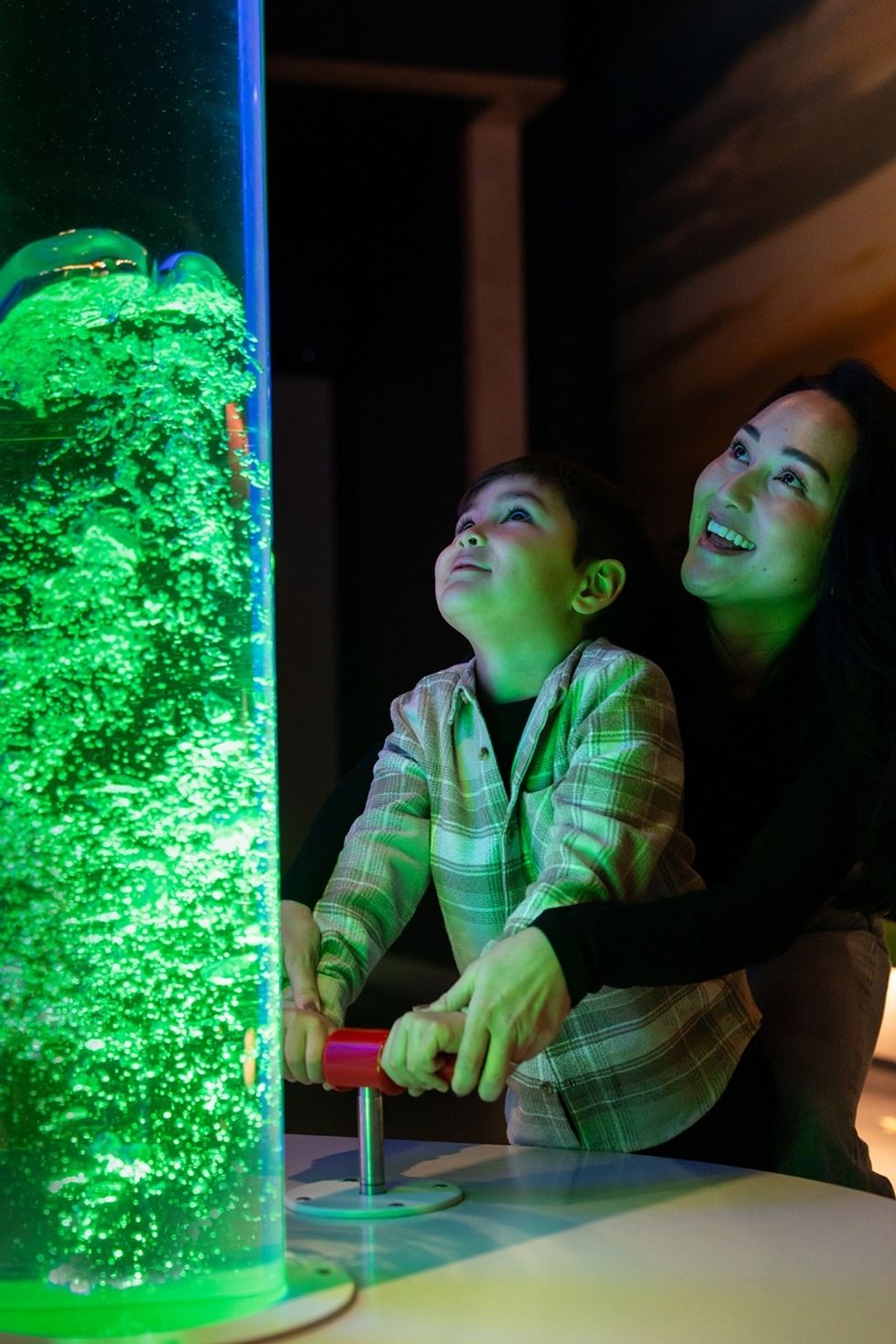
Visitors in the centre's hands-on interactive Lightbox gallery, which opened in 2025
Image courtesy of Life
“It's all very well when you're looking at things like forces and gravity; they're not going to change.
“But I think in contemporary science, where things move so fast, it's probably not the best model. We need to think about ways we can do things quickly and inexpensively, try things out, fail, and do it a different way.
“It's about managing the commercial, mission-driven activities.
“And the ability to manage change, and to not be frightened of risk because we're in an era now where you have to take risks.”
While this future vision for science centres requires agility and commercial acumen in a rapidly evolving space, Conlon stresses that people must remain at its heart.
“Our role isn't just to showcase innovation,” she says. “It's to help people see that they have a place in that future. To feel confident, included, and able to participate.”