
Research Casting International (RCI), an expert in the preservation, restoration, and fabrication of museum specimens, shares the craft and planning behind every mount. Its work supports museums and exhibit developers with their collections, from fossil preparation through to installation.
Behind every dinosaur skeleton mounted in a museum is an armature: a custom metal framework built to support the specimen’s size, weight, and pose. Building one is among the most demanding jobs that RCI takes on at its facility in Trenton, Ontario.
Original fossils are rare, fragile and often irreplaceable, so they can’t carry their own weight. The armature does that job instead. On fossil mounts, RCI's armatures are external, supporting the bones from the outside. On most cast and 3D-printed mounts, they are internal, built into the replica.
Either way, the company tailors every armature to its individual specimen.
Gnatalie at the Natural History Museum of Los Angeles County
Everything starts with the pose, says RCI. It has to be scientifically sound and dynamic, and it shapes every measurement that follows.
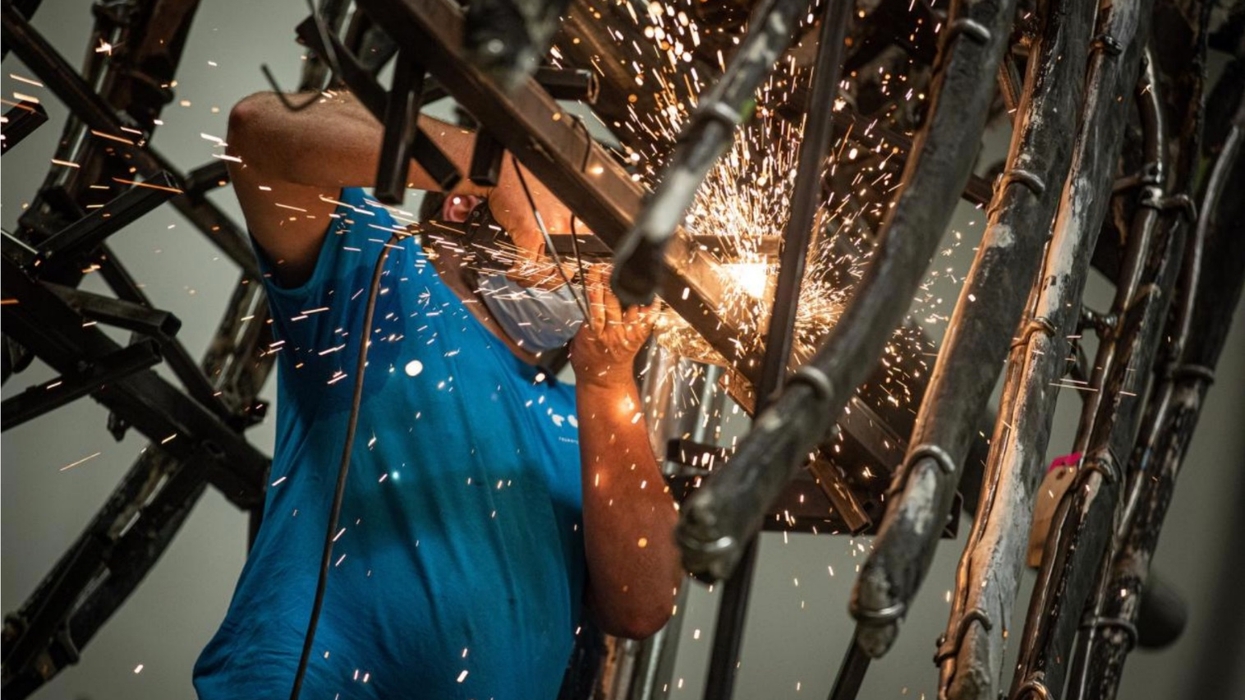
The team map the specimen in detail, supported by 3D scanning, so they can plan how the armature will support each bone without stressing fragile areas. RCI's blacksmiths and metal workers then shape and fit each support by hand, most often from mild steel, pairing classic forging with modern tools like 3D scanning and printing.
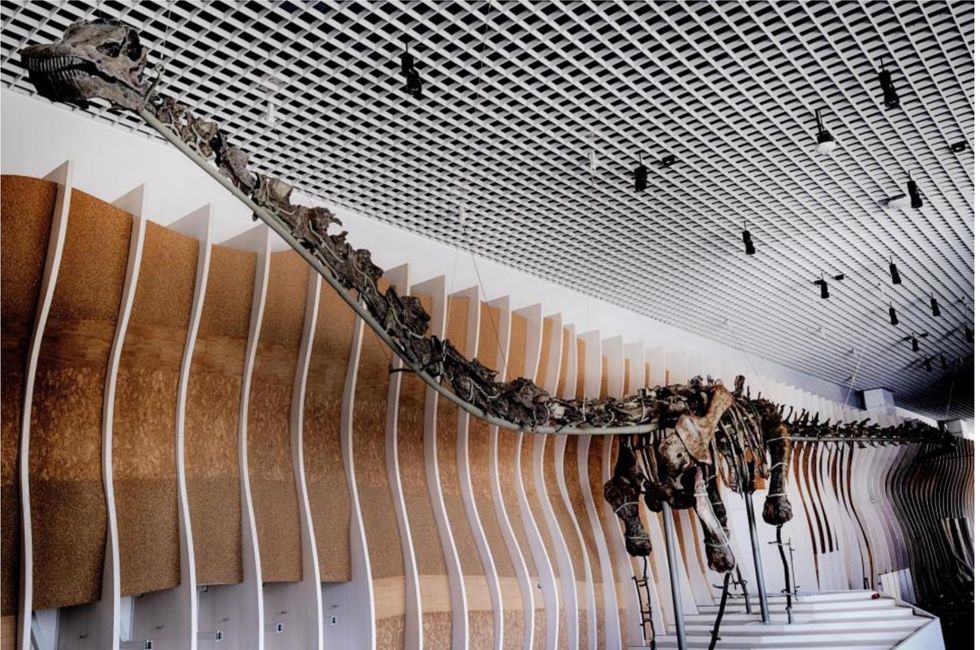 Gnatalie, a 150-million-year-old long-necked sauropod dinosaur skeleton on display at the Natural History Museum of Los Angeles County
The timeline depends on the specimen. Fitting a support to a single bone can take one to a couple of days, and a large skeleton can take around six months from start to finish. That time allows each support to match its bone, so the finished mount holds up long term.
RCI's work can be seen in Gnatalie, the green dinosaur on display at the Natural History Museum of Los Angeles County. For museums and exhibit developers, the result is a mount that reads as an animal caught mid-stride rather than a skeleton on display.
From the first decision about a pose to the final installation, RCI covers each step, including fossil preparation and mounting, digital imaging, moulding and casting, and exhibit fabrication and rigging.
“The biggest challenge for me personally is getting the pose right," says Brian Ross, head of fossil mounting at Research Casting International.
"I want the skeleton to look like we’ve captured a moment in the animal’s life, rather than just a skeleton standing there. That’s what I enjoy most, figuring out how to make it look natural and full of movement. The biggest reward for me would be seeing it fully installed on display at a museum.”
Recently, RCI worked with the Royal Ontario Museum on its newly renovated exhibition, The James and Louise Temerty Galleries of the Age of Dinosaurs. RCI's team of technicians moved hundreds of specimens, including many unique ones, and safely and meticulously disassembled, stored, and reinstalled them in the refurbished space.
Attendees at IAAPA Expo 2026 in Orlando can meet the team and find out more at booth #S1057