As public scrutiny sharpens and visitor expectations shift, how can attraction designers, zoo directors, and project teams create habitats that deliver world-class animal care while driving guest engagement and long-term ROI?
We spoke to five of the world's leading zoo design analysts and directors to establish the non-negotiable principles of modern habitat creation.
Our experts
Jesse Vargas
Jesse Vargas brings more than 20 years of executive leadership experience across theme parks, water parks, zoological attractions, educational facilities, public parkland and resorts. His international career has spanned the US, Mexico, Canada, Spain, the UAE and the Bahamas, with roles including director of operations, vice president, general manager, chief operating officer and chief executive officer. Vargas has supported four park openings and worked with leading global brands including Sesame Street, Six Flags, Warner Bros., Formula 1, Ferrari and Atlantis. At San Antonio Zoo, he brings extensive operational expertise and a collaborative leadership approach focused on supporting teams and delivering results.
Our experts
Tom Marschner
Tom Marschner is vice president at PGAV Destinations. He has led projects involving the design of new animal habitats, the renovation of existing facilities and the development of educational guest experiences for zoos and aquariums. His portfolio includes the Heart of Africa region at Columbus Zoo and Aquarium and the Sharks! Predators of the Deep gallery at Georgia Aquarium. An active member of the Association of Zoos and Aquariums, Marschner has presented PGAV projects to industry peers. He is passionate about creating environments that support animal wellbeing while delivering engaging, enriching experiences for visitors.
Our experts
Stacey Ludlum
Stacey Ludlum is director of design and planning for the zoo and aquarium division at TESSERE, bringing more than 20 years of experience in zoological planning and design. She previously spent 16 years at PGAV Destinations before founding Felis Consulting, where she spent eight years supporting zoos and aquariums with strategic planning, master planning and concept design. Her project portfolio includes Columbus Zoo & Aquarium, Georgia Aquarium, San Antonio Zoo and Brookfield Zoo. A contributor to blooloop and founder of DesigningZoos.com, Ludlum is passionate about challenging convention and creating environments that support animal wellbeing, conservation and meaningful visitor experiences.
Our experts
Justin Morris
Dr Justin Morris is chief executive of Bristol Zoological Society, a conservation and education charity, a role he has held since June 2018. He brings more than 20 years of experience in senior leadership positions at major UK cultural institutions, including the Natural History Museum and the British Museum. At the Natural History Museum, he led public engagement and commercial activities, including the transformation of its Central Hall and the installation of the blue whale exhibit. At Bristol Zoological Society, he leads the development of Bristol Zoo Project, bringing together animal care, conservation, research, education and public engagement to support wildlife conservation.
Our experts
Kieran Stanley
Kieran Stanley is the creative director of dan pearlman Group, a Berlin-based brand and experience architecture group he established in 1999. Originally from Cork, Ireland, he studied architecture at Trinity College Dublin before working on the masterplan for Hannover Zoo, an influential project in the evolution of European zoo design. His international portfolio includes the masterplan for Berlin Zoo, Chester Zoo’s Islands project, the giant panda habitat at Everland Resort in South Korea, and Berlin Zoo’s Rhinoceros Pagoda. Stanley champions collaborative design that balances animal welfare, operational needs and visitor experiences, using engaging environments to inspire greater appreciation of wildlife and conservation.
- Prioritise welfare over staging: Base every physical design decision—from substrates to shade—on species-specific naturalised behaviours rather than aesthetic props.
- Shift to authentic discovery: Move away from guaranteed, lined-up viewings toward reserve-like landscapes that encourage guests to explore and search.
- Ditch transient theming: Reallocate capital from fragile, theme-park-style props to mature landscaping, larger spaces, and direct conservation work.
- Align budgets early through co-creation: Involve animal care teams, contractors, and speciality suppliers at concept stage to prevent late-stage value engineering.
- Design for climate resilience: Future-proof habitats with closed-loop water systems, green energy, adaptive reuse, and climate-appropriate species planning.
- Balance AI tech with screen-free experiences: Deploy AI and sensors behind the scenes for welfare tracking while keeping guest encounters authentic and screen-free.
1. How do you prioritise animal welfare and naturalised behaviours?
Animal well-being is the foundational lens for every design choice. Over the past decade, zoo architecture has shifted away from containment toward choice-driven, complex environments where animals control their surroundings.
"The number one priority is that habitats should be safe and enriching for the animal," says Jesse Vargas, CEO of San Antonio Zoo.
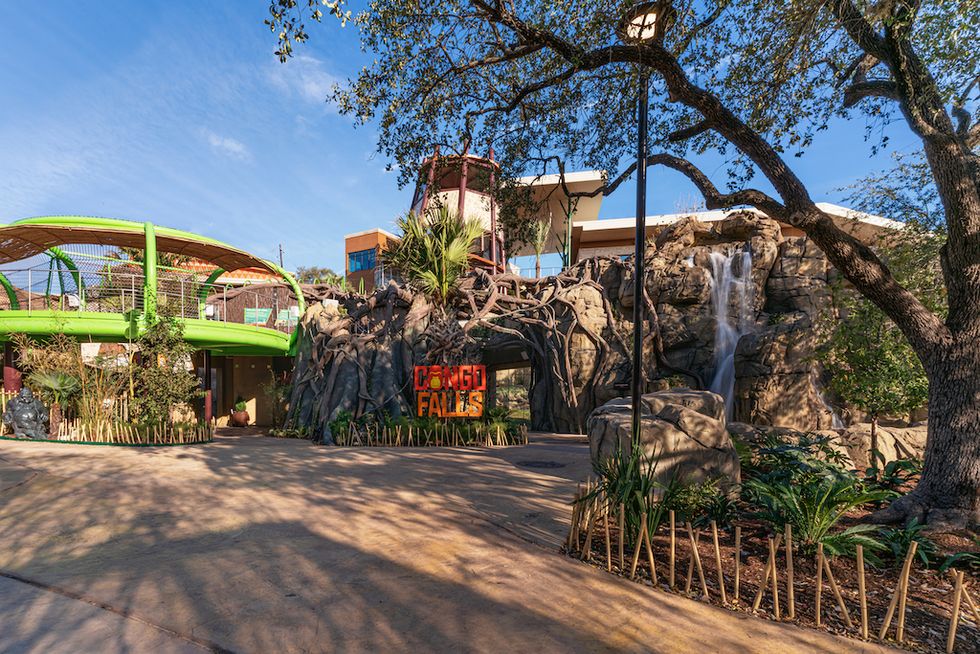
Congo Falls, the new gorilla habitat at San Antonio Zoo, designed by PGAV Destinations
Image courtesy of PGAV Destinations
"Literally everything else comes second. A deeper scientific understanding of naturalised behaviours now allows for unprecedented optimisation of substrates, hardscapes, climbing structures, and mixed-species configurations."
The #1 priority is that habitats should be safe and enriching for the animal. Literally everything else comes second. — Jesse Vargas, San Antonio Zoo
Tom Marschner, principal at PGAV Destinations, says that welfare design requires providing physical and psychological choices: "Environments must offer spaces for exploration, retreat, social interaction, and species-specific motivations."
Key animal welfare design elements include:
- Varied spatial elevations and climbing structures
- Species-specific substrate layers for digging and foraging
- Full retreat and privacy options
- Mixed-species social opportunities
- Dynamic, search-based feeding setups
Habitat architecture should also empower husbandry teams. Stacey Ludlum, director of zoo planning and design at Tessere, says that keeper safety and operational flexibility directly impact welfare:
"Giving care teams flexibility and efficiency allows keepers to work creatively rather than feeling constrained by rigid infrastructure."
Additionally, updated regulatory baselines—such as the revised UK Zoo Licensing Standards highlighted by Dr Justin Morris, CEO of Bristol Zoological Society—require habitat design to stem directly from a rigorous, science-led species plan.
2. How do you balance animal welfare with guest engagement and commercial goals?
Commercial sustainability and animal welfare are not in conflict—commercial success is a direct byproduct of delivering an innovative, welfare-first habitat.
"Creating a wide array of animal welfare elements naturally creates an exponential array of visitor engagement and commercial opportunities," says Vargas.
Leading institutions are moving toward landscape-based, reserve-like visitor journeys. Instead of row after row of predictable viewing windows, habitats now challenge visitors to explore.
"The experience of being surprised to see an animal, having had to look for it, can be far more powerful and long-lasting than simply viewing animals lined up one after another," says Morris.
"At the Bristol Zoo Project, we manage visitor expectations by deploying staff and volunteers to deliver human-to-human interpretation. A hidden animal becomes a teaching moment about natural welfare rather than a point of guest frustration."
The experience of being surprised to see an animal... can be more powerful and long-lasting than simply viewing animals lined up one after another. — Dr Justin Morris, Bristol Zoological Society
Architectural sightlines, proximity to water, and vantage points can create dramatic intimacy—such as standing eye-to-eye with a gorilla or watching a duck swim underwater—while ensuring the animal retains full control over its retreat options.
3. Why is the industry moving away from theme park-style theming?
The attractions sector is seeing a decisive shift away from capital-intensive, theatrical props and faux rockwork in favour of authentic environmental storytelling.
"The era of massive budgets for theme park-driven exhibits is behind us," says Ludlum.
"Theatrical fabrications age poorly outdoors, require constant upkeep, and fail to engage repeat local visitors. Reallocating capital away from artificial theming allows zoos to invest directly in denser natural landscaping, larger habitats, higher keeper wages, or direct in-situ conservation."
Reallocating capital away from artificial theming allows zoos to invest directly in denser natural landscaping, larger habitats, higher keeper wages, or direct in-situ conservation. — Stacey Ludlum, Tessere
Kieran Stanley, CEO and creative director at dan pearlman Experience Architecture, says that "story building" should take precedence over artificial staging.
"At Chester Zoo's Islands project, the design immerses guests in a physical journey that directly reflects the zoo’s real-world conservation work across Southeast Asia," says Stanley. "It turns a walk through the zoo into a personal expedition of discovery."
"The natural world is the ultimate storyteller," says Vargas. "When crafting a storyline, there is no need for embellishment."
Furthermore, zoos are embracing operational transparency.
Rather than hiding back-of-house husbandry facilities behind theatrical facades, modern designs intentionally showcase veterinary care and husbandry areas to build public trust and highlight conservation work.
4. How do you prevent cost overruns and delivery friction on complex habitat projects?
Zoo habitats are custom-engineered prototypes integrating living biological systems, heavy visitor infrastructure, life-support systems (LSS), and complex containment.
The primary causes of project failure include:
- Misalignment between creative aspirations and real budgets.
- Late-stage value engineering that destroys critical welfare features.
- Uncontrolled inflation and speciality supply chain bottlenecks.
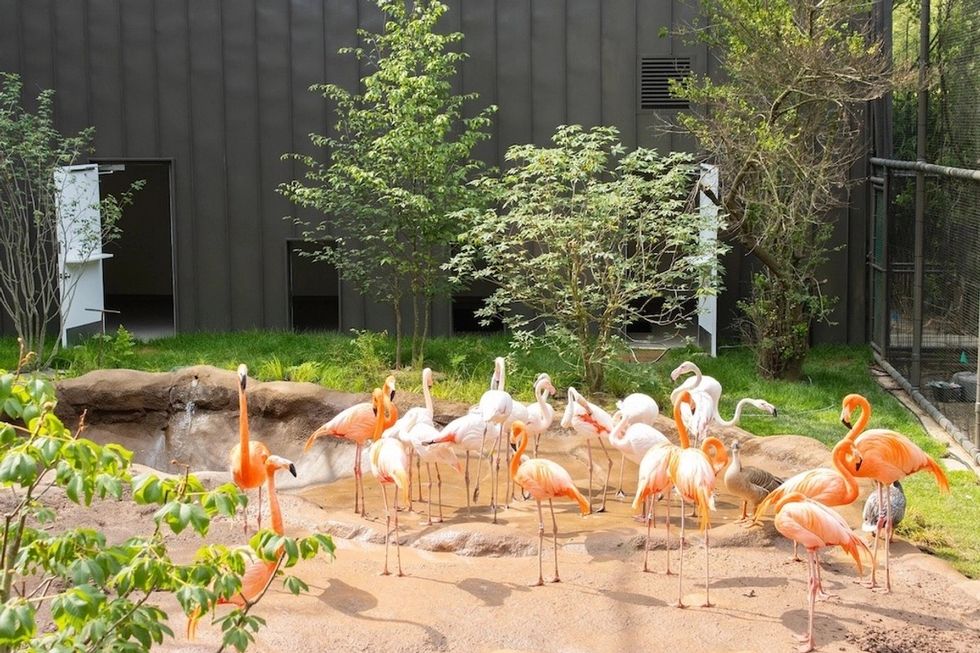
Philadelphia Zoo in Pennsylvania unveiled Flamingo Cove in 2025
Image courtesy of PGAV Destinations
To protect both design integrity and financial budgets, experts recommend a structured stage-gate approach across every project phase:
- Concept & briefing (co-creative Workshops): Hold joint alignment sessions with care staff, designers, and contractors before locking assumptions. Stanley says this ensures the brief matches the real budget from day one.
- Schematic design (early vendor integration): Engage speciality fabricators (LSS, mesh netting, aquatic rockwork) early to refine constructability. Marschner says this reduces surprises and avoids re-engineering during construction.
- Design development (categorised budgeting): Divide the project into Essential (welfare/LSS), Secondary (finishes), and Optional (graphics) tiers. Ludlum says this protects core animal care features when budget pressures arise.
- Procurement (pre-qualification tendering): For municipal sites, establish early dialogue with qualified speciality vendors to ensure competitive tenders. Stanley says early market engagement helps navigate strict public tendering rules.
5. How are climate resilience and sustainability shaping habitat master plans?
Escalating utility costs, extreme weather events, and resource scarcity have made climate adaptation a primary design driver.
"Both sustainability and future-proofing are in direct response to climate resilience," says Vargas.
"Design must adapt to offset resource strain through rain reclamation, low-energy buildings, xeriscaping, and native tree planting for natural shade."
Core climate resilience strategies include:
- Closed-loop water filtration and reclamation systems
- Electrified heating and cooling systems running on green energy tariffs
- Geothermal energy and solar capture
- Adaptive reuse of existing structures
- Climate-appropriate species planning
A leading benchmark is Tessere’s collaboration with John Ball Zoo on a Zero Carbon-certified otter exhibit, powered by geothermal energy and solar capture and built with carbon-conscious materials.
Ludlum also says that adaptive reuse is often the greenest choice: "Sometimes the most sustainable thing you can do is build less. Renovating and repurposing existing structures reduces embodied carbon while stretching capital budgets."
6. What technology and future innovations will transform zoo habitats?
The future of zoo design depends on a clear distinction: using high-tech analytics behind the scenes while protecting authentic, screen-free human experiences up front.
Behind the scenes: AI and continuous monitoring
Artificial intelligence (AI) is revolutionising animal care. AI-powered camera networks and sensors now collect 24/7 data on space utilisation, weather impacts, animal interactions, and subtle behavioural changes.
"This data provides designers with empirical insights to refine future habitat layouts, ensuring spaces are tailored precisely to animal habits," says Marschner.
In managed environments, AI-powered tools can record and analyse animal behaviour 24/7... helping inform habitat design decisions that better support animal wellbeing. — Tom Marschner, PGAV Destinations
In front of the camera: screen-free authenticity & social license
While augmented reality (AR) may supplement learning, operators strongly advocate for screen-free guest encounters."The power of a zoo lies in the fact that it is real—real animals, real landscapes, and real human connection," says Ludlum.
"Technology should support care, but it should not become the experience itself."
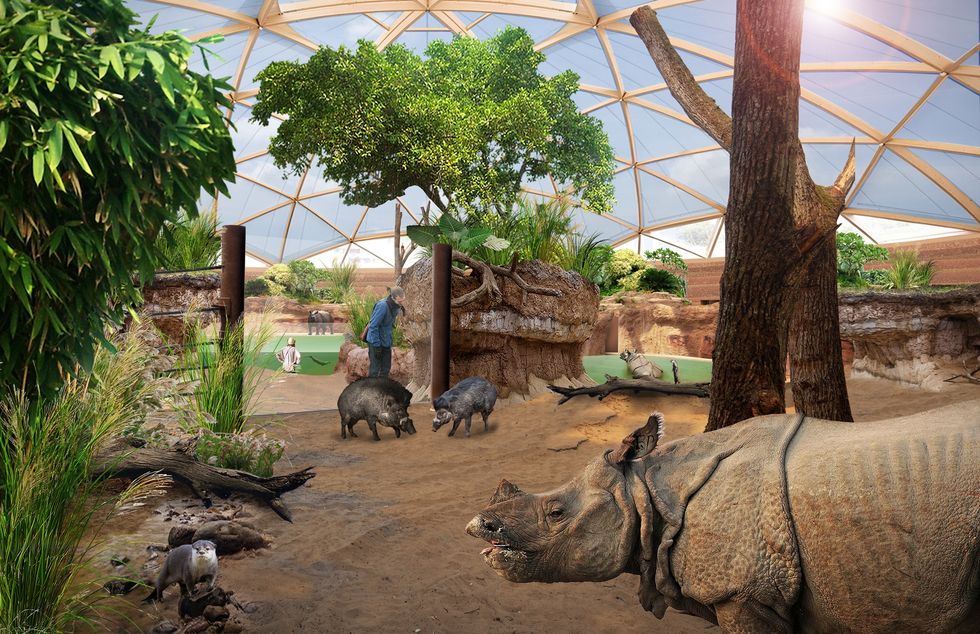
Landscape-led architecture at Odense Zoo creates a seamless environment that blurs conventional barriers, further immersing guests
Image courtesy of dan pearlmanLooking ahead, securing social acceptance and public trust will be the sector's defining objective. Unified industry advocacy through organisations like WAZA and the Association of German-speaking Zoos (VDZ) will be essential to communicating the vital conservation work of modern zoos.
Ultimately, a zoo should be a place of behavioural and environmental enrichment — for animals and for humans alike. A place where we don’t just learn about animals, but where we learn how to be better humans." — Kieran Stanley, dan pearlman Experience Architecture