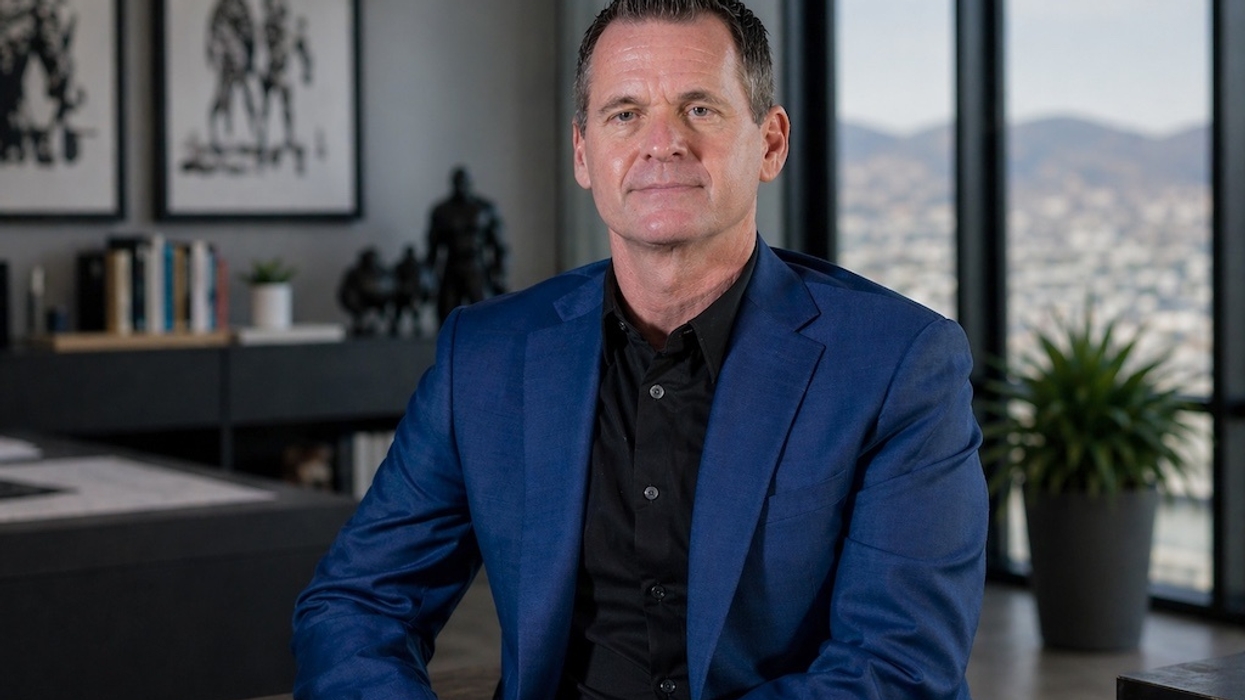

When Chuck Fawcett launched FGR8 in late 2024, it signalled the return of a highly experienced voice in animatronics for the attractions industry.
Fawcett now introduces a major shift in focus: providing executive-level owner’s representation services for animatronics to assist developers, operators, and creative teams in creating complex, character-driven experiences.
Instead of re-entering the market as a traditional vendor, Fawcett has repositioned FGR8 as an independent advisory platform, drawing on over thirty years of experience in designing, engineering, and delivering top-tier animatronics.
A career in animatronics
For over 35 years, Fawcett has been responsible for some of the most advanced animatronic characters ever created, collaborating with leading global operators, including Disney, Universal, and Warner Bros.
That experience provides a comprehensive understanding of how animatronics are delivered, from early creative intent through engineering, fabrication, and long-term operation.
“I’ve spent my entire career inside the system, designing, engineering, building, and delivering,” Fawcett says. “When you’ve seen enough projects go right and wrong, you start to recognize the patterns, and realize that most of the problems are predictable.”
Animatronics remain one of the most powerful tools in themed entertainment, capable of delivering deeply emotional, memorable guest experiences.
“What’s happening now is convergence. Animatronics, media, AI, robotics—these tools are coming together, creating both new opportunities and new complexity.”
That same complexity is where many projects begin to break down. Animatronics remain among the least understood and highest-risk scopes in the industry, not because of the technology itself, but because of how it is defined, scoped, and delivered.
Scope definitions are frequently unclear, and creative goals often surpass what can be realistically engineered and sustained. Vendor choices tend to favour familiarity over capability, while budgets and schedules are based on assumptions that don't hold up in real-world conditions.
This pattern consistently emerges in projects, leading to redesigns, delays, compromises, and sometimes even complete abandonment.
“In most cases, the failure isn’t in fabrication,” Fawcett adds. “It’s upstream. It’s in how the work is defined, packaged, and procured.”
Getting projects right from the start
That realisation led to a fundamental question: where is the highest and best use of this experience?
Discussions with developers, operators, and creative leaders involved in major destination projects reveal a common gap. As demand for immersive, IP-based experiences grows, many organisations lack specialised, high-level expertise in animatronics needed for strategic decisions.
Fawcett is now offering his services as an owner’s representative and executive consultant for animatronics, working directly with owners and project teams to define scope, guide procurement, evaluate vendors, and oversee delivery.
The focus is not on building the product himself, as he has done throughout his career, but on ensuring the right product is built by the right team from the start.
“What I’m doing now is helping teams avoid problems before they become expensive,” he says. “If you align creative ambition with what’s actually achievable, you protect the entire project.”
While the primary focus is advising owners and developers, Fawcett also sees an opportunity to apply his experience to strengthen the broader ecosystem.
Alongside owner-side advisory work, he collaborates with animatronics vendors, designers, and specialist shops to identify capability gaps, strengthen internal resources, and better align their work with the evolving demands of the industry.
“If the industry is going to move forward, everyone has to get better together,” he says. “That includes the people designing it, the people building it, and the people delivering it.”
Why this matters now
This change occurs amid increasing complexity in the global attractions industry. Experiences are becoming more immersive, character-driven, and technologically sophisticated. Meanwhile, financial constraints are tightening, and delivery expectations are rising.
As the vendor landscape has become more fragmented, the margin for error has significantly decreased. For developers and operators, the real challenge now is not only envisioning it but also implementing it successfully at scale.
“There’s a tendency to swing between extremes, either overcommitting to technology or avoiding it altogether,” Fawcett adds. “The real opportunity is in understanding how to use these tools intelligently.”
For Fawcett, this next chapter builds directly on a career spent delivering some of the industry’s most complex animatronic systems. He is now focused on early-stage decisions, where creative intent aligns with what is technically feasible, financially viable, and operationally sustainable.
“The biggest decisions are made long before anything gets built,” Fawcett says. “That’s where experience matters most. My role now is to bring clarity at that level, so teams can move forward with confidence and actually deliver what they set out to create.”
By engaging in that space, Fawcett offers a broader, experience-based perspective on animatronics, helping owners minimise risk, coordinate teams, and confidently realise their creative vision with clear direction.