
By the time an immersive project reaches concept development, the focus is often on differentiation - what will make the experience compelling, what will make it memorable, what will make it stand out in an increasingly crowded landscape.
This is the stage where creative ambition is at its highest, and rightly so. But it is also the stage where many projects begin to drift, not because the ideas are weak, but because they are not yet grounded in what it will actually take to build them.
In work that was recently published in Harvard Business Review, Wendy Heimann-Nunes and her husband, Prof. Joseph Nunes, explored the underlying psychological drivers of immersive engagement.
That framework is helpful in understanding why certain concepts are so compelling at the outset. They are designed to tap directly into what makes experiences “work” from a human perspective.
But what that framework also makes clear, particularly when applied in practice, is that the very elements that make an experience powerful are often the same elements that introduce complexity into how it is built.
Design meets structure
The gap between concept and execution is where projects either become real or begin to unravel. At the conceptual stage, teams tend to optimize for experience.
What is the most immersive version of this idea? What is the most emotionally engaging? What will create the strongest audience response?
Those are necessary questions, but they are incomplete if they are not paired with an equally rigorous assessment of what it will take practically and commercially to deliver that experience at scale.
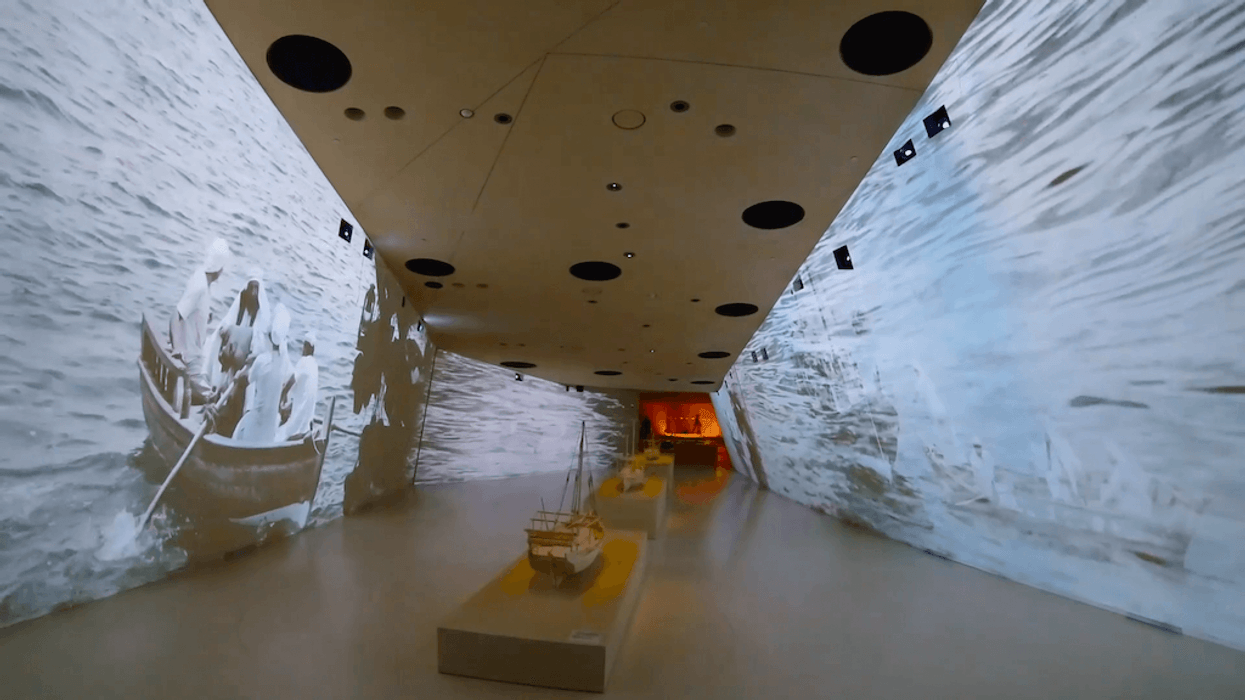
 Creative teams collaborate during the concept development phase of an immersive experience, balancing innovative experience design with the technical, operational, and commercial requirements needed for successful execution
Consider a project that incorporates real-time personalization as a core feature, designed to heighten emotional resonance by adapting environments dynamically based on guest input.
From the perspective of experiential psychology, this is precisely the kind of mechanism that can deepen engagement and create a sense of meaning. Early demonstrations are strong. The concept resonates. It feels like the right answer creatively.
But as the project moves into development, the implications of that design choice begin to surface. Delivering real-time personalization requires a level of technological infrastructure that introduces cost, complexity, and risk.
Systems must be reliable and responsive. Data flows must be managed securely. Legal considerations around consent, privacy, and data usage become central. The operational burden increases significantly, particularly if the experience is intended to scale across locations.
At this point, the project begins to fragment - not because the idea is flawed, but because it has not yet been reconciled with the structure required to support it.
The creative team pushes to preserve the experience as designed. The production team raises feasibility concerns. Legal and technical teams identify areas of exposure. Capital begins to reassess the risk profile.
What began as alignment around a compelling concept becomes divergence around whether, and how, it can actually be delivered.
Making the idea work in reality
The projects that move forward are not the ones that abandon these experiential drivers. They are the ones that design agility into the structure around them.
In one instance, rather than scaling back the ambition, the team addressed the issue through a combination of technical and legal design.
Personalization was maintained but implemented within a defined framework: guest inputs were limited to clearly consented interactions, data was processed within controlled parameters and not retained beyond the session, and the system architecture was modularized so that failure in one component would not compromise the experience as a whole.
 A visitor interacts with a personalised digital museum installation, showing how immersive experience design combines creative vision, interactive technology, and operational execution to deliver meaningful engagement
Contractually, responsibilities for the personalization layer were allocated across parties, with defined performance standards and risk allocation tied to those obligations.
The result was not a diminished experience. It was an alternate yet viable one.
This is the discipline that sits at the intersection of creativity and execution. The goal is not to dilute what makes an experience compelling. It is to ensure that the mechanisms that create that impact are supported by a structure that allows them to exist in the real world.
Because in immersive, the question is not simply whether an idea works in theory. It is whether it can survive the realities of being built.