For Moment Factory, immersive experiences are ultimately about people.
The global entertainment studio has spent 25 years combining technology, storytelling and physical environments to create experiences for audiences around the world. But while the tools have changed considerably since the company emerged from Montreal's rave scene in the late 1990s, its focus remains on bringing people together in the real world.
Its guiding principle is simple: “We do it in public.”
Being present
Co-founder and executive creative director Sakchin Bessette says the word ‘moment’ in the company's name reflects the importance of being present – something that can be increasingly difficult in a world dominated by digital distractions.
“A memory starts with being aware,” he explains. “When people are distracted on devices, or they're distracted in their mind, thinking about problems or things that are not in the moment, it's hard to connect to what's going on around you.
“So, the moment is about being present at that place at that time, and the factory is about making these magic moments, these memories, these memorable times in people's lives, things that are meaningful."
 Phish: The 2026 Sphere Residency – creative & show direction by Moment FactoryImage credit Alive Coverage
That idea of presence runs through Moment Factory's work. Technology is a tool for shaping the experience, rather than the experience itself.
For co-founder and chief innovation officer Dominic Audet, another essential ingredient is togetherness. Shared physical experiences can create memories and connections that are difficult to reproduce alone.
That emphasis on collective experience has its roots in Moment Factory's beginnings.
From raves to real-time storytelling
Moment Factory did not start as a conventional visitor attractions company. Its origins lie in Montreal's underground rave and nightlife scene, where Audet, Bessette and their collaborators experimented with emerging digital tools.
Audet organised rave parties, while Bessette worked as an experimental video artist. As digital equipment became more accessible, the group began experimenting with multimedia in a different setting.
“As rave party organisers, one of the tools that we were using was VJing,” says Audet. “This was new tech for creating wonder and making our raves more spectacular.
“Digital technology like video projectors, cameras and mixer boards started to become accessible to people like us instead of big corporations. With a few thousand, if not hundreds, of dollars, we could access these tools and use them in party mode.
“Technology for us was a way to enhance the experience of the parties.”
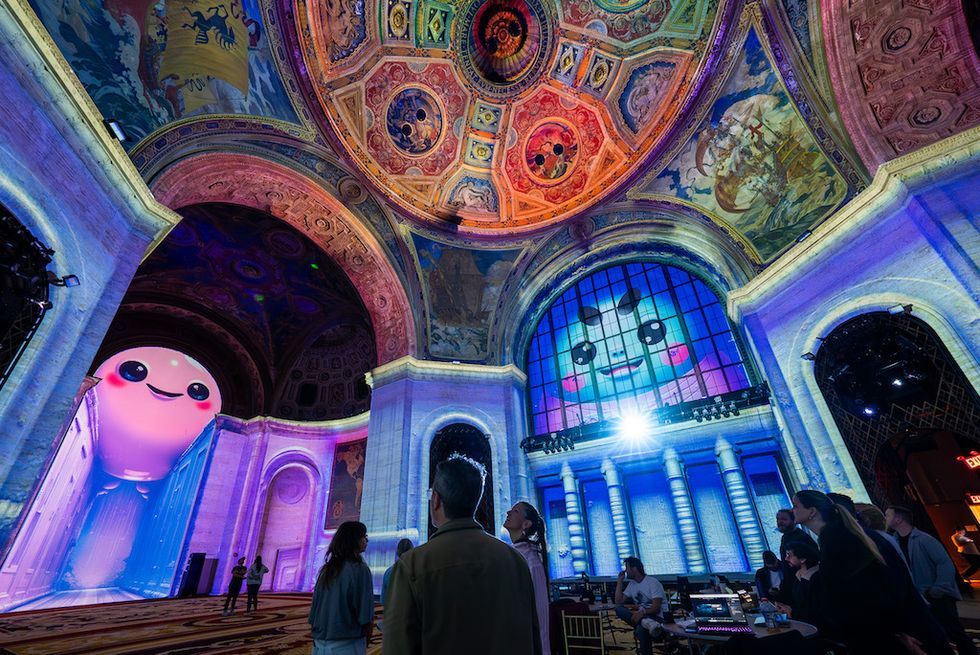
Moment Factory team during a creative workshop in 2025 at Cipriani 25 Broadway in New York City
Image courtesy of Moment Factory
The transition from analogue to digital production also changed what the team could create and how quickly it could respond to an audience.
Bessette recalls moving from 16mm film, with its physical reels and laboratory processing, to mini-DV cameras and computer-based editing. Footage could be captured, edited and projected within hours rather than days.
“There was a digital revolution. Everything shifted. A lot of it was about mixing live intuitively for the crowd, following the flow of the crowd. Then we started to experiment: how do you sync the video with the sound? And then the video with the sound and the lighting?”
Audet brought experience from the Montreal Planetarium and large-scale corporate shows, while Bessette and the wider creative team brought an artistic and experimental perspective. Together, they began synchronising video, sound, lighting and effects to shape an audience's emotional journey.
The result was a model that could combine the production quality of larger corporate shows with the experimentation and flexibility of an independent creative collective.
What started as an experiment in the rave scene gradually developed into a business.
The technology has evolved dramatically since then. But for Moment Factory, the underlying objective has remained much the same: binding creativity and technology to imagine new forms of entertainment and meaningful gathering moments.
Building a multidisciplinary culture
Moment Factory now employs more than 450 people across more than 70 creative and technical disciplines, from writers and directors to animators, lighting designers, software developers and systems engineers.
Maintaining a consistent culture across such a diverse organisation is a challenge. The founders believe its continued independence has helped.
Moment Factory remains privately owned by its founders, who continue to work in the business. Audet says that continuity has helped protect the culture that developed in its early years.
“Keeping our culture, I think it's easier for us than a lot of other companies because we're the same founders at the beginning. We started with this common passion, and then we kept it.”
The founders also place considerable emphasis on who joins the organisation. Bessette says the company looks for people who are curious and driven by creative work.
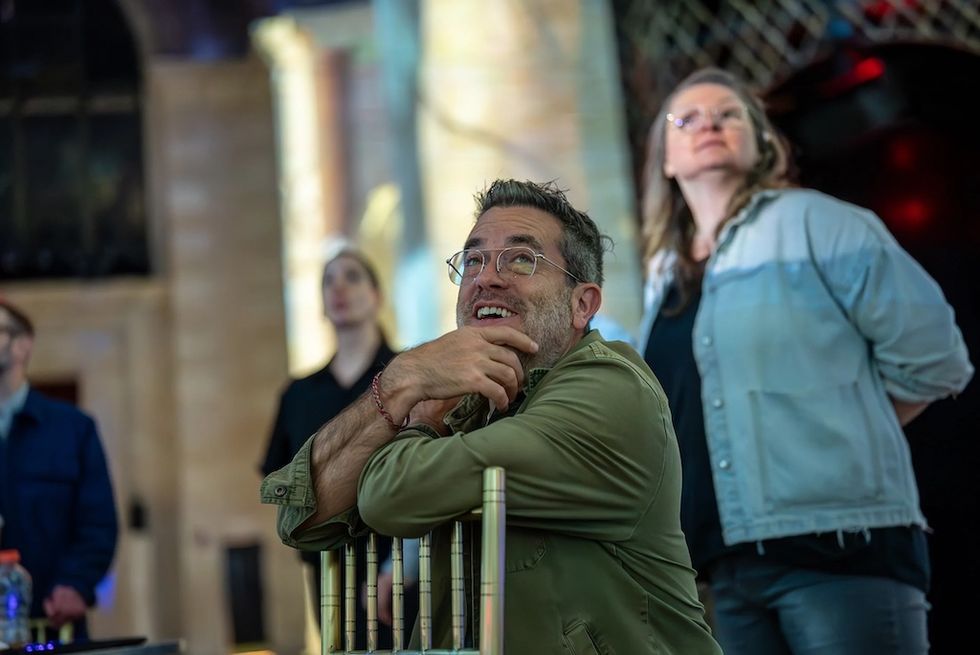
Sakchin Bessette during a creative workshop in 2025 at Cipriani 25 Broadway in New York City
Image courtesy of Moment Factory
“You recognise this type of person who is attracted to working here, or who ends up staying here for a long time; they are passionate, driven, curious. I find that the quality of humans that are here is exceptional.”
The company has also developed its own approach to professional development. Around 10 years ago, it launched the MF School, which supports career development and movement between disciplines. A technical director, for example, might move into production, while a writer could progress into a creative director role.
“The school is interesting because it lets people stay within the company but have different careers. It's been very efficient in organising new career management within the company, so we're very proud of it,” says Audet
The result is a deliberately multidisciplinary working environment. Rather than separating creative, technical and production teams, Moment Factory brings different disciplines together around individual projects.
What does ‘immersive’ really mean?
As immersive technology has become more accessible, the definition of ‘immersive’ has become increasingly broad. Projection mapping, VR, LED screens and spatial audio can all contribute to an experience, but Moment Factory's approach starts elsewhere.
For Bessette, immersion is about transporting an audience, not simply surrounding it with technology.
“You could be immersed in a great book. It doesn't necessarily mean that you're immersed in 360-degree screens. Sometimes, if you do a blackout with bird sounds, it could be extremely immersive. You're transporting people somewhere, and you don't need to show the literal interpretation of this necessarily.”
Physical space is therefore central to the company's work. Unlike film or other screen-based media, location-based experiences allow visitors to move through an environment and engage with it using multiple senses.
“In our mediums, we have a specific relationship to scale between the human body and its environment, and that's basically the dimension that we play in,” continues Bessette.
“We play in the physical worlds, and we add digital environments to it. But instead of, for example, being in a movie theatre where you're on a screen, we're in a space, and because you can move, your relationship between your body and the environment is a big part of this immersion.
That relationship between the audience and the physical environment can also create a sense of awe.
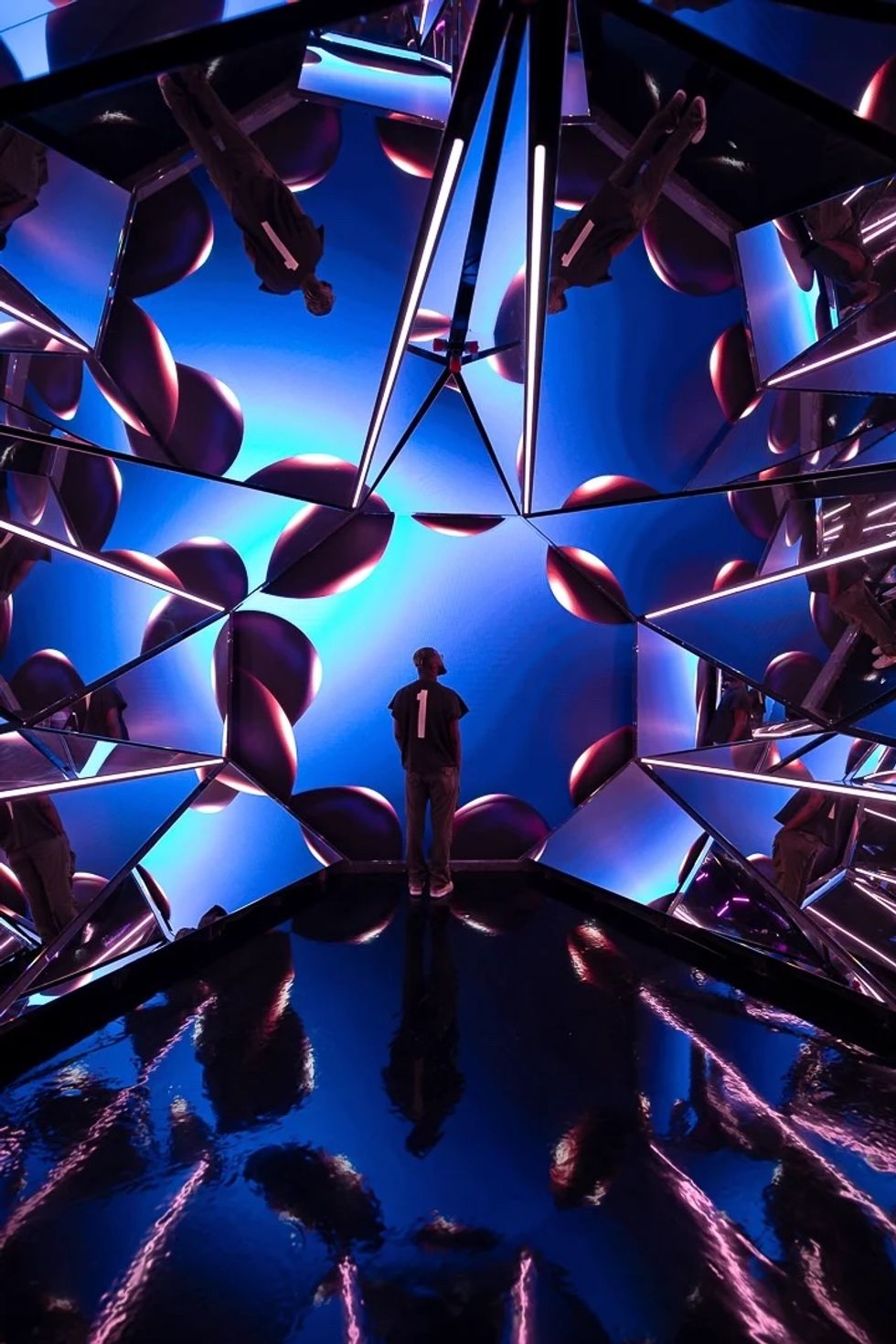
The Kaleidoscope at Edge NYC at Hudson Yards (2026), New York City, United States
Image courtesy of Moment Factory
Bessette points to the experience of looking at the night sky as an example of an inherently immersive encounter. Its combination of scale, darkness, light and mystery can create a powerful emotional response.
This also informs the company's approach to technology. Rather than starting with a particular technical solution, the creative process begins with the audience, location, and story.
Audet argues that this is particularly relevant as audiences become more familiar with digital media.
“For me, there's a going back to analogue that is very inspiring. We're not defined only by digital technology. It's our origin, but it's only one of our tools. We work in forests, in churches, and in public spaces, so technology and digital tools are never the objective in themselves.
"They are always used in service of the story and its emotional impact. When it's not required, we don't push too much for it, but when used well, it can really bring new dimensions to storytelling.
“Now, I think the opportunity is to focus on the core and the authenticity of our mission, which is connecting people and celebrating life.”
When the environment becomes part of the story
Moment Factory works across locations ranging from heritage sites and outdoor venues to airports, public spaces and entertainment venues.
Its approach is not to treat the location as a blank canvas. Instead, the physical environment becomes part of the story.
“The environment is an actor, I would say, or a co-creative director in the creative process,” says Audet. “It's a completely different approach to storytelling. It's people together, and the environment enhances it. It just completely changed the creative process; every time we need to reinvent because the space is creating with us somehow.”
The company's Lumina night walks and AURA heritage experiences reflect this approach.
The Lumina series has expanded to more than 35 permanent and temporary installations, using landscapes such as forests and parks as settings for nighttime journeys. Each experience is developed around its location and incorporates local stories and cultural references.
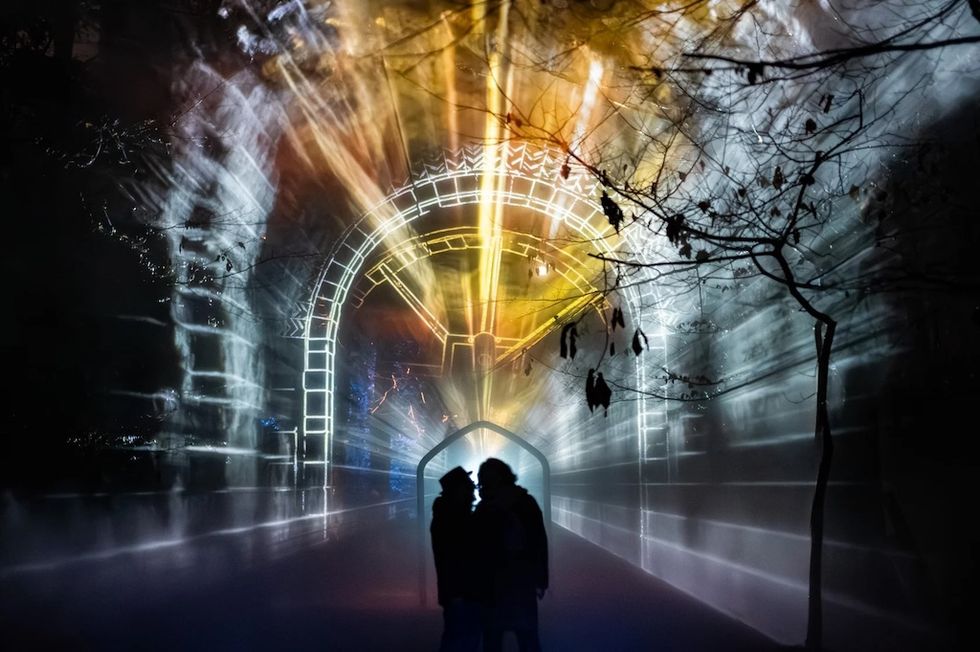
Arbora Lumina (created in 2025), the latest in the series, located at Domaine d'Harcourt in Normandy, France
Image courtesy of Moment Factory
This can involve close collaboration with local communities.
Onhwa’ Lumina in Wendake, Quebec, for example, was developed with the Great Wendat Nation and incorporates traditional symbols, beadwork, dance and archival recordings. Kamuy Lumina in Japan was created with the Ainu community around Lake Akan in Hokkaido.
Audet says those collaborations have influenced the creative process itself.
“One of my most intense experiences on Lumina was with the Ainu people in Japan. They influence the creative process a lot. The space and the people creating are just as important, and I think visitors can feel how it was influenced.
“It's more like: how do we tune in to the Ainu people, listen, and understand their vision? We bring our expertise, and they are there to guide, refine, and add sensitivity and depth to the narrative and the journey.”
The studio’s AURA series applies this principle to heritage landmarks through permanent, site-specific immersive experiences. These installations successfully reignite public interest, transforming historic sites into vibrant cultural destinations.
Projection, lighting, and sound are used to reinterpret spaces, including the Dôme des Invalides in Paris, Notre-Dame Basilica in Montreal, Grace Cathedral in San Francisco, and Saint-Roch Church in Quebec City.
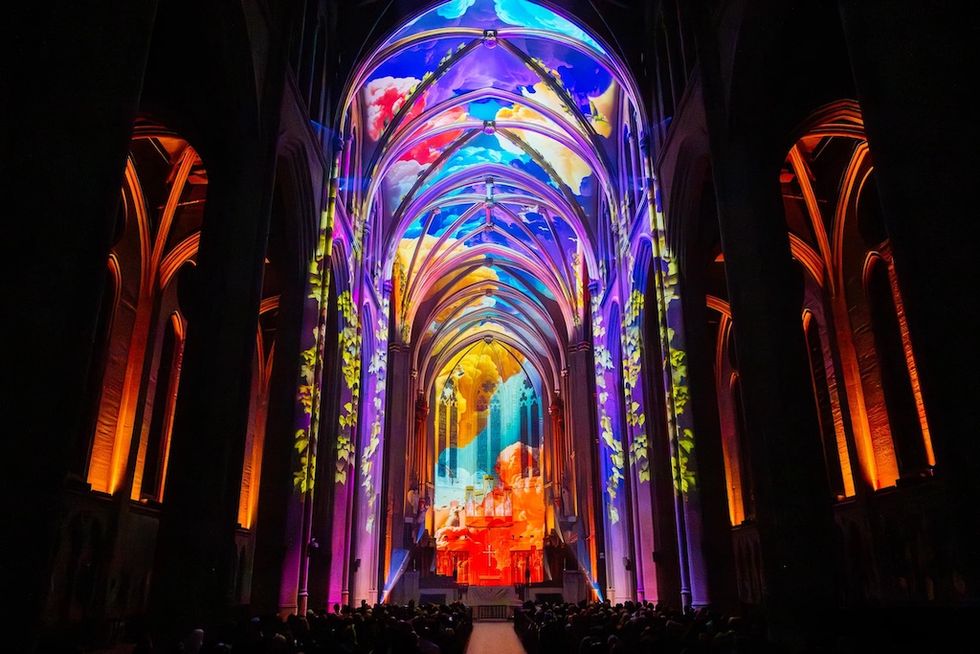
AURA Grace Cathedral (created in 2025), San Francisco, United States
Image courtesy of Moment Factory
The aim is not simply to project content onto a building, but to use the architecture itself as part of the experience.
These cultural and heritage venue projects can also introduce new audiences to familiar buildings while generating revenue that can support ongoing operations and preservation.
Making knowledge resonate
Moment Factory's work extends into projects for museums and scientific institutions. Recent examples include the National Geographic Museum of Exploration in Washington, D.C. and the Natural History Museum Abu Dhabi.
In these settings, the studio helps translate complex subject matter into experiences visitors can understand emotionally as well as intellectually.
At the National Geographic Museum of Exploration, the ambition is to connect the organisation's history of scientific exploration with a wider visitor journey from curiosity to connection and, ultimately, action.
At the Natural History Museum Abu Dhabi, Moment Factory has worked with the museum's curatorial team on multiple immersive galleries. These spaces form part of a wider visitor journey exploring the history of the universe and the Arabian Peninsula's natural heritage.
Bessette says the relationship between creative teams and subject-matter experts is central to this kind of work.
“If we're working for an institution where there's an educational aspect or there's a specific message that is intended to be communicated, then we can align the context, the space, the environment, the technology, the people, the story, everything into making that come through in an intelligent and touching way.
“It's about how do we touch people and communicate those things and hopefully inspire people into being more curious about these subjects after.”
“With emotion, things can click in people. We try to mix information and emotions in these projects, and that balance is quite complex to get.”
Extending familiar worlds
The studio is also working with major intellectual properties and brands, including Pokémon, FIFA, Real Madrid C.F., Messi and Super Nintendo World.
Location-based experiences offer IP owners an opportunity to extend established worlds beyond screens and into physical spaces. But they also require an understanding of what makes an IP meaningful to its existing audience.
Audet says the studio's role is to preserve that authenticity while adapting the experience to a physical environment.
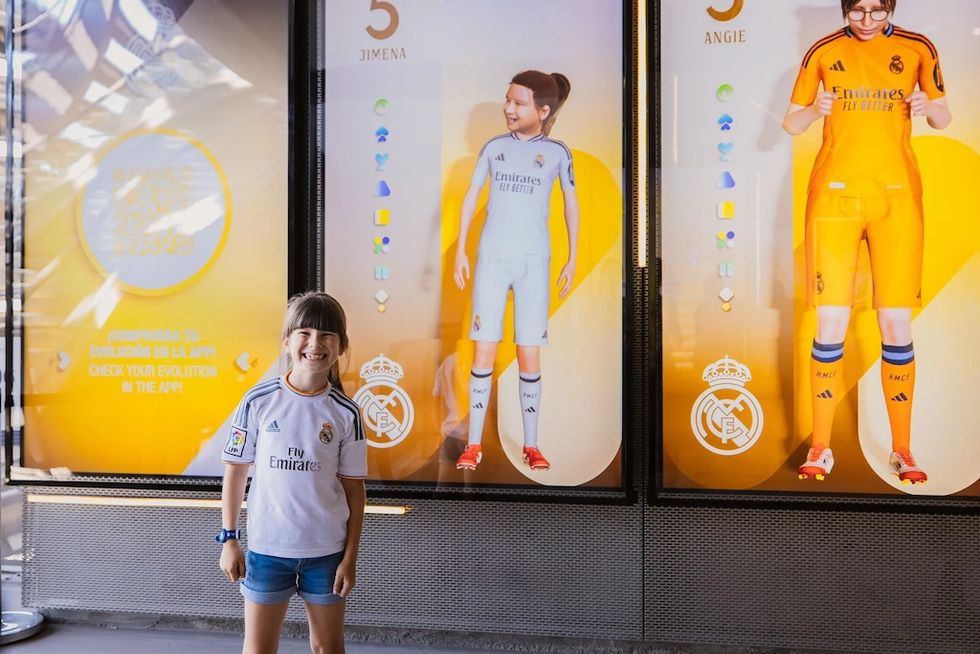
Realmadrid Games at Bernabéu Stadium in Madrid, Spain (created in 2025)
Image courtesy of Moment Factory
“These IPs are looking for new ways to engage with their fans. For location-based experiences, we're helping them keep the IP's authenticity while applying it to the real world.
“It's as exciting for us because, again, it's stories. Sometimes we come up with our own stories in our Original Experience, sometimes it is bringing an artist like Billie Eilish's vision to life, and sometimes it's working with Nintendo or Pokémon.
“It comes with a fan base and with lots of love and understanding. Our people are knowledgeable about the storytelling, but we are also trying to be humble and listen to what the fan wants.”
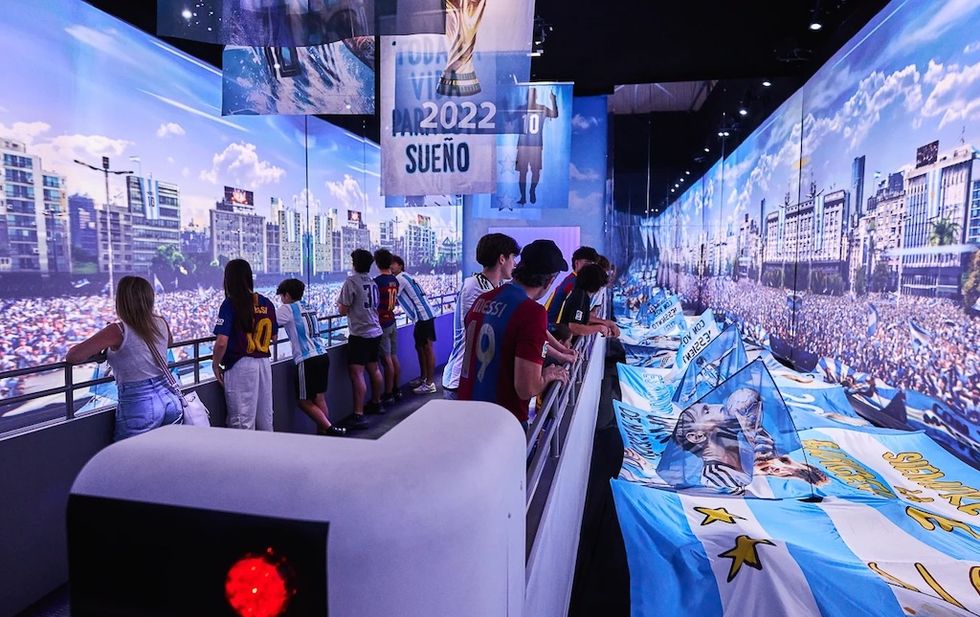
The Messi Experience, touring worldwide since 2024
Image courtesy of Moment Factory
That means spending time understanding the world, characters and existing fan relationships before developing the physical experience. The more iconic and beloved a brand is, the deeper and more exact the details must be. Devoted fans will immediately sense when something feels off.
From one-off attractions to lasting destinations
As Moment Factory looks to its next 25 years, its founders want to move beyond the traditional model of a one-off or short-duration attraction and develop more sustainable experiences. Audet sees opportunities for experiences to become part of the places where people live and spend time, rather than sites visited only once.
“I think we'll see the experience evolving past the one-hour show, and creating a lasting experience that's going to create a deeper connection, but also a recurring connection.
“It could be something where you spend a few days, or it's part of a district or a city where you can go every week or every day.
“Having this kind of lasting experience that creates a deeper connection is what's driving my excitement, and assembling all of the tools and the experiences that we have created, learned and given in the last 25 years and applying them in a more recurring and deeper way.”
That could mean integrating multimedia, lighting, interactive elements and storytelling into public spaces, parks, mixed-use developments and urban districts, a practice the studio has pursued for years and now seeks to expand in greater depth by getting involved earlier in the development of destinations.
Bessette adds that success still comes down to the effect an experience has on the people who encounter it.
“Touching people is, for me, what's the most exciting. How we can have lasting impressions on people, with new types of experiences that last longer, that are deeper, that are more related to connecting people together.”
Twenty-five years after its beginnings in Montreal’s rave scene, Moment Factory has grown into a global creative studio expanding across attractions, entertainment, culture, and public spaces.
Each project showcases the studio's expertise in creating world-class permanent installations and iconic destinations, bringing meaningful, memorable experiences to audiences worldwide year-round.
Its founders' focus, however, remains relatively simple: create experiences that bring people into the present, give them a reason to be together and leave them with something worth remembering.
“We're just getting started,” says Bessette.