A woodland area that might otherwise sit at the edge of a visitor attraction can become a destination in its own right. Elevated walkways, suspended bridges, timber towers, and places to stop and explore can encourage families to discover their surroundings from a different perspective,
At the Bronx Zoo, Nature Trek brings this idea to life.
Opened in 2017 through a collaboration between the Wildlife Conservation Society (WCS) and SimEx-Iwerks, the attraction weaves elevated pathways, towers and bridges through a wooded area, creating what Sean McAllister, senior vice president at SimEx-Iwerks, describes as a “village in the trees.”
The attraction welcomes around 500,000 guests a year. Its appeal lies not just in the structures themselves, but in the journey between them: visitors can explore at their own pace, discover different features along the way, and share the experience across generations.
For zoos, safari parks, botanical gardens and other outdoor attractions, this approach offers another way to make the most of existing landscapes.
SimEx-Iwerks’ Nature Attractions portfolio encompasses elevated trails, canopy walks, net-based play and natural playgrounds, with designs tailored to each site’s surroundings and operational requirements.
Outdoor adventures to reach a broader audience
Unlike traditional ropes courses, SimEx-Iwerks' Nature Attractions do not require visitors to wear harnesses, making them an alternative for operators looking to offer outdoor adventure to a broader range of guests.
The design is intended to let families explore together, with routes and challenges tailored to the site. Accessible routes can be incorporated.

Sean McAllister, senior vice president at SimEx-Iwerks
"The shared family experience is very appealing," McAllister adds. "We want adults to participate alongside the kids."
Operationally, the harness-free model reduces labour needs. Unlike systems that require large crews of certified technicians, safety monitors, and rescue-trained operators, nature treks need minimal supervision, lowering daily costs while maintaining throughput.
"The biggest misconception is that we’re proposing another ropes course," says McAllister. "Operators may immediately think about harnesses, specialist staffing, waivers, and an experience that only some of their guests will want or be able to do.
“Our Nature Trek and canopy trail designs take a different approach. The experiences are designed for families to enjoy together.
“This really changes the conversation.”
Four approaches to nature-based play
SimEx-Iwerks' Nature Attractions portfolio comprises four products, each custom-designed to suit the site's landscape, vegetation and intended visitor experience.
Nature Trek combines elevated trails, timber towers, suspended bridges and netted tunnels to create a route through the trees. Typically positioned 10-15 feet above the ground, it balances active challenges with places to pause and take in the surroundings.
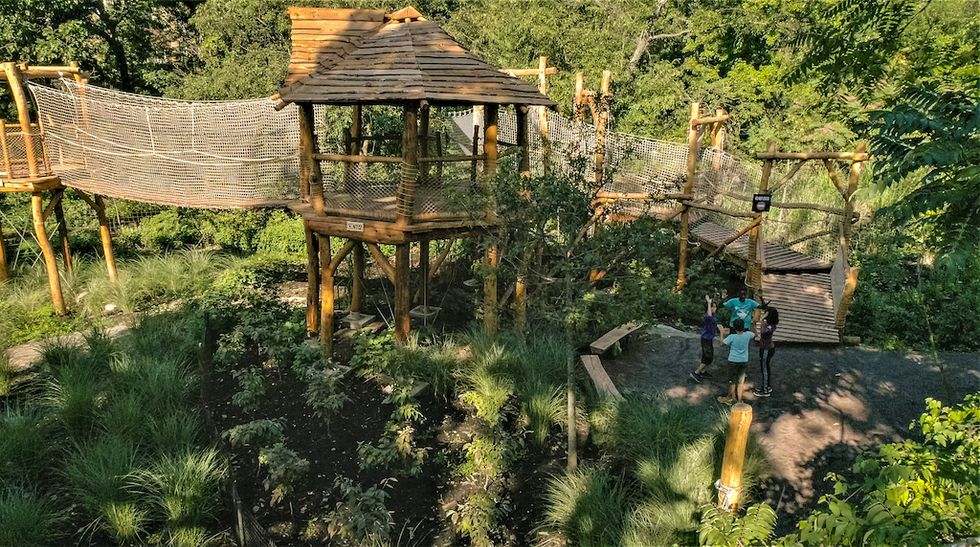
The Nature Trek installation at Bronx Zoo has proved to be a popular addition with visitors
Image courtesy of Bronx Zoo
Accessible routes can be incorporated where the site and layout permit.
Canopy Walk focuses on elevated viewpoints and the surrounding landscape. Usually 15–20 feet above ground, its suspended bridges and treetop platforms offer new perspectives on woodland, planting, and nearby habitats.
Optional lighting, audio and interpretive elements can extend its use beyond daytime visits.
AdventureNET uses large structural nets suspended between trees or support frames, creating spaces for visitors to climb, bounce and explore. The structures can be arranged across one or more levels. The structure supports active play and accommodates groups.
NaturePLAY brings the concept to ground level through handcrafted timber features, including balance beams, climbing logs and hollow trunks. It can operate as a standalone playground or complement a larger Nature Trek attraction.
Making better use of outside spaces
For operators, the opportunity starts with finding an outdoor-space use that fits the venue's wider visitor offer.
Depending on the site's objectives and commercial strategy, a nature-based attraction might be a separately ticketed experience, part of a premium package, or included in general admission.
Nature attractions can also bring underused areas into the visitor experience. Wooded sections, perimeter paths, and spaces between existing exhibits may be unsuitable for larger rides or buildings but could accommodate a trail or play environment, depending on site conditions.
Custom-designed routes can work with existing terrain and vegetation, reducing the demand for extensive groundworks.
"A Nature Attraction can make an underutilised space a compelling part of the visit," McAllister says. "It can provide a new revenue opportunity, a strong visual and story for marketing, and another reason for families to choose the destination or return.”
Discussions with operators often begin by reconsidering how existing spaces could be used.
"When we show these concepts or talk about what is possible, people immediately start thinking about their own property. They start seeing spaces differently: an area of trees, a pathway, the space around an exhibit.
“Because every project is custom, the conversation really starts with: what could we create here?”
"There are times when a location may think they don’t have the right space. Once we walk the site together, we can often surprise them with what’s possible. And if a full attraction isn’t the right fit, we offer a line of artfully designed natural playground elements made from the same black locust wood.
“There are plenty of ways to bring nature and play into a location, even on a smaller scale.”
Connecting play with education
For zoos, aquariums, botanical gardens and conservation institutions, nature-based attractions can also support education and conservation messaging. Elevated trails may offer new views of animal habitats, landscape features and plant collections.
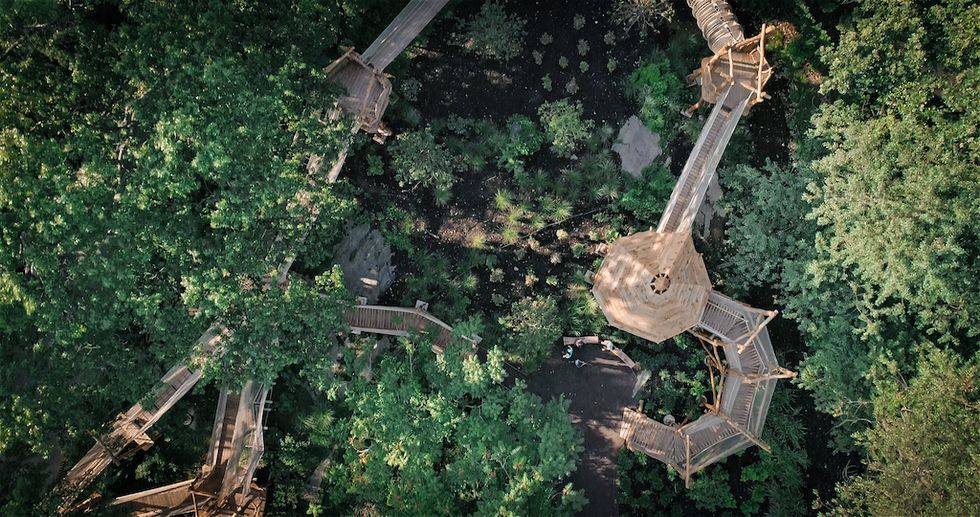
An aerial view of the Nature Trek by SimEx-Iwerks at Bronx Zoo
Image courtesy of Bronx Zoo
"The journey itself provides a framework for storytelling," McAllister explains. "Canopy trails and nature treks have a natural sequence of movement and stopping points, giving operators opportunities to introduce interpretation.
"For example, a lookout could draw attention to an animal habitat, while an elevated section could introduce the role of the forest canopy. We encourage locations to consider those opportunities during the design process. That allows the route, viewpoints, and interpretive elements to work together nicely.”
SimEx-Iwerks is also exploring other potential uses, including outdoor classrooms for school groups, summer camps and conservation workshops, as well as spaces for after-hours events.
Adding nature to the attraction mix
For SimEx-Iwerks, Nature Attractions extend an established portfolio of cinematic and immersive experiences into the outdoor environment. For operators, the appeal is the chance to add a different kind of activity while using the landscape that makes each venue distinctive.
The design philosophy recognises that today’s families seek different experiences within a single destination visit. A balanced venue master plan combines high-tech, indoor cinematic storytelling with physical, outdoor natural exploration.
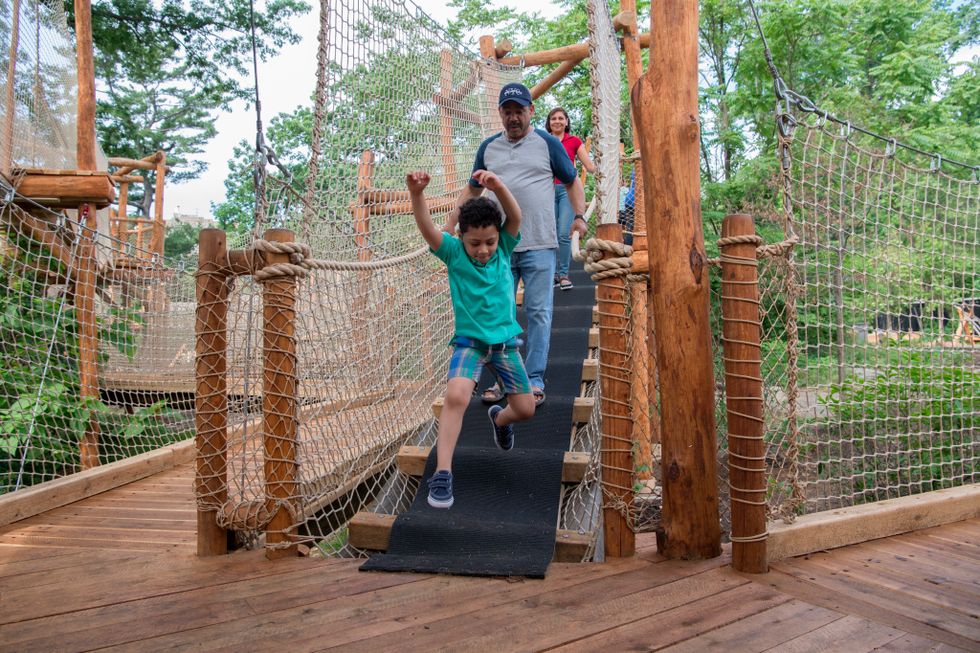
Nature Attractions, like Nature Trek at Bronx Zoo, broaden a destination's appeal
Image credit Julie Larsen Maher
Together, indoor and outdoor attractions can broaden a venue's offer, although outdoor experiences remain subject to weather and seasonal operating conditions.
As operators seek to use their outdoor spaces more, harness-free nature attractions offer a way to combine active play with the existing landscape.
The opportunity lies in finding an approach that suits the site, gives visitors another reason to explore and fits the venue's operational and commercial priorities.