
Disney has been granted a patent for a system that helps users choose rides based on their preferences and dislikes. Titled “Personalized Notification of Attractions Including User Preferences or Aversions,” patent US-20260245439-A1 was filed on 14 February 2025 and granted on 20 August 2026.
The system has a processor and memory that store software and a user preferences database, which includes at least one of the user's dislikes or likes.
The processor runs the software to receive data about an experience from an attraction service, compare it with the user's preferences, and determine if the experience matches the user's dislikes or likes.
The system surpasses the basic ride recommendations found in the Disneyland and Walt Disney World apps. Guests can input a broad range of preferences and dislikes.
As Disney states in the patent, guests have varied preferences, aversions, and health conditions. However, warnings and ride descriptions have limitations that can make it hard for individuals to determine if a ride suits them.
Beyond personalisation
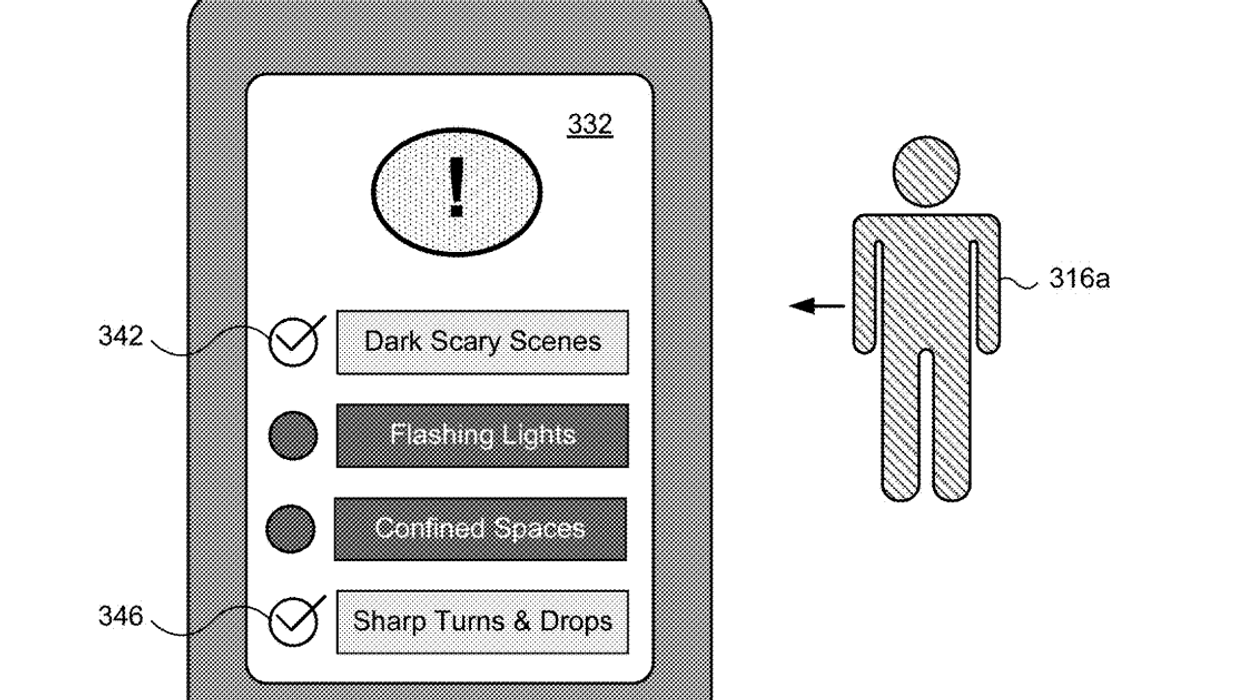
Disney suggests pinpointing specific features such as dark or scary scenes, flashing lights, tight spaces, sharp turns and drops, snakes and spiders, blood and gore, screams, profanity, smells, water effects, vibrations, and sound levels.
It also considers physical ride aspects like speed, acceleration, quick drops or rises, and a vehicle’s roll, pitch, or yaw.
This system would provide guests with visual, audio, or haptic alerts through devices like phones or smartwatches when a ride matches their preferences or aversions. These alerts could also occur during the ride, notifying guests of an upcoming trigger.
Aversions could also be assigned intensity ratings from one to ten. For instance, a single spider on an attraction might receive a low score, whereas a swarm of moving spiders could score much higher.
Some guests with a fear of spiders might be willing to endure the lower scores, while others might not. Additionally, some may prefer to be reminded during the attraction so they can close their eyes.
The patent also covers the ability to make real-time adjustments to an attraction, such as removing problematic elements or highlighting preferred features. This feature might not be accessible for all stimuli, but it can be readily added for on-screen visuals or sounds.
Previously, Disney filed a patent application for a robotic arm to transfer ride vehicles in theme parks from one support structure to another.
See also: 7 ways Disney robots will revolutionise theme parks

Charlotte Blanco Coates is blooloop's editor. She is from Brighton, UK and previously worked as a librarian. She has a strong interest in arts, culture and information and graduated from the University of Sussex with a degree in English Literature. Charlotte can usually be found either with her head in a book or planning her next travel adventure.