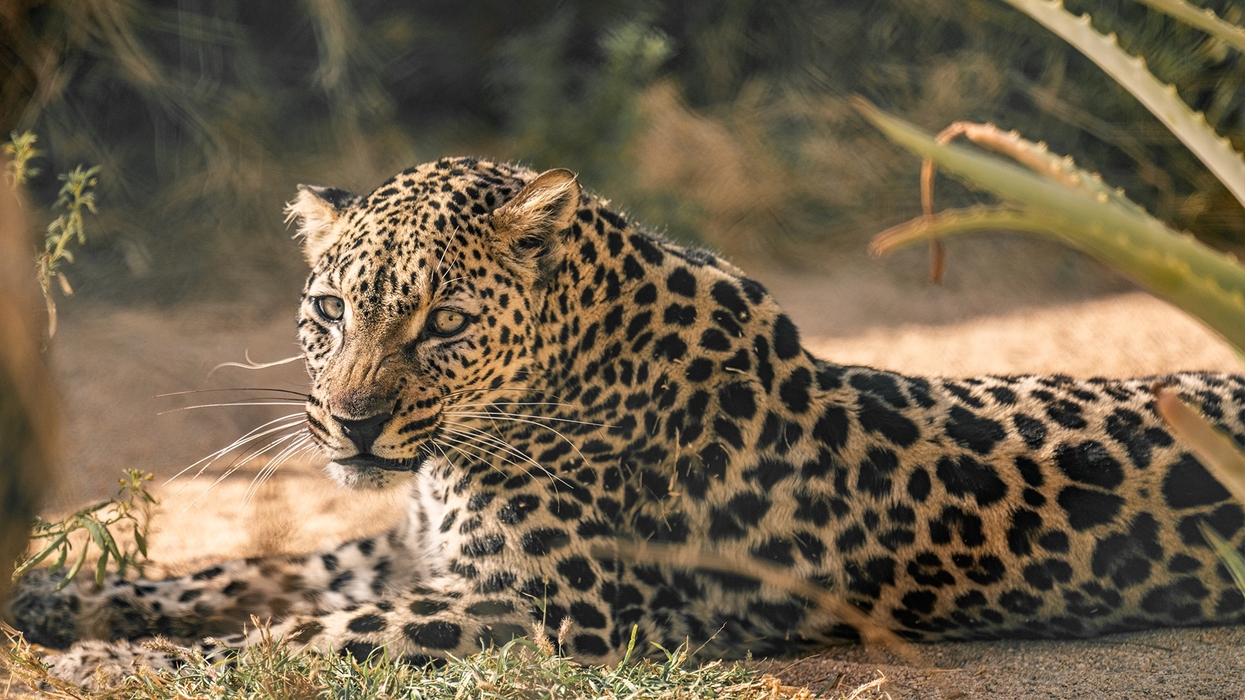

The Smithsonian's National Zoo in Washington, DC has broken ground on its new Arabian leopard exhibit in partnership with Saudi Arabia's AlUla project.
The 'Saudi Arabia: Arabian Leopard' exhibit is due to open in winter 2029 as the first exhibit to showcase Arabian leopards outside the Arabian Peninsula.
It will house a breeding pair from the Royal Commission for AlUla's Arabian leopard conservation breeding centre – the first wildlife institution in Saudi Arabia to be accredited by the European Association of Zoos and Aquariums (EAZA).
Fewer than an estimated 120 Arabian leopards remain in the wild, with the species experiencing dramatic declines due to habitat loss, hunting and the depletion of its natural prey.
“Extinction is not inevitable,” said Brandie Smith, director of the Smithsonian’s National Zoo and Conservation Biology Institute.
"When we bring together exceptional animal care, cutting-edge science, sustained investment and partners committed for the long term, we can change the future for wildlife.
"This exhibit will connect millions of people with one of the rarest cats on Earth and with the science and collaboration working to save it."
Inspired by AlUla's rugged landscapes and architectural heritage, the exhibit will include outdoor habitat areas, an overhead animal crossing, and an indoor habitat and care facilities.
In addition to the new Arabian leopard exhibit, the collaboration between the Smithsonian and AlUla spans conservation science, animal care, professional exchange, and public education.
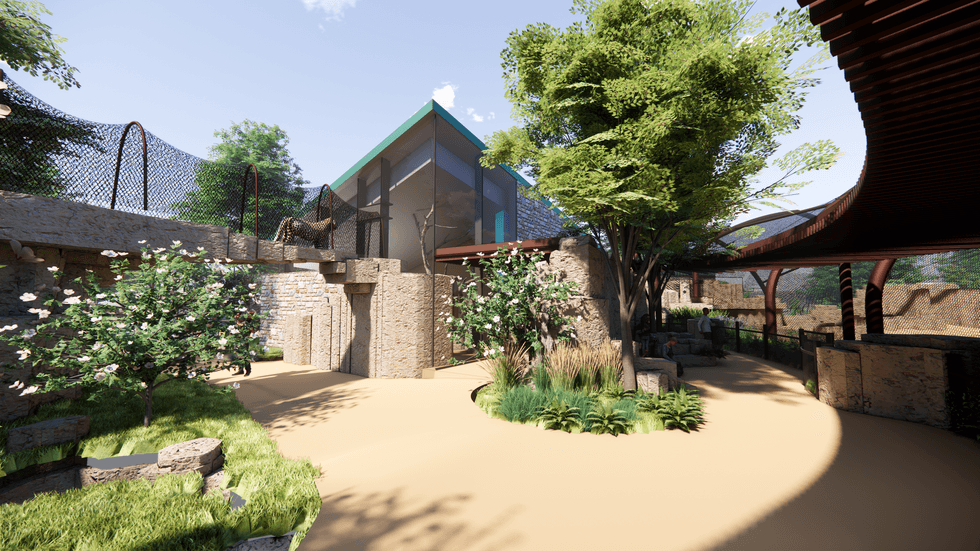 The 'Saudi Arabia: Arabian Leopard' exhibit is due to open at the Smithsonian's National Zoo in winter 2029Smithsonian
"Protecting the Arabian leopard is long-term work. It means restoring the landscape it needs, strengthening the science behind its recovery, and investing in the people who will carry that work forward,” said Abeer AlAkel, CEO of the Royal Commission of AlUla.
"The future of the species will depend not only on what we do today, but on the expertise we build for tomorrow," she added.
"Through our partnership with Smithsonian, we are sharing knowledge, developing Saudi conservation talent and building the long-term capability needed to support its recovery."
The exhibit and broader conservation initiative are supported by a $51.6 million gift from the Royal Commission of AlUla.