
Theme park operator Universal "required" financial support from the UK government in order to commit to developing its upcoming resort in Bedford due to the high cost of the project, according to a new report by a branch of the Competition and Markets Authority (CMA).
The 540-acre Universal United Kingdom Resort will include a 500-room hotel, as well as a shopping and dining district and a movie-themed park. Universal is committing more than £5 billion on building the complex and will invest a further £1bn over the decade after its opens in 2031.
It is expected to be a dream ticket for the UK, with forecasts suggesting that building and operating the resort will create 28,000 jobs. By 2055, it should have generated £50bn in economic impact. The government didn't want to risk losing those benefits to another country so it rolled out the red carpet for Universal.
Planning permission for the resort was fast-tracked by ministers last year and the government committed to investing £1.3bn in it, largely to upgrade the local transport infrastructure.
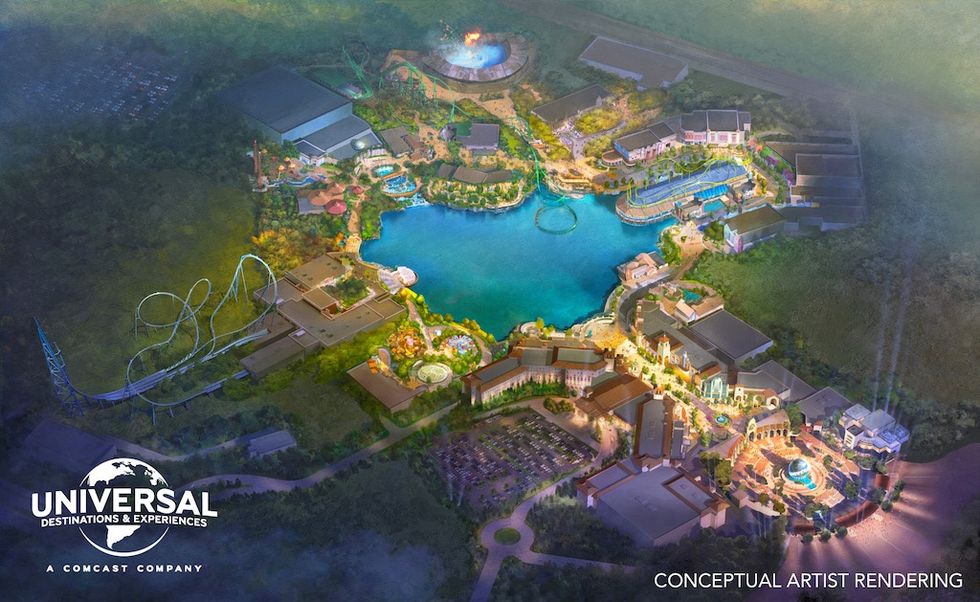 The new Universal United Kingdom Resort is expected to open in Bedfordshire in 2031 Universal
Milton Keynes is 17 miles away from the site, which isn't convenient for visitors arriving by rail. Accordingly, the local Wixams railway station needs to be expanded, the neighbouring A421 trunk road needs to be widened, and a dedicated junction needs to be built on it.
The government will spend £474 million of its £1.3bn commitment on the road and rail upgrades whilst the remainder will be paid in two stages to UDX Development Company, the Universal subsidiary behind the project.
First, the Department for Culture, Media and Sport (DCMS) will transfer a £438m grant once Universal has completed its work on the community infrastructure, with a further £400m subsidy paid when the resort opens.
All subsidies of more than £25m have to be assessed by the Subsidy Advice Unit (SAU), which is part of the CMA, and its review began at the end of June this year. The SAU recently published its report, which cuts straight to the chase as it states that "the project requires substantial upfront capital expenditure and ongoing reinvestment, increasing investor exposure to risk".
Crucially, it adds that "UK government support is required to reduce this risk to a level considered acceptable to UDX and its parent company".
£50bn in economic impact
Giving further detail, it explains that the lengthy construction period increases the risk for Universal and thereby the need for government funding.
"Revenues will not be generated until the park becomes operational following a lengthy construction period," says the report. "The delay between investment and returns increases uncertainty regarding future demand, costs and market conditions, reducing the commercial attractiveness of the project and increasing the need for government intervention."
The report adds that the risk is compounded by the UK being a new market for Universal: "As a US-based investor developing its first theme park in Europe, UDX faces risks arising from the structural and cultural differences between the UK and European markets and those in the United States."
The report adds that "the need to establish new supply chains, cultural and legal differences, high construction costs and reliance on supporting infrastructure increase uncertainty and the risks associated with the investment. The assessment states that, absent government support to alleviate these risks, private funding will not materialise".
According to the report, alternative forms of financial assistance were considered, such as a "loan or equity on better than market terms". However, they were rejected in the end "even though they could have reduced the overall size of the subsidy compared to a grant."
 Universal's UK theme park has been named Universal United Kingdom Resort and is due to open in 2031 Universal
The report paints a bleak picture of the outcome if Universal hadn't given the green light to the resort.
The assessment shows that "in the no subsidy scenario, the policy objective and wider government objectives would not be achieved. It states that the UK theme park market would likely continue on its current, relatively static, trajectory and that the UK would be unlikely to see a theme park and resort of the project’s scale in the foreseeable future".
That's not all. The report says that "millions of additional international visitors from 2031 onwards would not materialise, UK tourism growth would remain below its potential, visitor economy benefits would not be realised, and thousands of jobs would not be created."
It concludes that "this could damage the UK's reputation as a destination for large-scale private investment and increase perceptions of barriers to investment".
So, although the resort may seem like nothing more than a place of fun, for the government, it couldn't be more serious.