
Bea is a journalist specialising in entertainment, attractions and tech with 15 years' experience. She has written and edited for publications including CNET, BuzzFeed, Digital Spy, Evening Standard and BBC. Bea graduated from King's College London and has an MA in journalism.
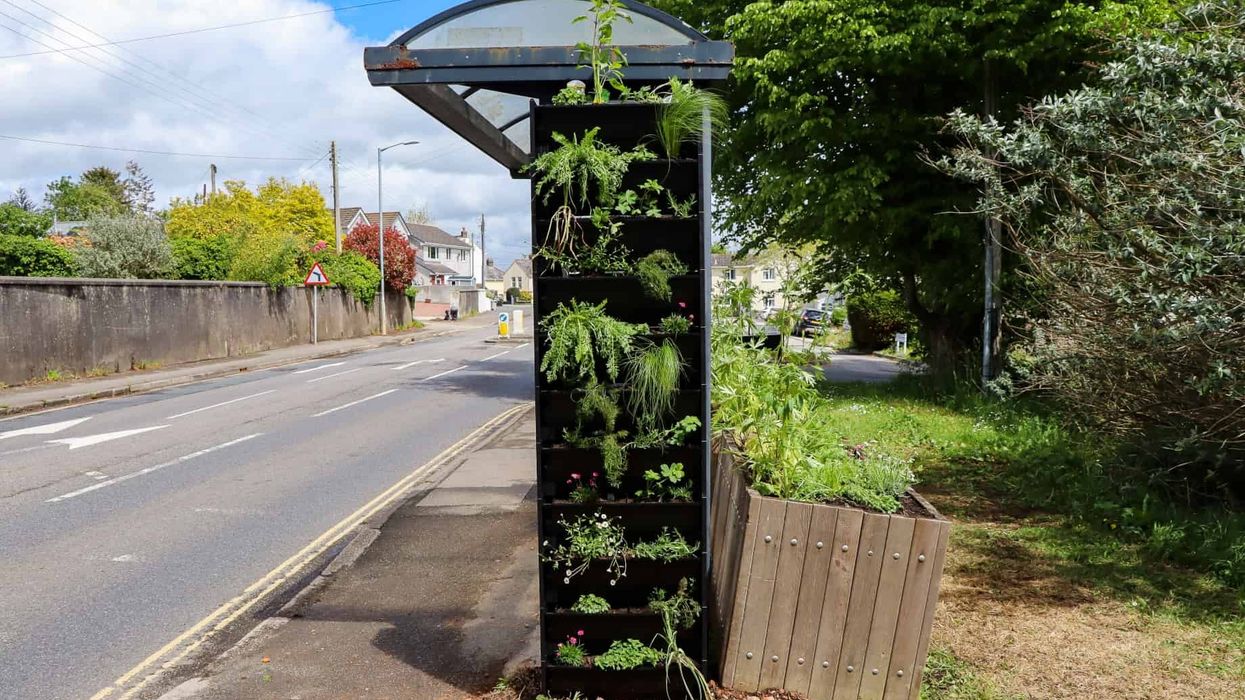
The Eden Project 's team of apprentices have created a colourful network of 'buzz stops' to bring wildlife to bus stops in Cornwall and tackle habitat loss.
Eden has installed a series of vertical planters and large troughs at bus stops in St Blazey, Treverbyn and Roche. The buzz stops have been filled with bee-friendly plants.
"As landscapes become increasingly fragmented it becomes harder for pollinators to navigate their way to sources of pollen and nectar," said Juliet Rose, Eden’s community programmes development manager.
“Buzz stops are a bit like transit cafes providing sustenance as insects move through our communities and help to link up dispersed populations."
Bringing wildlife to UK bus stops
"We hope they also put a smile on people’s faces by bringing some greenery and wildlife to their local bus stops," Rose said.
The initiative is part of the Create a Buzz project and funded by the Garfield Weston Foundation. It comes after 400 mini buzz stops made by local community members in their gardens during the pandemic.
Students from Doubletrees School in St Blazey helped the team of apprentices create the buzz stop outside their school.
"This was an amazing opportunity presented to us by the Eden Project Communities team and clearly shows their emphasis on education and apprenticeship by entrusting us with this project," said Eden apprentice Matthew Toms.
"We focused on using as much repurposed material from within Eden to help create the buzz stops, mimicking the story of the Eden Project itself."
In more news, theEden Projecthas launched a new exhibition called ‘The Art of Cutting Carbon’ that highlights the huge amounts ofgreenhouse gas emissionscaused by the manufacture of everyday materials.
Edenhas also launched its first virtual tour, giving online visitors from across the globe the chance to explore its iconic biomes. Virtual guests can also identify plants and view exhibits.
Bea is a journalist specialising in entertainment, attractions and tech with 15 years' experience. She has written and edited for publications including CNET, BuzzFeed, Digital Spy, Evening Standard and BBC. Bea graduated from King's College London and has an MA in journalism.
The Eden Project’s National Wildflower Centre (NWC) in Cornwall, UK, has warned that rising temperatures in spring and unpredictable autumns are making the task of restoring the UK’s lost meadows more difficult, reports The Guardian.
The centre, celebrating its 25th anniversary next month, promotes initiatives to restore wildflower-rich meadows, 97% of which have disappeared in the last 80 years.
Juliet Rose, the head of development at the Eden Project, notes that changing weather patterns caused by the climate emergency are making it more challenging to find suitable times to sow wildflower seeds. “We have seen sowings fail or plants showing increasing signs of distress when planted in spring – especially through those hot springs we had in the pandemic and this year. If you sow in spring the plants can fry.
“When the National Wildflower Centre started, they would have had two clear windows in which to sow seed: early autumn and spring. What we have seen is an increase in the risk for spring plantings to fail, especially if you can’t control the watering regime.”
The power of sowing seeds
This year has been especially challenging following the Met Office's report that the UK encountered an unprecedented period of warmth and sunshine during spring 2025.
However, the NWC remains optimistic. The main goal of the NWC, established as a millennium project, was to recruit a diverse range of people from various backgrounds to participate in restoration projects, and Rose emphasises that anyone can sow seeds.
Individuals, communities, businesses, local authorities, and non-governmental organisations are supported in planting wildflowers across various locations, including fields, churchyards, roundabouts, business parks, and housing estates.
Projects in Cornwall involve planting over 10,000 devil’s-bit scabious along a main road to support the declining marsh fritillary butterfly population.
The centre has sown wildflowers in inner-city Liverpool wards such as Toxteth, Sefton, and Anfield, and has collaborated with the Canary Wharf Partnership to introduce wildflowers to London Docklands. During a session in Dundee, parkrun participants paused to collect handfuls of seed and scatter them as they ran.
Sam Alford, who leads nature connections at the Eden Project, collaborates with diverse groups of people on planting initiatives, such as military veterans and individuals dealing with physical and mental health issues. “You can see slumped shoulders rising, you can see confidence building and the excitement of seeing something grow. It’s wonderful.”
This summer, new visuals of the highly anticipated ecotourism destination, Eden Project Morecambe, were unveiled. The shell-inspired design, a sister site to the originalEden Projectin Cornwall, is set to open in late 2028 and is expected to draw thousands of visitors.
Echoing the pioneering transformation of a barren clay pit in Cornwall, Oriental Eden recovers an expansive, environmentally damaged landscape spanning a 200-acre site overlooking Jiaozhou Bay. It spans 1,200 acres, with 400 acres dedicated to its core attractions.
This immersive destination combines science education, entertainment, live performances and social initiatives, all designed to connect its millions of visitors with nature.
The engagement approach pays special attention to the water story linked to the local surroundings. This extends the reach of Eden Project ’s charitable mission, demonstrating and inspiring positive action for the planet.
Developing a key message
Event's design priority was to create a narrative and experience that communicates the vital importance of water to us and our planet.
Andrew Lock, associate director and sustainability lead at Museum Studio (a collective of cultural companies that includes Event), says: "A dramatic journey takes the visitor through theatrical moments, from microscopic life in a drop of water, to thunder claps and arid deserts."
The project aims to convince visitors of the importance of water, thereby making a small but essential step towards societal change.
Established in the 1980s, Event was born out of a desire to create change and promote social justice for all. Created through a partnership between a content creator and a designer, the practice has undergone numerous transformations, but the importance of this close dialogue between design and content has remained unchanged.
"Rather than content feeding design, or creating briefs for it to follow, we believe in the importance of a shared space where the magic happens," says Kate Hulme, associate director of strategic communications at Museum Studio.
"This isn’t exactly about form following content, though it often does – it is about innovative ideas coming from a team of inspired people sitting round a table together.
"The studio thinks of itself as world builders. We think about where the threshold between normal life and our storytelling space is, and what world we are creating on the other side of that. What rules apply? What normal rules don’t apply? And what role does the visitor play in this narrative space?"
Museum design in an age of climate urgency
Sustainable practice is extremely important, the studio says, but Event believes it has other key roles to play in addressing climate injustice and biodiversity loss.
"One of the most important things we can do is to change the narrative,’ says Lock. "We think about where we can help museums be regenerative as well as sustainable - as well as preventing harm, how can they add benefit? Museums are in an important position – there is a lot of trust in them, largely, and a great many visitors pass through their doors. They have the potential to help people think differently about our place in nature."
"We consider ourselves fortunate to have built up quite a portfolio of natural history projects,’ adds Hulme. "One thing we keep finding ourselves coming back to when we’re in the early stages of these projects is our responsibility in addressing the lingering sense that humans are separate from and superior to nature."
This, says Event, is the way museums can influence society and cultural behaviour, particularly when it comes to narratives around our planet and our place in it.
Through local co-creation initiatives, the museum sector can contribute to societal change that can help ensure climate justice and reduce biodiversity loss, says Lock. "The benefit of co-creative practice is that it can be fantastically specific to communities and local needs."
Creating an emotional connection
Event also recently placed second in the international design competition for the new Estonian Natural History Museum.
With this project, Event's goal was to move people from feeling powerless to active advocates, shifting them from emotional detachment to loving nature and wanting to protect it. The team wanted people to develop a respectful, equal relationship with nature, acknowledging human damage, hoping this would influence better decisions.
The future, the studio says, lies in handing over control to communities to shape the narratives, and this means designing in an entirely different way. "As designers we like control,’ says Lock, "but if you design like that, you don’t allow the community in. We need to design in a way that’s a framework rather than a solution, and that’s the only way you’ll get true community expression into your design.
"At the heart of it, it’s about giving people the tools to advocate for themselves and their environment. That’s how we see our role – empowering people to ask for and advocate for change."
Earlier this year, Event celebrated the Carl Nielsen Museum’s nomination for the 2025 European Museum of the Year Awards. In this project, Event aimed to create a unique space to match the quality of the composer's work.The agency worked with a panel of internationally renowned Nielsen experts from the University of Copenhagen to identify the key musical works and moments in time that provide insights into his complex creative spirit.
The Eden Project has opened a new ecotourism destination in Qingdao, China inspired by its original site in Cornwall, UK.
Named Oriental Eden, the new attraction is inspired by nature and the local landscape. It aims to engage visitors "with the history and future, beauty and wonder, challenges and hope tied to water", Eden said.
Oriental Eden overlooks Jiaozhou Bay and is surrounded by water. It is located on 200 acres of environmentally damaged barren land, originally used for salt production and then prawn breeding.
The new Eden is operated and owned by Chinese company Jinmao Holding, which worked with the Eden Project team for 10 years on the regenerative tourism project.
For China, Eden has created an interactive water experience featuring experiential worlds like the Storm Forest, a giant tropical biome combining living landscapes and an immersive experience.
The project also showcases the regeneration of the site, and explores the importance of water.
Interactive water experience at Oriental Eden
"It communicates the importance of water and the ongoing water challenge in a meaningful and fun way and is a positive and optimistic place for environmental and social change, extending the reach of Eden Project's charitable mission to demonstrate and inspire positive action for the planet," Eden said.
Earlier this month, Eden released new images of its upcoming site in Morecambe, Lancashire. The shell-inspired attraction is due to open in late 2028.
The Eden Project is a pioneer in the world of ecotourism. It opened its first biomes in a disused Cornish clay pit in 2001.
Now, new Eden sites are planned for South America and Central America, as well as Australia and New Zealand.
In the UK, projects are underway in Dorset, Northern Ireland, and Scotland.
All new Eden destinations focus on the individual challenges that affect each location, such as water, food, biodiversity, or soil.
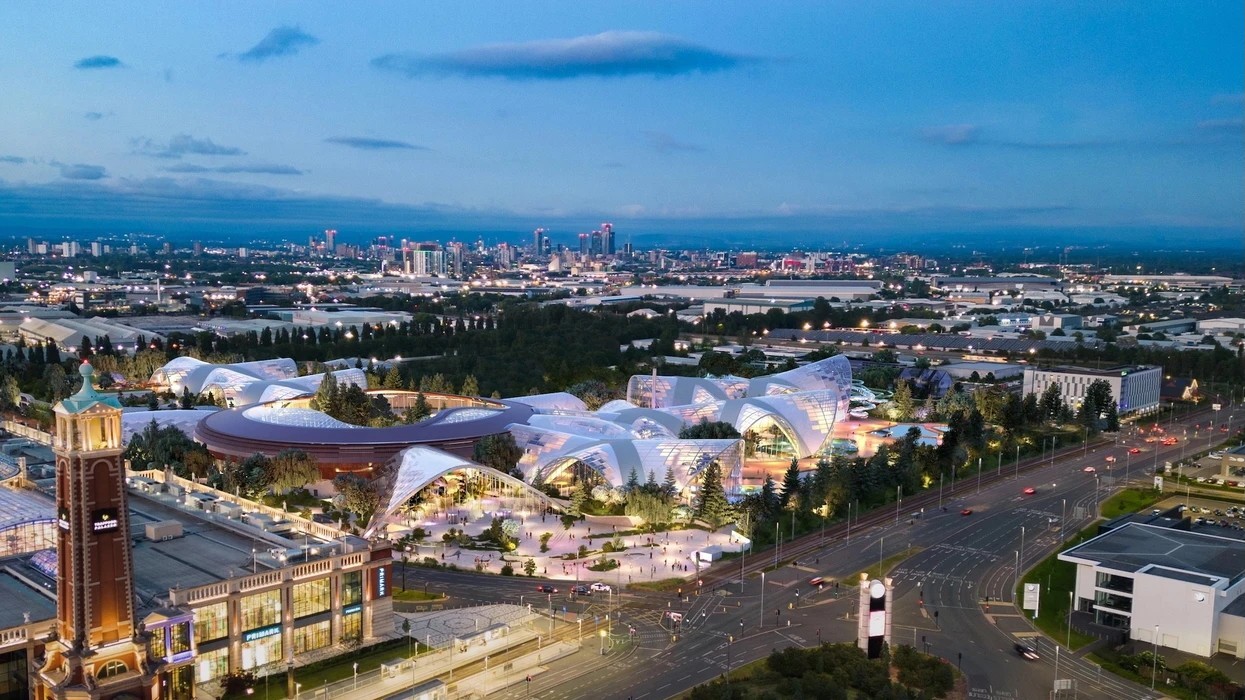
New visuals of the highly anticipated ecotourism destination, Eden Project Morecambe, have been unveiled. The shell-inspired design, a sister site to the original Eden Project in Cornwall, is set to open in late 2028 and is expected to draw thousands of visitors.
"We’ve been working really hard behind the scenes developing incredible plans for this shell-inspired structure, designed by award-winning architects Grimshaw, which will house extraordinary living landscapes and immersive worlds inhabited by world-class art, performance, storytelling, interactive installations and play," said Eden Project in a statement.
"With Morecambe Bay’s tidal range one of the largest in the world, the natural rhythms of nature will underpin all aspects of this exciting project.
"Inspired by the natural geometries, beauty and efficiency of seashells, the architecture of Eden Project Morecambe will be instantly recognisable and will be an emblem of sustainability with a deep connection to place, respecting and complementing the highly valued heritage landmarks nearby."
"A destination from the community, for the community"
Inside the structure, there will be two Realms – the Sun and the Moon. The Realm of the Sun will feature a bright, tropical landscape from the near future, where humans have learned to heal and reconnect with the natural world. Visitors will be invited to engage and reflect through interactive exhibits, living structures, storytelling, and workshops. The Elder Tree, a stunning 20-meter sculpture, will define the space.
Meanwhile, the Realm of the Moon will showcase the extraordinary rhythms of Morecambe Bay and its native species. It will feature a hyper-real rock pool where accelerated cycles of tides, days, and seasons create a dynamic immersive world filled with storytelling and discovery.
More information regarding two additional distinctive Realms – a Four Seasons Garden and a Public Realm – will be shared soon.
Andy Jasper, chief executive officer of the Eden Project, says: “Today is an exciting day as we share the developed designs of Eden Project Morecambe for the very first time.
"This project is profoundly important to us all. It is not just a project for Morecambe, but for the whole of the UK, and we are delighted to share how the design process is progressing... Eden Project Morecambe is going to ultimately become the destination from the community, for the community and is developed in tandem with our brilliant partners in Morecambe and throughout the North West and will be something for us all to be proud of.”
The project is being delivered in partnership with Lancaster City Council, Lancaster County Council and Lancaster University.
Earlier this year, Eden Project Morecambe appointed its first official employee, John Pye. Taking on the role of project director, he is based in the town of Morecambe and will drive the project to completion.
Pye will work with a multi-disciplinary team overseeing construction, horticulture and the visitor experience, also considering Eden’s vision of public benefit andsustainability.
Ahead of greenloop 2025, blooloop’s annual conference focusing on sustainability in visitor attractions, we take a look at some of the top trends to watch in the industry. From measuring Scope 3 emissions to regenerative tourism projects, climate-conscious developments in the attractions business show attempts to provide a greener experience.
2024: the warmest year on record, breaking 1.5°C
And there’s no time like the present. The World Meteorological Organization (WMO) has confirmed that 2024 was the warmest year on record, based on six international datasets. The past 10 years have all been in the top 10 in a concerning streak of record-breaking temperatures. It’s likely that 2024 was the first calendar year with a global mean temperature of more than 1.5 degrees above pre-industrial levels.
[The] assessment from the World Meteorological Organization (WMO) proves yet again – global heating is a cold, hard fact.
Individual years pushing past the 1.5 degree limit do not mean the long-term goal is shot. It means we need to fight even harder to get on track. Blazing temperatures in 2024 require trail-blazing climate action in 2025. There’s still time to avoid the worst of climate catastrophe. But leaders must act – now.
Join us at greenloop
Join us at greenloop 2025 to learn more. This year, the original sustainability conference focused on the global visitor attractions industry has another inspiring line-up of speakers. Now in its fifth year, this is a must-attend event for anyone interested in visitor attraction sustainability.
blooloop director Rachel Read said in advance of greenloop:
“2025 is a pivotal year for climate action. We’re just five years off 2030, we’ve yet again experienced the hottest year on record, and the US is slashing programmes to limit global warming. The science is clear; climate change is real, happening and a threat to humanity. We can still make a difference if we take action now. But we can make more of a difference if we do it together, so please join us at greenloop.”
“We work really hard each year to find the best – and most qualified – speakers for greenloop, as we know that climate change can be an intimidating topic to try and tackle alone. We promise to do everything we can to help support you in your sustainability journey.”
Some of our key sustainability trends for 2025 carry over from last year’s predictions. Meanwhile, new movements include a look at strategic climate funds and ride innovations in theme parks. Keep reading to find out more.
Regenerative tourism experiences
Kicking off blooloop’s top 2025 sustainability trends is eco-tourism, specifically regenerative tourism. This aims to contribute to the restoration and enhancement of destinations and their local communities.
Red Sea Globalin Saudi Arabia, for example, is redefining project development with a focus on luxury, sustainability, and innovation. By 2030, it aims to build 50 resorts along the kingdom’s Red Sea coast, each committed to environmental protection.
“We’re doing this by enhancing our habitats. We’re planting mangroves, seeding seagrass, working on coral regeneration projects, and improving the land vegetation. In addition, we have conservation projects that we’re embedding into the visitor experience,” Lindsay Madden-Nadeau, senior director of wellness strategy at Red Sea Global, told blooloop.
The Eden Project is another pioneer in the world of eco-tourism. It opened its iconic biomes in a disused Cornish clay pit in 2001. Now, it’s one of the most visited attractions in the UK.
Eco-tourism at Eden and The Red Sea
Eden Project International was first established in 2014 and is spreading the green concept worldwide.
New Eden sites are coming to South America and Central America, as well as China, Australia, and New Zealand. Meanwhile, in the UK, projects are underway in Lancashire, Dorset, Northern Ireland, and Scotland. All new Eden destinations focus on the individual challenges that affect each location, such as water, food, biodiversity, or soil.
Hawaii Visitors and Convention Bureau CEO Aaron Sala said at the Travel Weekly Hawaii Leadership Forum in April, "Tourism as we have known it is over."
He added: "The traditional model is not just outdated, it is extractive, colonial, dangerously romantic. It asked communities to perform authenticity while their futures were auctioned off for occupancy. It celebrated arrivals while silencing the voices of those displaced by rising rents and eroding shorelines.”
Tech for a better world
Tech for good, or tech for a better world, means the use of technology to address social or environmental challenges. Another of blooloop’s top sustainability trends for 2025 focuses largely on robots and drones. Autonomous innovations are being put to work by operators across the world.
When it comes to robots, the UK’s Blenheim Palace has been testing a robot dog monitoring the impact of climate change. In Saudi Arabia, Red Sea Global has a state-of-the-art robot to clean its beaches.
As for drones, Ocean Park Hong Kong’s conservation foundation is working with scientists to protect local horseshoe crabs using the unmanned aerial vehicles and artificial intelligence (AI).
Via a report in the South China Morning Post, the local population of endangered horseshoe crabs has declined by 90 percent. Ocean Park’s response is an AI system to accurately distinguish horseshoe crabs from other small objects in mudflat areas.
“We believe that by using AI technology, we can effectively and efficiently collect data on the number of local horseshoe crabs,” said Howard Chuk Hau-chung, director of the Ocean Park Conservation Foundation.
AI, robots and drones for conservation
Chen Xi, a research assistant professor at the Chinese University of Hong Kong and part of the project team, said:
“What used to be an hour of collecting data by eye and counting the crabs one by one can easily be done in a few minutes with unmanned drones.”
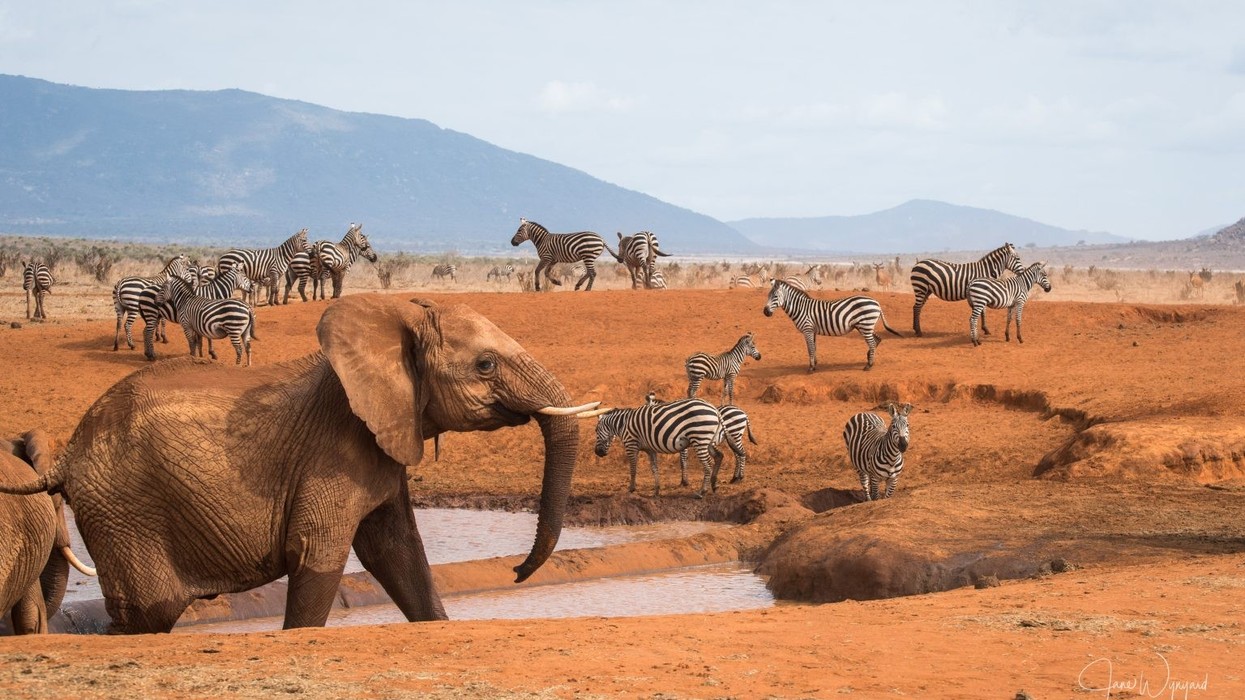
Back in the UK, UK zoo Marwell Wildlife is developing drones to monitor endangered species in the wild in partnership with the University of Southampton. This drone technology uses thermal imaging, high-definition cameras, and AI to keep track of animals such as snow leopards in Kazakhstan and Grévy’s zebra in Kenya.
Philip Riordan, conservation director at Marwell Wildlife, said:
“The potential applications of existing technologies for wildlife conservation are already huge and largely untapped. This project will use what is available and, with our partners, drive further innovations that can help conservationists around the world.”
Ride innovations in theme parks
Electrifying and innovating vehicles and rides in visitor attractions is one of our top sustainability trends for 2025. Recently, parks like Universal Studios Hollywood, Disneyland and Efteling have led this movement. Universal’s California park now has a Studio Tour fleet powered by electric instead of diesel-hydraulic engines. Disneyland’s Autopia car ride is going electric from gas engines. Efteling’s steam trains are also being converted from coal to electric.
Ghibli Park also houses eco-friendly Catbus electric vehicles. These are designed to both look and feel like the Catbus from My Neighbor Totoro.
When it comes to sustainable ride innovations, these will also be on show in the new Mattel Adventure Park locations in Glendale, Arizona and Kansas City, Missouri. Highlights in Mattel Adventure Parks include Hot Wheels-themed coasters, a Barbie Beach House, and Thomas & Friends attractions.
The Hot Wheels coasters are called Bone Shaker: The Ultimate Ride and Twin Mill Racer. The former is an 84-foot-tall family coaster. The latter offers a double loop and two corkscrews. Mark Cornell is president of Epic Resort Destinations, the developer of the parks. He told blooloop the team has created “one of the most efficient launching coasters in the world”.
Energy-efficient coasters and EVs
He added: “All of our numbers say that we’re probably using 70 percent less power with this method. That is simply amazing. I want to scream that from the rooftops, to be able to accomplish this level of efficiency.”
Data centre energy used to heat
A new addition to our top sustainability trends in 2025 is the potential use of heat generated by data centres to heat pools inwater parks and other visitor attractions.
In North America, the top 20 water parks by attendance welcomed a combined 12.6 million guests, according to the 2023 TEA/AECOM Theme Index. The Asia-Pacific region’s water parks attracted a total of 13.7 million visitors. These parks are run by global operators like Chimelong, Disney and Universal.
Using excess heat from data centres could be implemented at water parks across the world. So far, it has been trialled in the UK with a £200 million investment from British energy group Octopus Energy. A green tech firm called Deep Green piloted the scheme at a public swimming pool in Exmouth, Devon, using energy from a computer data processing centre to heat the water.
Mark Bjornsgaard, chief executive of Deep Green, said the project could be expanded beyond pools to other sites. He told the Guardian:
"If just 1 percent of the data centre demand in the UK operated on our servers, we could deploy in every public pool in the country. The backing from Octopus is the first step."
Potential solutions for water parks
He added: "This is no longer just about pools, however. We have received interest from a wide range of other potential partners who could make use of our free heat, such as district heating networks.”
We need innovative solutions to unusual problems
Zoisa North-Bond, chief executive of Octopus Energy Generation, said:
“To tackle the energy crisis head-on, we need innovative solutions to unusual problems. By using excess heat from data centres to slash energy bills for communities across the UK, Deep Green solves two problems with one solution.”
Measuring Scope 3 emissions
Another of our sustainability trends for 2025 is measuring Scope 3 emissions. This means keeping track of all emissions associated with a company up and down its supply chain.
Merlin Entertainments is a vital champion for sustainability in the sector as the second-largest visitor attraction operator in the world. Dare Ilori, sustainability director at Merlin, spoke to blooloop about accurately measuring Scope 3 emissions in an ever-growing company.
“Scope 3 is not something that you just snap your fingers and get,” he said in 2024. “But I’m hoping that by this time next year, I’ll be able to say our Scope 3 is now cleaner and clearer than just spend data.”
Another company considering Scope 3 is Walt Disney Imagineering:
Imagineering’s design studio executive Emily Dow said: “I really hope we can work together to push the industry to really look at Scope 3 emissions. I hope we can encourage the manufacturers and suppliers to provide greener alternatives. I also hope we can encourage our government partners and our regional agencies to invest in sustainable infrastructure projects."
In Spain, PortAventura World is working with its suppliers to measure and reduce the carbon in purchased goods and services. Choni Fernandez Veciana, director of central services and sustainability at PortAventura, said:
“We are going to rank our vendors. We are also going to reward the ones who have this commitment with emissions reduction.”
Also, Guggenheim Museum Bilbao was the first museum in Spain to measure the carbon footprint of its direct and indirect emissions. In the UK, Blenheim Palaceaims to become carbon neutral across Scopes 1 to 3 by 2027. It also hopes to be carbon negative by 2050.
Environmentally-friendly cruises
From phasing out single-use plastics to using low-emission energy sources, the cruise industry is working to make cruise holidays more sustainable. Disney is leading the way with a programme of innovation and research. It also has a company-wide commitment to reach near net zero by 2030.
Initiatives at Disney Cruise Line include reducing Scope 3 emissions and going plastic-free. It is also powering its ships with low-emission liquefied natural gas (LNG), ultra-low-sulphur fuel and green methanol.
On the Disney Wish, the company is recycling energy, saving fuel through design, using energy-efficient heating and air conditioning systems, and utilising an advanced energy-saving wastewater treatment system.
In a statement in 2022 announcing the launch of Disney Wish, Sharon Siskie, senior vice president and general manager of Disney Cruise Line, said:
“All of our Disney Cruise Line ships were built with some of the most advanced systems available at the time. We continue to invest in our fleet by incorporating the latest technology that helps us minimize our impact on the environment. The Disney Wish serves as a floating lab that will help us discover how new innovations can be used throughout the rest of our fleet to help us meet our environmental goals.”
Sustainability innovations at Disney Cruise Line
Barry Compagnoni, Disney Cruise Line’s VP for safety, security and environmental policy and compliance, told blooloop in a 2023 interview:
“We want, from a cruise line perspective, to be a leader as we move with the industry.”
Disney Cruise Line’s sustainability initiatives include Lookout Cay at Lighthouse Point, a new island destination in the Bahamas. Disney aimed to minimise the environmental impact of the design and construction of the site. It developed and operates Lookout Cay sustainably in accordance with its 2030 environmental goals.
Dr Mark Penning, vice president for animals, science and environment at Disney’s parks division, told blooloop:
“I have been so delighted to work in a company where protecting the environment, protecting the magic we talk about, is just as important as the magic itself.”
Another cruise company attempting to make its fleet more sustainable is Ponant. Last year, it became the world’s first cruise line to earn a Green Globe certification. Ponant was also the world’s first cruise line to abandon heavy fuel oil, with the whole fleet using low-sulphur marine gas oil from 2019.
Among Pontant’s sustainability initiatives is a fleet equipped with catalytic systems to reduce nitrogen oxide emissions, and the phasing out of single-use plastics.
Strategic climate funds
One of our sustainability trends for 2025 looks at making an impact through strategic climate funds in the arts and museums sector.
The strategic climate fund (SCF) scheme has been conceived as a solution to the problems associated with offsetting by the Gallery Climate Coalition (GCC), an international membership organisation providing environmental sustainability guidelines for art institutions and more.
The initiative comes as commonly-used climate interventions likenet zerotargets, carbon credits and tree planting come under fire. Per the GCC, strategic climate funds challenge the mainstream approach to financing environmental initiatives, which still relies largely on the conventional carbon offset market.
The Gallery Climate Coalition advises its members against the use of conventional carbon offsetting and individual net zero targets, which can allow for misleading claims that an organisation is carbon neutral. Here’s what the group says:
“Carbon offsetting means paying someone else to reduce or remove emissions that will ‘cancel out’ your own.
“Typically, these schemes sell carbon credits that equate to the quantity of CO2e emitted. This money is then spent on projects that either claim to draw CO2e out of the atmosphere, like tree planting, or prevent future emissions, like renewable energy projects.
“In practice, this often means that organisations reduce some emissions but ultimately use potentially ineffectual offsetting schemes to reach ‘net zero’."
Tackle individual emissions and support climate action
Setting up a strategic climate fund involves allocating money into a set fund each year and then using the money to support climate action. Funds could go towards external organisations working on the climate crisis. Or towards internal sustainability initiatives that remove emissions and waste directly from operations and supply chains.
The idea is that rather than spending money on conventional carbon offsets, museums and other arts organisations should measure their own emissions and create an action plan for reducing them by at least 50 percent by 2030, and set aside the additional money to support frontline climate projects without claiming that these neutralise or cancel out their own emissions.
The GCC’s initiative is a new way to tackle individual emissions and take climate action. As a solution, it could be taken on by more visitor attractions, such as zoos, aquariums, theme parks, water parks and immersive destinations.
Retrofitting for sustainability
Retrofitting for sustainability is another one of our top trends for 2025. The process involves upgrading existing buildings and spaces to improve energy efficiency and reduce environmental impact. Retrofitting can include improvements such as insulation, window upgrades and moving to renewable energy sources.
Merlin, for example, invested £2 million into a total of 50 green energy projects at its global attractions last year. Key projects include upgrades to LED lighting systems at Gardaland Resort, resulting in substantial energy savings.
At Sea Life Charlotte-Concord in the US, Merlin has installed a new pump system to improve energy efficiency and reduce noise. Legoland Korea has adopted on-site solar photovoltaic installations to generate renewable energy and reduce its reliance on traditional energy sources.
Paultons Park in the UK is also planning a new £1.5 millionsolar energy project to reduce its impact on the planet. Other green initiatives at the park include two grass-roofed buildings, water usage reduction technologies, and energy efficient building materials.
World-class theme parks invest in solar
Other theme parks investing in solar power include Efteling in the Netherlands, PortAventura World in Spain, and Six Flags, SeaWorld and Disney parks.
The redevelopment of old or unused sites into visitor attractions is also a growing trend for this year. One example is from museum design company the Creative Core, which is designing and building a new attraction in Wales called Stori Brymbo. This is located on the former Brymbo iron and steel works site.
A similar project is the Battersea Power Station transformation. Sam Cotton, head of asset management at Battersea Power Station Development Company, told blooloop:
“The two Turbine Halls are excellent examples of how the building’s character has been retained with their original crane gantries, steel beams, water gauges and faience tiles still on display, whilst at the same time being adapted for modern use.”
Increasing community engagement
Last but not least on our list of the top sustainability trends for 2025 is community engagement, as more and more operators in the attractions sector look to engage guests, suppliers and communities with climate change and sustainability.
This can mean involving visitors, local residents and stakeholders in developing and implementing climate action plans to build a more informed community, with initiatives designed to be relevant and effective.
Monterey Bay Aquarium, for example, has a strong focus on conservation and is a founding member of the Aquarium Conservation Partnership (ACP), a coalition aimed at inspiring collective actionfor ocean and freshwater conservation.
Rosa the otter at Monterey Bay Aquarium
To engage its online community, the aquarium uses social media and other platforms to campaign and encourage climate action. In one of these efforts, it provided ways for followers and guests to write to congress regarding environmental laws. Another gave solutions to pollution caused by fish aggregating devices.
Donation drives
Also engaging the community is the Columbus Zoo and Aquarium. For this year’s Earth Day, the zoo provided eco-friendly activities and donation drives. People could bring various recyclable or reusable items to designated drop-off areas, and the zoo hosted a handheld electronics recycling drive as part of an effort to protect gorilla habitats in the Democratic Republic of the Congo.
Across the country, we interact with nature in different ways
Beyond zoos, the Natural History Museum in London has funded 12 regional museums and cultural partners across the UK to run climate action events this year. These range from workshops in secondary schools to climate exhibitions in local museums.
Tom Bevan, head of national programmes at the museum, said: “We’re proud to support the fantastic work our partners are doing to empower communities to connect with issues facing the natural world."
He said: “Across the country, we interact with nature in different ways. This programme is perfectly placed to amplify stories from different communities and drive meaningful action for a future where people and planet thrive.”
greenloop 2025
greenloop, blooloop’s online conference focusing on sustainability in visitor attractions, is now in its fifth year.
This year's greenloop will feature industry leaders, sustainability experts, insightful case studies and signposting to places where delegates can get more information. Our sessions are relevant across all sectors from theme parks and water parks to zoos and museums.