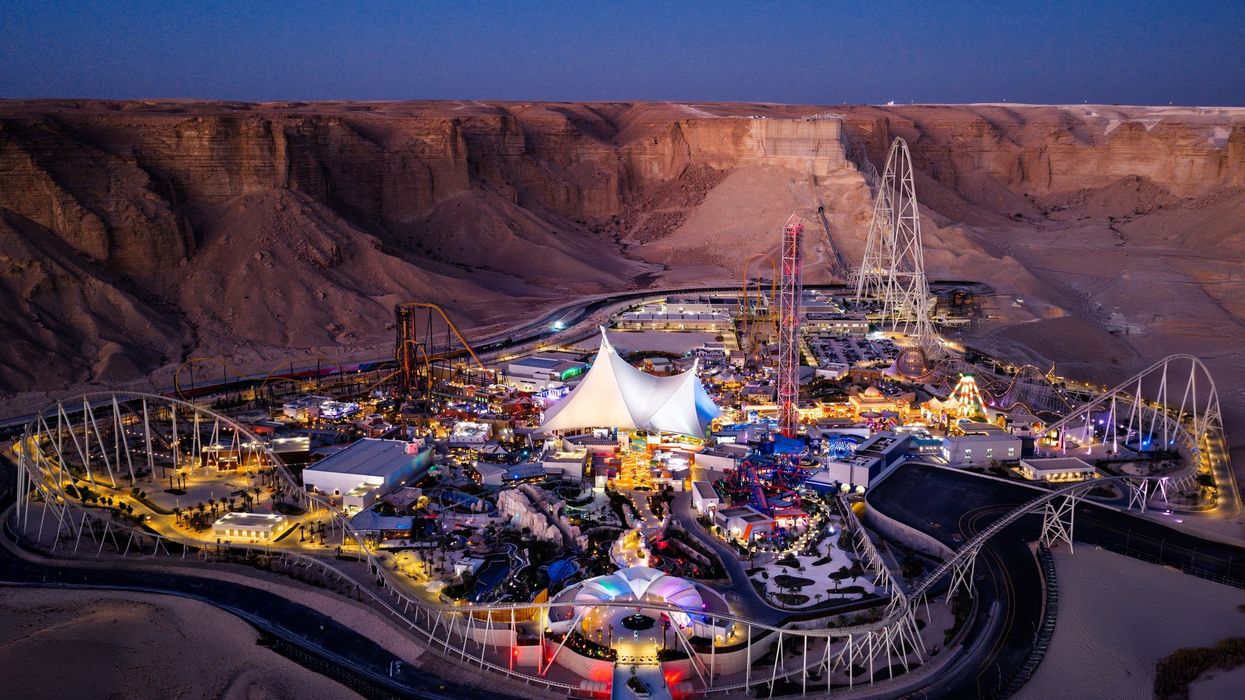

If you’re a fan of the industry, you have probably seen more than a few new videos of the new Six Flags Qiddiya City theme park that opened on New Year's Eve.
Leading up to the grand opening, there were several preview events with invited guests attending the park, which led to a lot of social media footage flooding the internet for weeks.
One item that caught my attention, however, was that most of the marketing and official footage shot and posted by the park itself during this period almost exclusively showed how the park looked after dark.
This was not a bad choice by any means, as the footage was beautiful and clearly the park put a lot of thought (and money) into installing an incredible lighting package to make all the buildings and attractions really shine and look magical after dark.
Given that Six Flags Qiddiya City is located in Saudi Arabia, a country known for extreme heat in the summer months, able to exceed 113ºF / 45ºC, it dawned on me that the park may actually have been designed to focus more on operations after the sun goes down.
As it turns out, this is actually true, as a quick look at the park’s current operational schedule in late January to February (it’s currently still Winter in Saudi Arabia) shows that the park itself does not even open until 4 pm and stays open daily until Midnight, taking full advantage of all that incredible night lighting throughout the park.
The magic of theme parks after dark
To me, this is something of a dream, as one thing I’ve always enjoyed is theme parks staying open long after dark. For lack of a better expression, parks just become more magical after dark in so many ways.
Even if you’ve been in the park all day long, as the sun sinks behind the skyline, there is a subtle but powerful transformation that takes place.
The screams floating through the air don’t fade; they almost seem to sharpen. The music not only feels louder, but also seems to become less muddled in the ears and travel farther. The lights glow brighter against the darkening sky. Familiar rides suddenly feel unfamiliar again.
After dark, theme parks don’t just stay the same… they transform into something else.
This effect is even more pronounced on the rides! Roller coasters suddenly feel like they are moving even faster than before. The extreme heights of the drop towers now feel ever taller than before, as you can no longer quite make out how far down the ground actually is.
Even gentle family rides seem to take on a more quirky and fun attitude after dark.
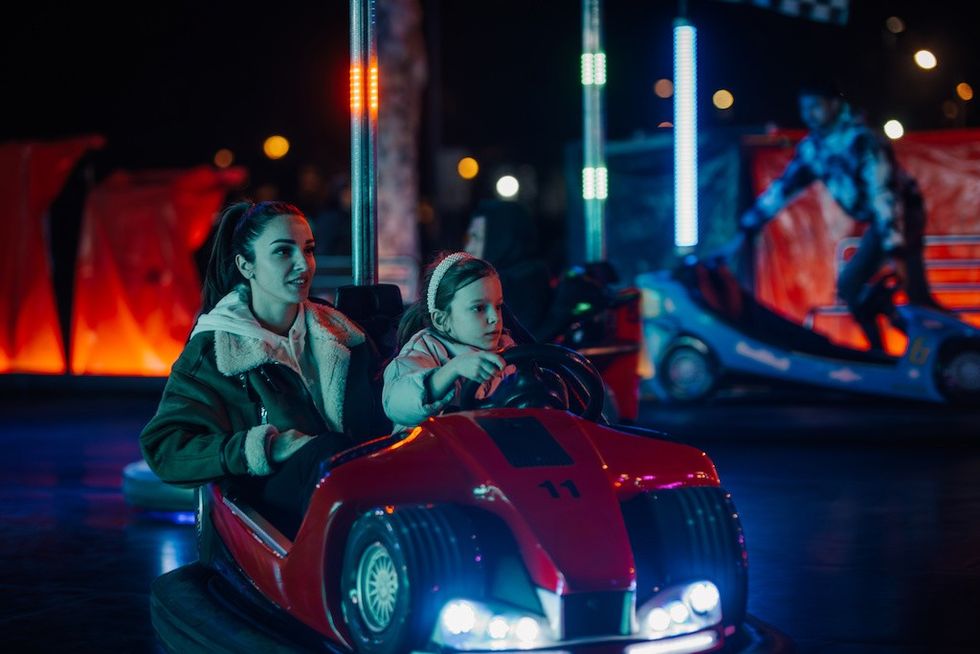
Designers know this, the engineers plan for it, and seasoned fans chase it, but what exactly makes theme parks after dark so special?
The answer lies in a careful blend of psychology, engineering, lighting and sound design, atmosphere, and storytelling… all working together to turn thrills into legends.
As with so many other design aspects in theme parks and attractions, the goal is to leverage how the human brain responds to the world around it. Human perception is deeply tied to vision, and during daylight hours, our brains constantly calculate distance, speed, and potential risk based on visual cues.
Once darkness settles across the land, many of those visual cues disappear. Climbing aboard a roller coaster after dark, you can’t see the full layout ahead of you. Hills vanish into the dark sky above, and twisting tracks disappear into the shadow realm below.
Without a solid view of what is coming next, the human brain will begin to fill in those gaps with expectations… which are typically highly exaggerated.
Anticipatory fear
Psychologists refer to this effect as “anticipatory fear”, where the unknown is often more frightening than what we can clearly see. This fear of the unknown triggers your body to release a hormone cocktail of endorphins, dopamine, norepinephrine and adrenaline, as part of the activation of the body’s fight-or-flight response system.
So, despite a roller coaster offering identical speeds and heights in the daytime, a ride on the same attraction at night just feels a bit different. The ride itself hasn’t changed at all. But your perception of it has.
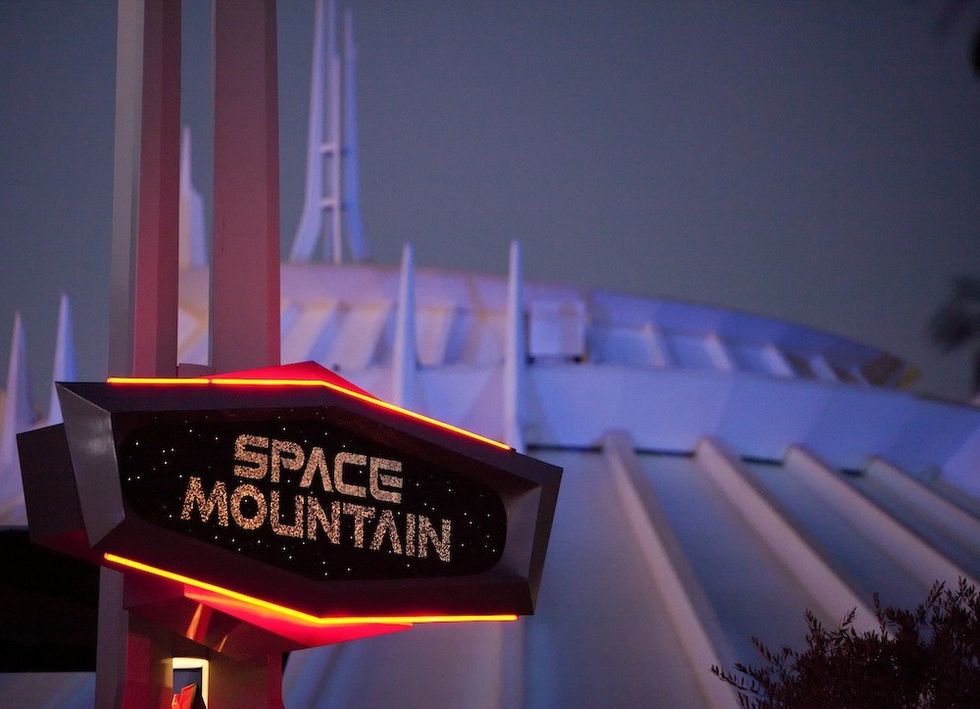 Space Mountain at Disneyland Resort
Disney Imagineers took advantage of this effect long ago when they designed the legendary attraction that would take the world by storm: Space Mountain. The Imagineers understood that the sensation of motion just felt so much faster in the dark once your surroundings became invisible.
In the darkness, your peripheral vision is reduced. You lose sight of reference points like trees, buildings, or distant landmarks, and without those anchors, your brain interprets motion as more intense.
Putting this to the test on the first Space Mountain that opened at Walt Disney World in 1975, a roller coaster that really only has a top speed of 27mph, suddenly feels like you’re taking guests on a wild and out-of-control experience, travelling at unheard-of speeds through the galaxy.
It isn’t just Space Mountain, though; this amplification effect works on all of the rides. Swing rides feel higher and out of control, the drops on the log rides feel steeper, and spinning rides seem to move in even faster and have more chaotic patterns when your eyes don’t have a solid point to focus on.
Enhancing all the senses
While I’ve discussed what happens when you can’t see, there are also a number of enhancements that can affect how you feel based on what you can see. For this, proper lighting design is a key element of theme park design that is often overlooked by parks that close at sundown.
When the sun goes down, every aspect of your park or attraction can then take on a more theatrical appearance to convey a sense of purpose or general atmospheric feeling. Pathways glow softly, buildings are bathed in colors and iconic structures are lit to appear larger, deeper, and more dramatic than they do in the daylight.
The choice of colors used is often carefully chosen as part of the overall storytelling required for the area. Warm colors can create a peaceful or comforting atmosphere, while cold ones can be used to create an anticipation of danger or a sense that you may be somewhere you aren’t wanted.
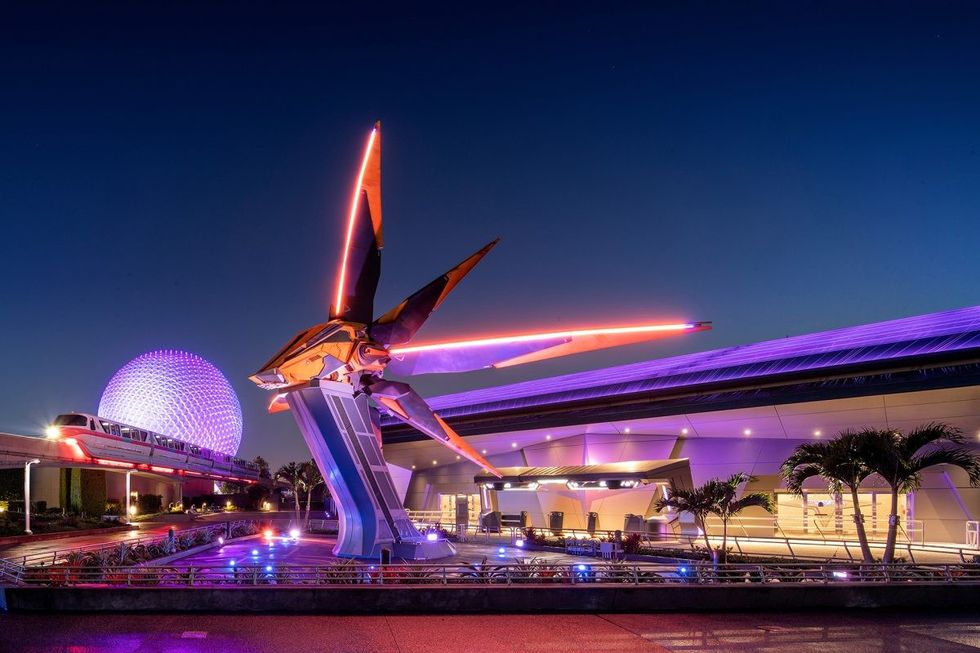 Guardians of the Galaxy: Cosmic Rewind at night, Walt Disney World
Even the use of slow-pulsing lights, strobe effects, or areas of deliberate darkness is designed to direct your gaze towards what the designers want you to see.
Your sense of smell is also amplified in the dark, and with modern scent-effect systems, guests can feel like they’re in an evergreen forest or smell the danger of a nearby fire burning wild.
Perhaps the need is to recreate the still, moist air of an underground cave, maybe adding the foul smell of something dead down there with you, just out of sight in the darkness. All it takes is a hint of the right scent, and your mind will fill in all the blanks and run wild with the endless possibilities.
Sometimes designers use the cover of darkness to heighten your other senses.
Sound effects are used to create feelings through not only music but also subtle audio cues. The creaking of wooden boards, the sound of water trickling in the distance, crickets chirping in the darkness… all while masking the unwanted mechanical sounds of the ride system.
Theme parks can take advantage of this by subtly adjusting soundscapes after dark. Music may be slightly louder. Bass tones feel deeper. Effects such as wind, rumbling, or heartbeat-like rhythms become more noticeable.
The sounds programmed for an attraction are not just filler; they shape an emotional response that can become a primary driver of fear or excitement.
Epic Universe after dark
While taking a preview tour of the new Universal Epic Universe last spring, several interesting facts about the music created for the park’s central Celestial Park area were explained to me.
Celestial Park serves not only as the main entrance to the park, but also as the gateway to each of the five themed portals guests pass through to get to the different themed worlds. To support the atmosphere of Celestial Park, Universal created over 40 hours of audio for the land, including 14 hours of original music created just for the park.
What you are listening to at any given moment will not only depend on your location within Celestial Park, but also on what time of day or night it is.
The team took care to create entirely different soundscapes based on whether it was light or dark outside in order to create the proper atmosphere, no matter if you are near a particular portal, passing through Luna’s Court of the Moon or standing in front of Helios’s Court of the Sun.
The goal was to create a living, breathing soundscape that would evolve as you passed through, rather than just a loop of audio tracks on repeat.
Thinking back to that Six Flags Qiddiya City footage and comparing it to footage from other large parks and resorts, there is a reason so many advertisements feature glowing castles, neon rides, and skies full of fireworks (and now drones) set against clear, dark skies.
Darkness simply amplifies the atmosphere. Shadows create depth, reflections of light on water add movement, and even fog, mist, and steam look more dramatic when lit for the effect.
Even simple things like illuminated attraction signs or glowing lights on a ride vehicle give everything a more cinematic feel, with everything moving with a purpose.
Despite knowing that everything was set, programmed, and created for a reason, these effects tend to make the faux amusement park lands feel more like a genuine living world.
The warm glow and festive atmosphere of a fantasy landscape around something like The World of Frozen, the dark, moody realm of monsters and mad-science gone wild created for Universal’s Dark Universe, or the electric and sleek neon glow of a modern cyberscape as seen around the Tron: Lightcycle/Run attraction.
These attraction spaces do feel like living worlds that encourage guests to look around and emotionally engage with their surroundings rather than just rush from ride to ride.
Nighttime spectaculars
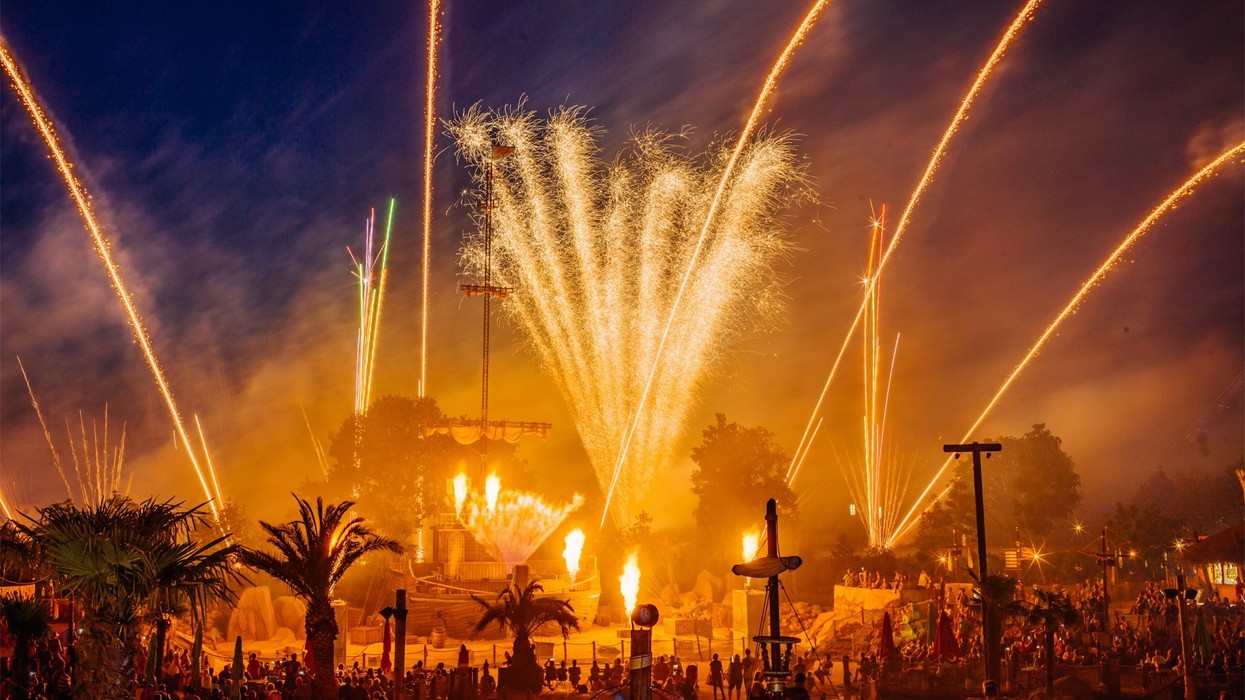
Then there are the nighttime spectaculars full of fireworks, projections, lasers, drones, illuminated fountains, water screens and pyrotechnical pillars of flame.
For many parks, the whole nighttime experience leads into one big park-wide show that serves not only as a sort of “goodbye kiss” for the night, but also as a way to deliver a bit of an emotional payoff for everything the guests have experienced throughout their stay.
These shows combine music, storytelling, and lights in ways that can deeply resonate with guests. After all, for most, it has been a long day full of emotional highs and lows, thrills of joy and shrieks of fright, and by the end of the night, pure fatigue is setting in, lowering some of those emotional barriers we all carry.
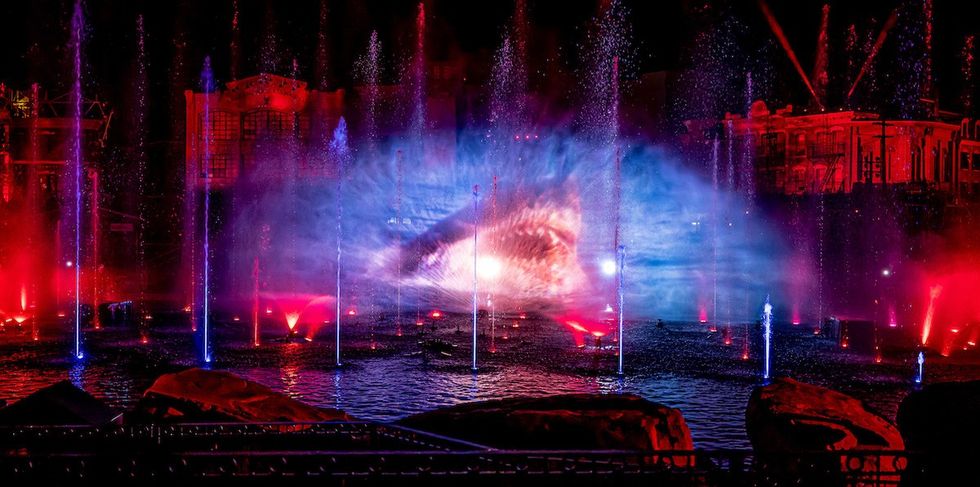 CineSational: A Symphonic Spectacular at Universal Orlando
If you are visiting with loved ones, this shared experience with the walls down can feel even more meaningful and create an even deeper connection, making memories that will last a lifetime of your shared adventure.
After all, your memories are deeply connected to your emotional state, and by the end of the night, all of your emotions have essentially peaked. Your senses are heightened, your emotional state is amplified, and now the unfamiliar becomes memorable.
Even as the years pass, you may forget the name of a show, or the exact layout or details of a particular ride, but you will remember how it felt to race across the night sky on a mechanical comet, the intensity of screaming into the night air, and the glow of laughing with friends and family at the end of it all.
In short, this is the emotional climax of your entire experience, and you will remember how it made you feel for the rest of your life, and how alive you felt.