
When women step into construction, architecture, and design, they bring precision, patience, and a collaborative spirit that reshapes the built environment. Through mentorship, knowledge-sharing, and support across trades, they strengthen teams and elevate projects.
When we make space for women in construction, we build not only better spaces but stronger industries.
When we think about construction and architecture, many of us instinctively picture a male-dominated profession. For generations, architecture has been perceived as a field led primarily by men.
The statistics reflect this trend: according to the Royal Institute of British Architects (RIBA), only 31% of its Chartered Members are women.
Yet, in interior design, a closely related discipline, the trend is strikingly different. The 2023/2024 diversity survey by the British Institute of Interior Design (BIID) reports that approximately 90% of interior designers are female.
This contrast raises an important question: why has architecture historically been male-led, and why are we now witnessing a meaningful shift?
A visible shift in leadership
The industry is evolving. We are increasingly seeing successful, high-profile projects led by women - projects that are not only ambitious but culturally significant.
At the British Museum, the design for the Western Range galleries redevelopment is being led by multi-award-winning architect Lina Ghotmeh.
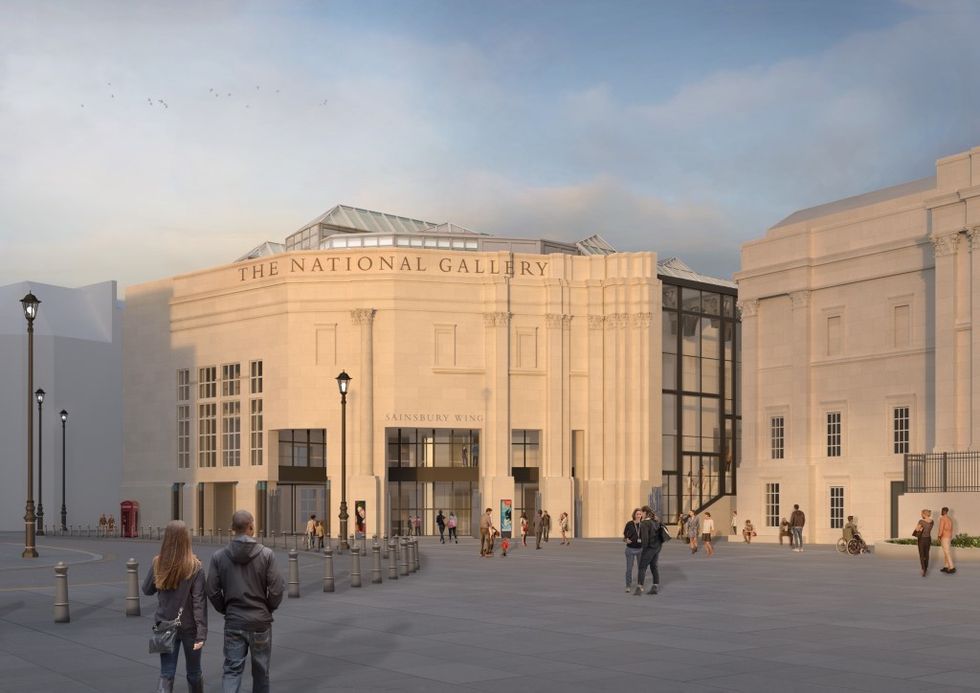 Transformation plans for the National Gallery, London. Image courtesy of Selldorf Architects.
Meanwhile, the transformation of the National Gallery was entrusted to Selldorf Architects, founded by Annabelle Selldorf, who was named one of the 100 most influential people in 2025.
These are not isolated examples. They represent a broader shift in visibility, recognition, and influence. They also demonstrate something powerful: women are not just participating in architecture - they are shaping its future.
What women bring to the design process
In architecture, design and construction, the work goes far beyond creating buildings - it is about shaping human experience. It is about how people move, feel, gather, and connect within a space.
Female architects and designers often bring a strong emphasis on usability and comfort. They demonstrate greater sensitivity to safety and inclusivity, along with careful attention to human-scale details. Their work is often guided by empathetic, user-centred thinking.
Women frequently prioritise how diverse communities will interact with a space. From public institutions to commercial interiors, this approach ensures environments are not only visually compelling but also welcoming, safe, and accessible.
Design becomes less about monumentality and more about meaning.
The power of diverse teams
At Lumsden Design, diversity is embedded into how we operate. With 72% of the team being female and an international mix of backgrounds, collaboration becomes the foundation of success.
This diversity has an impact on the global projects we are involved in, particularly for cultural and visitor-attraction organisations such as Netflix, Natural History Museum of Denmark, and Warner Bros. Discovery.
 Netflix House - the morning exterior facade of Dallas, showcasing the iconic Red Envelope entrance, creating an instantly recognisable brand moment
A combination of ethnicities, genders, and cultural experiences expands creative potential and allows for all voices to be heard. It enhances cultural sensitivity and strengthens problem-solving capabilities.
In an industry where design is a form of storytelling, this breadth of perspective prevents generic, one-size-fits-all solutions and makes it unique to a destination.
Instead, it leads to authentic, culturally rich environments that resonate with audiences worldwide.
This approach directly aligns with the principles of the experience economy - where it’s not about delivering products or services alone, but it’s about creating meaningful, memorable experiences and curating emotional, immersive journeys.
Leadership beyond ego
Female-led design is often characterised by functionality, attention to detail, and innovation grounded in empathy. There is typically less focus on ego and more on collective success.
Mentorship plays a crucial role. Leadership becomes less about personal ambition and more about nurturing talent, elevating others, and creating space for growth. By fostering curiosity and collaboration, teams develop stronger commitment and long-term progression.
This approach strengthens not only creative outcomes but organisational culture.
The business case for gender diversity
Gender-diverse leadership is no longer simply a matter of equity - it is a strategic advantage.
Research consistently shows that companies with diverse executive teams are 25% more likely to achieve above-average profitability.
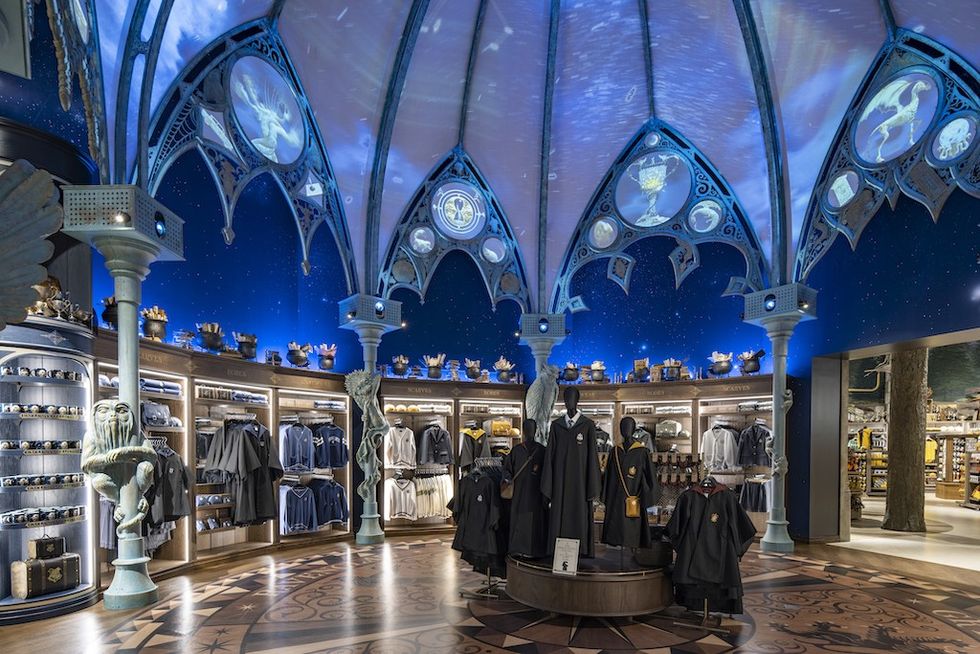 Warner Bros. Studio Tour Tokyo
Inclusive organisations are significantly more capable of meeting financial goals, and a higher representation of women in leadership correlates with greater radical innovation.
Why? Because leadership styles complement one another.
Traditionally, male leadership has been associated with agentic qualities—goal-driven, decisive, performance-oriented. Female leadership often brings communal and empathetic strengths—emotional intelligence, communication, collaboration, and people-focused management.
When these approaches work together, they create a dynamic that outperforms homogeneous teams. Employee morale improves. Staff turnover decreases. Creativity increases.
The result is not compromised - it is a competitive advantage.
A new era for architecture, design & construction
Architecture and design are storytelling disciplines. They shape how we experience culture, commerce, and community. To tell richer stories, we need richer perspectives.
The growing presence of women in architecture is not about replacing one dominance with another. It is about balance. It is about recognising that the most innovative, resilient, and successful teams are those built on diversity—of gender, culture, experience, and thought.
The profession is evolving from a historically male-led industry to a more inclusive, collaborative field. And as the examples from the British Museum and the National Gallery demonstrate, women are not just contributing—they are leading at the highest level.
Gender-diverse leadership is no longer optional. It is essential to the future of architecture and business alike.
The buildings we design today will shape the world of tomorrow. It is only right that the people shaping them reflect the full diversity of the communities they serve.