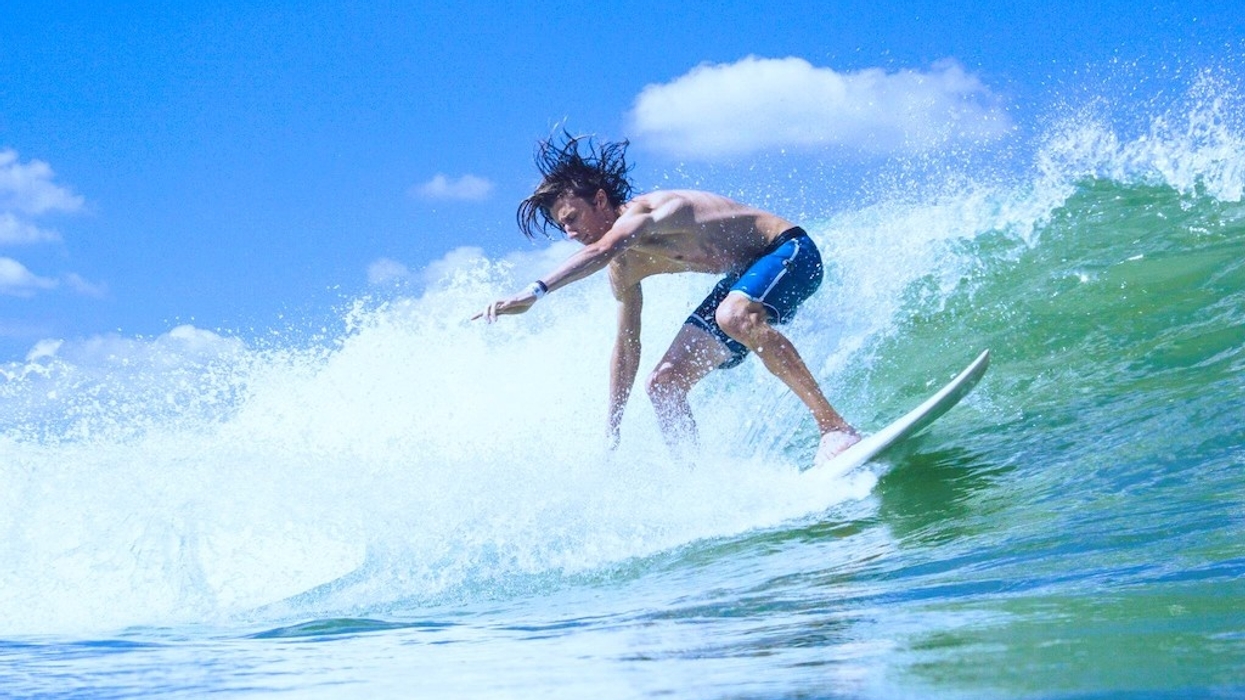

Cloward H2O, an expert in aquatic design, has worked on several surf park projects. These attractions, with surfing on demand in an artificial wave lagoon, are engineering marvels that blend fluid dynamics with precision design.
"Modern surf parks create ocean-like waves by applying principles of physics—conservation of energy, conservation of momentum, and wave mechanics," says the firm.
"Aquatic engineers think in terms of water displacement and energy transfer. In a wave basin, controlled mechanical forces generate the wave. All that’s required is the proper application of force; a simple push (or pull) and a disturbance radiates outward.
"Multiple disturbances, variable forces, and precision timing shape the wave energy, which then travels across the basin and breaks predictably on a shaped bottom, the bathymetry."
Generating artificial waves
The core of every successful surf park is the wave generator, which applies controlled forces to create waves. Artificial waves use a basin and force application to mimic natural surf on a smaller scale.
Wave energy scales exponentially; increasing wave height from 3 ft to 6 ft requires nearly 10 times as much power. Small waves in a waterpark are easy to produce, but large surfable waves require immense energy. Each technology aims to optimise energy transfer efficiency.
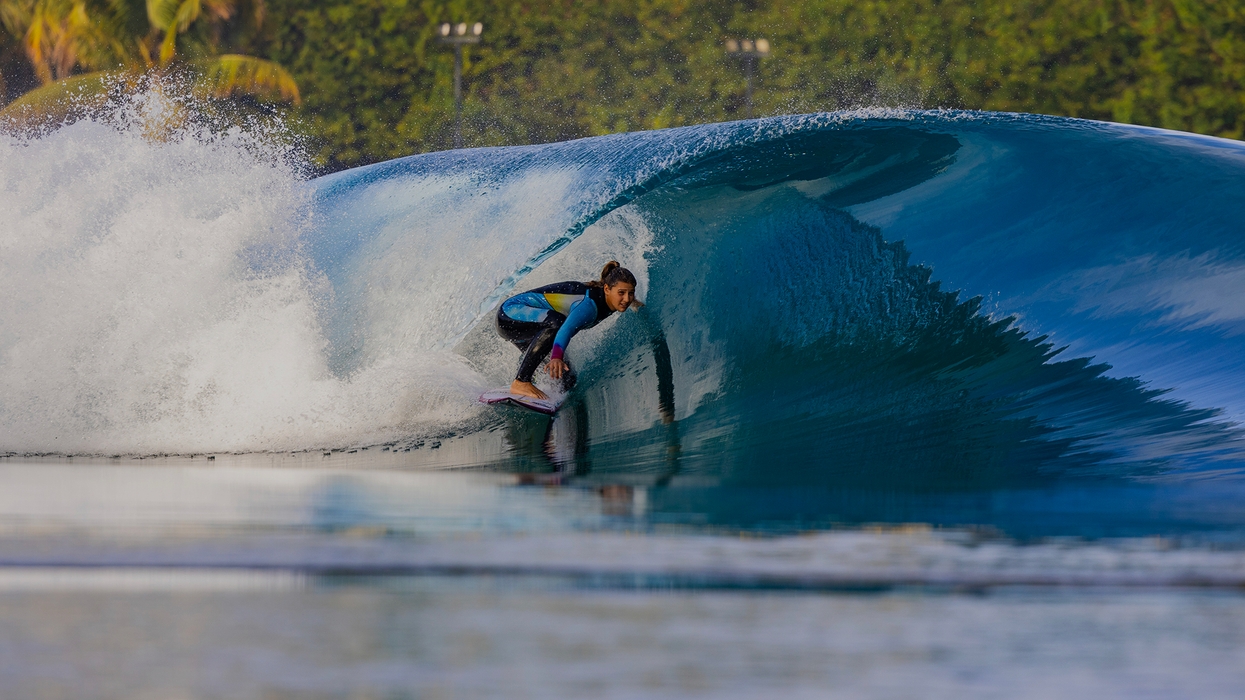
Once created, the artificial wave acts like a natural ocean wave, with energy moving forward and water particles oscillating in a circular motion. In deep water (>1/2 wavelength), the wave (swell) isn't affected by basin bathymetry. In shallower water, waves slow and break as they interact with the floor. As bathymetry shifts from deep to shallow, waves build, crest, and break.
"Conservation of energy causes the wave height to grow as it compresses," adds the firm. "This steepening continues until the crest outruns the trough and the wave breaks.
"Engineers use these principles to predict where and how a wave will break and design the bottom contours of their basin to interact in predictable ways with the wave energy they are creating. In surf parks, as in nature, the result is that waves slow and squeeze together, growing taller until they spill or plunge on the engineered reef or slope."
Bathymetry, wave shaping, and energy transfer
Bathymetry shapes the wave by contouring the ocean floor, thereby controlling wave behaviour. Gentle rises create spilling breakers, while sudden steps or convex reefs induce plunging barrels. Engineers use CFD modelling to tune these shapes, adjusting reef angles, slopes, and ridges until the wave breaks as desired.
Larger basins have multiple zones with different profiles, such as mellow slopes for beginners and steeper reefs for experts, each designed to create specific wave forms. This ensures waves shoal predictably, breaking at planned points with desired wavelength and power.
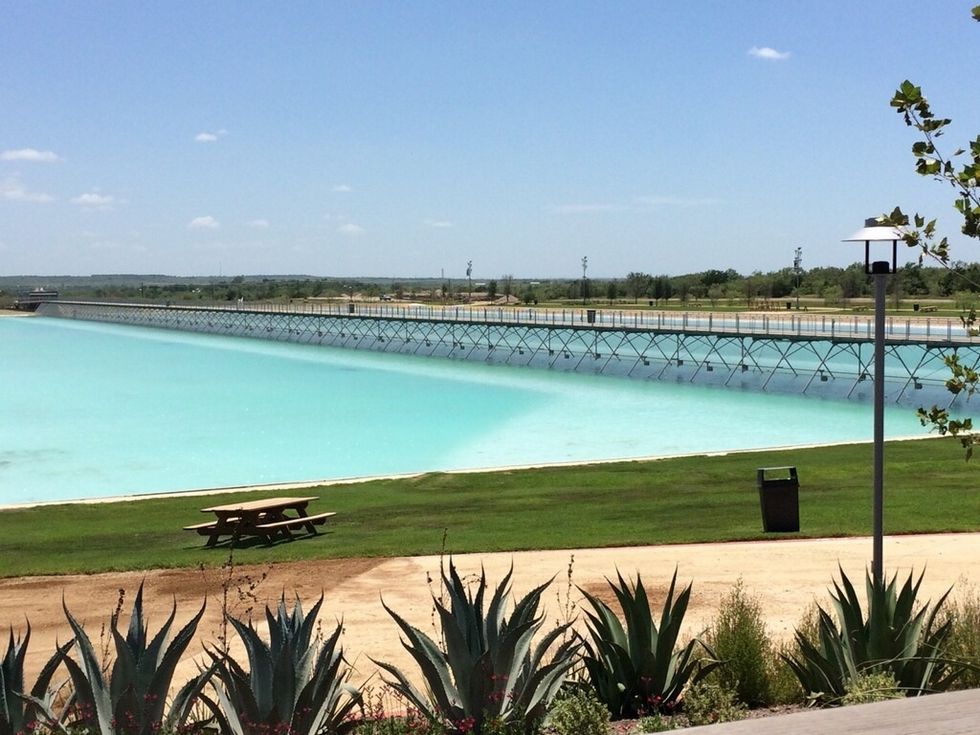 The surf lagoon at NLand Surf Park in Austin, Texas
The wave-making machine transfers energy to water using methods such as pneumatic chambers or movable devices. The reactive forces from this transfer act on the structure based on device type, basin shape, bathymetry, and materials. Without careful design, these systems risk damage from repeated push-pull forces and friction as waves travel through the basin.
"As with all energy transfer, some energy is inevitably lost each cycle," explains Cloward H2O.
"The most common loss of energy is heat in the wave generation equipment, but some other minor losses are due to friction on the floor, turbulence in the breaker, and even sound and splashing.
"Designers have to account for all these losses when creating the wave generator. In all, the system is calibrated so each wave can be delivered at a set interval and height, with the system replenishing just enough energy to maintain repeatability."
Testing and managing waves
Even with powerful CFD, designers validate and refine their models with physical tests, often using scale models in wave basins with miniature generators and reefs to compare real wave heights with CFD predictions. Circular or linear tanks test continuous waves. Some teams conduct field trials, such as testing boats that generate swells or equipment in lakes to refine breaking processes. Each stage provides data to improve the design.
"By iterating between CFD and experiments, we can ensure that the wave generator and bathymetry are all tuned to produce fantastic waves."
After a wave breaks, its energy must be managed before the next. The process creates turbulence, residual currents, and reflective waves. Left unchecked, these interfere with new waves. Surf basin designers use energy-absorbing features, such as channels, to divert energy, preventing waves from returning as reflections or climbing the beach.
This reduces interference with future waves.
Characteristic basin geometry is designed to minimise reflections and currents, guiding off-break waves out of the surf zone. The system functions as a feedback loop: the wave generator creates waves, bathymetry makes them surfable, and beach and channel systems remove residual energy. Energy considerations ensure water is ready for the next wave.
Structural considerations
"As mentioned previously, wave basins experience various reactive forces from wave generation and propagation through transitional zones," says the company.
"If not understood and accounted for, these forces will be the demise of the system as a whole. Engineers must ensure that the basin’s structures can withstand these loads, as well as taking into consideration the cyclic nature, which amplifies the effects over time."
A breaking surf wave exerts large cyclic forces on walls, floors, and supports. Engineers calculate worst-case dynamic load, impact reaction, friction, and drag, and confirm them using CFD-derived pressure and velocity fields and physical tests. Structural criteria for the basin floor, walls, mechanical anchors, barriers, and supports are then specified.
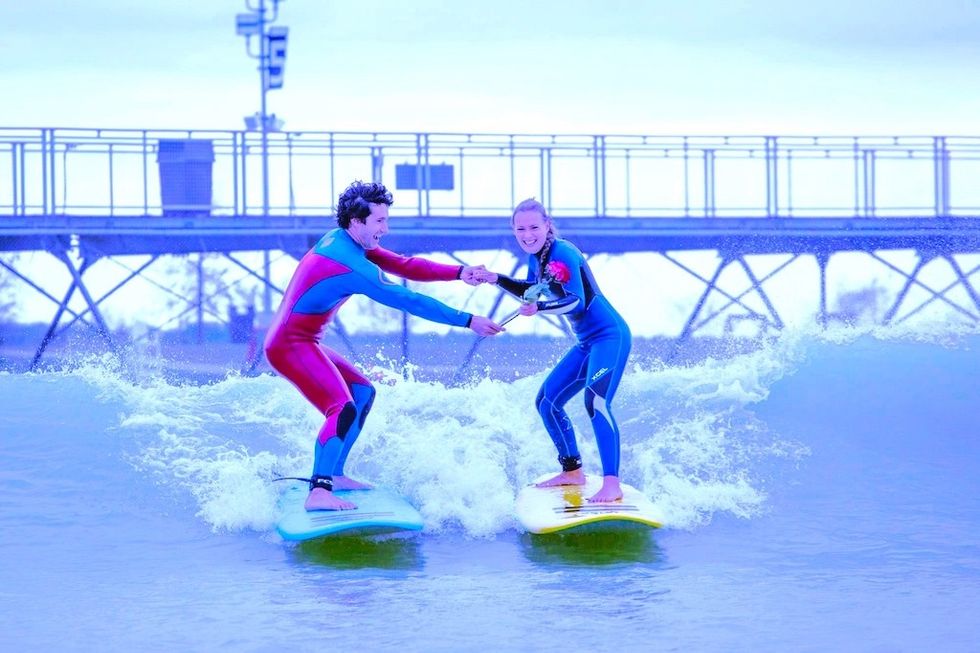 Well-engineered artifical waves are consistent and reliable, meaning visitors can enjoy more time surfing
In practice, this means concrete walls are reinforced to resist the expected thrust and fatigue; foundations are sized for dynamic loading, and viewing decks are set well above the high-water mark.
These engineering criteria are treated like dam design. The forces from the highest waves (plus a safety margin) decide wall thickness and connection strength. Even modest waves can exert thousands of pounds per square foot. By considering wave height, slope, and water depth, engineers ensure the basin is a safe containment system.
Operational controls add safety: wave mechanisms prevent waves from exceeding limits. With fixed basin geometry and machine inputs, each wave remains within the predicted load range.
Treatment and circulation
A key point Cloward H2O notes about wave physics is that waves, by nature, do not move particles but rather transfer energy through a medium, be it a gas or a liquid.
"In water, wave action causes the water molecules to oscillate between the peaks and valleys, but not much beyond until the wave breaks.
"With this in mind, it is evident that the venue requires a robust circulation and water quality management system to keep the water balanced, clear, and sanitised throughout for the safety of patrons and staff, along with the longevity of the structures and wave equipment.
"It is critical to employ the four basic stages of water quality management."
Circulation ensures the distribution of treated water and sanitiser throughout the water volume; filtration removes solids; oxidation reacts with dissolved contaminants; and sanitisation controls microbial life and prevents waterborne illness.
Engineered surf
For surfers, the result is a wave that looks and feels like nature yet is remarkably consistent and predictable.
"In a well-designed surf park, the wave face forms and peels predictably along its length – perhaps opening into a barrel at one point and a gentle shoulder at another or even custom wave sets and colliding waves forming steep air sections.
"The underlying fluid physics and wave dynamics are the same as on an ocean reef: Wave energy piles up as it shoals, and then the crest curls. But here we can guide it toward the ideal conditions that are relatively rare in nature."
Surf parks are feats of applied physics, where engineers embed wave theory in concrete and steel. They control energy transfer, sculpting the bottom and beach to provide reliable, repeatable waves, fusing art and science for thrilling, consistent surf.
Earlier this year, Cloward H2O shared how it contributed to the aquatic engineering design of new critical-care manatee rehabilitation pools in partnership with ZooTampa at Lowry Park in Florida.