Communicating the Arts (CTA), a conference for cultural leaders from across the globe, will explore the impact of co-creation with a trio of presentations at its 2026 event in Ottawa-Gatineau.
The conference will take place from 13 to 16 October on the theme Building Trust, Bridging Worlds.
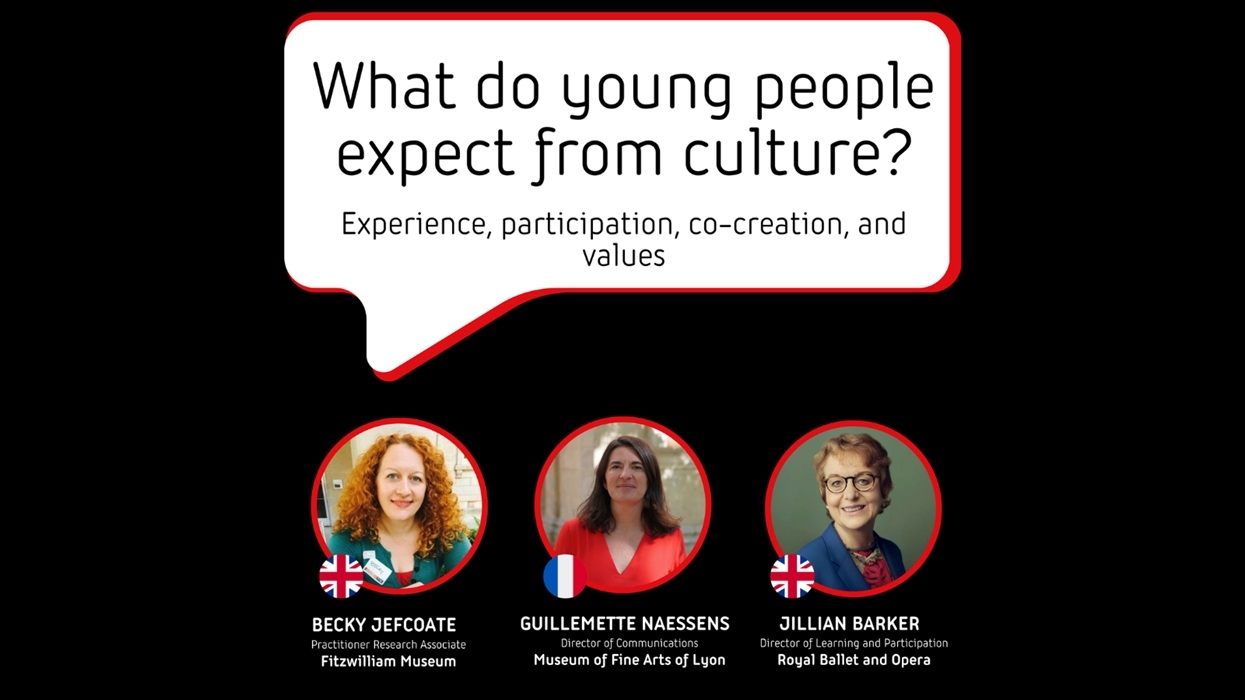
The programme includes sessions with Becky Jefcoate, practitioner research associate at the Fitzwilliam Museum in Cambridge; Guillemette Naessens, director of communications at the Museum of Fine Arts of Lyon; and Jillian Barker, director of learning and participation at the Royal Ballet and Opera in London.
Each will highlight how co-creation is turning cultural organisations into spaces where the next generation is not merely visiting, but actively contributing, collaborating, and making change.
To find out more and to register to attend, please click here.
Collaboration, trust, and shared ownership
Jefcoate will speak about Fitzwilliam Museum's project, Happy Place, which illustrates the power of listening, trust, and shared creative ownership. Responding to concerns about the mental health and wellbeing of 16-25-year-olds, this project asked 49 young adults to serve as creative producers in a nine-month design project.
The result was an immersive wellbeing 'garden of the imagination', featuring soothing sounds, scents, hammocks, cardboard trees, and opportunities for play and reflection.
Beyond the exhibition, Happy Place demonstrated how, by sharing authority and embracing empathy, the museum could create a space where every guest reported improved mood and a stronger sense of connection, calm, and belonging.
Presenting a vision to go beyond audience engagement and toward genuine partnership with younger visitors, Jefcoate’s session shows how cultural organisations can create supportive spaces in an increasingly fragmented world.
At the Museum of Fine Arts of Lyon, ambitious projects have placed students at the very centre of institutional life for over a decade.
Naessens will share how young people are encouraged to be contributors rather than consumers, going beyond the visit to take on meaningful responsibilities, for example, contributing to major events through communications, audience engagement, event management or visitor experience.
As a result, 30% of the museum’s individual visitors are under 26, cementing the organisation as a genuinely inclusive space, relevant across generations.
Meanwhile, Barker will explore how Royal Ballet and Opera shaped a three-year collaboration in Bradford, one of the UK’s most diverse cities and the 2025 UK City of Culture, through listening, partnership, and local collaboration.
This project, which engaged 45 schools, dance schools, teachers, and 2,500 young people, investigated how ballet and opera could foster creativity, confidence, and social connection and illustrated the potential of integrating creativity into education.
Independent researchers reported significant positive impacts on learning, wellbeing, and participation, while the resulting large-scale performance, Sing, Dance, Leap, brought together thousands of children and professional artists and showed how culture can overcome social divides and create meaningful connections.
Inspiration and actionable advice
Davide Mura, editorialist, Communicating the Arts, says: "Together, these three sessions reveal a common lesson: young people are not tomorrow's audience—they are partners today.
"Whether transforming a gallery into a wellbeing sanctuary, handing students the keys to a museum, or co-creating performances with thousands of children, Becky Jefcoate, Guillemette Naessens, and Jillian Barker demonstrate that the future of cultural engagement lies in collaboration, trust, and shared ownership.
"For cultural leaders seeking new ways to connect with younger generations, these presentations offer practical strategies, inspiring case studies, and a powerful reminder that the most meaningful spaces are often the ones we create together."
The sessions will also explore the potential and challenges of intergenerational partnerships within cultural organisations. By examining successful case studies and practical tools, CTA conference participants will learn best practices for promoting meaningful exchange between age groups.
Recently, CTA shared how cultural leaders from across the globe will address crisis management at the 2026 conference. The focus will shift from abstract theory to how cultural institutions can effectively communicate during crises in ways that are credible, transparent, and human.

Rebecca Hardy has over 10 years' experience in the culture and heritage sector. She studied Fine Art at university and has written for a broad range of creative organisations including artists, galleries, and retailers. When she's not writing, she spends her time getting lost in the woods and making mud pies with her young son.