With the official opening of the transformed Dorrance DOME in October 2025, the Arizona Science Center in Phoenix, US, unveiled the most advanced LED dome of its kind in the Southwest.
Powered by Cosm’s CX System, the renovation signifies a move away from traditional projection towards a future characterised by 8K+ resolution, unmatched brightness, and a degree of flexibility that fundamentally changes the role of a planetarium.
To understand the scope of this transformation, we spoke with Tammy Stewart, interim Hazel A. Hare president & CEO of Arizona Science Center, and Kirk Johnson, chief operations officer at Cosm.
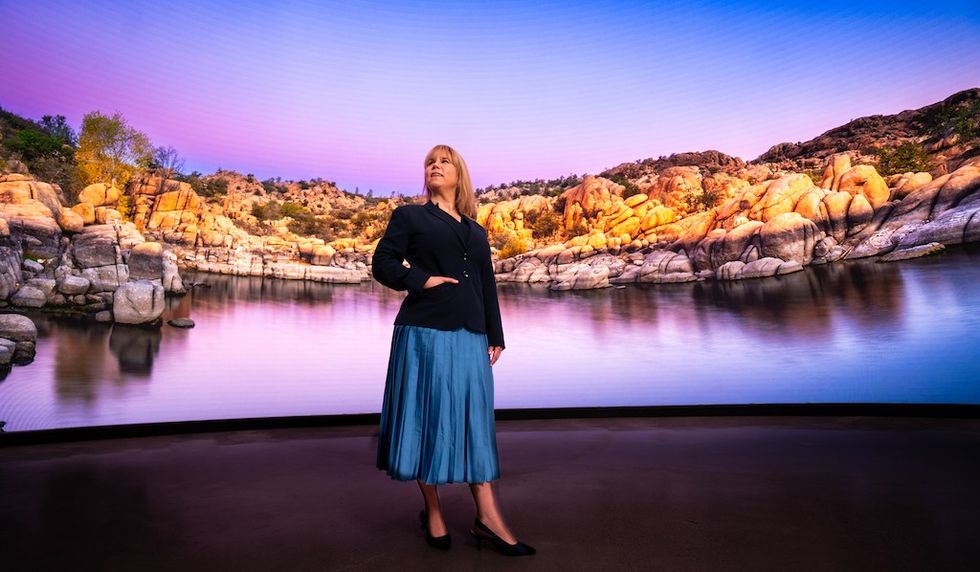 Tammy Stewart in the Dorrance DOME
Together, they discuss the decision-making process, the engineering challenges of retrofitting a 1990s structure, and the "wow" moments that shape the new guest experience.
Meeting modern expectations
Since opening its doors in 1997, the Arizona Science Center has been a premier destination for science learning, engaging over 200,000 students each year.
For decades, the Dorrance Planetarium was a key attraction. However, as visitor expectations for cinematic realism increased, the leadership team recognised that the existing projection system was no longer enough to engage a modern audience.
Stewart says the decision to modernise was driven by a desire to maintain the science centre’s status as a major regional attraction:
“We were at a stage where it was time to update the equipment. Our planetarium has been a major attraction since it opened in the mid-90s, for visitors, students, families, and tourists. So, we wanted to make sure that we invested in something that would be a true attraction to our community, both locally and also for tourists.”
The partnership between Arizona Science Center and Cosm was not new. It was built on nearly thirty years of collaboration, starting with the installation of the Digistar II system in 1997.
Johnson emphasises this long-standing relationship as the foundation for innovation:
“Our relationship goes back many years, and they’ve always been a customer that’s tried new things and innovated, experimenting with different types of content.”
The "ten-second" decision
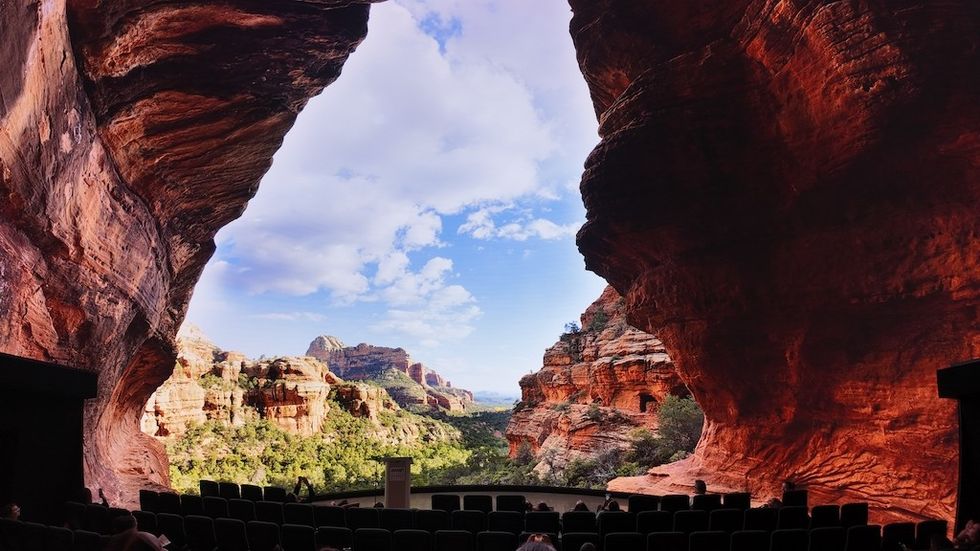
Although the necessity for an update was evident, the decision on the technology was made during a pivotal site visit to Cosm’s Experience Center in Salt Lake City. The distinction between standard projection and Cosm’s CX System LED dome was immediately clear to the Science Center’s leadership.
“We had heard about this new technology, so a group of team members went to the demo space there with Kirk, and we knew right away that this was the type of experience that was going to transform what a planetarium visit could look like.”
However, the next challenge was convincing the board. Johnson shares an anecdote that underscores the powerful effect of the technology:
“One of my favourite stories about the Arizona Science Center is that the team came to our experience centre to see our CX System, and to explore new ideas about how they could update the science museum.
“After returning, they were trying to explain what our CX System is to the board of directors, and their CEO said, ‘You just need to come and see it. It’ll only take you 30 seconds after you see it, and you’ll understand why this technology is important.’”
The result of that visit was instantaneous buy-in:
“After the board visited, they said to the CEO, ‘You lied to us. It only took 10 seconds.’ And I think that’s the power of this technology. People get it,” Johnson says.
“Even people who have worked in domes for their entire careers, for 30 years, you can explain the concepts and the specifications, but really you have to come and see it, because it is a game-changer.
“You don’t really realise that from the numbers until you experience it for yourself.”
Inside the Dorrance DOME
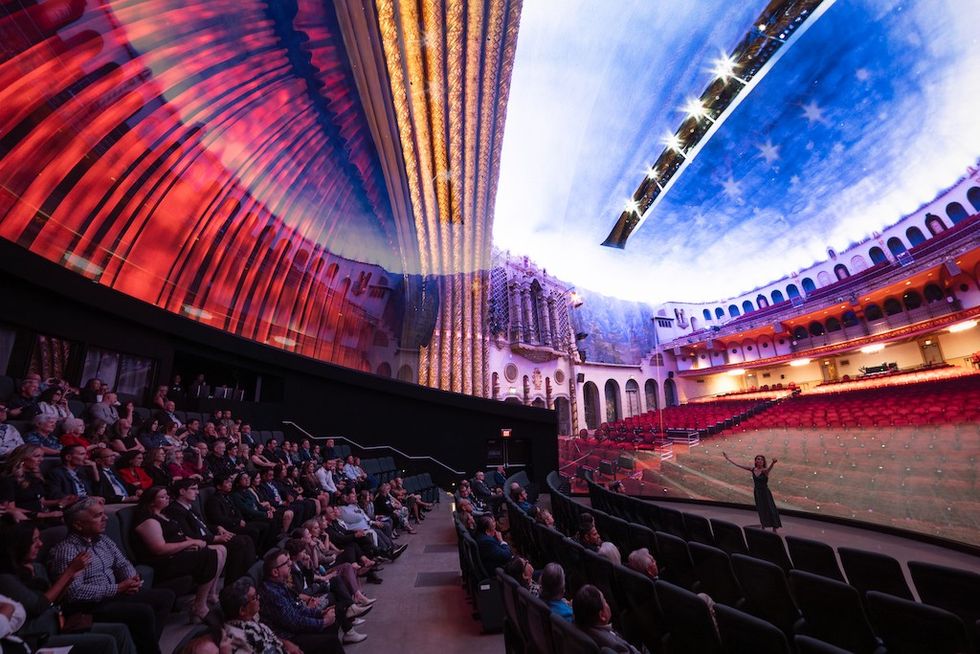
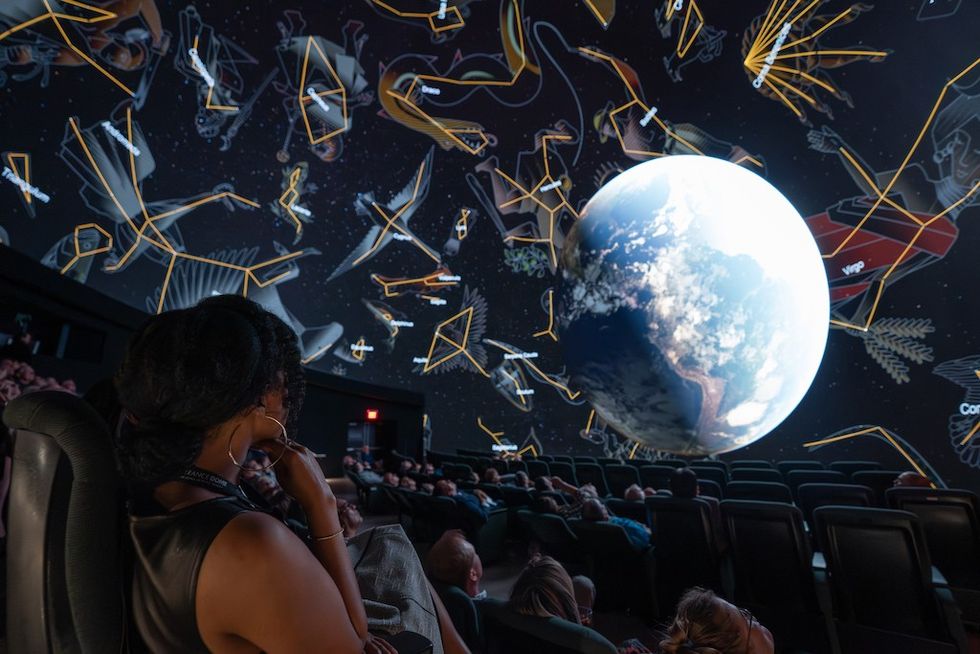
The Dorrance DOME now features an extended 18-metre LED dome with 9,026 individual LED panels. The specifications are impressive compared to traditional planetarium setups. The system delivers 8K+ resolution and a brightness level that fundamentally transforms how content is perceived.
Johnson details the metrics that set the Dorrance DOME apart:
“We’re more than 100 times brighter than a typical planetarium projector and 150 times brighter than the previous system at the Arizona Science Center. At that brightness, we have a contrast ratio 10 times that of any projection system.
“That combination with resolution creates a quality of image that’s never been seen before in immersive experiences.”
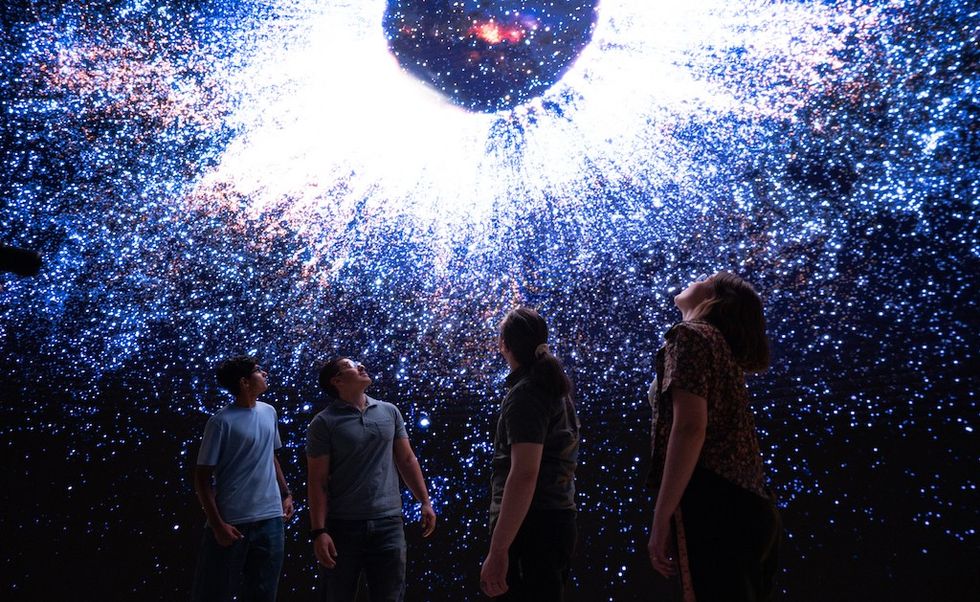
This technical leap allows for "true black," a feat impossible with projection due to cross-bounce (light reflecting off one side of the dome and washing out the other).
“That’s what transports people. It feels like you’re taking them to worlds they might never be able to go to themselves. That transported nature, because of the brightness and contrast, is really what makes it different.”
See also: Fort Worth’s revamped Omni Theater: a new era in immersive edutainment
Bringing the project to life
Installing such advanced technology in a building designed in the 1990s posed unique challenges. The project required fitting a massive LED structure into an existing footprint while navigating decades-old infrastructure.
“We had to figure out how to get the largest dome we could while maintaining the existing 18-metre dome, and avoid the ducts, pipes, and infrastructure from 40 years ago,” says Johnson.
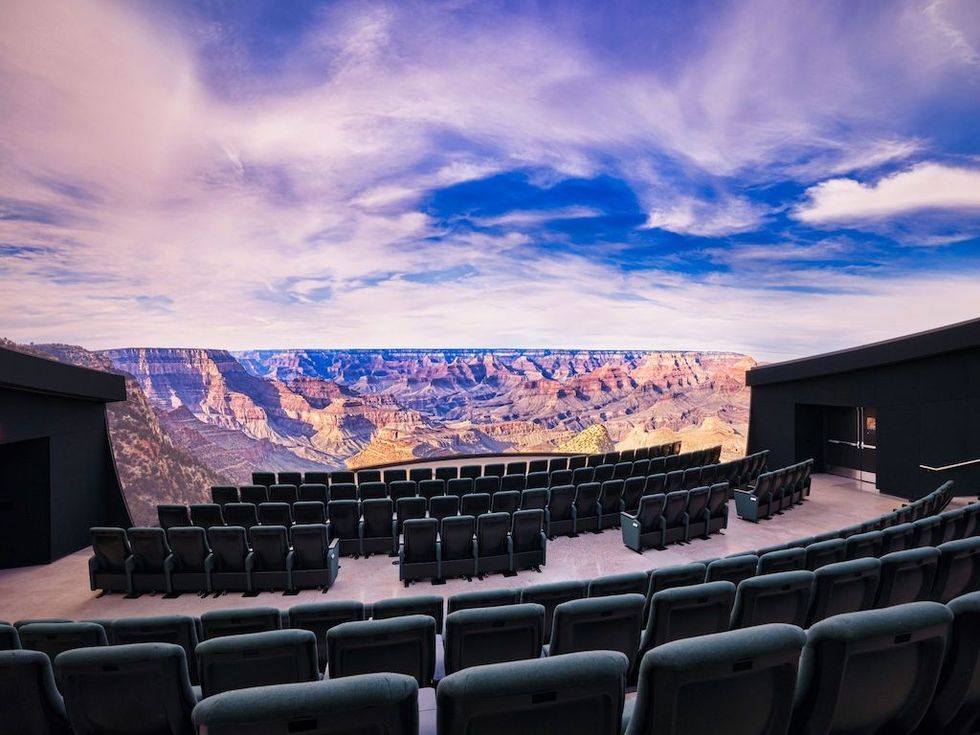
Despite these hurdles, the teams worked to ensure the renovation maximised the utility of the space without necessitating prohibitive structural changes. “Historically, planetariums have fixed seating from front to back,” he adds.
“We were able to work with them to create a flexible, flat space in the front with removable seats, while minimising infrastructure changes.”
A more versatile attraction
One of the most notable changes for the Arizona Science Center is the transition from a rigid, lecture-oriented planetarium to a versatile, multi-purpose venue.
The new Dorrance DOME has seating for 205 visitors and, importantly, a hybrid layout that allows seats to be removed to form an open floor area.
Stewart emphasises that this flexibility was a core design principle, intended to make the space welcoming and adaptable for diverse audiences:
“Everything we do at Arizona Science Center, we want to create a space that welcomes everyone. For us, this remodelling within the dome itself—not just the technology, but bringing in new seats and creating a new space—had that in mind.
“Half the seats actually roll away and create a flat space within our planetarium, and we’re able to bring in different kinds of seating, from bean bags to yoga mats to cocktail tables. That flexibility really allows us to create a welcoming space.”
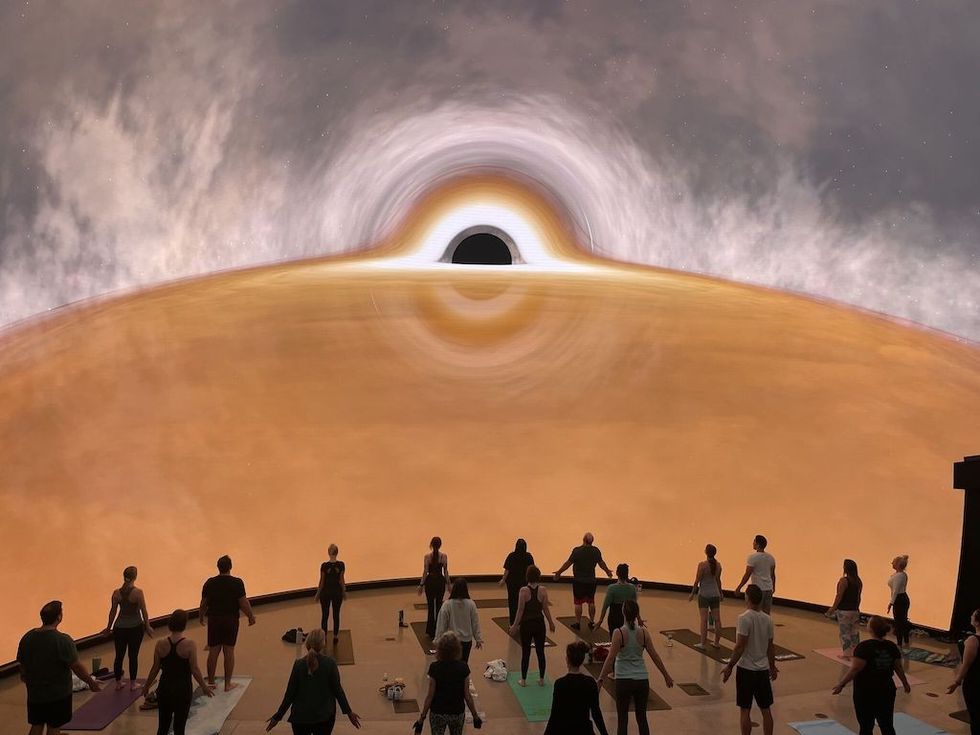
This adaptability opens the door to revenue streams and community engagement opportunities that were previously impossible. The Science Center can now host everything from corporate product launches to wellness events.
“Now they can do traditional seated programmes, but they can also host interactive events, like dance parties, weddings, dinner parties, corporate events,” Johnson says.
Stewart adds that this multidisciplinary approach is vital for modern science engagement, bridging the gap between art, culture, and STEM.
“It is a new challenge, and the team has really stepped up to it,” she says.
“It’s been fun to allow the team to spread out and not think of just standard programming. How can we do things differently? How can we bring in different partners? Who would have thought you’d be doing yoga in a planetarium with a yoga instructor?
“It allows us to bring science, art, and culture all together in one place. Science and art should work together and are a great bridge for bringing new concepts to people.”
Quality content
The hardware is only part of the story. The Dorrance DOME runs on an ecosystem that includes Cosm’s Digistar software, Unreal Engine integration for real-time content, and the Cosm Studios Premium Media Program.
This enables the science centre to access exclusive, award-winning films such as Black Hole First Picture, Orbital, and Inside Pop Art.
However, the vision extends beyond licensed content. Arizona Science Center has also forged a strategic partnership with Arizona State University’s Media and Immersive eXperience (MIX) Center.
This collaboration empowers students and faculty to develop custom content for the dome, turning the venue into a laboratory for future immersive storytellers.
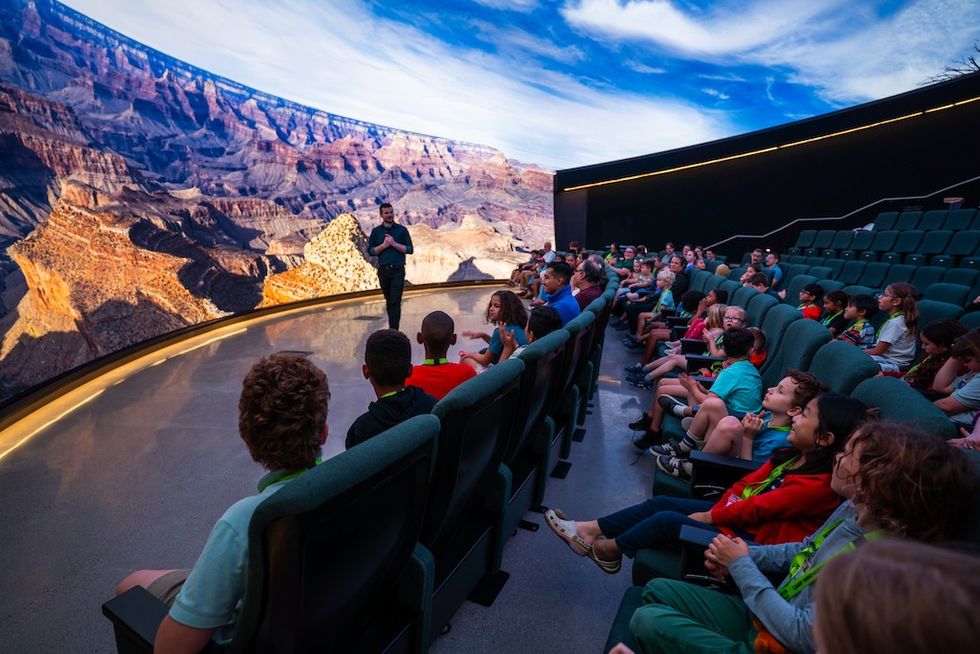
“This partnership allows us to have a partner that works with us in creating content,” Stewart says. “As we look at new possibilities and new ideas for presentations in the Dorrance DOME using the Cosm technology, we knew we needed a partner to help with content creation.
“Their students and faculty have the opportunity to create content in a new type of space and technology, and it allows us to work together to create content that blends entertainment and education in the same space.”
Johnson is especially passionate about this educational aspect, noting that the technology is helping to train the next generation of creators:
“I love that students are involved. Our senior product manager started as an intern at a university planetarium and is now one of the best users of this technology in the world.
“We’ve worked with universities throughout our history, and I love that students are developing creativity and skill sets that will matter in their professional futures. They’ll be able to express themselves on these domes, and I believe we’re helping build the future producers of immersive content.”
The "wow" moment
Since its opening in October 2025, the public response has been overwhelmingly positive. Stewart explains the strong emotional reaction guests experience as the lights dim and the 8K LED dome comes to life.
“We just had an event where the planetarium was full of adults. We were showing imagery from space, and every adult in there was having that wow moment, mouths wide open, jaws dropped,” Stewart says.
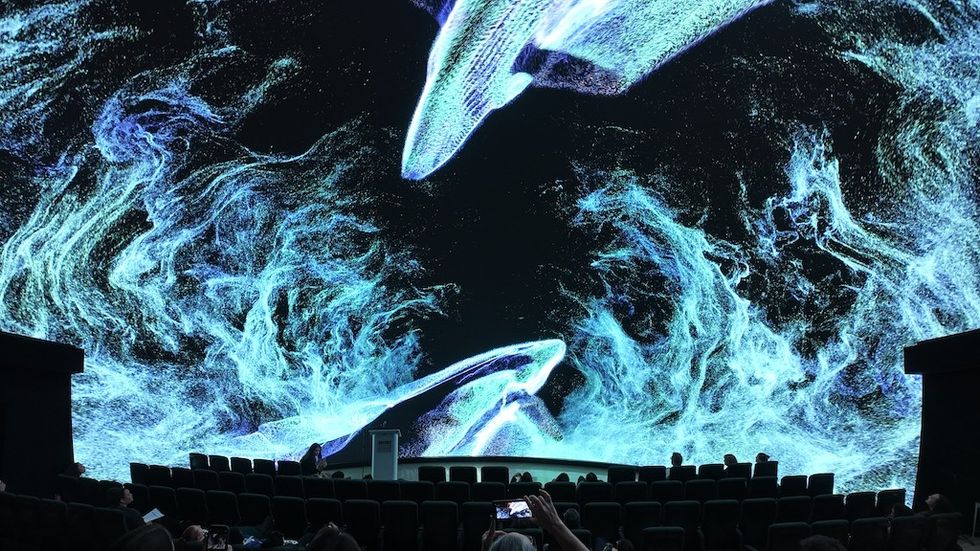
“This week, we’ll have school groups in there having their first planetarium experience, and it’s still going to be that same moment. They’re going to see Saturn come flying out at them, and they’re going to have that wow moment also.”
For Stewart, these reactions are the ultimate validation of the project:
“It is why I do my job. When I see, whether it’s a young child or an adult, have that awe moment and mouths drop, I know we’ve made an impression, and I know they’ll remember it for a lifetime.”
The long-term impact
Beyond the immediate spectacle, the move to LED technology also offers operational benefits.
Johnson highlights that despite the larger initial investment, the long-term maintenance costs and consistency of LED panels greatly surpass those of traditional laser projection, making them more sustainable.
“The LED display is expected to last up to 100,000 hours. A typical laser projection system might last 20,000 to 25,000 hours, and over that time the brightness drops by 50%,” he says.
“With LED domes, brightness might drop only about 10% over 100,000 hours. That ability to maintain quality over time makes it more affordable and less wasteful, because you don’t have to replace projectors multiple times.”
Furthermore, the system is easier to maintain:
“Because of the alignment, blending, and calibration software we have, it’s actually easier to maintain than traditional projection systems.
"It’s been very reliable, and we train the customer to calibrate the image as needed. In reality, they probably only need to do it once or twice a year.”
Setting a new global standard with the Dorrance DOME
The Dorrance DOME joins a growing network of Cosm CX System installations, including the Fort Worth Museum of Science and History and the Prague Planetarium. Both Stewart and Johnson believe this installation signals a broader industry shift.
“There’s no question they’re becoming the new standard,” says Johnson. “We have three right now, with a couple more announced. But everyone who sees it wants it. Now it’s a matter of educating CEOs and boards, finding funding, and adapting facilities.
“I have no question in my mind that this is the future.”
For the Arizona Science Center, the Dorrance DOME is just the beginning of a larger renewal.
“The planetarium was one of our top attractions before, and we know the new Dorrance DOME is going to continue that tradition. This was also the launching point of a multi-year renewal plan for our entire building,” Stewart says.
“It set the bar high for the type of experiences we want to bring to all our galleries.”
The transformation of the Dorrance DOME is more than just an upgrade; it is a redefining of what shared, immersive experiences can be.
By combining Cosm’s cutting-edge LED technology with a mission-driven approach to education and community, Arizona Science Center has crafted a space where science, art, and innovation come together.
Additionally, Stewart says the technology is merely the tool to achieve a greater goal: “Through this flexible technology, Arizona Science Center will be able to provide opportunities for around-the-clock programming that reflects current and changing science.
“As an early adopter of Cosm’s CX System, we’re positioning ourselves as a global leader in immersive learning for guests of all ages.”
And for those questioning whether the hype is warranted, Johnson extends a simple invitation, reflecting the sentiment that swayed the board:
“You can explain the concepts and the specifications, but really, you have to come and see it. It’s a game-changer.”