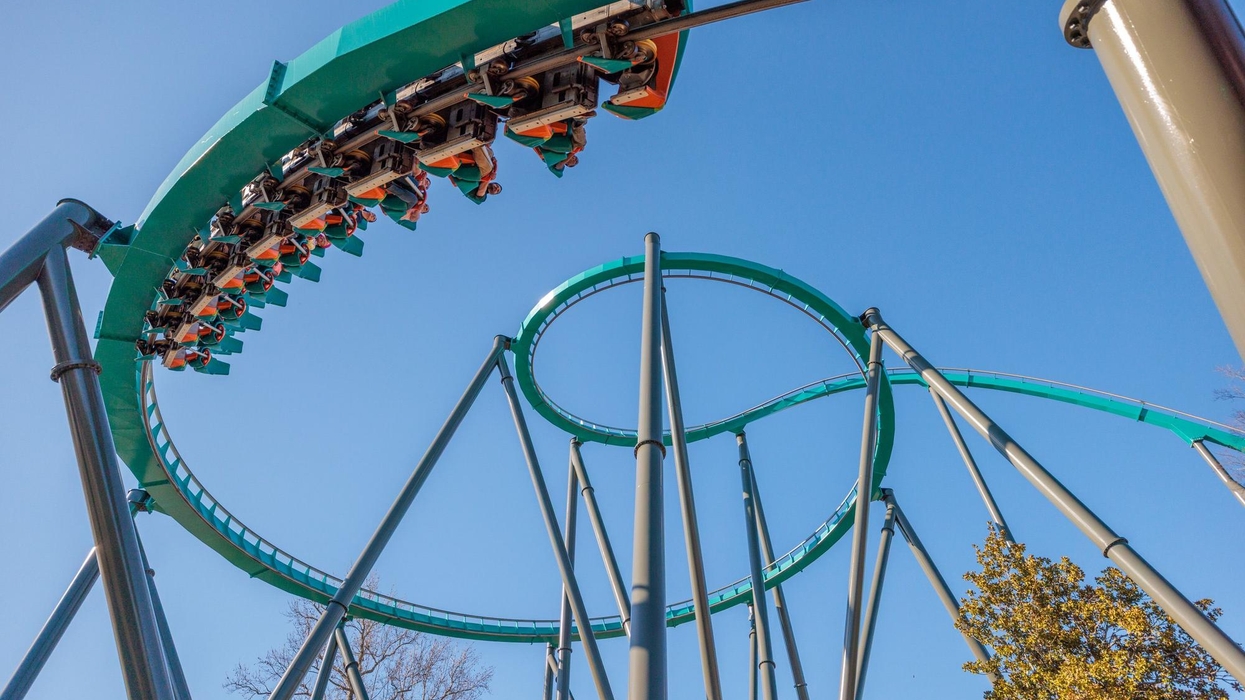
Attraction maintenance isn't a glamorous job. Stripping down a complex ride system outdoors in the bite of a British winter is hardly something that sells itself on a recruitment poster.
Yet across theme parks worldwide, maintaining roller coasters and complex rides has quietly become one of the industry's most pressing operational tightropes.
Our experts
Jamie Gaffney
Jamie Gaffney is Corporate Vice President of Maintenance and Engineering at Six Flags Entertainment Corporation, where he supports the maintenance, engineering and operational performance of the company’s theme parks. He joined Six Flags in July 2024, having previously held the same corporate role at Cedar Fair Entertainment Company. Before that, Gaffney served as Vice President of Maintenance and Construction at Kings Island from 2014 to 2022. His experience spans theme park maintenance, engineering support, construction and continuous improvement, with a focus on supporting park operations and maintaining attraction reliability
Our experts
David Bromilow
David Bromilow is Global Director of Parks & Attractions at Mobaro. He has more than 45 years of experience in the amusement and attractions industry, specialising in ride safety, maintenance, engineering and operations. Bromilow began his career as an apprentice mechanical engineer at Blackpool Pleasure Beach in 1977, before working in technical risk management, insurance, special effects and project management. He later spent five years as general manager of park operations at Drayton Manor. A prominent industry safety advocate, Bromilow has chaired IAAPA's Global Safety Committee and served as president of AIMS International
Our experts
Alex Nicholls
Alex Nicholls is the founder of Comply: Amusement Safety, a specialist inspection, testing and certification company serving the amusement and leisure industry. Established in 2017, Comply helps operators demonstrate compliance with relevant safety standards and regulatory requirements. Its services cover the full lifecycle of attractions, from design reviews and manufacturing inspections to installation testing and periodic examinations of existing equipment. The company works across a wide range of attractions, including amusement rides, water parks, climbing structures, ropes courses, trampolines and go-karts
Our experts
Nathan Jones
Nathan Jones is president of Martin & Vleminckx, a global manufacturer specialising in the design, manufacture and installation of wooden roller coasters and other amusement attractions. He joined the company in 2022, bringing more than 24 years of experience in the attractions industry. Before joining Martin & Vleminckx, Jones held executive management positions at WhiteWater, Vekoma Rides and Brogent Technologies, contributing to business growth and development across the sector. He is also active in the Themed Entertainment Association (TEA), where he has held leadership roles, including serving on its International Board and championing diversity, equity, inclusion and accessibility
Our experts
Lee Hollinshead
Lee Hollinshead is the founder of D-Tex Visual Ltd, a technology company developing AI-powered monitoring and detection systems for the theme park and attractions industry. Driven by a lifelong passion for attractions, Hollinshead established the business after identifying an opportunity to improve traditional ride maintenance practices through continuous, technology-led monitoring. The company’s flagship product, Bolt-iT, is an intelligent sensor system designed to monitor the condition of bolts and structural components in real time, detecting movement, stress and vibration changes. D-Tex Visual develops its hardware and software in-house, helping operators improve safety, maintenance efficiency and operational reliability across rides and attractions
- Elevating maintenance culture: Moving maintenance out of the "cost centre" corner so it is treated as a strategic partner in park profitability.
- Capturing institutional knowledge: Combatting technician retirements through structured apprenticeships, standardised procedures, and digital documentation.
- Navigating safety regulations: Meeting continuously updated global standards (ASTM F24, ISO 17842, EN 13814) through rigorous risk and reliability studies.
- Genuine OEM (Original Equipment Manufacturer) collaboration: Building transparent supplier relationships around joint O&M manual digestion, bidirectional telemetry, and annual on-site audits.
Overcoming workforce shortages and capturing institutional knowledge
Theme parks face a quiet behind-the-scenes crisis: an ageing workforce.
As veteran ride technicians, controls specialists, and certified welders near retirement, decades of hands-on, unwritten institutional knowledge threaten to walk out the exit gate with them.
Compounding the issue, many venues operate assets that are 20 or more years old. For these legacy coasters, spare parts are increasingly scarce, obsolete control systems require custom redesigns, and maintaining smooth operation requires specialised know-how that takes years to cultivate.
"The biggest challenges begin with finding experienced ride technicians, controls technicians and welders to replace an ageing workforce, as many skilled professionals are reaching retirement age," says Gaffney.
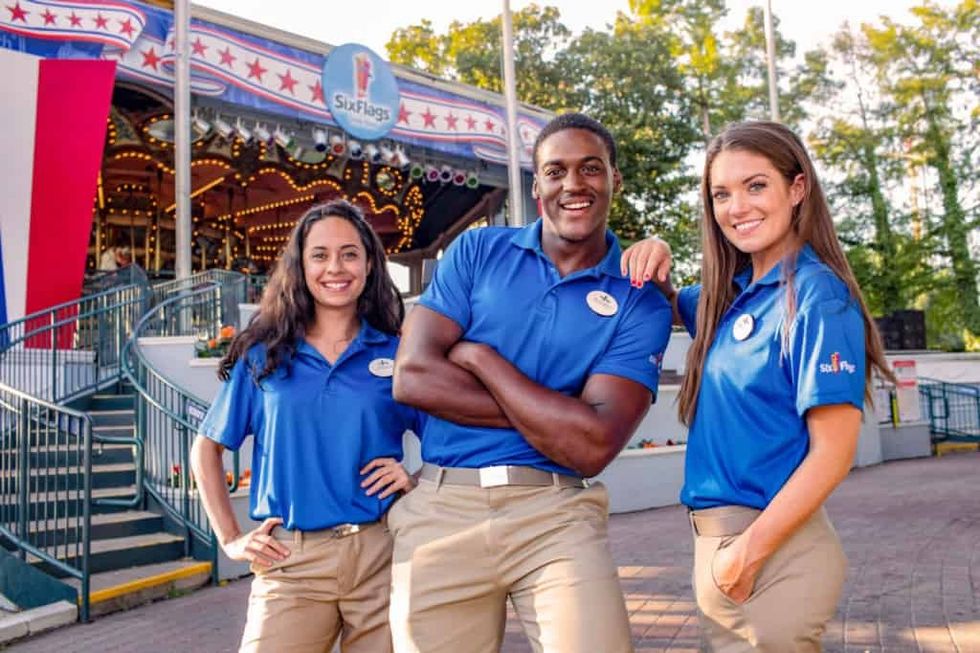
Six Flags team members; an experienced workforce is key
Image courtesy of Six Flags
"It’s critical to capture their valuable institutional knowledge through standardised procedures, effective documentation, and comprehensive training programs to ensure a seamless transfer of expertise to the next generation
The biggest challenges begin with finding experienced ride technicians, controls technicians and welders to replace an ageing workforce, as many skilled professionals are reaching retirement age. — Jamie Gaffney, Six Flags Entertainment Corporation
Modern attractions are no longer purely mechanical systems; they integrate complex show controls, industrial automation, and high-speed communications networks. That requires maintenance teams to possess a far broader skill set than previous generations.
"Recruitment and retention remain one of the most persistent challenges across the attractions maintenance world. Stripping down a ride system in an outdoor environment in the depths of a British winter is not something a job advert sells easily," says Bromilow.
“Beyond people, the ageing of rides presents a growing challenge. Many parks are operating assets that are 20+ years old. Parts availability becomes increasingly difficult, and the institutional knowledge needed to maintain older systems walks out the door every time an experienced maintenance tech retires."
Because attractions engineering expertise is so specialised, learning the intricacies of individual ride models demands significant time and financial investment.
To safeguard operations, parks must build structured apprenticeship pipelines, foster mentorship programs, and digitise procedural knowledge so that critical expertise stays within the park rather than leaving with individual staff members.
Shifting culture and managing operational friction
Perhaps the hardest hurdle facing maintenance leads isn't technical at all—it's organisational perception. Too often, maintenance is still viewed as a necessary loss leader rather than a central driver of business success.
Cost is always a factor—Alex Nicholls, Comply
"Cost is always a factor, as maintenance is still looked upon as a loss-leader instead of how it should be viewed as a partner in success," says Nicholls.
"So, a healthy attitude to the whole premise of maintenance in the first place is what can be hard to come by and thus hugely challenging."
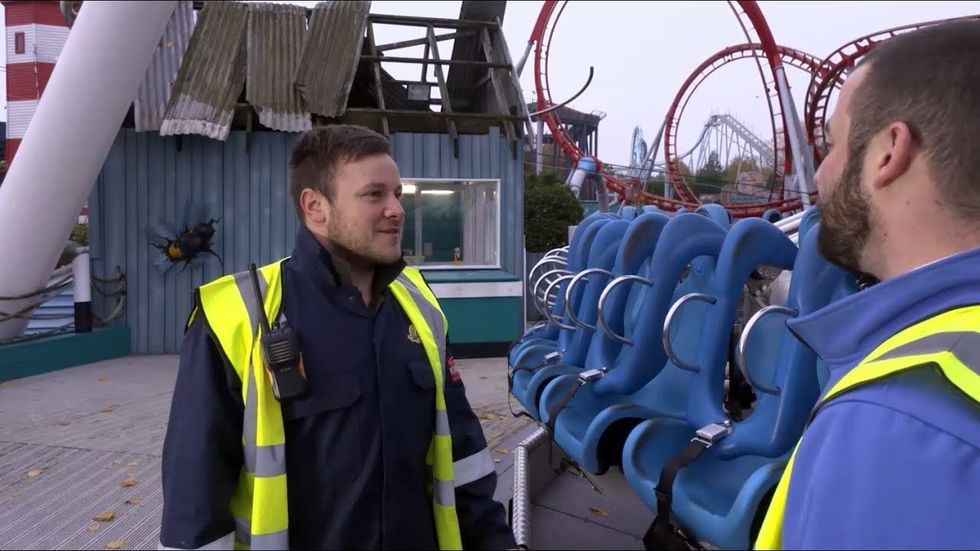
Ride maintenance at Drayton Manor, UK
Image courtesy of Mobaro
Across the sector, target ride uptime typically hovers around 98%. Reaching that number while commercial demands expand is a constant battle.
As parks extend operating calendars to squeeze out revenue, maintenance windows shrink dramatically.
That dynamic regularly creates friction between commercial teams and engineering departments. An extra operating day might look like pure revenue to marketing, but to a maintenance team, it means less overhaul time and more accumulated technical debt.
I can remember the marketing team arriving in my office with their latest idea for an extra operational day. To them it was additional revenue; to me it was one less day for my team and a touch of heartburn. — David Bromilow, Mobaro
When budgets and calendars come under pressure, operators must draw a clear line: safety-critical inspection intervals, staffing levels, and preventive maintenance schedules can never be compromised.
Navigating global regulatory standards and risk assessments
Keeping guests safe across global jurisdictions requires constant alignment with evolving engineering codes and safety standards. Operating teams must stay compliant across a mosaic of regulatory frameworks, including:
- ASTM F24: Standard specifications for amusement rides and devices.
- ISO 17842: International safety standards for amusement ride machinery.
- EN 13814: European standards for fairground and park structures.
Industry bodies like IAAPA and the TEA work closely with standards committees to ensure regulatory changes filter down to parks and OEMs worldwide.
"One of the biggest challenges that OEMs and operators face when maintaining roller coasters and other amusement attractions today would be compliance with continuously updating regulations and standards," says Jones.
"Throughout the world, there are many different governing bodies that play a part in updating standards across the amusement industry, such as the ASTM F24 committee, ISO 17842 and EN 13814."
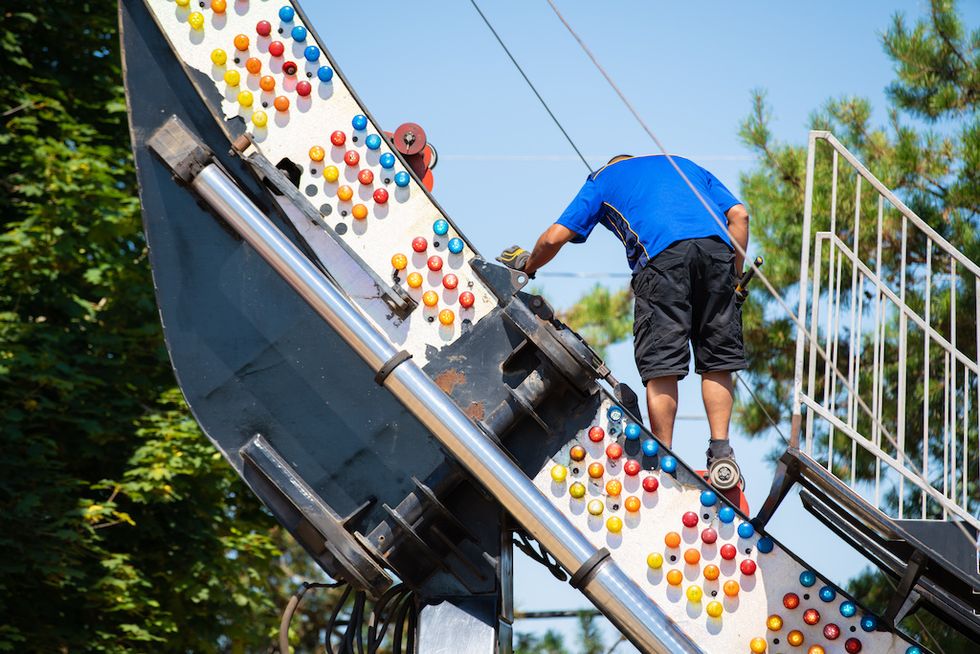
Ride maintenance and inspection is a vital part of attractions management
To comply without causing excessive downtime, operators rely heavily on risk assessments and reliability studies. These evaluations set precise inspection frequencies and help engineers predict component wear.
Post-maintenance analysis and feedback loops must remain fixed agenda items to catch hidden operational "gremlins" before they trigger unplanned stoppages.
Building transparent OEM and supplier partnerships
Extending the lifespan of a major coaster or dark ride depends entirely on the strength of the relationship between the park operator, original equipment manufacturer (OEM), and technology suppliers.
That relationship can no longer end once the ride opens to the public.
Practical, effective collaboration relies on several core workflows:
- O&M manual digestion: Operators must thoroughly review manufacturer Operations & Maintenance manuals, coordinating directly with OEMs to address any operational gaps or unwritten edge cases.
- Bidirectional data sharing: Parks feed real-world performance metrics back to manufacturers to improve future ride designs, while OEMs issue proactive technical bulletins across operating venues.
- Pre- and post-season alignment: Structured calls before and after scheduled maintenance periods allow teams to review performance trends, discuss software updates, and troubleshoot issues directly.
- Annual on-site audits: Inviting OEM engineers for annual on-site inspections provides an independent sanity check and streamlines emergency support when issues arise.
- Specialised technology integration: Combining corporate operator experience with nimble technology developers gives parks access to flexible, innovative tools that extend asset life.
Hollinshead says:
"Partnerships are crucial to the success of any multi-stakeholder project. This shouldn't only apply to operators, manufacturers and maintenance providers, but also to the developers of new technology, the ones who ultimately can provide them with the tools to prolong the lifespan of the attraction and make their processes more efficient."
Partnerships are crucial to the success of any multi-stakeholder project.— Lee Hollinshead, D-Tex Visual Ltd
In the second part of this guide on maintaining coasters and attractions, our industry experts will explore the shift toward condition monitoring, AI edge sensors, drone inspections, and digital twin analytics—innovations poised to shape attraction care over the next decade.