Guide-ID, the audio tour specialist, has shared the results of its audio tour for Anne Frank The Exhibition, developed in partnership with Anne Frank Stichting.
By keeping technology in the background, Guide-ID’s screen-free audio guides help travelling exhibitions and cultural venues create intuitive experiences that keep the focus on the stories being told and the connection they create with visitors.
The company reports a completion rate of over 95% of visitors at the exhibition's New York and Chicago locations, demonstrating the impact of cultural experiences that are easy to follow and feel worthwhile.
 Front-of-house staff need little training to explain to visitors how the Podcatcher Proaudio guide worksImage courtesy of Guide-ID
Jeff Danziger, sales director, North America, says: "We’re incredibly proud that our audio guides are helping visitors experience Anne Frank’s story in such a meaningful way.
"It’s a powerful reminder of why museums matter, preserving history, fostering empathy, and creating unforgettable learning experiences."
In-depth options
Anne Frank The Exhibition debuted at the Center for Jewish History in New York in January 2025, and was on show for over a year.
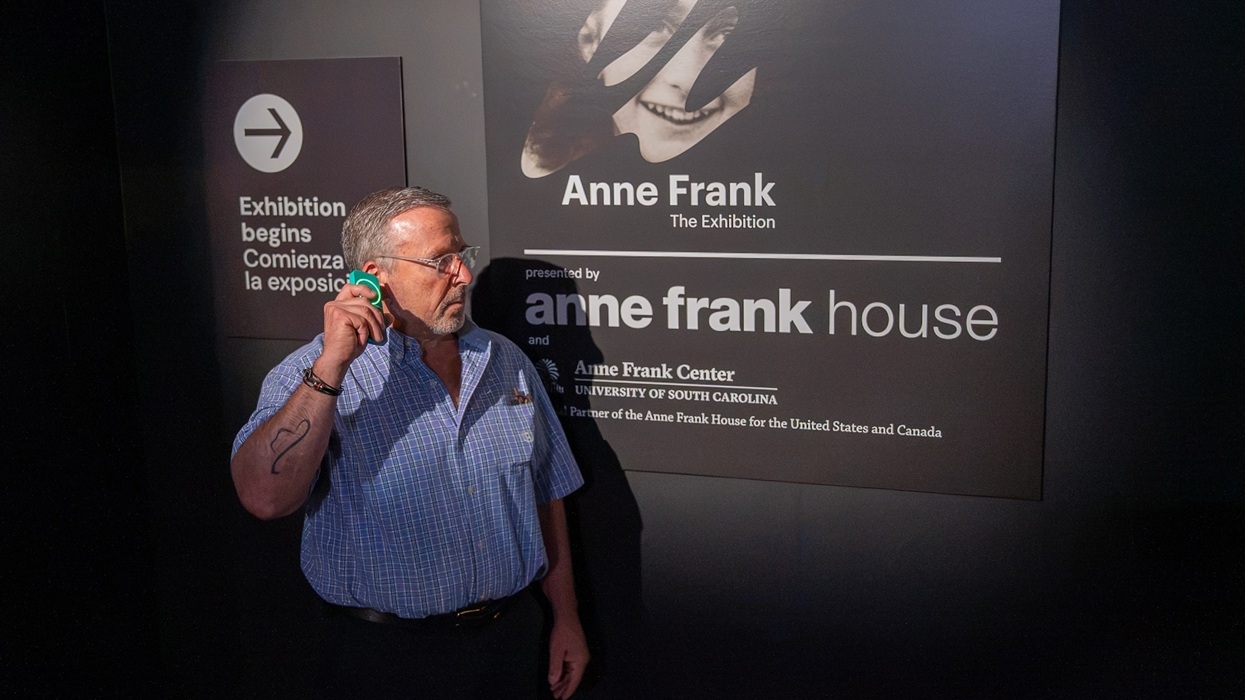
It featured an audio guide delivered via the Podcatcher Pro, a screen-free device that is straightforward to use and minimises distractions. Visitors could choose from three audio tours of different lengths, with the longer route proving most popular.
When the exhibition opened at the Griffin Museum of Science and Industry in Chicago, the setup was extended to include twice as many devices, additional audio-visual sync moments, and Spanish as a language option.
This exhibition run continues until early 2027, with Guide-ID’s analytics showing sustained completion rates of over 95%.
Here, visitors can choose between an adult tour and a student tour, with most choosing the longer option.
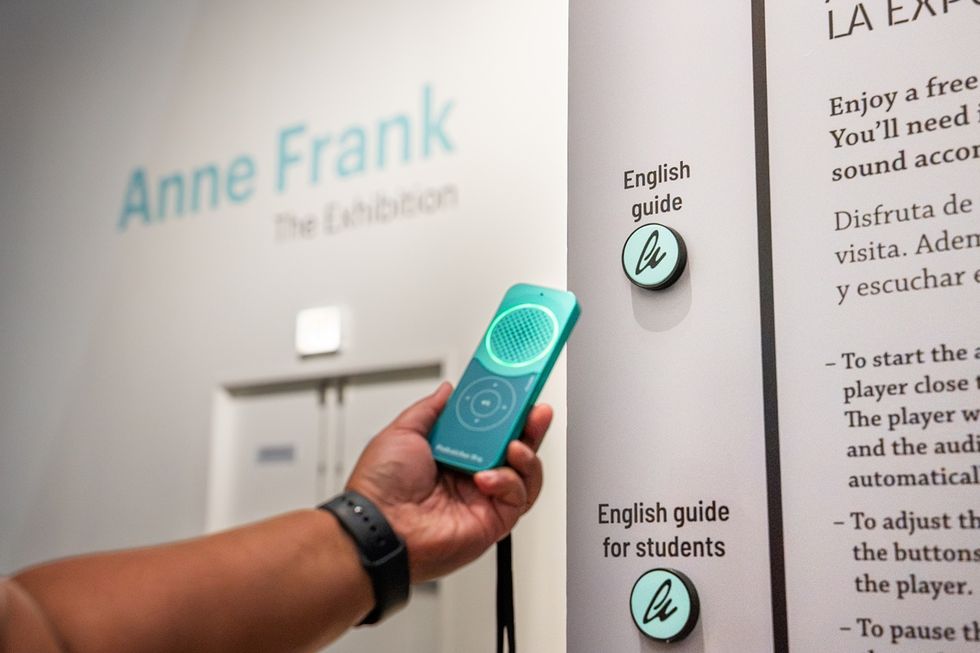 Visitors to Anne Frank The Exhibition in Chicago can select from adult and student tour optionsImage courtesy of Guide-ID
Guide-ID has identified research on visitor attention that helps explain this high completion rate. For example, Stephen Bitgood's Attention-Value Model outlines how people trade their attention for the value they expect in return for their time and effort.
Bitgood also notes that it is often more effective to reduce required effort than to increase value; if it takes too much effort to reach better content, better content does not help. By using a screen-free, easy-to-use format, Guide-ID reduces the effort required and keeps visitors focused on the story.
The company also cites a 2021 study from Rachel Hutchinson and Alison F. Eardley. This found that visitors using an audio description that noted specific visual details remembered more and reported a deeper personal response than those using a standard audio guide and text labels alone.
Although this study tested only one type of guidance in a single setting, it supports the idea that a well-designed audio guide helps visitors look, listen, and connect with the exhibition at the same time.
Combined with results from the Anne Frank The Exhibition audio guide, this research reinforces the idea that easy-to-access experiences that feel worthwhile are more likely to earn visitors' attention.
Last month, Guide-ID celebrated the success of its partner, Art Zoo Museum in Amsterdam, which was named among TIME Magazine's World's Greatest Places for 2026.