
From artist vision to global experience: a new model for touring art
From monumental Trolls built from salvaged timber to immersive structures woven from saplings, a new generation of artist-led experiences is changing the relationship between art, entertainment and destination.
At the centre of that evolution is Imagine, formerly Imagine Exhibitions, which has spent nearly two decades developing, producing, and touring experiences worldwide.
Today, the company is applying that global infrastructure to a growing portfolio of artist collaborations, working with creators including Thomas Dambo, Patrick Dougherty, Gillie and Marc Schattner, and Sean Kenney.
Imagine works with artists to translate their creative vision into experiences capable of reaching audiences across multiple cities, countries and types of venues
For the artists, the model offers something hard to build independently: the infrastructure to take a creative vision to audiences around the world while staying focused on the work itself.
For venues and cities, it provides access to distinctive cultural content that can drive visitation, attract new audiences, encourage repeat visits, and, increasingly, become part of a destination's tourism strategy.
The result is an emerging model in which the artist remains the creative force while Imagine provides the platform that allows the vision to scale.
Building a platform for artist-led experiences
Tom Zaller, president and CEO of Imagine, says artist-led experiences are a natural extension of the company's original mission.
“Starting Imagine 17 years ago, we wanted to build a diverse portfolio of experiences that could serve many different venues, audiences and destinations around the world.

Tom Zaller, president and CEO of Imagine
"But the common thread has always been the same: create extraordinary experiences that give people a reason to get out of their homes and come together to be entertained, educated, inspired and emotionally connected to what they experience.”
Imagine's portfolio spans science, natural history, cultural exhibitions, major entertainment properties and original experiences. Artist collaborations increasingly represent another important part of that strategy.
Zaller traces the idea back to his work helping program exhibitions for the ArtScience Museum in Singapore and, later, to discovering the work of Chicago metal sculptor John Payne, who created life-sized kinetic dinosaur sculptures from recycled industrial materials. After his death, his widow was searching for a way to preserve the collection.
“I fell in love with these dinosaurs,” Zaller recalls. “I told his widow, ‘This collection deserves to stay together, because John's story is part of what makes the work so special.’”
Imagine acquired the collection and transformed it into Dinosaurs in Motion. It became the first exhibition Imagine owned outright. More than a decade later, it continues to tour.
“Dinosaurs in Motion has been touring since 2012, often three cities a year,” says Zaller. “People still love it. There is a giant T-Rex that visitors actually get to move, but they also experience the progression of John's work and understand the artist behind it.”
That experience helped establish a philosophy Imagine still applies today: the most successful experiences don't simply display objects. They create a world around a story and give audiences a reason to engage with it.
See also: Imagine's 15-year evolution: crafting stories beyond exhibitions
When artists become destinations
Imagine later expanded the model into botanical gardens, zoos, and outdoor destinations. One early collaboration was with Sean Kenney, a former Certified Lego Professional, known for creating large-scale sculptures inspired by nature and the animal world.
"Sean was using this form as his medium, creating a natural bridge between an object and the artist who crafted it,” says Zaller. “It wasn't just about assembling something. There was an artist using the medium to tell stories.”
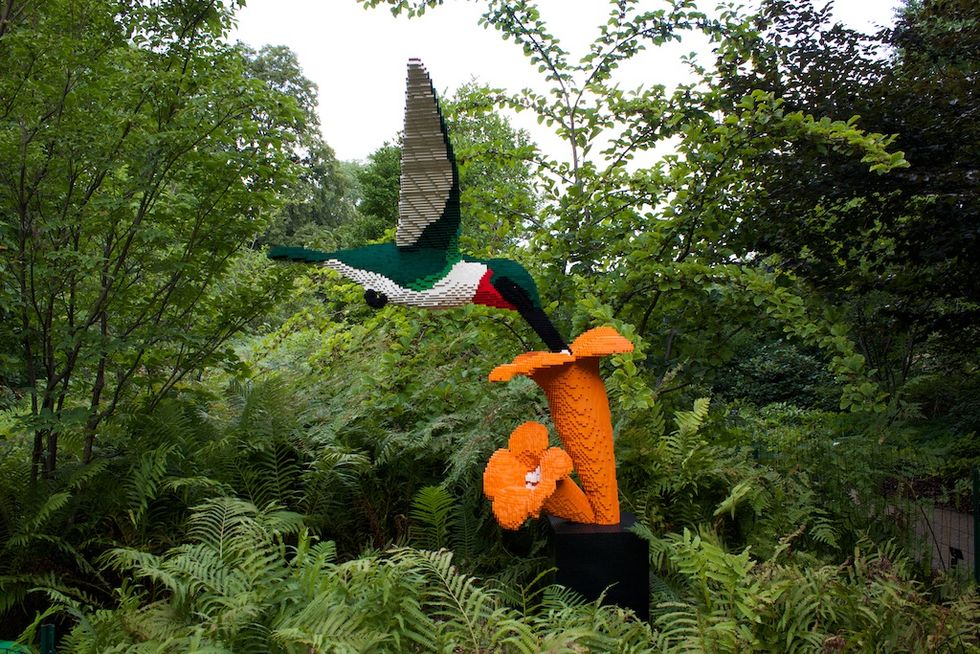
Lego art by Sean Kenney: a hummingbird feeds from a trumpet flower
Image courtesy of Imagine
Kenney explains: "As an artist, I am good at making my sculptures, but knowing how to put them in front of the right audience in the right way requires a completely different set of skills.
"Imagine brings expertise to our partnership that is critical to making my work stand out: creating the audience experience, working with venues, handling logistics—everything that turns a body of work into something people can connect with.
"That's the wonderful thing about our partnership: I can focus on my art, and they get it out into the world, each of us playing to our strengths.”
From artwork to scalable experience
Turning an artist's vision into something that works across markets requires creative development, exhibition design, engineering, fabrication, logistics, operations, marketing, and an understanding of how audiences move through and interact with an experience.
Imagine’s COO & VP of sales, Debbie Donohue, says that combination is increasingly important.

Debbie Donohue, COO & VP of sales at Imagine
“We tell artists: you should continue focusing on what you do best, creating extraordinary work,” says Donohue. “Imagine can build the infrastructure around that vision and help introduce it to audiences around the world.
"We understand how to take existing art and develop it into an experience visitors love while protecting what makes the artist and the work special in the first place.
“Our development, touring, venue, operational and marketing capabilities allow the artist to keep creating while we build and manage the platform that can take that work into new markets.”
That can mean adapting artwork for different footprints, engineering structures for repeated installation, developing interactive elements, creating visitor flow, coordinating transportation and labour, producing interpretive content and determining how an experience can operate financially across very different destinations.
Outdoor work adds another layer: weather, UV exposure, public interaction, landscaping, engineering and environmental conditions all have to be considered.
The objective isn't to standardise the art. It is to build enough infrastructure around the art so the artist's vision can travel.
Thomas Dambo: turning global demand into a touring platform
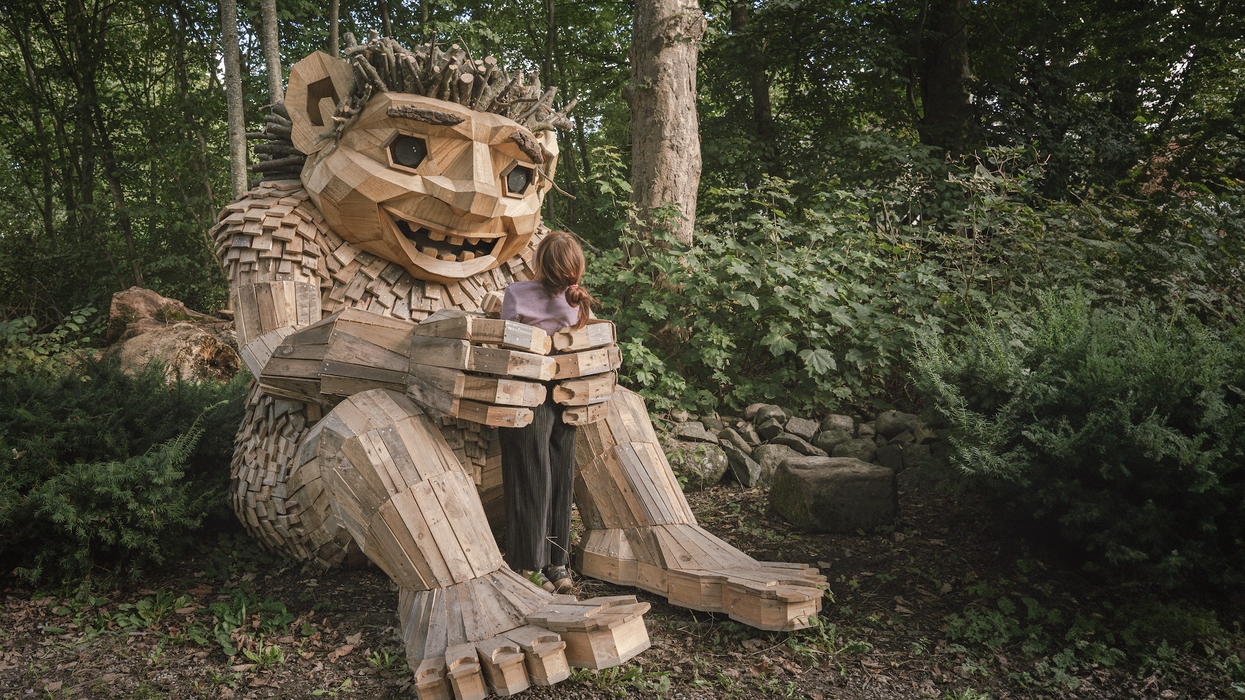
Few collaborations demonstrate the model better than Imagine's work with Danish artist Thomas Dambo, known globally for his monumental Troll sculptures made from salvaged timber and discarded materials.
“For me, building a sculpture is a craft that you can learn and refine. I like to build things with my hands, and I like to build things together with other people that I meet. I like to look into the trash can and have the thrill of the hunt, of finding the treasure in the trash, and the joy of turning it into something beautiful.
“I love to see the families, the kids, and the seniors that go and enjoy my artwork.”
Dambo estimates that over 300 million people have engaged with his creations physically or digitally.
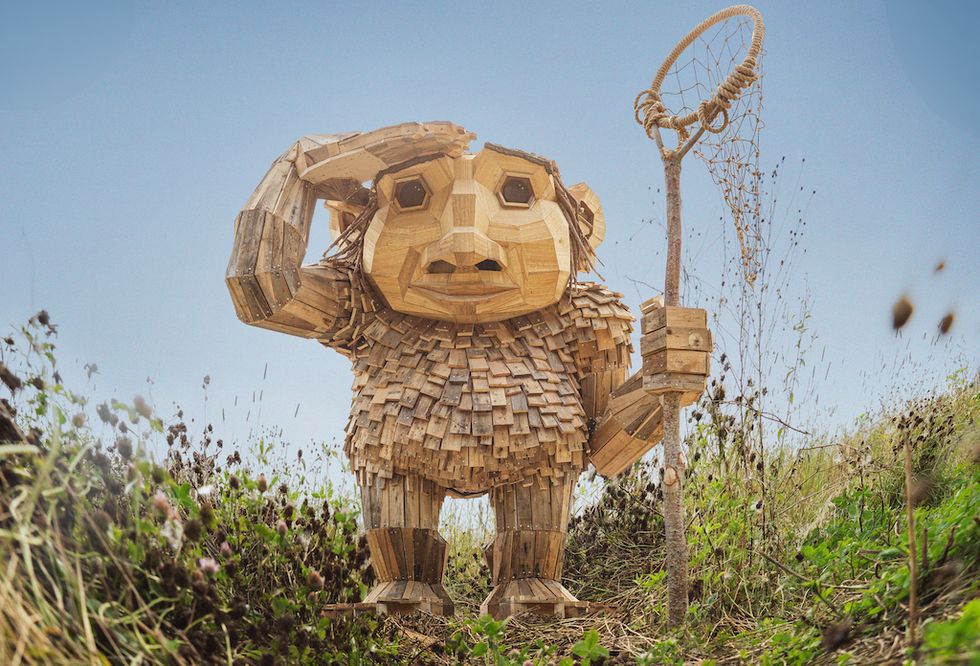
One of Dambo's Troll sculptures on tour
Photo and artwork by Thomas Dambo
He initially built bespoke, permanent Troll installations tied to specific locations. During the pandemic, Zaller proposed a touring framework:
"I said, 'There's another world where you can build a collection once and take it around the world. Instead of the work living in one city, millions of people can potentially experience it. It expands your audience, builds your name and creates an entirely new platform for your work.’
“We launched that show, and the first set was sold out through 2030 right away. Now we have two sets out on the road.”
The model also solves a challenge successful artists often face: demand for their work can eventually outpace their capacity to create new installations. "I'm so busy," he explains.
“Working with Imagine and travelling some of my sculptures around lets me show my work to some of the people who want to see it. It gives me the possibility to try some other things that we can test out and build in my studio in Denmark and send them on the road.”
Imagine doesn't replace the artist's studio. It expands its reach.
Keeping site-specific art connected to place
Scaling an experience does not mean every presentation needs to feel identical.
In Trolls: Save the Humans, for example, Dambo and Imagine incorporated participatory elements that allow each host venue to become part of the work. One Troll holding a massive bucket is paired with stones gathered locally, which staff and visitors use to create custom patterns.
In Trolls: A Field Study, visitors can find themselves caught in a mischievous Troll's net or have their height measured by another curious Troll.
Host venues can also run workshops where visitors build birdhouses from salvaged timber. When the exhibition moves on, the birdhouses remain part of the local landscape.
"The exhibition changes the location around it rather than just being a part of it, leaving behind a little bit of the message. It teaches different lessons about remembering that we share the world with other species.”
That ability to combine a proven touring experience with something authentically local is becoming increasingly important to venues and destinations.
Gillie and Marc: from public art to GO WILD
Imagine is taking a different approach with Australian and British artists Gillie and Marc Schattner, whose public sculptures featuring Rabbitwoman and Dogman combine storytelling, interaction and wildlife conservation.
Their collaboration with Imagine has resulted in GO WILD: An Immersive Animal Adventure.
“For more than 30 years, we’ve believed that art shouldn’t just be something people stand back and look at,” explain Gillie and Marc. “Some of the most meaningful moments happen when people forget they’re looking at ‘art’ and simply become part of it.
“GO WILD feels like the natural evolution of everything we’ve been doing. For the first time, we have the opportunity to bring many of these sculptures together and create an entire world around them.”
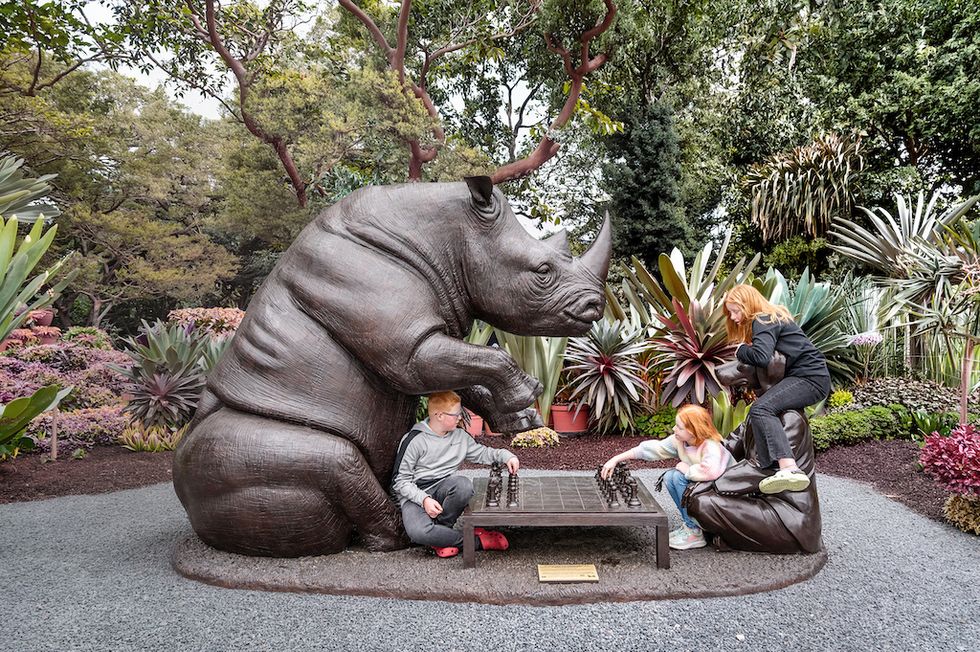
Visitors can engage with Gillie and Marc's work as it tours
Image courtesy of Gille and Marc Schattner
For the artists, an immersive format offers something different from traditional public art.
“Public art has its own incredible magic because people often encounter it unexpectedly on their way to work. An immersive experience gives us something different: time. Time to take people on a journey, to let them explore, interact and become emotionally involved.”
Touring extends that concept even further: “A touring exhibition has a completely different kind of magic. The artwork itself becomes the traveller. Every place it visits will bring something different to the experience, beginning a completely new conversation in every city.”
Creating a legacy for Patrick Dougherty's stickwork
Imagine's partnership with Patrick Dougherty demonstrates another role the model can play: preserving and extending an artist's legacy.
For over 30 years, North Carolina artist Patrick Dougherty has woven tree saplings into immersive Stickwork sculptures, drawing on childhood memories of fort-building to create structures that evoke nests, shelters and hidden spaces.
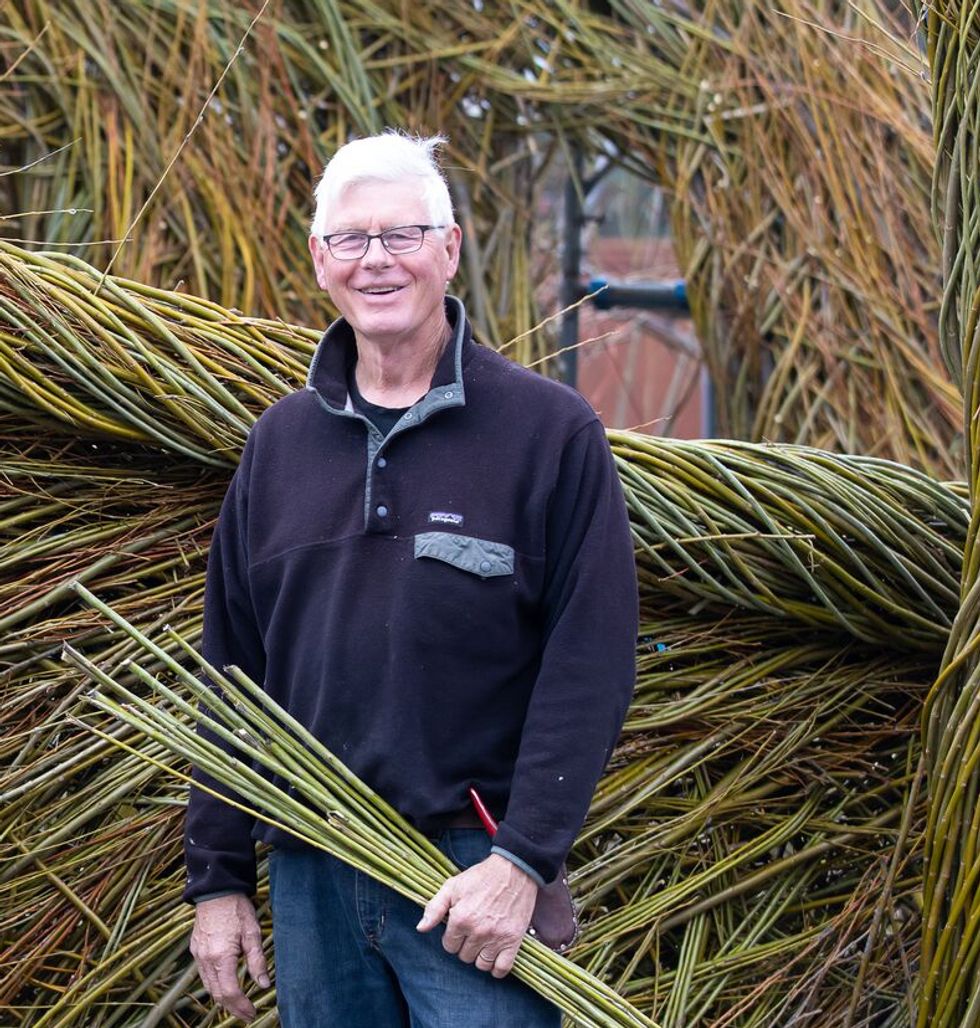
Patrick Dougherty creating one of his stickwork sculptures
Image courtesy of Patrick Dougherty
Dougherty's work presents a particular challenge for touring. Traditionally, each installation was created on site over several weeks using locally harvested saplings. As he approached retirement, Imagine proposed a new idea: create a touring collection that could bring together his work on a scale audiences had never experienced.
The result is UNTAMED HIDEAWAYS: Immersive Stickwork Sculptures.
“Patrick had spent decades creating these extraordinary works individually,” Zaller says. “We saw an opportunity to work with him to create a legacy experience, a collection that could introduce his work to audiences around the world and ultimately become the largest concentration of his work ever presented in one setting.”
Dougherty sees the partnership as a way to keep the work reaching audiences.
“Partnering with Imagine gives me a unique opportunity to reach new audiences," he says. "They have a strong record of presenting celebrated exhibitions in botanical gardens, zoos, and other high-profile venues.”
Why venues are paying attention
For host venues, an artist-led exhibition can deliver value beyond admissions.
"One of the biggest opportunities is that an artist-led experience can give someone a reason to visit a venue they may never have considered before," says Donohue. "Once they're there, the goal is to introduce them to everything else the venue has to offer and give them a reason to return.
"Venues that host our travelling exhibitions often find that 25–50% of attendees are first-time visitors.”
Beyond admissions, venues can benefit from membership conversion, repeat visitation and increased ancillary spending on food and beverage, retail and other offerings.
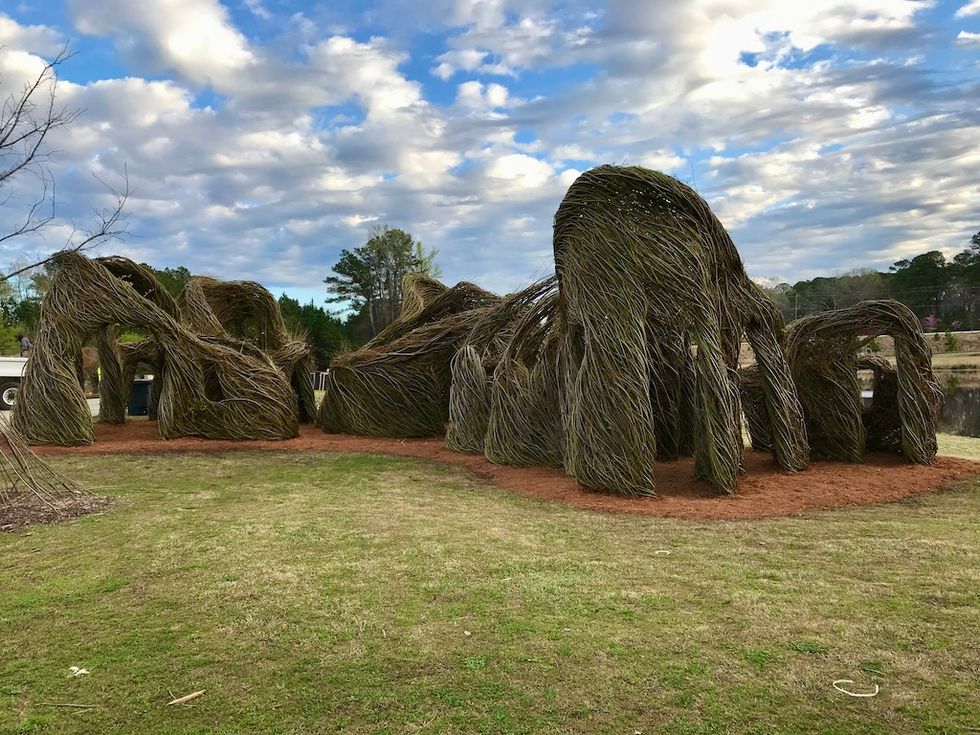
Fly Away Home, a stickwork sculpture by Patrick Dougherty
Imagine is also exploring partnerships with regional destination organisations.
"We're seeing an opportunity to think beyond the individual venue and work with destination organisations that are looking for compelling reasons to bring visitors to their cities," says Donohue.
"An artist-led experience can become part of the destination itself, creating a new tourism draw that encourages visitation, extends stays and ultimately helps drive overnight stays and broader economic impact.”
And touring is only one model.
The same approach can apply to long-term and permanent experiences, allowing cities, developers, and destinations to work with Imagine and artists to create signature attractions unique to a particular location.
What comes next for artist-led experiences
Zaller sees organic landscapes as a canvas for artistic storytelling:
"When you're in nature, you have distance, you have depth, you have colour, you have seasonality, you have undulations in the earth. There are so many unknowns from place to place that help bring the art to life in such a cool way.
“Artwork gives people another reason to come. It's a win for the artist, a win for the venue, a win for us as producers, and a win for the visiting public.”
For Imagine, the future lies in bringing together three groups that need one another: extraordinary artists with stories to tell, destinations searching for new reasons to visit, and audiences looking for meaningful experiences in the physical world.
Donohue sees continued opportunities to expand the model: "I think one of the greatest opportunities is continuing to let artists lead the creative process and focus on what they do best, while we at Imagine find the solutions that allow that vision to become a successful touring experience.
"The industry can think much more broadly about what an attraction can be, where it can live and the kinds of creative voices that can be part of it.”