For decades, natural history museums have mainly served to document the natural world, preserve specimens, and inform the public about what has gone before.
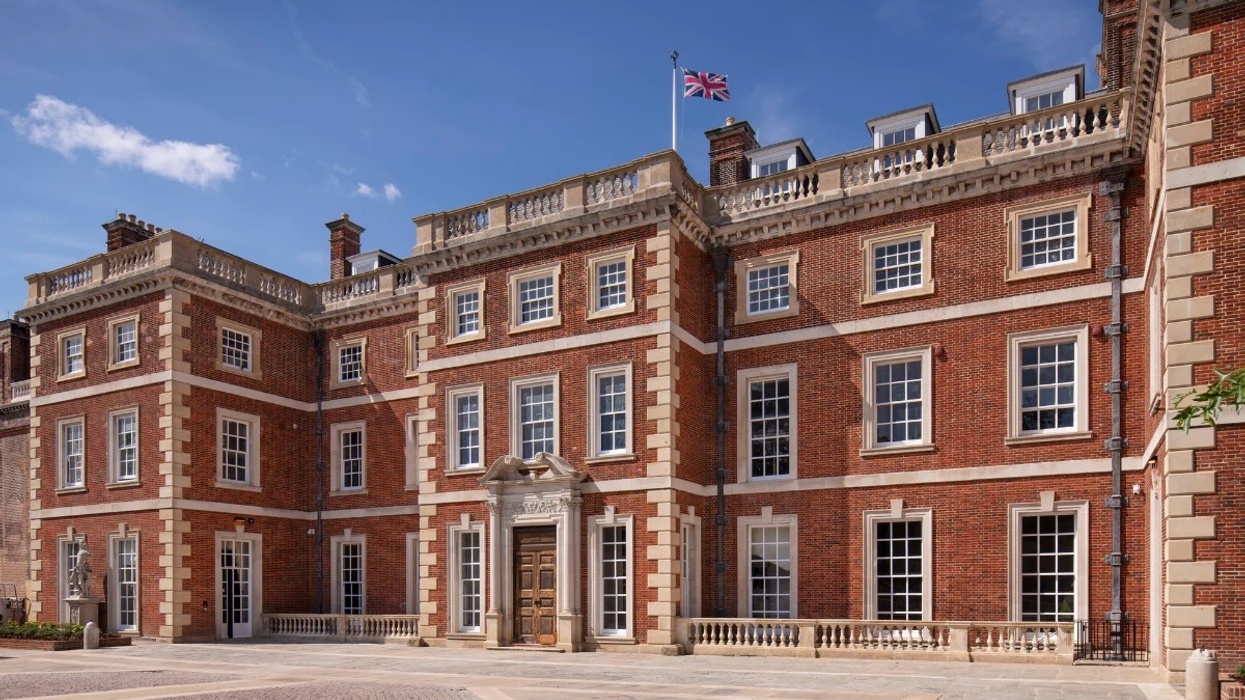
However, today, in the face of a rapidly accelerating planetary emergency, these institutions are uniquely positioned to leverage their immense public trust and scientific authority to shape the future, and nowhere is this evolution more evident than at London's Natural History Museum (NHM).
Transitioning from a traditional "catalogue of natural history" to a "catalyst for change," the institution has fundamentally reimagined its relationship with its audience.
In a recent greenloop sustainability webinar, we brought together key figures behind the museum's landmark Fixing Our Broken Planet initiative.
 A recent greenloop webinar explored Fixing Our Broken Planet with the Natural History Museum
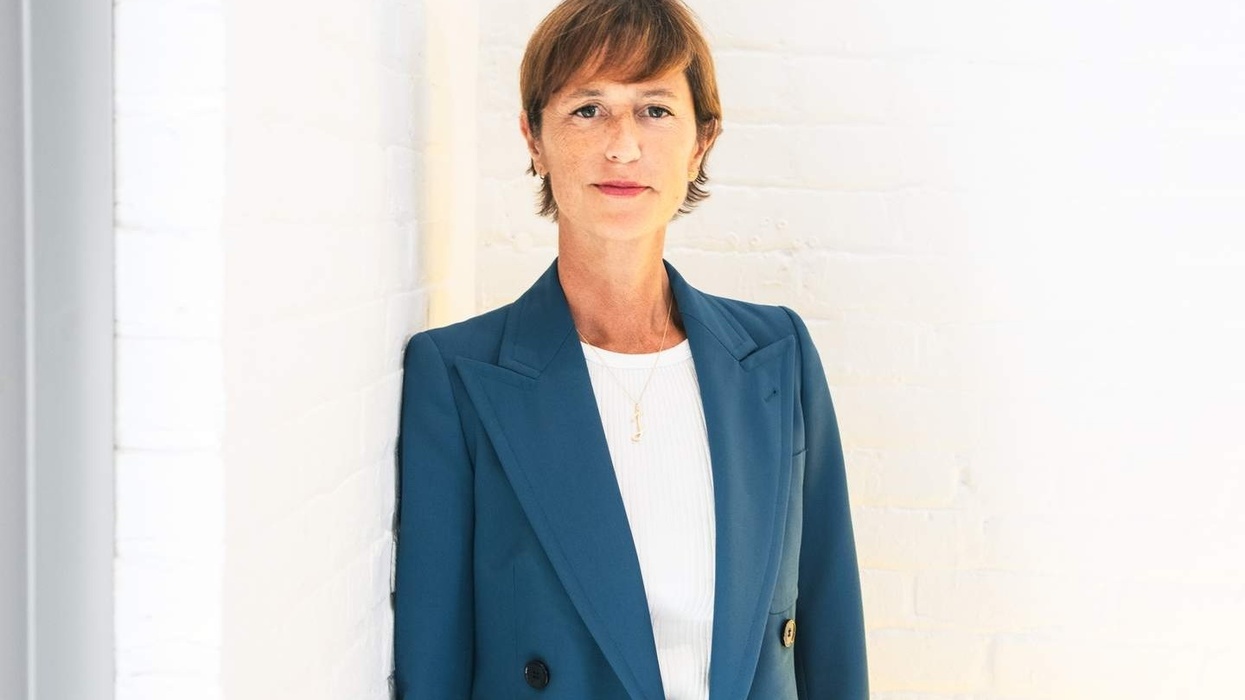
The webinar panel featured Meg Macdonald, senior project and programme manager; Gabriela Marrero Vasquez, gallery architect and design manager; and Pippa Gittings, lead for the Find Your Climate Action digital tool.
Together, they outlined the sustainable "fabric-first" design of the new permanent gallery, the innovative digital tools to empower visitors, and the ambitious global outreach programmes that demonstrate that science-led hope is the ultimate antidote to climate anxiety.
Creating the Fixing Our Broken Planet gallery
The story of the Fixing Our Broken Planet gallery begins during the COVID-19 pandemic.
According to McDonald, who has delivered public-facing projects at the NHM for more than 14 years, the initiative was born of a shifting museum strategy to create advocates for a planet where both people and nature can thrive.
"We had paused a couple of projects whilst everything was locking down, and everybody was talking about it, and it came out of [that moment] as feeling like an urgent story to tell."
 L to R: Meg Macdonald, senior project and programme manager; Gabriela Marrero Vasquez, gallery architect and design manager; and Pippa Gittings, lead for the Find Your Climate Action digital tool
Working with a very limited budget, the museum asked its active scientists and researchers to suggest pressing stories. The resulting temporary exhibition, Our Broken Planet: How We Got Here and Ways to Fix It, launched in 2021 to coincide with the museum's reopening.
The response was huge.
The temporary exhibition welcomed more than a million visitors in just under a year and was a finalist in the 2022 UN SDG (Sustainable Development Goals) awards.
"It found a lot of success, and so did its supporting programme, which led to us putting a permanent gallery in," Macdonald says. This permanent gallery, which opened in April 2025 in a newly restored space, sits directly across from the iconic dinosaur exhibits to capture maximum footfall.
Since its opening, the museum has welcomed over 2.8 million visitors into the gallery. "It reached its first million in only four months of being open," adds McDonald.
The 5 S's: delivering science-led hope
At the heart of the gallery's success is a rigorous yet accessible interpretive approach, which the museum team calls the "Five S's". This framework ensures that every story told on the gallery floor is grounded in tangible research while remaining relevant to visitors' daily lives.
"It uses a specimen from our vast collection at the NHM," Macdonald explains.
"It features the voice of the scientist talking about the science that they are doing and leading towards looking at solutions to problems that we're facing, and also how society as a whole features in this planetary emergency."
A key lesson from the 2021 temporary exhibition was the trust the public places in scientific experts.
"We found that actually, the voice of the scientists really resonates with the public," says Macdonald.
"There's such a high level of trust in the voice of the scientist, so it's a perfect way, not only to forefront our science, but also to give a trusted, hopeful voice to people when talking about these large problems."
Hope is not merely an emotional by-product of the exhibition; it is a strategic necessity. Macdonald emphasised that moving visitors from passive concern to active engagement requires a foundation of optimism.
"If you don't first make people believe that there is hope, they will have no incentive to go off and do the things that we're encouraging them to do."
Beyond the physical space in South Kensington, the programme extends globally.
The initiative includes a "self-build" touring model that eliminates emissions from international shipping, a free 2D touring exhibition that recently visited Bangalore, and an interconnected programme that provides grants to smaller UK museums to host their own versions.
A flagship element of this global outreach is Generation Hope, an annual event that draws on a network of international climate influencers and young activists, giving them a platform to converse directly with NHM scientists and visitors.
Sustainable gallery design
For a museum dedicated to fixing the planet, building a gallery using traditional, high-carbon construction methods was completely out of the question.
Marrero Vasquez, the gallery's architect and design manager, was tasked with creating a permanent gallery that adhered to sustainable design principles.
"Sustainability really underpins all of our builds, but especially this one, where we were addressing the planetary emergency," Marrero Vasquez explains. "So we have to be ultra careful about what we are using.
"How can we build less but still tell really impactful stories? How can we be really light with our materials? How can we build wisely, being low carbon and ultimately also being future-proof and robust?"
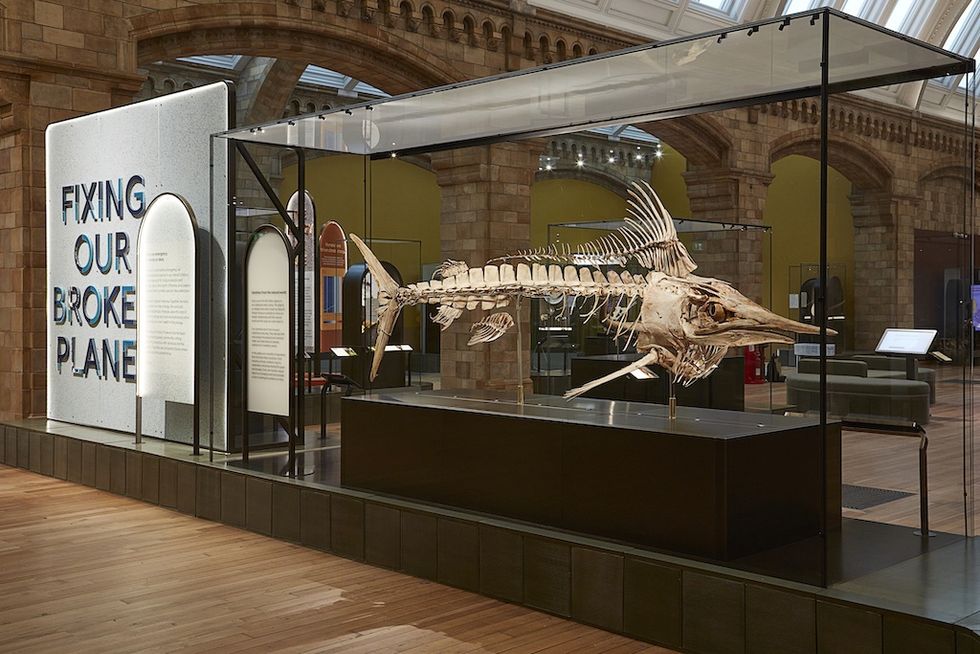 Sustainability was a key consideration in the design and build of NHM's Fixing Our Broken Planet Image courtesy of NHM
Balancing sustainability with the stringent conservation requirements of a world-class natural history collection is no easy feat. The team had to account for fire safety, security, and intensive Integrated Pest Management (IPM) to protect the organic specimens.
Because of these non-negotiable requirements, the design team knew they were locked into using certain carbon-intensive materials, such as glass and steel, for showcases.
To offset this, Marrero Vasquez and her team appointed a specialist sustainability consultant. They utilised the rigorous Royal Institution of Chartered Surveyors (RICS) whole-life carbon assessment standard—a methodology usually reserved for constructing entire buildings rather than internal gallery fit-outs.
The Key Performance Indicators (KPIs) went far beyond simple carbon tracking. "We also looked at Circular Economy, recycled content. How much are we reusing? What's the actual recyclability of our materials after we've used them?"
The team also adopted methodologies from the BREEAM and Living Building Challenge standards, ensuring the gallery was entirely Red List free, meaning it contains no materials known to pose serious risks to human health or the environment.
Minimalist and deconstructable
To maintain control over their environmental impact, the design team drastically reduced their material palette to just four or five core components: glass, steelwork, 3D-printed ceramics, and recycled plastics. The plinths supporting the displays are a prime example of this approach.
"All of our plinths were made of these two materials: the 3D-printed ceramic, which has a lot of recycled content," says Marrero Vasquez. "They're clay-based, so completely cement-free... And they are also held together by this 3D printed cellulose piece that you can see holding it all like building blocks."
Crucially, the entire gallery was designed for end-of-life disassembly. Instead of adhesives, materials are bolted together mechanically to make them easier to recycle.
However, pioneering these sustainable construction methods in the museum sector required significant education and collaboration with contractors.
The NHM team issued highly detailed spreadsheets to potential contractors, demanding full transparency on material volumes, chemical components, and recycled content.
"Getting contractors to get on board with that... was a big challenge for all of us," says Marrero Vasquez.
Furthermore, using cutting-edge sustainable materials often meant working with suppliers who lacked standard Environmental Product Declarations (EPDs), requiring NHM's consultants to help generate this critical data from scratch.
There were also hard lessons learned about the hidden carbon footprint of supposedly "green" materials.
"We did find out lots of materials, for example, recycled plastic suppliers, who are not using clean energy, then actually it's quite a labour-intensive process. So then a carbon footprint of that recycled plastic, which sounds really lovely, is actually really high."
The Find Your Climate Action tool
While the physical gallery and its sustainable design provide an inspirational backdrop, NHM recognised that true advocacy requires providing visitors with clear, actionable next steps. This is where the 100% digital Find Your Climate Action tool comes into play.
Gittings, who has been a digital product manager at the NHM since 2018, led the development of this interactive platform.
The tool was specifically designed to reach audiences with digital scalability and answers the common visitor sentiment: "I feel guilty and powerless. I want to do more for the planet, but I don't know where to start."
Through extensive user research with 16- to 35-year-olds in the UK, Gittings and her team identified a specific user archetype they called the "quiet advocate."
These are individuals who are willing to take personal actions to help the planet but are not yet comfortable engaging in public, community, or campaigning actions, such as writing to their MP or joining protests.
"They feel guilty about not doing enough for the planet, and they do feel this pressure to be perfect as well," Gittings says. "A lot of them were saying things like, 'It can feel like either you go vegan or there's no point'."
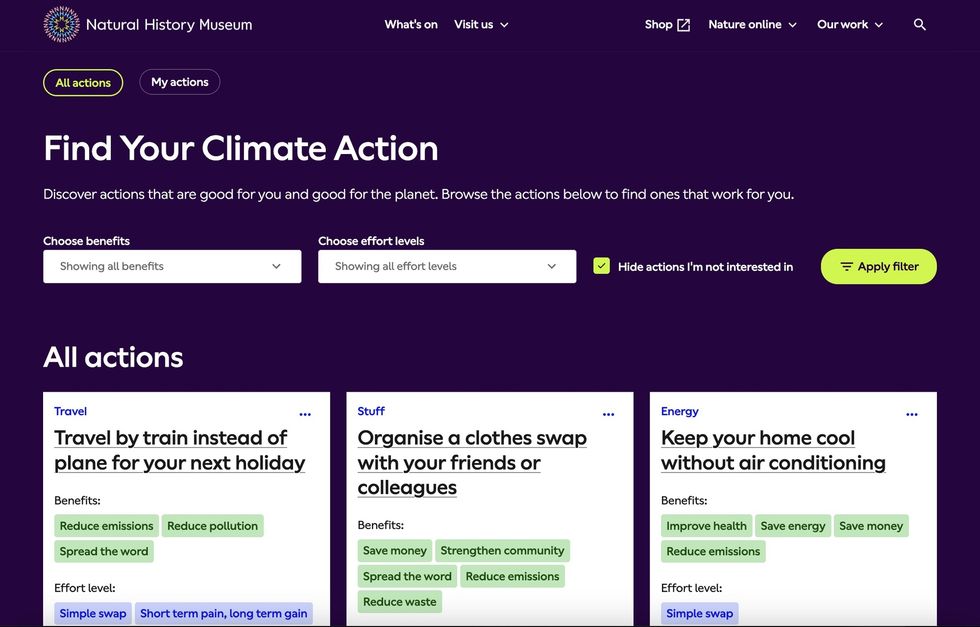 The Find Your Climate Action tool from NHM shows simple changes that can make a difference
To overcome this paralysis by perfection, the Find Your Climate Action tool was designed around the concept of "guilt-free choice without checklist pressure". It avoids the gamification tactics common in modern apps, deliberately omitting daily streaks, leaderboards, and completion goals.
"It's tempting to be the Duolingo for actions for the planet, but that really would counter the need of a lot of our audience, which is to be given a list of actions, but not pressured or forced to take them."
Each action offers clear benefits, such as saving money or improving local communities, and lets users filter by their preferred level of effort.
Since its launch, it has attracted over 20,000 visits. Surprisingly, some of the most popular actions chosen by users diverge from standard environmental tropes.
"We've seen the most popular actions be things like mending and repairing clothes, switching to a greener bank and volunteering at a community garden," Gittings shares.
"Our hypothesis is that those are less frequently mentioned than the more classic ones, like eat less meat, or shop less."
The format has also been adopted internally by the NHM's sustainability team to create a "Green Champions" scheme for staff, demonstrating the versatility of this guilt-free, recipe-based approach.
Measuring impact: from intent to action
A persistent challenge for the museum industry is measuring the long-term impact of an exhibition after visitors leave the building.
When asked about tracking this transition from intent to action, Macdonald acknowledges the difficulty of the task." It's an excellent question, and it's something that the museum has had to think very hard about, about how you actually measure creating advocates."
While the digital Find Your Climate Action tool provides tracking analytics, understanding behavioural changes among physical gallery visitors requires a different approach.
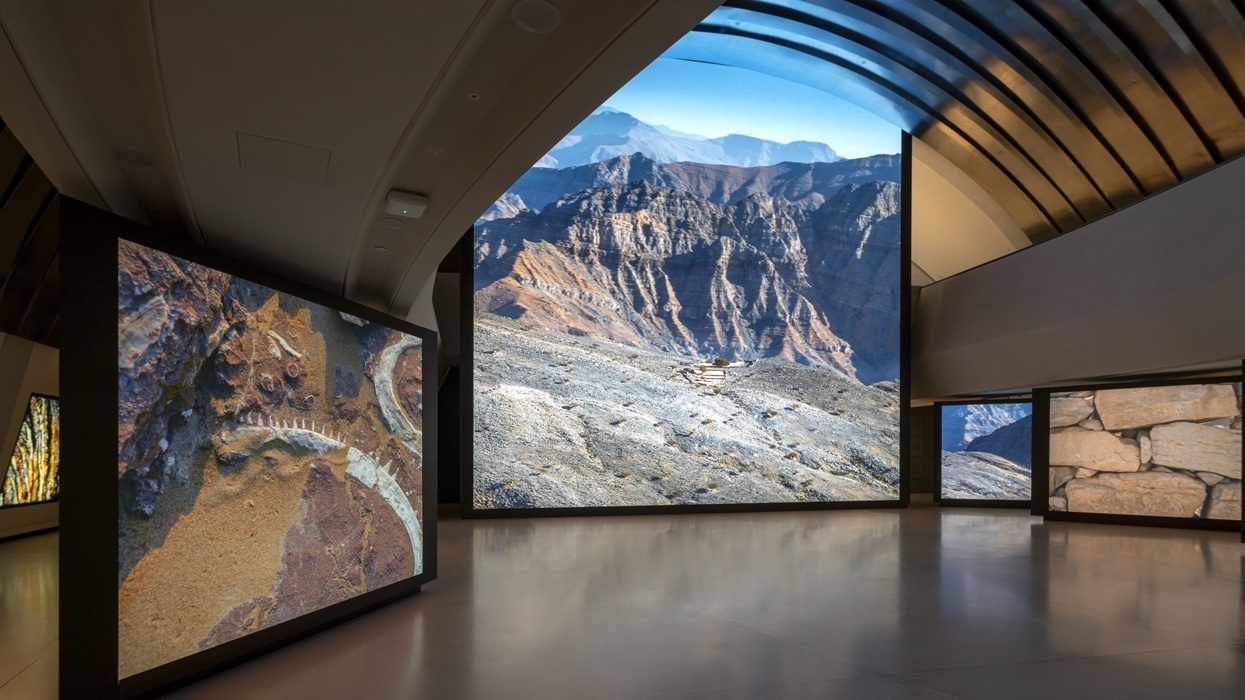
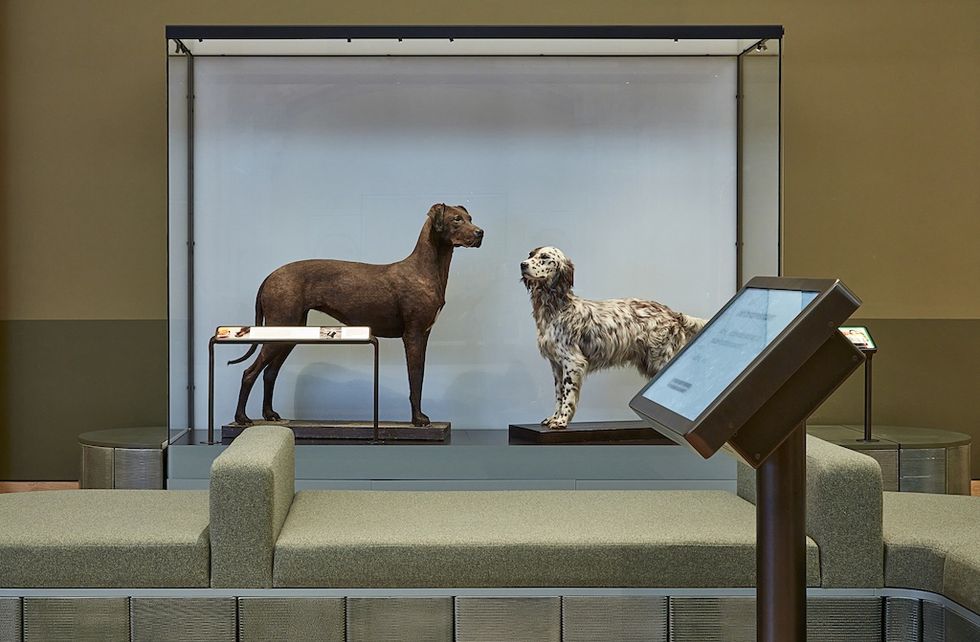 Fixing Our Broken Planet includes over 200 specimens, from a Sumatran rhino to an ancient cow skull, to tell the story of our impact on the natural world and explore the opportunities to save itImage courtesy of NHM
Alongside standard exit surveys and tracking a small cohort of highly engaged visitors over time, the NHM employs an innovative, low-friction interactive tool on the gallery floor called "Conversation Starters" These touchscreens pose complex, contemporary geopolitical questions to visitors.
Macdonald gives a prime example regarding the sourcing of green energy materials: "There's a question that's about mining the deep sea to get the resources we need to resource the green economy...They can say yes or no."
Because the tool requires no personal data and immediately shows users how their opinions compare with others', it serves as a highly effective pulse check on public sentiment.
"It's a really casual way to get a snippet of information about how the public is viewing these," Macdonald says, adding that the software allows the NHM to easily update questions to keep pace with changing policies and scientific breakthroughs.
NHM 150 and a legacy of sustainable design
As the Fixing Our Broken Planet gallery continues its permanent residency, NHM will keep the content dynamic.
"We have committed to regular updates to the gallery, because it is such contemporary science, we need to make sure that we are staying accurate and relevant," Macdonald says.
More broadly, the rigorous sustainable design practices pioneered by Marrero Vasquez and her team are setting a new institutional standard. The museum is currently embarking on NHM 150, a major redevelopment project celebrating 150 years at South Kensington, with five new galleries opening over the next five years.
"All of the lessons that Gabriela and the team were able to collect whilst doing the work with the sustainability consultant, we will be able to apply to all of those projects," Macdonald adds.
"We will be embedding sustainability consultants in our design and build projects going forward."
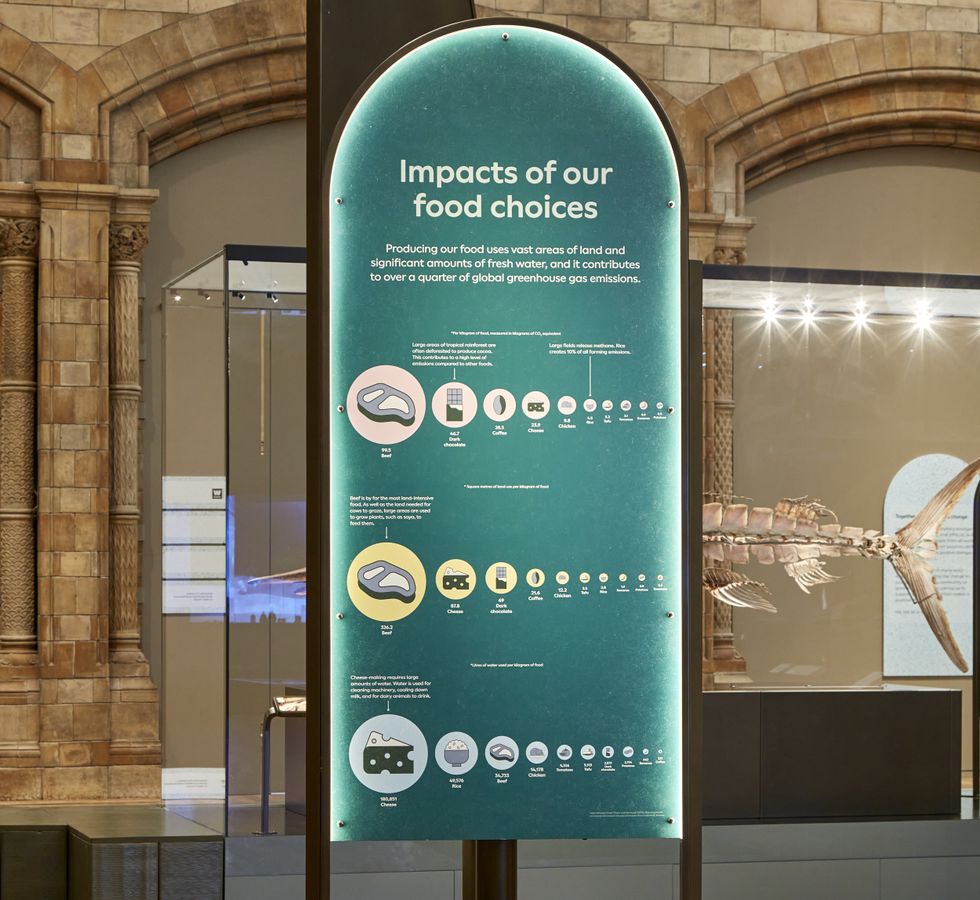 Fixing Our Broken Planet explores topics such as the food we eat, the energy we consume, the stuff we use and the impact of all of this on our healthImage courtesy of NHM
For Gittings and the digital team, the goal is to expand the Find Your Climate Action tool from its initial 21 actions to around 50, continuously reviewing the science and linking specific actions to seasonal prompts in the "Planet Fixes" newsletter.
When asked what the panel would wish for if given a "magic greenloop wand" to perfect their sustainability efforts, Marrero Vasquez wished that the industry would adopt sustainable practices as standard.
Both Macdonald and Gittings wished for a magical ability to track the long-term impact of their work—to definitively see their visitors step up the advocacy scale and bring about the change the museum set out to inspire.
Through initiatives such as Fixing Our Broken Planet, the Natural History Museum is doing exactly that. By blending world-class scientific authority with cutting-edge sustainable architecture and empathetic, user-centric digital tools, the NHM provides a masterclass for the attractions industry.
It is proving that museums can, and must, be much more than catalogues of the past; they are essential catalysts for our collective future.