
Ralph Appelbaum Associates (RAA), a multidisciplinary firm specialising in the planning and design of museums, exhibits, educational environments, and visitor attractions, is celebrating the opening of The Obama Presidential Center Museum in Chicago’s Jackson Park.
RAA led the exhibition design effort in collaboration with the Obama Foundation Museum team and a broad team of creative partners and specialists.
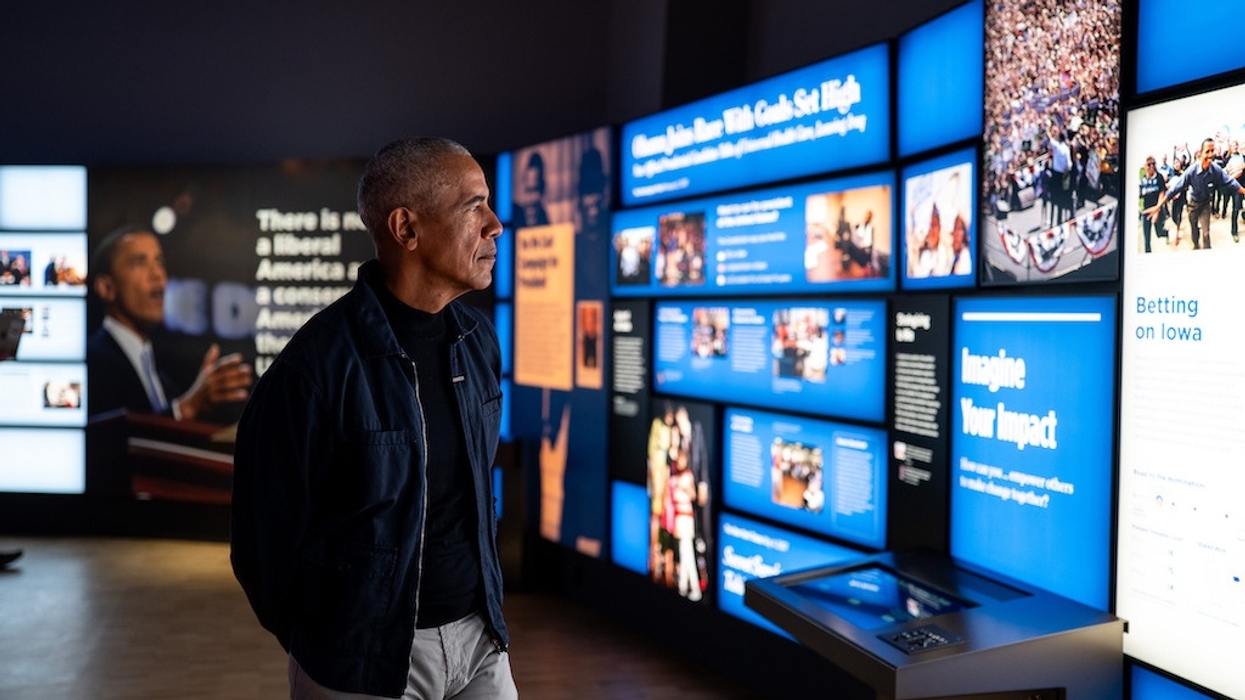
The museum, which opened on 19 June 2026, spans four levels and nearly 35,000 square feet of exhibits and tells the inspiring story of President and Mrs Obama, highlighting their historic roles as America’s first Black president and First Lady.
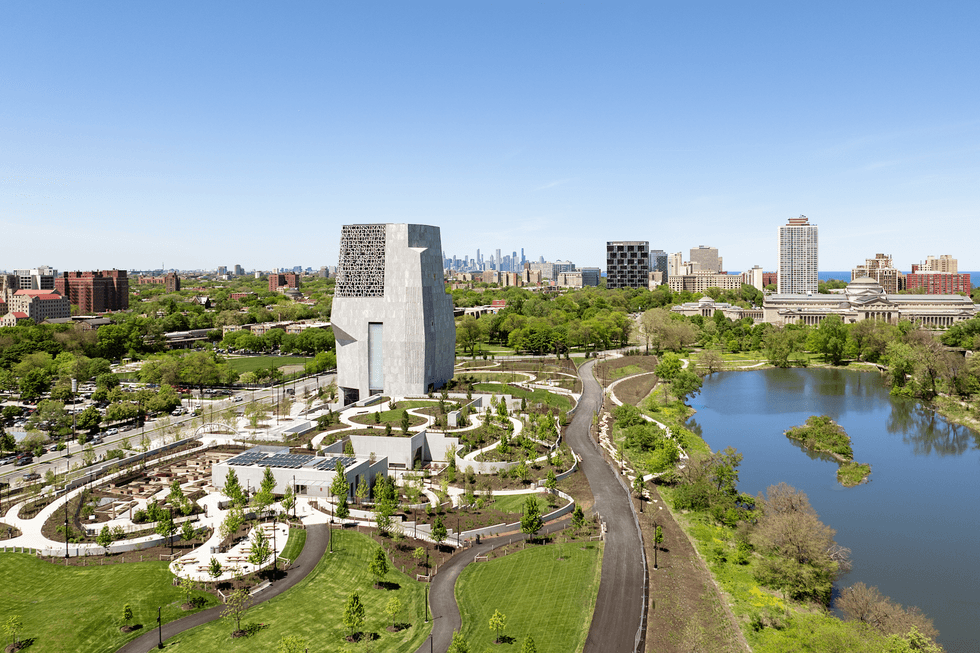 The Obama Presidential Center is a 19.3-acre museum campus in Chicago’s historic Jackson Park Image credit Obama Foundation
The exhibit journey covers themes of history, democracy, public service, and the collective power to enact change.
Visitors at each of the four levels can delve into the promises and complexities of American democracy, learn about the foundational moments that shaped the Obamas, explore the achievements of the Obama presidency, and reflect on the collective responsibility to build a better union.
See also: How US visitor attractions are celebrating America’s 250th anniversary
A collaborative project
The design team comprised firms and individuals with expertise in public interest design, artistic practice, architecture, media, lighting, acoustics, and civic storytelling, with significant contributions from Chicago-based creative collaborators.
This included Civic Projects Architecture, which served as the exhibit design and documentation partner, and Normal Studio, which served as the exhibit graphic design partner. Electrosonic provided AV technical design and integration.
Artists and educators Amanda Williams, Andres L. Hernandez, and Norman Teague played an important role in the formative concept phase, helping to shape the artistic vision and civic spirit of the work; Teague continued with the project through the design and production of the Museum galleries’ inclusively designed wooden benches.
From the outset, the team structure reflected the project's values: collaboration, local engagement, creative excellence, and inclusive participation.
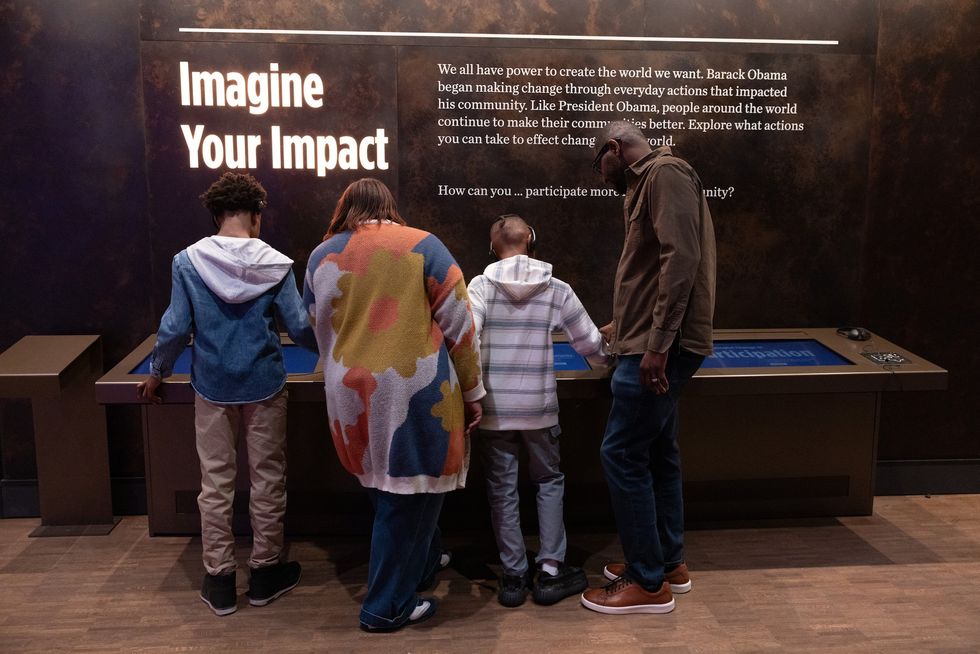 The collective power to enact change is a key theme at the Obama Presidential Center MuseumImage credit Obama Foundation
Nearly half of the exhibition design work for the Obama Presidential Center was carried out by minority- and woman-owned businesses.
The RAA team crafted a layered visitor journey across four main exhibition levels: Toward a More Perfect Union, Working for the Common Good, The People’s House, and We the People.
These galleries guide visitors from the founding principles of the nation and its ongoing development, through the people, movements, policies, challenges, and achievements that defined the Obama presidency, and into pressing civic issues of today and the future.
Using artefacts, immersive media, storytelling, and interactive digital and analogue experiences, the Museum links history to current action, encouraging visitors to view democracy as a dynamic, collective effort by ordinary people.
A story of possibility
At its heart, the Museum is a story of possibility: what becomes possible when ordinary people organise, participate, lead, listen, and act in common purpose.
The exhibits place President and Mrs Obama’s journey within a broader American civic narrative, one rooted in Chicago’s South Side, shaped by national and global movements for justice, and carried forward by the people who continue to drive change in their communities, including participants in the Obama Foundation’s Global Programs.
Visitors leave with a deeper understanding of the Obamas’ legacy and a renewed sense of their own agency in the ongoing work of democracy at home and abroad.
Highlights include Power of Words, an 88-foot-tall media canvas featuring speech, sound, images, poetry, and art, illustrating how words can inspire action and motivate people toward change.
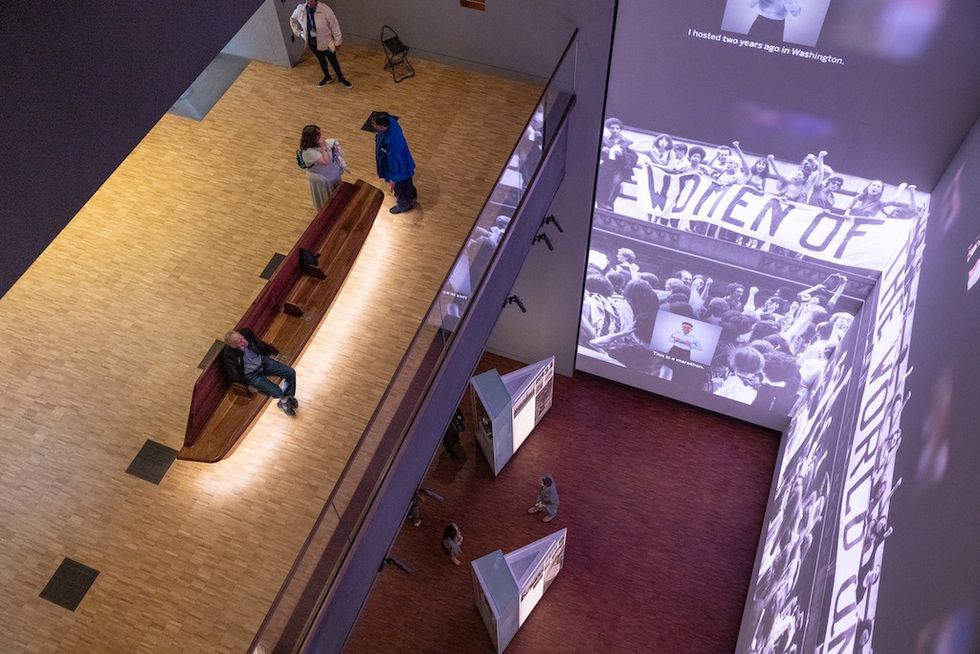 Power of Words, an 88-foot-tall media canvas at the Obama Presidential Center MuseumImage credit Obama Foundation
The exhibit Toward a More Perfect Union' presents an illuminated, prismatic opening gallery that links the nation’s founding ideals and contradictions to the movements and individuals who have advanced American democracy toward greater justice and inclusion.
The YES WE CAN campaign is represented by a dynamic circular gallery showcasing a panoramic media installation of volunteer voices alongside crowdsourced campaign artefacts, immersing visitors in the energy of the 2008 grassroots movement.
Meanwhile, Democracy 101 offers an interactive, hands-on civics exhibit that lets visitors explore how democracy works through engaging experiences that foster knowledge, confidence, and participation.
The Panorama of a Presidency features a comprehensive media room offering a behind-the-scenes view of the activities and locations that constitute the presidency's daily work.
Additionally, detailed miniature rooms of the White House present a playful and intimate look at how the Obamas opened the People’s House through traditions, celebrations, performances, and public programmes.
Life in the White House artefacts showcase a rich collection of fashion, state gifts, and sports memorabilia that illustrate how the Obamas made the White House feel welcoming, inclusive, personal, and reflective of America’s diversity and vibrancy.
Accessibility and inclusion
The museum experience invites visitors to imagine their impact, encouraging reflection on how individual actions can come together to create collective change through a shared media experience and a large-scale digital art commission.
The museum's design supports visitors of all ages and abilities through accessible, multisensory features, including tactile stations, replicas, captioning, ASL interpretation, audio descriptions, assistive listening devices, clear wayfinding, and opportunities for interactive participation.
Plus, the exhibits feature artworks by artists including Jeffrey Gibson, Jules Julien, and María Magdalena Campos-Pons, alongside Teague’s custom-designed benches, offering layered visual expressions of identity and hope that enrich the visitor experience.
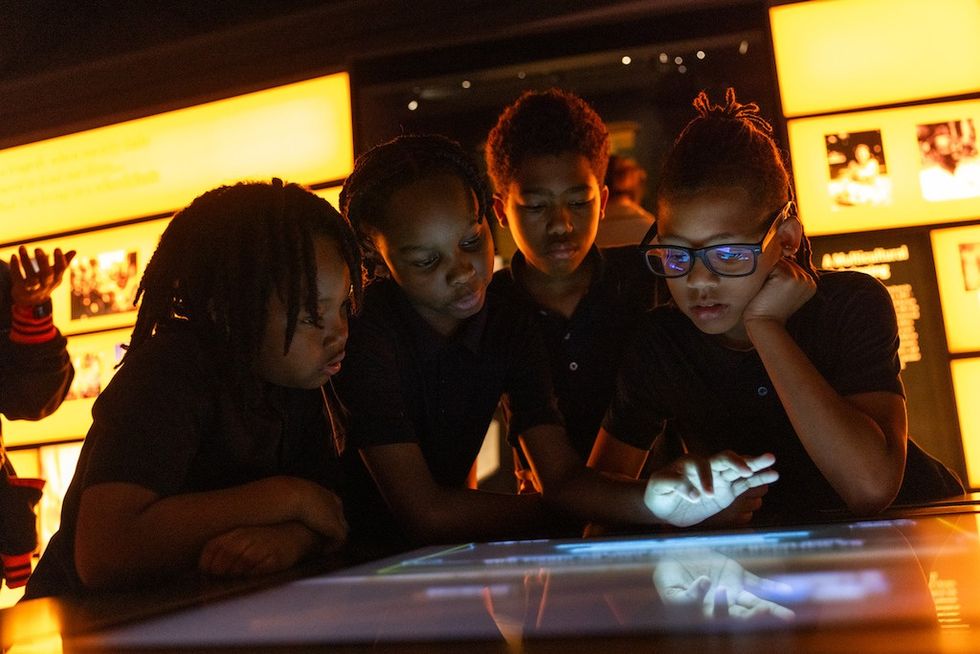 The Obama Presidential Center Museum includes interactive, hands-on civics exhibit that lets visitors explore how democracy worksImage credit Obama Foundation
“Designing the Obama Presidential Center Museum has been a profound honor and an opportunity to tell a story about democracy as a collective practice," says Aki Carpenter, vice president and chief creative officer at Ralph Appelbaum Associates.
"RAA intentionally assembled an extraordinary team of design partners, artists, educators, practitioners, and creative collaborators, many of whom are rooted in Chicago and the South Side, to co-create the work's artistic vision and civic spirit.
"Together with The Obama Foundation, we designed a layered journey through the context and communities that shaped President and Mrs. Obama’s lives and work, connecting visitors to the past, to one another, and to the possibility of building a more just and inclusive future.”
Monica Chadha, founder of Civic Projects Architecture, adds: “The Obama Presidential Center’s commitment to engaging local firms has created real opportunities for practices like ours.
"From the proposal phase, we have worked alongside RAA to help shape how the Museum’s stories become physical, immersive, and accessible. The partnership has been rooted in shared values and has served as a catalyst for Civic Projects’ growth, helping us build the experience and capacity to take on larger, more complex cultural projects in Chicago.
"As a South Side–based, woman- and minority-owned firm, it is deeply meaningful to contribute to a project that will welcome visitors from around the world while remaining grounded in its local community.”
Bringing about change
“As a leader, Obama asked us to believe in our ability to bring about change," says Renata Graw, founder of Normal. "This provocation became a guiding principle for our work.
"We are humbled and inspired to have contributed to such a meaningful project, and we are thankful to have had the opportunity to participate, listen, and learn alongside so many others.”
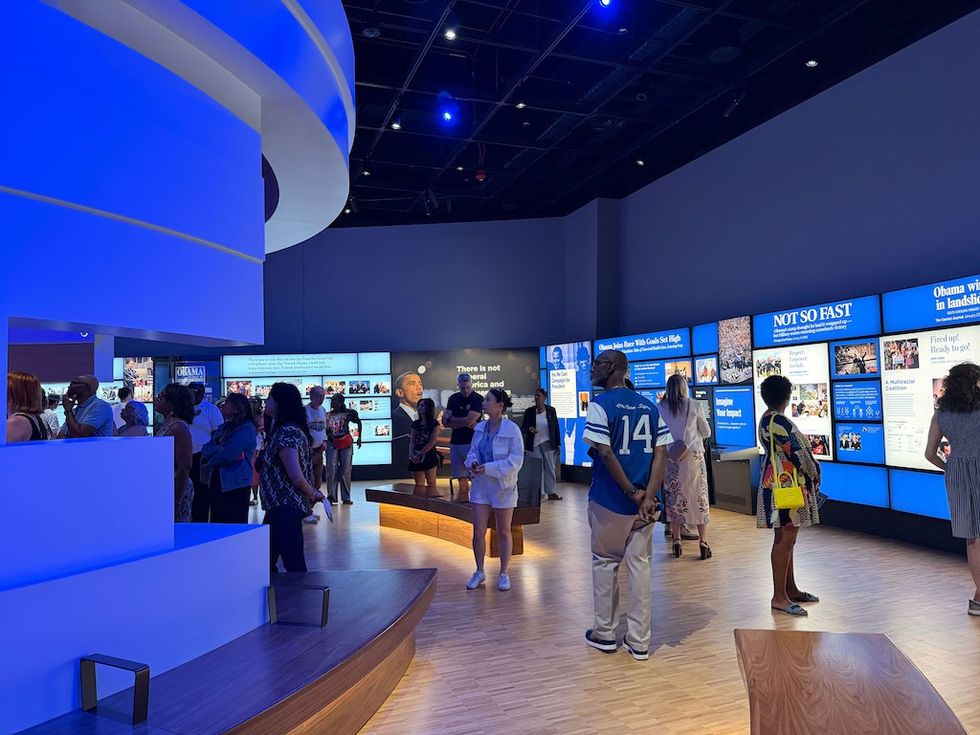 The YES WE CAN circular gallery includes a panoramic media installation of volunteer voices alongside crowdsourced campaign artefacts, immersing visitors in the energy of the movementImage credit Obama Foundation
Norman Teague, artist and designer, says: "First and foremost, thank you President Barack Obama and first lady Michelle Obama! Being invited into the cultural fabric of the Obama Presidential Center is a deeply personal experience for me.
"I've designed and built everything from church podiums and retail spaces to exhibitions globally but I have never had the honor to design for the greatest American president of my time. The inclusion of my work to the OPC speaks to the layers of black Chicago in its purest form.
"My hope is that these seats are seen as part of the city’s front porch protests, relaxed picnics and basement house parties and corner store stoop conversations.
"This opportunity should remind my students, partners and community that the ideas on the south and west sides deserve to live at the core of history, architecture and design."
Earlier this year, RAA announced a new project for The Haus der Geschichte Nordrhein-Westfalen foundation (the House of History) in Düsseldorf, Germany. This venue tells the story of North Rhine-Westphalia (NRW), Germany's most populous federal state.