
When The Observer covered global advertising giant WPP’s strategy, CEO Cindy Rose highlighted how rapidly commercial discovery is shifting.
Speaking on her role leading the company through this transition, she said: “Marketing and advertising is probably being transformed faster than almost any other industry.”
At the heart of that transformation is a fundamental reality captured by Nick Louisson, her director of commercial partnerships and agency services: "LLMs are essentially a new consumer."
As Louisson points out, brands must now appear in large language models (LLMs) to reach their audiences as search habits evolve. But unlike traditional Google search—where businesses could buy sponsored ads or bid their way to top rankings—most LLMs prioritise earned media derived from trusted legacy outlets.
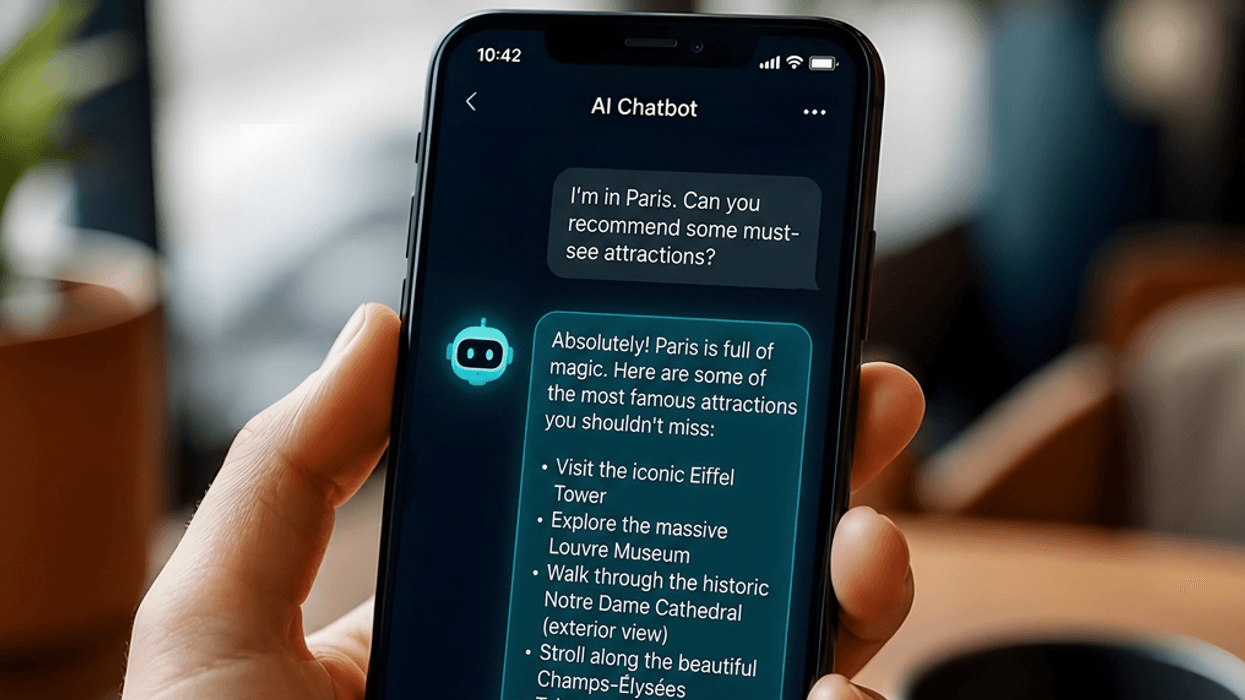
 Smartphones changed how visitors find and interact with attractions, and agentic AI is the next chapter
“Search has been dominated by Google, which was about understanding how to win with its algorithm, then – failing that – about buying your way to the top,” Louisson said.
“Now you must learn how to win with ChatGPT, Gemini, Claude and Perplexity. Currently, you must earn that performance; you can’t simply buy it.”
This shift is actively reshaping B2B decision-making across the attractions and leisure sectors.
Whether a museum director is looking for digital exhibit technology, a theme park developer is shortlisting ride manufacturers, or a resort operator is sourcing sustainable water park solutions, buyers are increasingly starting their research in conversation with AI.
They ask ChatGPT, Gemini, or Google AI Overviews to compare options, evaluate suppliers, and present a curated shortlist.
The scale of the market shift
The speed of this transition is reflected in recent research on commercial adoption. According to a landmark study by Forrester, an overwhelming 94% of B2B buyers now use AI to research vendors and evaluate options as part of their purchasing decisions.
As Forbes recently highlighted in an analysis on generative engine optimisation (GEO), the financial stakes of missing this layer are substantial. Roughly half of major search interactions now surface AI-generated summaries ahead of traditional results, a share that is rising fast.
When a brand is omitted from that first answer layer, it risks losing credibility by absence alone, effectively redirecting high-value commercial inquiries to competitors named as the default options.
Visibility no longer relies on sitting somewhere in a long list of search links; it depends entirely on being cited and trusted by the AI engine itself.
The travel sector: from ten links to a shortlist of three
The travel and tourism industry offers a clear view of where discovery is heading.
Research from leading travel site Skift highlights a stark reality for destination and supplier discovery: traditional search engines present ten blue links, but AI conversational tools condense that pool of choices down to a tight shortlist of just three recommendations.
AI Narrows Hotel Search to 3 Results and Changes Who Wins
Travel is a closely related sector, so this "winner-takes-all" curation similarly impacts attractions B2B suppliers.
When an operator prompts an AI for recommendations, the system extracts data from a handful of primary, trusted sources. If a business isn't embedded within those underlying sources, it is cut from the shortlist entirely.
How AI models decide who to trust
AI engines do not generate authority in a vacuum; they crawl, index, and learn from platforms that maintain high domain trust, structured data, and active human engagement.
For example, blooloop is already the most-read media resource in the visitor attractions sector, but our reach also extends far beyond human readership: our domain trust ensures we rank alongside major global news publishers in AI search visibility.
In a recent global media study of over 15 million AI responses by Muck Rack, blooloop ranked in the UK Top 10 for AI visibility alongside mainstream news outlets like The Guardian and the Financial Times. Additionally, news editor Bea Mitchell was named the #4 most-cited journalist globally by AI engines.
Our AI ongoing strategy
blooloop has a Domain Authority of 75 built on decades of delivering trusted content to visitor attraction professionals. When an LLM delivers industry news or supplier information across attraction design, technology, or operations, it leans on us as a high-trust, human-validated network to form its answers.
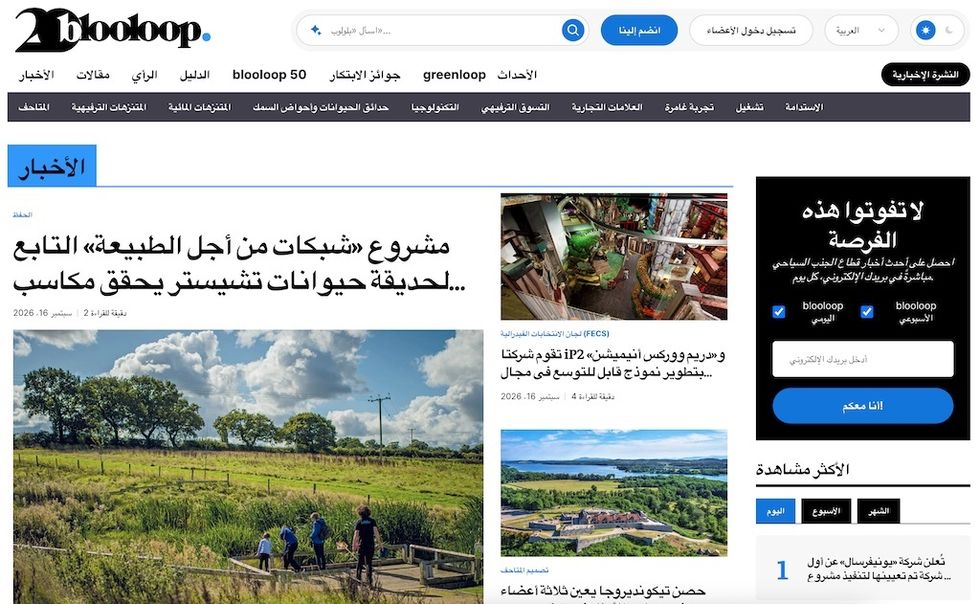 blooloop has boosted its AI visibility with eight new regional websites
To supercharge this AI visibility globally and future-proof coverage across key growth regions, we have recently expanded our digital infrastructure beyond a single .com domain.
The launch of our 8 new regional websites across key global markets, from China and the Middle East to Latin America, serves a double structural role:
- Delivering localised, native-language news to real human decision-makers on the ground.
- Supplying geographically relevant entity data directly to AI search crawlers worldwide.
Do feed the algorithms
Navigating the next era of discovery isn't an either/or choice between human audiences and machine algorithms. The primary driver of AI trust remains genuine human readership and rigorous editorial standards maintained over years.
A great company website is perfect for converting visitors who already know you, but it won't get you surfaced by AI search engines in the first place.
To be recommended by LLMs as buyers research their options, your brand must now be embedded in the trusted, established media sources that feed those algorithms.