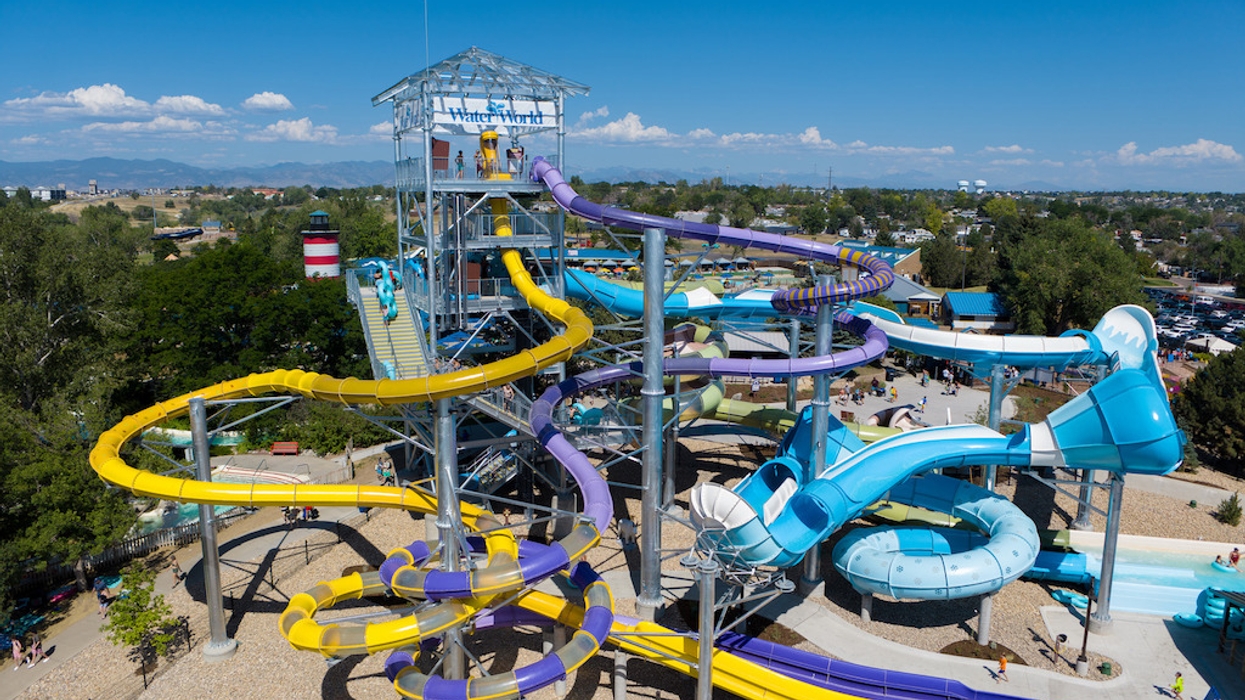

For years, water park success was largely measured by the size and speed of the next attraction. Bigger slide towers, longer ride paths, and new thrill experiences fueled growth across the industry.
Those elements still matter. But as guest expectations evolve, we're seeing a new challenge emerge for designers and operators: creating water parks that feel memorable beyond the attractions themselves.
Increasingly, guests are looking for experiences that feel immersive, authentic, and connected to their surroundings. In other words, they want destinations with a story.
At Water World's Summit Canyon expansion in Colorado, that story began with the site itself.
Rather than applying a theme after the attractions had been planned, the design process started with a simple question: what would a water park inspired by Colorado's landscapes actually feel like?
Rooted in place
The answer shaped everything from topography and planting design to signage and guest circulation.
The concept draws on the experience of moving through a mountain environment. The ride tower serves as the symbolic summit, while guests travel through a landscape that descends toward the valley below.
Alpine-inspired planting transitions to lower-elevation species as guests move through the site, creating an experience rooted in Colorado's natural character rather than an imported theme.
This may seem like a subtle distinction, but it reflects a broader shift taking place across the industry.
For many years, successful theming often meant transporting guests somewhere completely different. Today, some of the most compelling destinations are finding ways to celebrate where they already are.
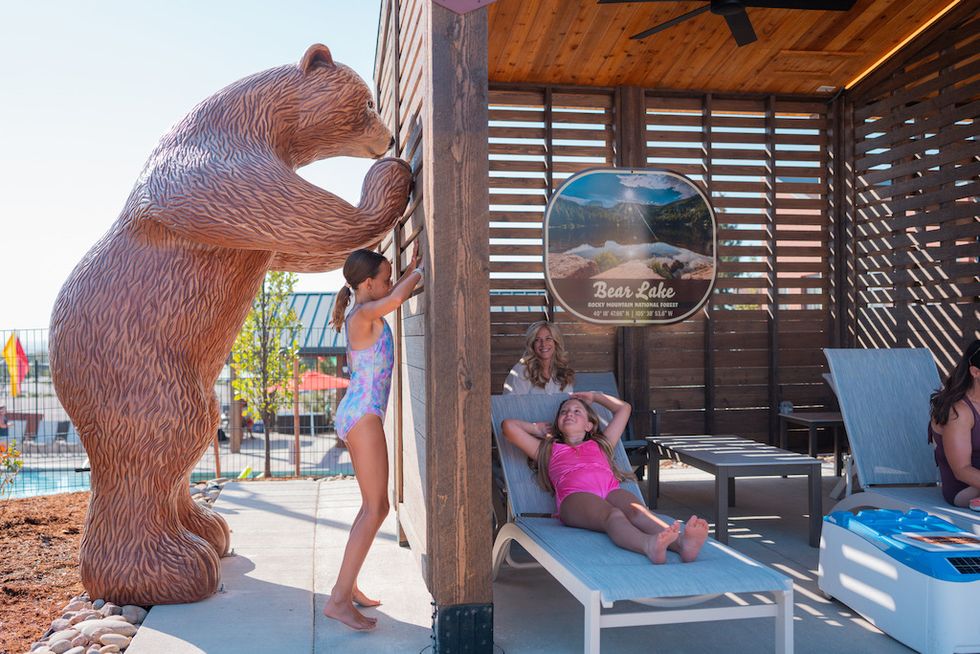 From national park inspired signage to the peeking brown bear, the little sibling to the Denver Convention Center’s Blue Bear, this new expansion is distinctly Colorado
At Summit Canyon, Colorado's high-desert climate drove the strategy for appropriate drought-tolerant plantings.
Sustainability goals and environmental performance became part of the guest experience and the overall story of the place rather than an afterthought.
The same thinking influenced decisions about existing site features.
One of the project's biggest challenges involved preserving mature trees that had been on site for more than 30 years. Significant grading was required to accommodate new attractions, but through careful coordination between designers and engineers, key trees were retained using terraced grading solutions and retaining walls.
The result? A new destination that feels established from day one.
Lessons from Summit Canyon
Another lesson from Summit Canyon is that successful placemaking rarely comes from a single discipline.
The guest experience depends on coordination between landscape architects, architects, aquatic designers, engineers, contractors, operators, and owners. The most successful projects aren't collections of individual components. They're environments where every element supports a common vision.
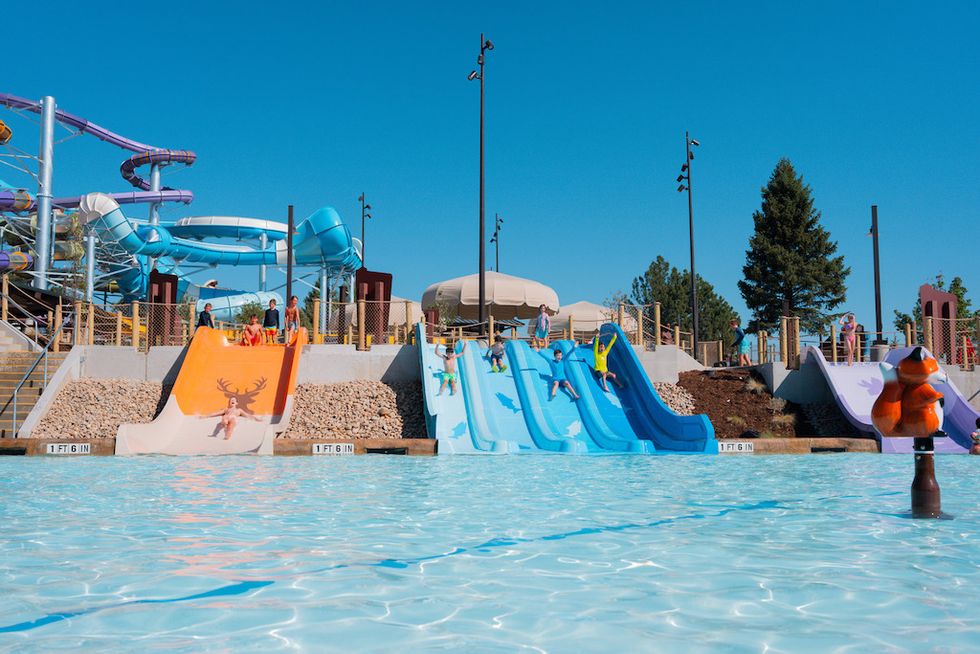 Iconography on the slides and characters in the pool continue the story: this experience can only happen at Water World
As the market becomes even more competitive, differentiation won't come solely from adding another slide or another attraction. It will increasingly come from creating destinations that offer experiences guests can't find anywhere else.
Sometimes, the strongest competitive advantage isn't inventing a new story. It's discovering the one that already exists.