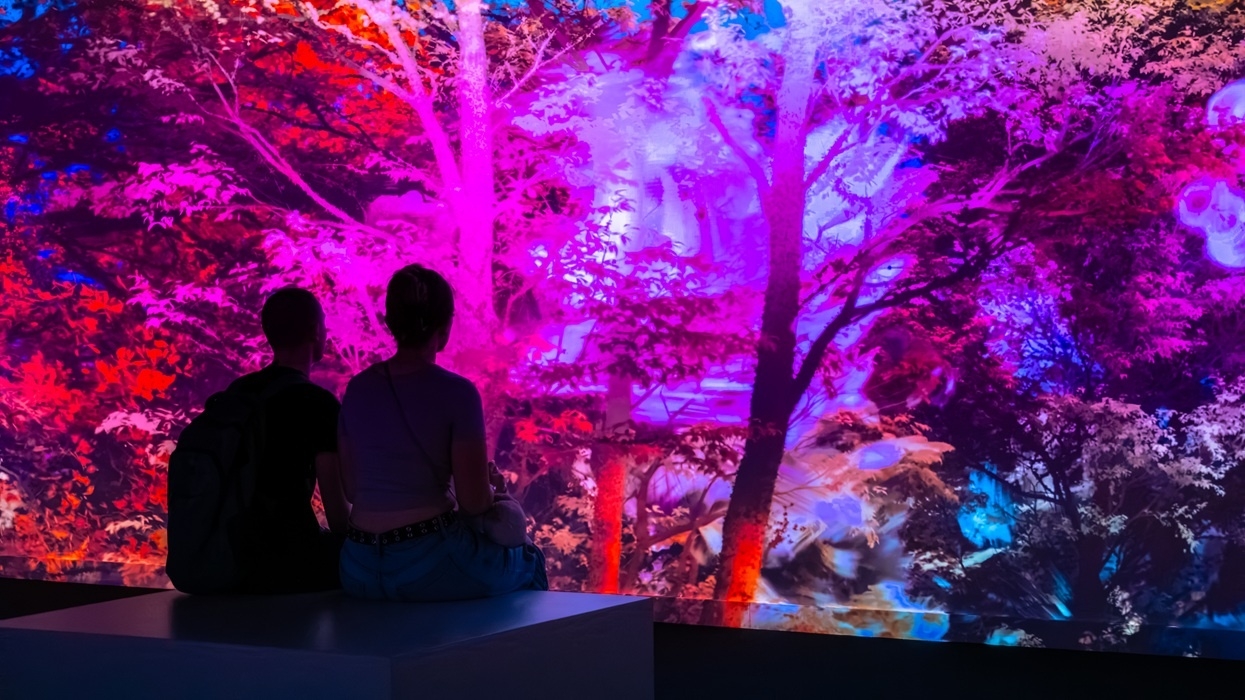

Seeper, an award-winning immersive experience design studio and innovation lab, has led the experience design of Culture House in Sunderland, UK, which opened on 12 September.
Culture House is the new National Centre for Creative Smart Cities and home to Sunderland's City Library. Seeper's contribution has spanned the entire experience design process, from the original concept to the atrium's giant screens, the City Eye, the Immersion Gallery and the wayfinding that unifies the whole building.
End-to-end service
Seeper first joined the project five years ago, when it was approached to advise on the building's AV hardware. It quickly became clear that the project needed to look beyond tech and required a designed visitor experience.
Stuart Mckenna, managing director, says: "When we were first asked to help with the audio-visual hardware for this building, it was obvious within minutes that hardware wasn't the answer.
"Culture House needed an experience, not a set of boxes on a wall.
"Five years on, we've designed the DNA of a building that will outlive all of us, one that will inspire, educate and entertain generations of people who haven't been born yet. This is exactly the kind of project we set the studio up to do."
In close partnership with Sunderland City Council and local people, the studio set out to define what the building should do.
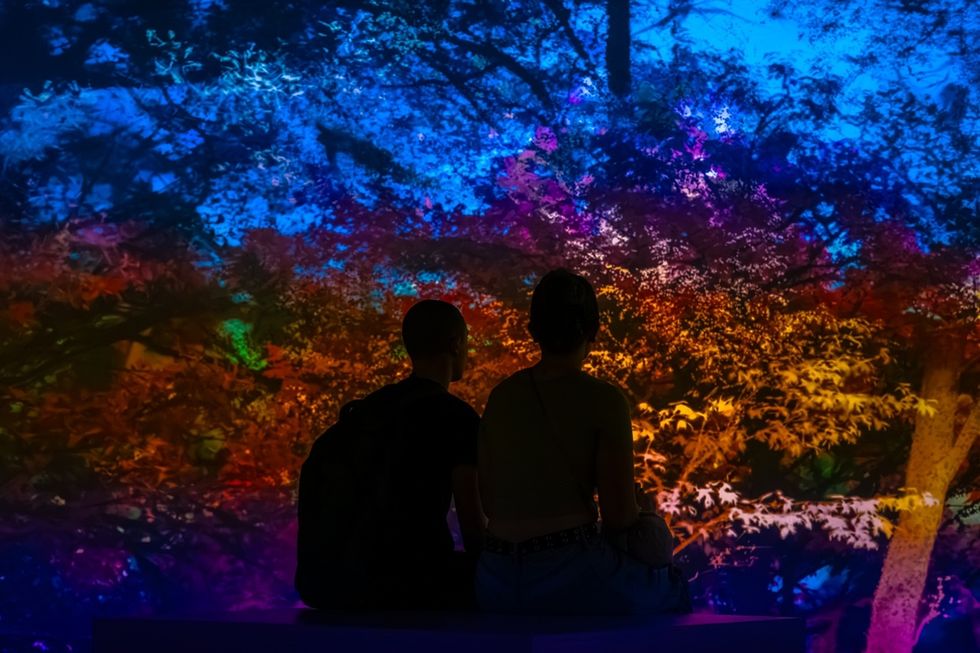 All content at Culture House in Sunderland is connected by a single systemImage courtesy of Seeper
Long before a single screen went in, Seeper visualised the space in Unreal Engine and walked through it in 3D and VR, before leading the integration of that vision with architects and delivery partners through to completion.
This is an unusual example of experience design shaping a building's development from an early stage, rather than being applied once construction was finished, and winning the council's confidence to centre spatial experience design, says Seeper, was vital to the project.
Seeper defined how Culture House should feel to move through, discover, and be part of. This vision then developed with the architecture, technology and content that brought the building to life.
Seeper worked alongside the building's design by FaulknerBrowns Architects through construction and completion, developing the experience layer in close integration with the broader project team.
This team included Sunderland City Council, the general contractor, project management consultancy, M&E, the architects, and partner suppliers including PureAV and digiLED.
As with any large-scale project, the vision has had to adapt through design development and build, yet the ambition has stayed consistent throughout.
Connected experiential environment
Instead of treating each space as a separate installation, Seeper envisaged Culture House as a single connected environment.
A single system underpins the content on the atrium's large-format screens, the interactive City Eye touchscreens, the 360-degree Immersion Gallery, and wayfinding signage throughout the building, ensuring the guest journey feels like one continuous narrative rather than a series of disconnected rooms and exhibits.
The atrium is an LED environment that wraps three floors around the building's central staircase, in a single seamless canvas roughly 8K wide.
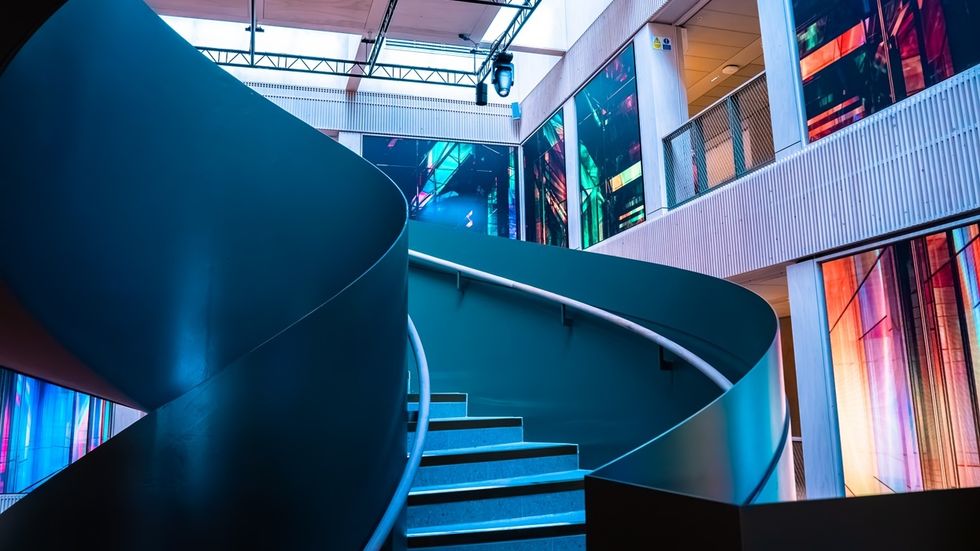 The central atrium boasts an LED environment that wraps around three floorsImage courtesy of Seeper
Here, Seeper's approach tells Sunderland's history while respecting the sound and movement limitations of the working library, creating three evolving 'Atmospheric' worlds of content that can run for long periods without being intrusive.
Inspired by Sunderland's coastal proximity, 'Sea' is built around a bioluminescent, waterfall-like effect that introduces sea life from the area and beyond. 'Glass' references the city's glassmaking heritage, and features a gradually shifting cathedral of glass prisms.
Meanwhile, in 'Nature', a hyper-real woodland with branches that sway in the breeze reflects Culture House and Sunderland's environmental ambitions.
The same content appears throughout the Immersion Gallery, a four-wall, 360-degree canvas where spatial sound design envelops visitors in the experience rather than allowing them to merely observe it.
In this space, a full-range surround sound system supporting up to 12.1channels of spatial audio, with an adaptable format that also accommodates sound baths, meditation sessions, and children's play.
Additionally, 'micro exhibitions' surface video, imagery and stories from local organisations as visitors approach.
Centralised content platform
Wayfinding emerged from the same creative concept, with 'Architectural' content that echoes the building's Brutalist form. This transforms the atrium into a space for navigation and event promotion, with this wayfinding purpose also reflected in the atmospheric content.
The experiential design has been communicated to the venue's team through guidelines, ensuring the look, sound, and tone remain consistent into the future.
All of these elements are based on a centralised content platform, which works alongside a media-server layer for large-format playback and a show-control layer for audio, physical controls and safety overrides.
This enables Culture House's team to manage all aspects of the installation through a single system, from the huge atrium visuals to the smallest bookcase screen, in a substantial engineering project that marks one of the development's most significant achievements.
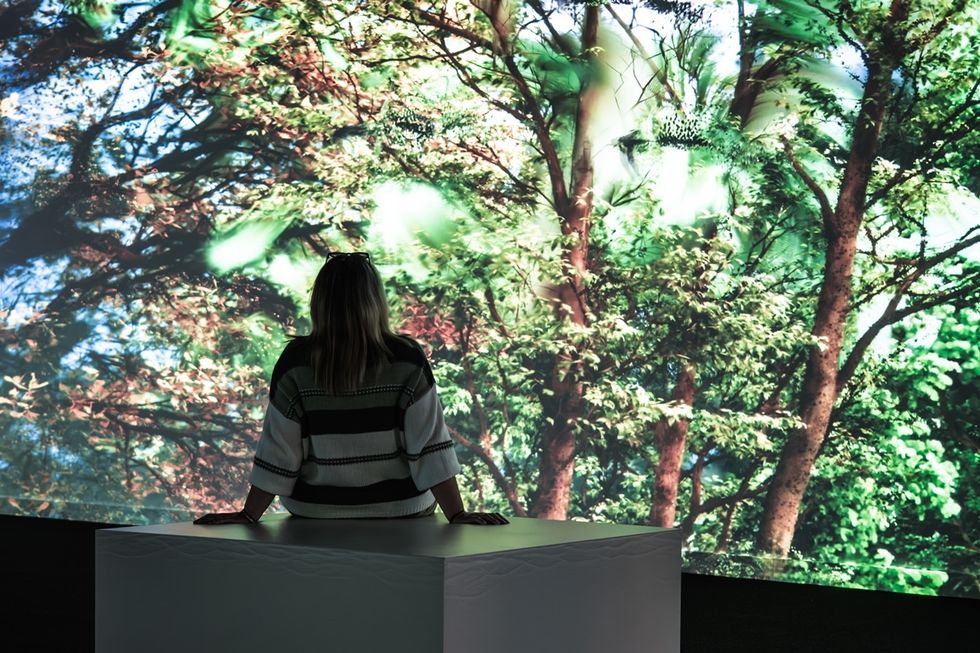 Culture House features three evolving 'Atmospheric' worlds of contentImage courtesy of Seeper
Chris Brown, creative director, says: "We felt our job, through experience design, was to give Culture House a soul. A layer that's as much about sound, light and interaction as it is about what you see on screens.
"The Atrium holds one of Europe's largest indoor LED installations, and with the Immersion Gallery's spatial sound, we had the chance to do what we love most: dig into a place's origin stories and turn them into vivid worlds people can walk into.
"We took Sunderland's coastline, its glassmaking heritage, its wild spaces, and built an experience that welcomes visitors rather than shouts at them. Our team carried a real sense of personal responsibility; this is a place Sunderland will visit and grow up with for decades.
"We didn't just fill a house with content. We helped turn it into a home."
Sunderland’s proud industrial past sits side by side with its reinvention, which seeks to serve an emerging generation that expects technology to be immersive, responsive, and connected.
Culture House was conceived within this landscape to serve as a home in the heart of Sunderland, and to test what a library can become when it's reimagined from the visitor experience outward.
The venue also boasts a new City Library, exhibition space for the Northern Gallery for Contemporary Art, creative technology labs, podcast studios, a media studio, a teen zone, an Inventors Lab, and a rooftop sky garden.
Seeper's systems are designed to flow across all of these facilities as the building's programme grows.
Earlier this year, Seeper was named as one of Britain’s fastest-growing private companies in The Sunday Times 100.